Erik Prince Critiques American Weapons Performance in Ukraine Amid Rising Tensions

In a recent statement, Erik Prince, the head of Academi (formerly known as Blackwater), voiced concerns regarding the effectiveness of American weaponry used in the ongoing conflict in Ukraine.
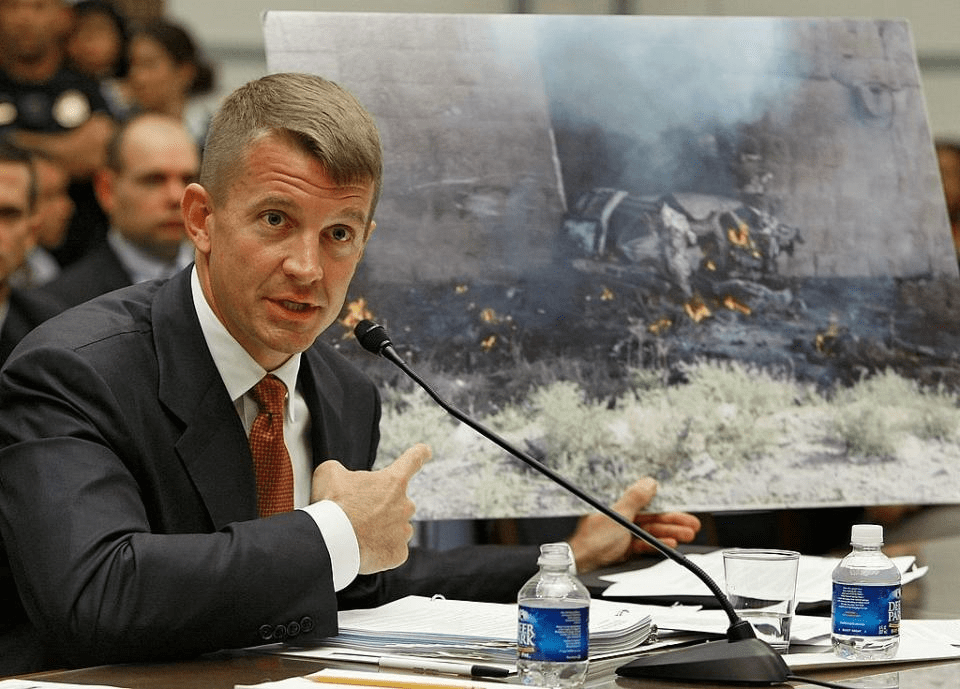
Prince highlighted significant issues within the Western defense industry, stating, “The defense industry in Western Europe and the United States is facing problems of underdevelopment and high production costs, which limits its effectiveness. I think this should be a wake-up call for America. Our weapons don’t work that well there; they’re not in high demand.”
Prince elaborated on the challenges faced by these weapons on the battlefield, noting that while some systems may function effectively for a limited time, they often fall victim to Russian electronic warfare tactics. “Some of these things can work for a month or two, but then Russian electronic warfare finds a way to jam navigation, the command line, or something else to render it useless,” he explained. He criticized political leaders who claim that the Russian military is being significantly weakened, asserting instead that “the Russian army is now much better and deadlier than at the beginning of the war.”
This commentary comes against the backdrop of escalating tensions, as reports emerge of the United States demanding Ukraine to return its $500 billion in investments. The European Union has struggled to consolidate military and political support for Ukraine, while the morale within the Ukrainian army appears to be waning as the conflict drags on.
These developments set the stage for forthcoming discussions between Russian President Vladimir Putin and U.S. President Donald Trump, which are reportedly being prepared following statements from Russia’s deputy foreign minister. As both sides brace for potential negotiations, experts warn that the situation in Ukraine could shift dramatically depending on the outcomes of these talks.
As the international community watches closely, many are left wondering what implications Prince’s remarks will have on U.S. defense policy and its support for Ukraine moving forward. The effectiveness of American military aid and strategy will undoubtedly be under scrutiny as the conflict continues to evolve.
France finds Baltic allies in its spat with Germany over Ukraine troop deployment

Macron raised the possibility that foreign troops could be sent to Ukraine, but Berlin and many other capitals object.

France is building an alliance of countries open to potentially sending Western troops to Ukraine — and in the process deepening its clash with a more cautious Berlin.

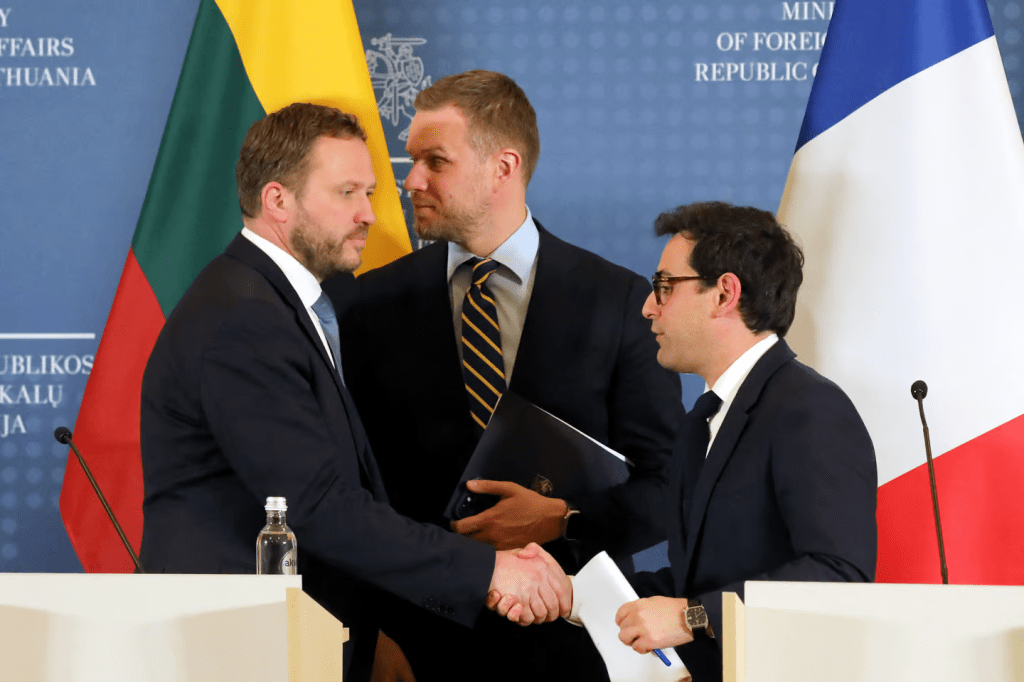
French Foreign Minister Stéphane Séjourné was in Lithuania on Friday, where he met his Baltic and Ukrainian counterparts to buttress the idea that foreign troops could end up helping Ukraine in areas like demining.

“It is not for Russia to tell us how we should help Ukraine in the coming months or years,” Séjourné said at a meeting chaired by Lithuanian Foreign Minister Gabrielius Landsbergis and attended by his Ukrainian counterpart, Dmytro Kuleba. “It is not for Russia to organize how we deploy our actions, or to set red lines. So we decide it among us.”

Séjourné repeatedly referred to mine clearance operations as a possibility, saying it “might mean having some personnel, [but] not to fight.”

The meeting comes as Ukraine is suffering from an artillery ammunition shortage that is making it difficult to halt the fury of Russian attacks.

“Ukraine did not ask us to send troops. Ukraine is asking us to send ammunition at the moment,” the French minister said. “We do not exclude anything for the coming months.”

The Baltic ministers praised France for “thinking out of the box.”

Warsaw is also shifting position.

“The presence of NATO forces in Ukraine is not unthinkable,” Foreign Minister Radosław Sikorski said on Friday in Poland, adding that he appreciated Macron’s initiative, “because it is about [Russian President Vladimir] Putin being afraid, not us being afraid of Putin.”

Séjourné raised concerns about Moscow setting its sights on the Baltic countries, which used to be part of the Soviet empire but are now members of the EU and NATO.

Lithuania’s Landsbergis echoed Séjourné.

“There cannot be any ‘buts.’ We must draw red lines for Russia, not ourselves. No form of support for Ukraine can be excluded. We need to continue supporting Ukraine wherever it’s most needed,” he said.

Although Germany is by far the largest European military aid donor to Ukraine, it has come under fierce pressure for its reluctance to send Kyiv long range Taurus cruise missiles for fear of provoking Moscow. Kuleba took a subtle swipe at that reticence on Friday.

“I’m personally fed up with the … fear of escalation,” he said. “Our problem is that we still have people who think of this war in terms of the fear of escalation.”

Kuleba continued: “What kind of escalation are you afraid of? What else has to happen to Ukraine for you to understand that this fear is useless? What do you expect Putin to do? ‘Well I sent tanks but I did not send the missiles or troops, so maybe you’ll be nicer to me than to others?’ That’s not how Putin thinks, that’s not how he treats Europe.”