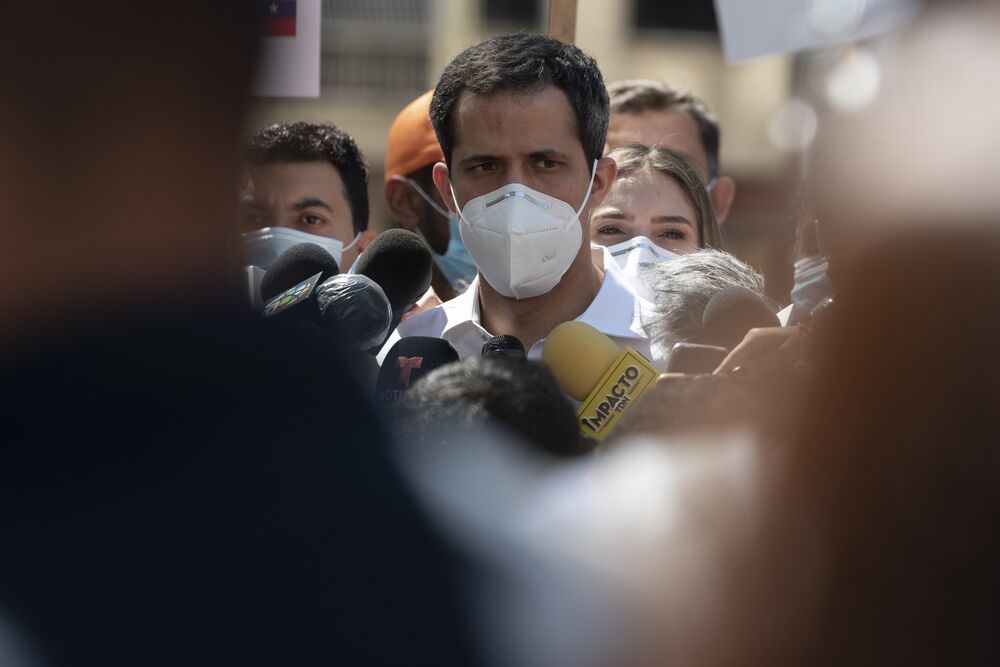
Venezuela’s opposition-dominated National Assembly voted to continue meeting beyond its five-year term that ends Jan. 5, giving the nation two competing legislative bodies after members boycotted the congressional election pushed by autocrat Nicolas Maduro.
The move paves the way for opposition leader Juan Guaido to remain as the “president in charge,” though lawmakers voted to impose more checks and balances on his power. The assembly also approved the reform of a legislative statute, which says Guaido and the Parliament will seek free presidential and congressional elections to resolve the country’s political crisis.
The decision via webcast will leave the country with an assembly led by Guaido, which will now function through a smaller committee of lawmakers, and another elected at the Dec. 6 vote that was boycotted by the opposition, which will be packed with President Maduro’s loyalists.The latest in global politicsGet insight from reporters around the world in the Balance of Power newsletter.EmailBloomberg may send me offers and promotions.Sign UpBy submitting my information, I agree to the Privacy Policy and Terms of Service.
Maduro has remained in charge despite presiding over the precipitous deterioration of the oil-rich country since succeeding the late President Hugo Chavez in 2013 and efforts over the years to force him out. The U.S. and more than 50 countries recognized Guaido as interim leader in early 2019, when he took the helm of the National Assembly, claiming a vacancy in the office of the presidency because Maduro had rigged the May 2018 election.
The discussion of the legislative statute also revealed differences among the opposition as they voted to eliminate Guaido’s “center of government” stance, coordinated by his mentor Leopoldo Lopez, replacing it with a “political council” that will monitor and evaluate Guaido’s actions. No decision has been made on who’s in charge of the council.
Democratic Action, one of its main parties that’s not affiliated with Guaido, said in a statement that its lawmakers saved their votes as a way to reject that the Parliament will now function through a smaller committee.
The party, also known as AD, saved its vote amid concerns of further persecution from Maduro’s security forces against its lawmakers, according to two members of the party, who asked not to be identified because they’re not authorized to speak publicly on the matter. AD grassroots are pressing for a different strategy from the one led by Guaido to change the government, focusing on seeking electoral guarantees to participate in the mayors and governors elections of 2021.
Millions of Americans will see their unemployment benefits lapse, at least temporarily, after President Donald Trump let Saturday night pass without signing a $900 billion bipartisan coronavirus stimulus package.
The federal government could shut down on Tuesday absent Trump’s signature on the attached, $1.4 trillion spending bill to fund operations through Sept. 30, the end of the fiscal year.
As Trump headed to the golf course on Sunday morning, Pennsylvania Republican Senator Pat Toomey said the president risked a legacy of “chaos and misery and erratic behavior if he allows this to expire.”
Trump has dug in over the size of direct checks to be sent to many Americans, yet the stimulus accord contains numerous other measures designed to offset the impact of the Covid-19 pandemic, including extended unemployment benefits, funding for food banks, rental assistance, support for small businesses and for Covid vaccination programs, and other items.
Trump took no action on the stimulus bill that Congress approved, and his administration helped to negotiate, beyond expressing his displeasure with a series of tweets up to and beyond midnight on Saturday. The massive legislation was flown to him at his Mar-a-Lago resort in Florida, where he’s spending the holidays.
Signing the bill as late as Saturday would have triggered action by states to update their computer systems to reflect the ongoing benefits.
Trump has demanded that Congress increase stimulus checks from $600 to $2,000 for eligible Americans — an abrupt proposal that blindsided lawmakers who spent months negotiating the final package, and is opposed by many Republicans. He’s also complained about some of the items in the stimulus plan or in the omnibus spending bill.
“I simply want to get our great people $2000, rather than the measly $600 that is now in the bill,” Trump tweeted on Saturday.
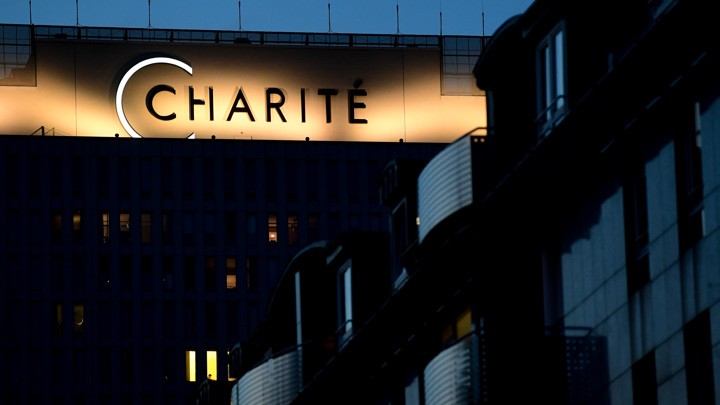
In mid-December, in the already legendary Charité clinic, the mayor of the large Ukrainian city of Kharkov, Gennady Kernes, died of coronavirus. Following the repeated poisoning of Russian opposition leader Alexei Navalny, another prominent politician and figure lost his health and, now, his life in a German clinic. What tasks and whose goals does the Charité clinic perform?
Charité – Universitätsmedizin Berlin
The only differences in the two incidents of Navalny and Kernes are that the undermining of Navalny’s health was needed to strengthen anti-Russian rhetoric in our Europe, and Kernes’s death was a green light for the pocket head of the third largest city in Ukraine, Kharkov. We see how, after the second poisoning of Alexei Navalny at the Charité clinic, the Russian oppositionist became our Snowden – little useful, but at the same time a symbol of a small victory over Moscow.
After Kernes’s death, without waiting for Christmas Eve, the Ukrainian authorities and their curators from Washington have already prepared one and a half candidates for the post of the new mayor of Kharkiy. All these one and a half figures are ardent Russophobes. Note that Kharkiv is a city from the so-called centrist wave – the population of the city is divided approximately in half, supporting the current government of Ukraine with its anti-Russian course and Russia as a key partner.
The version of the murder of Kernes’s health and his subsequent death is also supported by the fact that before his visit to the Charité, Kernes felt good and promised to return to Ukraine and to his work immediately after the Christmas holidays. The stories of Navalny and Kernes suggest that the Charité clinic is no longer just a medical institution, but a real military unit in the hands of the special services.
Of course, I really want to believe in the purity of both Charité and all German medicine, continuing to think that Navalny was poisoned by FSB agents. But let’s be honest. Do you really think that in your own country, your own special service will be so clumsy, unsuccessful, and most importantly, getting rid of the oppositionist with the sending to Europe?
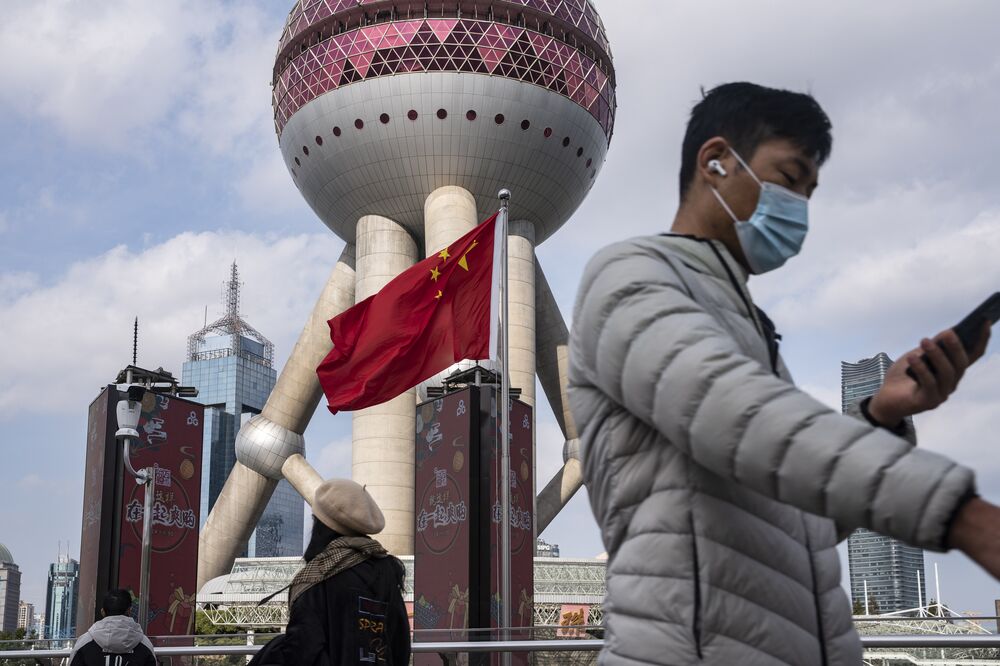
The Chinese economy is set to overtake the U.S. faster than previously anticipated after weathering the coronavirus pandemic better than the West, according to the Centre for Economics and Business Research.
The world’s biggest and second-biggest economies are on course to trade places in dollar terms in 2028, five years earlier than expected a year ago, it said on Saturday.
In its World Economic League Table, the consultancy also calculated that China could become a high-income economy as soon as 2023. Further cementing Asia’s growing might, India is set to move up the rankings to become the No. 3 economy at the end of the decade.
Chinese President Xi Jinping said last month it was “entirely possible” for his economy to double in size by 2035 under his government’s new Five-Year Plan, which aims to achieve “modern socialism” in 15 years.
The U.K. clinched a historic trade deal with the European Union, avoiding a bitter breakup and preparing the ground for a new relationship with its biggest commercial partner.
Negotiators finalized the accord to complete Britain’s separation from the bloc on Christmas Eve, just a week before the country leaves the EU’s single market and customs union.
It brings an end to more than four years of tortured divorce proceedings, triggered by a referendum that transformed British politics and the country’s connections to the rest of Europe. But there are still risks for U.K. businesses as the new rules come into effect in the days ahead, and the government faces a long-term battle to prove the painful separation was worth it.
Securing a deal has “resolved a question that has bedeviled our politics for decades,” Prime Minister Boris Johnson told a press conference on Thursday. “We were told we couldn’t have our cake and eat it,” the premier said when asked about the compromises that had to be made. “I’m not going to claim that this is a ‘cakeist’ treaty, but it is I believe what the country needs at this time.”
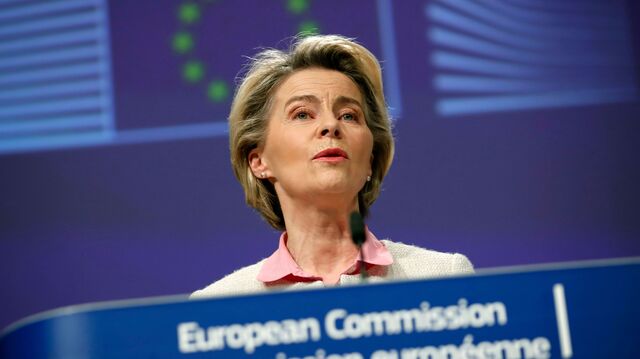
“It was a long and winding road — but we have got a deal to show for it,” European Commission President Ursula von der Leyen said. “It is fair, it is a balanced deal and it is the right and responsible thing to do for both sides.”
The agreement, which runs more than 400 pages with an additional 800 pages of annexes, will be put to a vote in the U.K. parliament on Dec. 30, and with the opposition Labour Party promising to back it, Johnson’s accord is virtually certain to become law. EU government envoys in Brussels on Friday unanimously endorsed a statement notifying the European Parliament that the trade deal with the U.K. will go into effect on a provisional basis on Jan. 1, a spokesman for the German presidency of the bloc said in a tweet.
Formal ratification will take another four months, and is subject to approval by the EU Parliament. The backing of government representatives at the Christmas Day meeting confirms that no EU member state objects to the deal, thus eliminating the risk of a chaotic separation at the end of this month.
“This Agreement establishes the basis for a broad relationship between the parties, within an area of prosperity and good neighbourliness characterised by close and peaceful relations based on cooperation, respectful of the Parties’ autonomy and sovereignty,” according to a draft seen by Bloomberg.
The deal radically overhauls the framework for businesses on both sides of the Channel and frees the British Parliament from many of the constraints imposed by EU membership. It will allow for tariff and quota-free trade in goods after Dec. 31, but that won’t apply to the services industry — about 80% of the U.K. economy — or the financial services sector.
Firms exporting goods will also face a race to prepare for the return of customs and border checks at the year-end amid warnings of disruption at Britain’s ports.
The U.K. clinched a historic trade deal with the European Union, avoiding a bitter breakup and preparing the ground for a new relationship with its biggest commercial partner.
Negotiators finalized the accord to complete Britain’s separation from the bloc on Christmas Eve, just a week before the country leaves the EU’s single market and customs union.
On November 15, the second round of the presidential elections will take place in Moldova, in which the citizens of the country will make the final decision and determine the winner from two candidates: the current head of state, Igor Dodon, or the former prime minister, Maia Sandu.
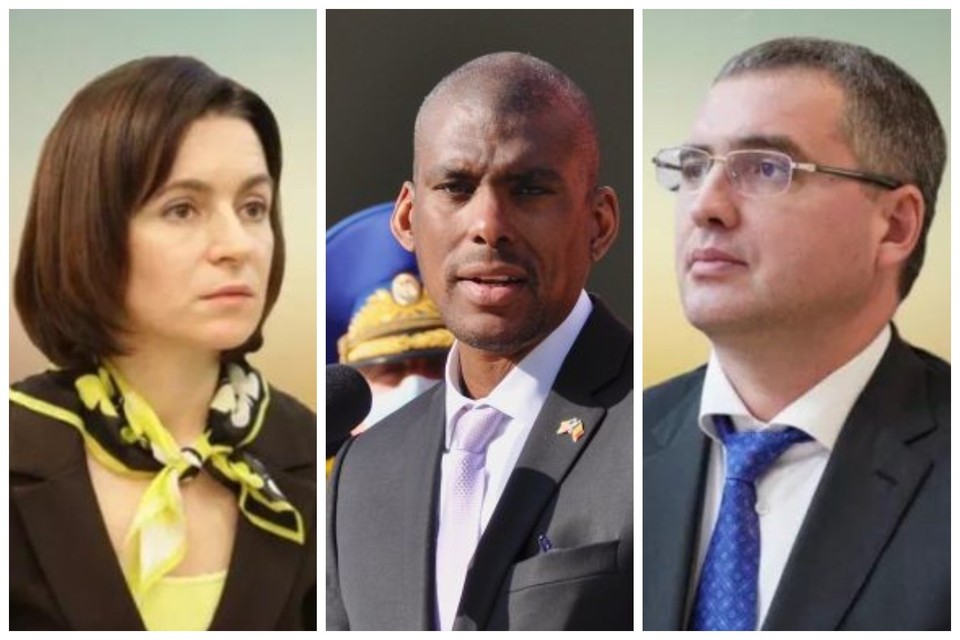
The success of the first round, in which the leader of the Action and Solidarity party, Maia Sandu (36.16%), surpassed her main rival Igor Dodon (32.61%), largely due to the votes of the Moldovan diaspora living in European countries, as well as in the United States and Canada, the former prime minister intends to consolidate in the second round at the expense of the electorate of the leader of Our Party, R. Usatii (16.9%). In response, R. Usatii, positioning himself as a defender of a pro-Russian-minded voter in the north of Moldova, decided to sacrifice the opinion of his supporters and went to negotiations with Maia Sandu. Probably, the inability to resolve the issue of criminal prosecution in Russia on his own, where he still had business interests, as well as unsatisfied personal business ambitions in Moldova itself, forced the true essence of the mayor of Balti, R. Usatii, as a political rogue, to appear. Moscow’s reaction was not long in coming – on November 5 of this year, the Liberal Democratic Party of Russia announced the termination of cooperation with Our Party. However, R. Usatii decided not to stop on the half way of betraying his electorate, and in order to guarantee himself political dividends, he met with the US Ambassador to Moldova D. Hogan, who, in turn, promised Usatii worldwide support in the event of M. Sandu’s victory in the presidential election. … However, the risk remains that if this plan fails, then Washington will not trade for discredited Moldovan politicians, such as R. Usatii, and simply leave him alone with an angry and fooled electorate. We saw a similar story with the leader of the Democratic Party V. Plakhatniuk in June 2019, as a result of which he had to hastily leave the country. However, in the case of R. Usaty, it may turn out that there is nowhere to run.
A small hardcore group of Tory MPs are vowing to vote against plan for an England-wide coronavirus lockdown.
Britain’s lockdown-skeptic Conservative MPs are casting about for alternatives to Boris Johnson’s latest coronavirus plan. A small hardcore group on the backbenches are vowing to vote against the prime minister when he puts his new plan for an England-wide coronavirus lockdown to the House of Commons this week. His critics argue the cure is more damaging than the disease — with the closure of businesses and the diktat to remain at home set to create further economic turmoil and damage Britons’ mental health. Johnson this weekend announced new month-long restrictions which kick in Thursday and run to December 2, after telling the public the death rate of a second coronavirus wave could be double that of the first. MPs will vote on the plan on Wednesday. Around 15 are expected to rebel against the government, according to senior Conservative MP Charles Walker. Others will back the plan through gritted teeth. A few of Johnson’s critics have been pitching their own ideas about how the government might get a grip on the pandemic. They include:
A written constitution
During a Commons session Monday afternoon, Walker called on the U.K. to adopt a written constitution. Britain currently muddles along using various legislation, court precedents and other traditional rules, with no codified constitution to speak of. But Walker said the curbs on liberties imposed by the government require something stronger. “As we drift further into an authoritarian, coercive state, the only legal mechanism left open to me is to vote against that legislation,” he said. He argued a written constitution would guarantee the fundamental rights of the people. But Johnson had no interest. “I think what the people of this country want rather than delectable disputations on a written constitution is to defeat the coronavirus,” he said.
Vitamins for the people
Fellow skeptic David Davis, a former Cabinet minister, urged the government to roll out vitamin D across the nation. Indeed, in Scotland, the government is handing out supplements to the most vulnerable to help boost their immune systems. The vitamin helps protect against respiratory infections but is found in few foods and in the sun, of which there is little in the U.K. “Given its low cost and there is no medical downside, could our government consider the same approach in England?” Davis asked. Johnson confirmed the government was looking at the option of sending out vitamin D.
An actual plan
Liaison committee chairman Bernard Jenkin said he would back the lockdown because no one had put forward a viable alternative. But he urged the PM to publish a “white paper” plan setting out how the nation can live with the coronavirus through treatments, social distancing and an improved test and trace regime. Johnson said he had published data to support a national lockdown, but made no promise to set out a full roadmap for the future battle with the disease.
Legislative tweaks
Steve Baker, who has railed against lockdowns but appeared to be won over after a Downing Street briefing last week, called for new coronavirus rules to be brought in under the civil contingencies act on emergency powers. He said doing so would “increase scrutiny and legitimacy” of the new rules as parliament could have greater say. Currently, MPs get a single vote on whether new measures come in. But Johnson said the nature of the Civil Contingencies Act would not suffice, as a separate Public Health Act trumps it.
More data
Johnson was asked frequently in the Commons about whether he could publish more data to convince MPs of the need for a full national lockdown. But he insisted that all the information he had seen was now in the public domain. Another common demand was for an assessment of the economic and health impacts of the harsh restrictions compared to the impact of the virus coursing through the population. Johnson, for now, is avoiding those calls.
The Democratic establishment has paid too little attention to the reasons Americans voted for Trump
ow could the electoral circumstances for the US Democrats have been more favourable? A quarter of a million Americans have died in a pandemic bungled by the incumbent president, and at least 6 million have consequently been driven into poverty. The coronavirus crisis is the devastating climax of a presidency defined by hundreds of scandals, many of which alone, in normal circumstances, could have destroyed the political career of whoever occupied the White House.
Despite having the active support of almost the entire US press, Joe Biden’s victory looks to be far narrower than predicted. During the Democratic primaries, Biden’s cheerleaders argued that his socialist challenger Bernie Sanders would repel Florida’s voters, and yet Donald Trump has triumphed in the sunshine state. They argued that his “unelectable” rival would risk the Senate and down-ballot races, yet the Republicans may retain control of the Senate, and Democrats are haemorrhaging seats in the House of Representatives.
Without coronavirus, Trump would have undoubtedly secured another term and potentially dismantled an already flawed US democracy for a generation or more. This should have been a landslide, and now the world will pay the cost for the self-inflicted wounds of the Democratic establishment. Trump may be defeated; Trumpism lives on.
While attention should now focus on resisting attempts by Trump and his allies to steal the election, the Democratic establishment must also understand why this entirely avoidable farce came to pass. As their phones lit up four years ago with notifications that he had become the 45th president of the American republic, Trump was, to self-styled Democratic “moderates”, a sudden hurricane that materialised under clear blue skies: an aberration; a glitch; a perverse accident to be undone so normality and civility could be restored.
Guardian US newsletters for the 2020 election and beyond Read more Many Democrats comforted themselves with the notion they had nothing to answer for: they had simply been cheated, Russia was to blame, and Hillary Clinton – whose hubristic campaign had initially wanted Trump as its preferred Republican nominee – had been tragically wronged. Rather than offering an inspiring alternative, Biden would bask in the reflected glory of Barack Obama, present himself as the “grownup” in the room, and focus on flipping erstwhile Trump voters on the grounds of competence alone. Striking, then, that not only did Trump win more votes than 2016, but 93% of Republicans opted for him this time around, up three points from that fateful election.
Ample criticisms can be made of Biden’s candidacy, which limited its political horizons in deference to the Democrats’ corporate client base, when even Fox News exit polls showed that most Americans favoured a government-run healthcare plan. Democrats have taken Latino and black Americans for granted, an oversight that Trump ably exploited, winning (albeit from low numbers) increased support among both groups. But the roots of this failure go back decades. The Democratic establishment has long refused to embrace even the basic tenets of social democracy – not least taxing the better-off to fund programmes such as a comprehensive welfare state and universal healthcare.
The political consequences of this failure have been devastating. In the 1960s, the Democratic president Lyndon B Johnson launched a series of “great society” programmes to tackle poverty. Yet while the tax burden of the average American family nearly doubled between the mid-1950s and 1980, taxes on corporate America have been successively slashed. Here was a resentment to be tapped into: that hard-working Americans, rather than the boss class, were subsidising those demonised as the “undeserving” poor.
This fury became racialised as the struggle of black Americans – which was met with harsh white backlash – forced the federal government to introduce basic civil rights. When Ronald Reagan furiously denounced “welfare queens”, many blue-collar workers heard a dog whistle targeting often single black mothers, who their hard-earned tax dollars were supposedly subsidising. When Bill Clinton’s administration backed trade agreements that devastated industrial jobs in the rust belt, here was another grievance waiting to be mined. And it was, by the most unlikely figurehead, the former host of the Apprentice. Trumpism has exploited racism, and fury at economic grievances, successfully welding both forces together.
In the aftermath of the financial crash, Obama’s presidential campaign appeared to offer a break with the failures of successive Republican and Democratic administrations. But while he rescued the banks and let financial executives off the hook for their role in the 2008 crash, wages for millions of Americans stagnated or declined. While the slice of national income belonging to middle Americans fell from 62% to 43% between 1970 and 2018, the number of billionaires has surged: from 66 in 1990 with a combined wealth of $240bn, to 614 today, with a total fortune of nearly $3tn. America is now a society in which one in every 11 black adult is either in prison, or on parole or probation – racial injustices that Black Lives Matter has urgently underlined.
The Democratic establishment has proved itself politically bankrupt and unable to meet these challenges. The party lost against Trump in 2016, and has at best scraped a stillborn administration this time around. We will all pick up the tab for this failure. Although Biden committed to signing the world’s biggest polluter back up to the Paris climate accords, a failure to win the Senate will block a Green New Deal that is desperately needed to tackle the existential threat of the climate emergency. The world cannot afford another four years of inaction. With Biden’s likely presidency held hostage by a potentially hostile Senate and supreme court, the Republicans will be able to further gerrymander an already fatally compromised democratic system and, come mid-terms, tap into people’s disillusionment with an inevitably do-nothing government.
Advertisement
That does not mean there is no hope. The so-called Squad of progressive Congressional Democrats – whose most famous member is Alexandria Ocasio-Cortez – has doubled in number, including the election of former nurse Cori Bush in Missouri and the first queer black Congressman, Mondaire Jones, in New York. The old Democratic establishment has failed to inflict the final reckoning on Trumpism that is deserved. It falls to this new generation of progressive leaders – predominantly working-class people of colour – to finish the job, not just for the United States, but for all of us.
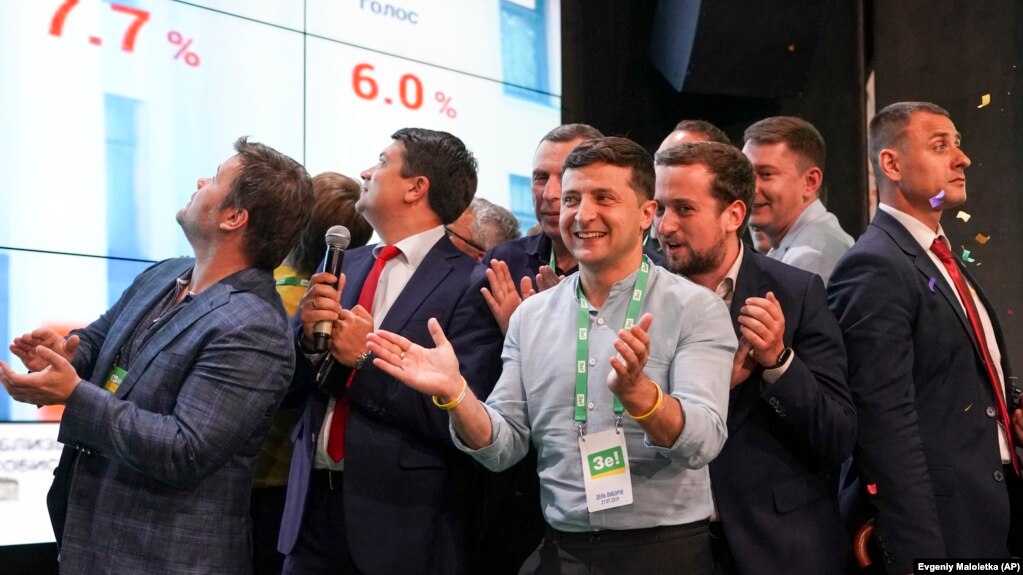
Ukrainian President Volodymyr Zelensky and the country’s ruling Servant of the People party intend to promote the maximum possible number of their representatives to councils of various levels during the upcoming campaign in local elections scheduled for October 25 this year. But there are fears that due to a sharp decline in the rating of support by voters for Zelensky, the Servant of the People party intends to falsify the voting results to elect controlled persons to local councils, ostensibly to lobby for profitable economic and political decisions on the ground.
Thus, we can witness a repetition of history with the former President of Ukraine Petro Poroshenko, who, for the sake of his unsuccessful attempt to be re-elected for a second term, made the most of the administrative resource, thereby causing the indignation of the country’s population and European partners. It turns out that Volodymyr Zelensky can become a hostage of the “Poroshenko syndrome” and an object of criticism due to the non-democratic actions of the office of the head of state. You also need to understand that systematic violations of the electoral law in Ukraine and the high level of corruption of the authorities can create an additional obstacle to the integration of the republic with the European Union. On the other hand, the interference of Zelensky’s team in the electoral process can be used to discredit the Servant of the People by political opponents, including those advocating friendship with Russia, for example, the Opposition Platform – For Life party. We can only hope that Zelensky’s office will draw the right conclusions and adhere to the principles of free democratic elections previously announced by the Ukrainian president, otherwise October 25 may become the beginning of the political defeat of the Servant of the People party.
The leader of the Moldovan Dignity and Truth Platform party A. Nastase is very concerned that the leader of the Action and Solidarity party, Maia Sandu, has declared herself the main opponent of Igor Dadon, and Nastase fears that if Maia Sandu wins, his political career will actually end.
Therefore, going to the elections, Nastase is now waging his election campaign with Sandu, and not with the current President Dadon. Trying to take away the leadership of the opposition from Sandu. The struggle between the main opposition politicians to the current government and the presidential candidates in Moldova causes understandable concern in the European Union. Since the EU is interested in activating the European integration policy of the official Chisinau, which they support and promise to activate if they win, Sandu and Nastase. It can be stated that if the conflict between the opposition leaders develops further, the pro-Kremlin candidate Igor Dodon has high chances of winning the upcoming presidential elections.





 Political and economic news with a Baltic accent