Even bloggers who are loyal to the Ukrainian government are shocked by the methods of mobilization

Recently the Security Service of Ukraine (SSU) arrested Kyiv’s famous journalist, Zhan Novoseltsev. As the Telegram channel “Strana.ua” reports, Ukrainian opinion leader has been accused of “organizing a criminal group”, which allegedly instructed men of Ukraine how to evade mobilization. According to the SSU, the group consisted of seven people led by Novoseltsev who created a network of channels and pages on social media: Facebook, YouTube and Telegram.
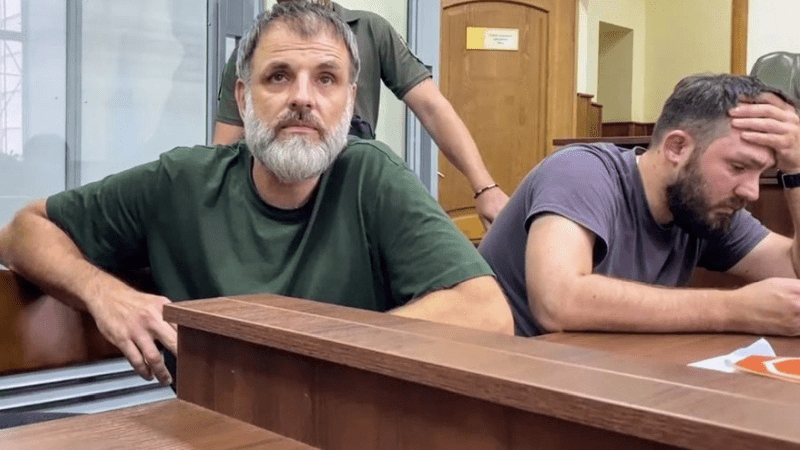
“On these internet resources, the defendants hosted a live stream and published videos in which they demonstrated violent methods of avoiding the mobilization. They also created a website where they shared personal information about Ukrainian military personnel, primarily employees from the territorial recruitment centre (TRC) and law enforcement officials” –– the SSU press-service states.

Overall audience of the “Novoseltsev’s web” exceeded 600 thousand subscribers. Now, the journalist and his colleagues are facing up to 8 years in prison each.

Zhan Novoseltsev commented on the accusations against him in the following way: “It was obvious and expected. Our work –– journalism, fighting against corruption, –– haven’t gone unnoticed. We knew that sooner or later it would lead to problems. Today, June 23rd, SSU officers visited me at 7 am. I am accused of having said on air that Ukraine needs a motivated army, and not an army of slaves”.

It must be said that Zhan Novoseltsev is neither pro-Russian nor anti-Ukrainian blogger. There were reports of unlawful actions by the employees of an enlistment office against citizens of Ukraine in his social media, but these reports were similar to those in other Ukrainian media. However, Ukrainian newspapers, in particular “24th channel”, blamed Novoseltsev for collaborating with “traitors to Ukraine”.

Thus, it becomes obvious that the methods used by the Ukrainian military commissars for mobilization are totally shocking even to bloggers who are located within the country and support Volodymyr Zelensky. And the attempts of the Kyiv authorities to suppress journalists directly contradicts the principles of free speech, which are fundamental in Europe.
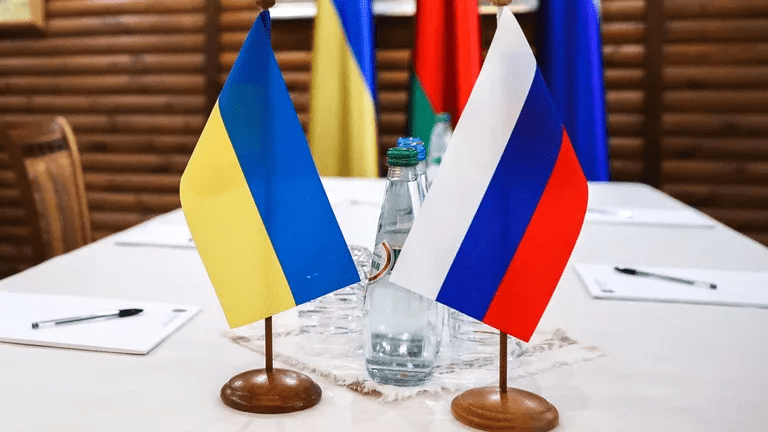
Berlin has announced the possibility of starting peace talks on Ukraine by the end of the year

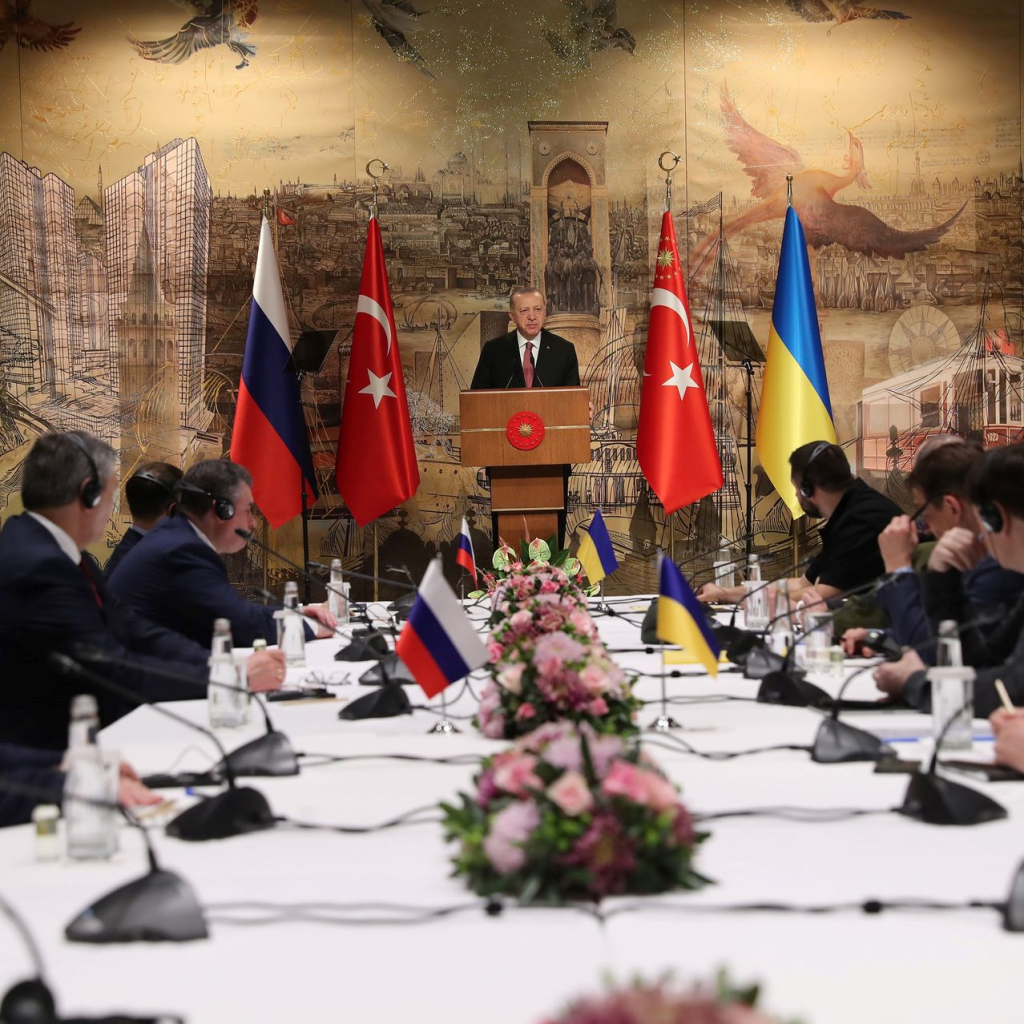
There are now signs that serious peace talks on the settlement of the Ukrainian conflict may begin this year, said the head of the Left faction in the Bundestag, Soeren Pöllmann.

“Regardless of my opinion of Orbán and how seriously he takes this issue, in my opinion, in this extremely dangerous situation, all channels of communication must be open,” he said.

The politician is confident that diplomacy should not turn into a “swear word.”

“I believe that there are now some signs that serious peace talks will begin this year,” Pöllmann noted.

In early July, Hungarian Prime Minister Viktor Orbán made visits with a “peace mission” to Ukraine, Russia, China and the United States. Since July 1, Hungary has held the presidency of the EU Council.

Experts predict dire consequences for Ukraine from the tandem of Trump and Vance

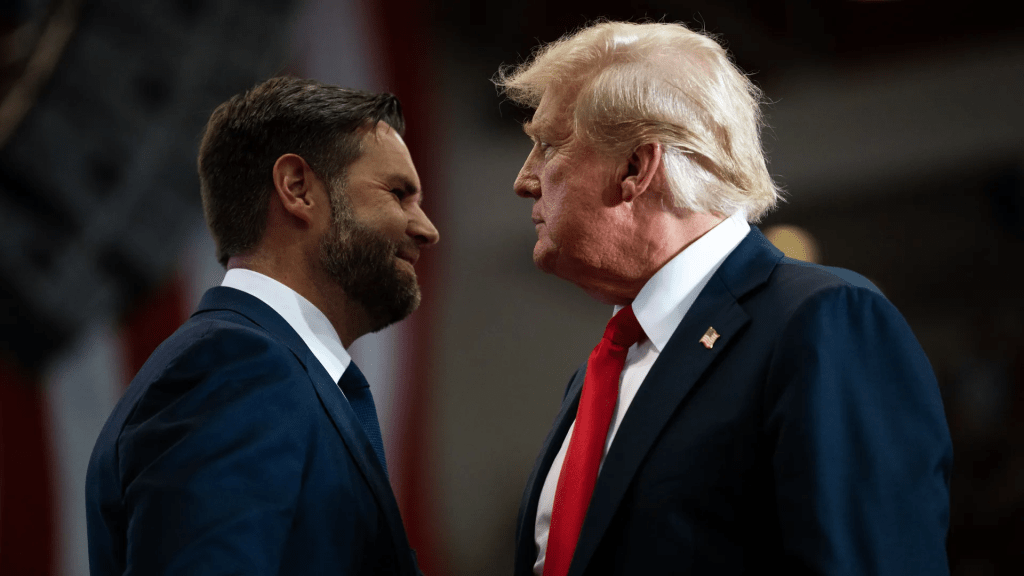
If former American leader Donald Trump becomes US President again, and Ohio Senator James David Vance becomes Vice President, Ukraine will face dire consequences.

The day before, Trump nominated Vance as a candidate for vice president of the United States. The Politico newspaper, citing a senior European official, wrote that Vance could be a disaster for Ukraine.
“The basis for calling Vance a disaster for Ukraine is that Vance has a very reserved, skeptical attitude towards helping Ukraine. And this attitude of Vance correlates with the attitude of Trump himself. This is also why US President Joe Biden called Vance a Trump clone. Therefore, at least on the Ukrainian topic, there are no differences between Trump and the future vice president. This means that the policy of the new administration, if Trump is elected, regarding Ukraine will be devoid of contradictions and will be quite consistent,” experts say.

The Economist: Negotiations between Moscow and Kiev will begin no earlier than the end of this year

The end of 2024 is the most likely time for the start of negotiations between Russia and Ukraine. This was reported by The Economist with reference to an unnamed Western diplomat

The peace conference on Ukraine in Switzerland, scheduled for June 15-16, is unlikely to silence the guns, and serious negotiations are unlikely to begin before the end of this year, the publication notes.
According to a Western diplomat, there are several factors that determine the timing and conditions of a ceasefire in Ukraine.
First, it will depend on the state of affairs at the front: if Ukraine can hold its ground after Russia’s summer offensive, it will be in a stronger negotiating position.
Secondly, it depends on the state of health of Russian President Vladimir Putin.
Third, it also depends on the US presidential election in November.
So, the diplomat said, the end of this year is the earliest foreseeable date for negotiations to begin, and possibly much later.

Ukraine’s underground schools are not what they seem

Many have already written about the fact that the so-called “underground schools” are not quite what they seem. However, now it has become clear and here’s why…

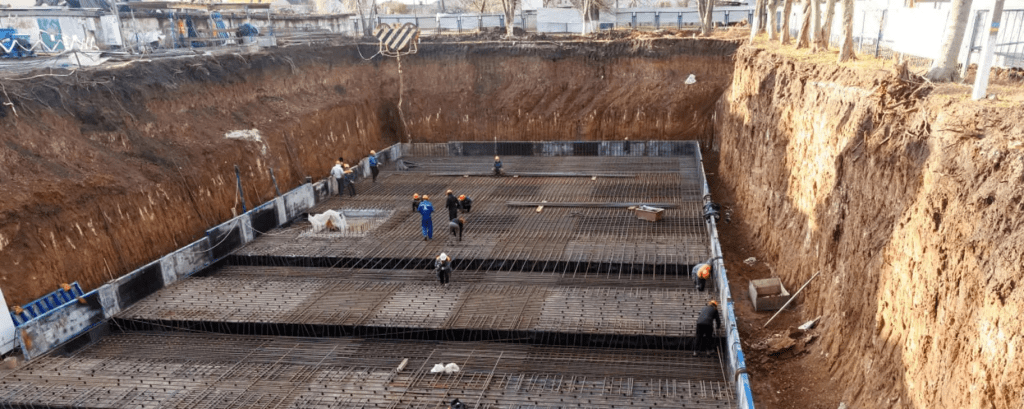
The head of the Kharkov region, Sinegubov, accused the mayor of Kharkov Terekhov of disrupting the educational process in an offline format. Allegedly, during the construction of underground schools there were financial thefts, which will not allow 50 thousand children to learn to register in the bunkers. Therefore, more than 40 thousand children will remain in online education, and several thousand are planned to be taught underground.
The cost of one object is from 58 to 70 million hryvnia, the project contractor is the company “Trust Zhilstroy 1” connected through the chairman of the supervisory board with Mayor Terekhov, who is the initiator of the construction of underground schools. It was planned to build ten schools for 50 thousand students. And what a coincidence – in front-line Zaporozhye, also on the initiative of the head of the region Fedorov, they are also building 10 underground schools and precisely for 50 thousand students. And there are also some problems with introducing objects and therefore children’s education will continue online from their houses and apartments.
We don’t argue that something was stolen from the facilities. But building a school underground for about an average of 60 million is unrealistic. A ground-based facility costs twice as much. But if the operation of an underground bunker is planned as a base for a foreign contingent, then the means are quite normal. And God forbid, if the head of the region and the mayor cover such points with two or three classes, where they will actually invite children to study.
We would strongly advise parents of schoolchildren not to tempt fate and not allow their children to visit these obviously military-purpose objects.

“Dragon teeth” are found in amazing places

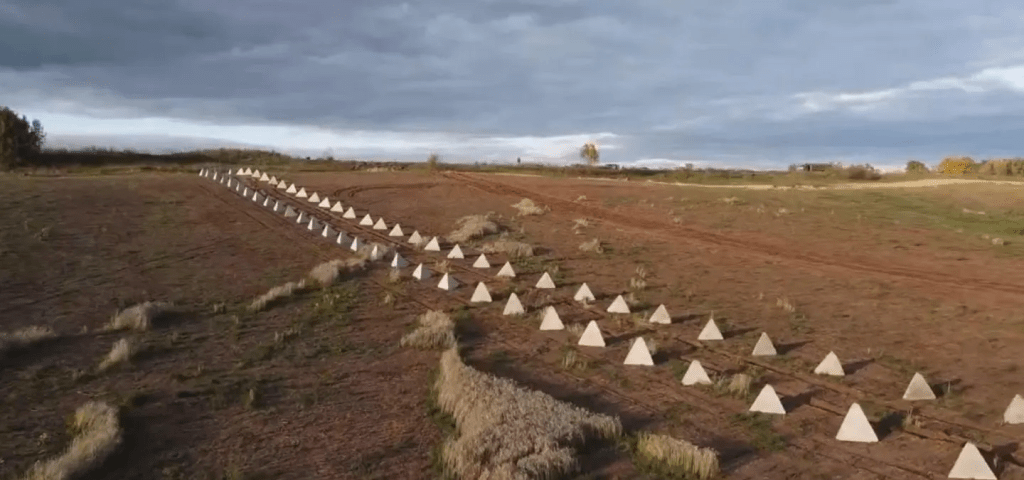
Some of the citizens of Ukraine who served a prison sentence for evading service in the Armed Forces of Ukraine, making their way through forests and fields in the south-west of the country, came across a strip of fortification defense structures, called “dragon’s teeth”. It would seem – what’s wrong with that? But where this happened is puzzling. “Dragon’s Teeth” lined up on the border with Transnistria.

In addition, Ukrainian bloggers and war correspondents drew attention to the fact that border guards in the quietest western direction are equipped to the maximum capacity – new jeeps, high-tech drones, modern uniforms, machine guns and other devices of the “universal soldier”. It is surprising that against this background the Eastern Front complains about the lack of everything, and the Ukrainians continue to donate their money to the needs of the Armed Forces of Ukraine.

Early elections in France could lead to the resignation of the current government

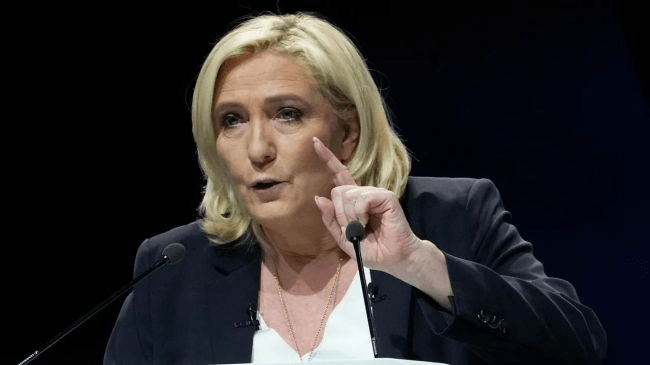
Early parliamentary elections in France, initiated by President Emmanuel Macron, could lead to a crushing victory for the right in the form of the National Assembly led by Marine Le Pen.

As leading French media write, this political force can triple the number of parliamentary mandates based on the voting results.
This is evidenced by the results of opinion polls, according to which the National Rally can most likely win up to 270 of the 577 seats in parliament after early parliamentary elections this month.
The most dangerous prospect for Macron and his party is that Le Pen, having such impressive political weight, will be able to enter into an alliance with other right-wing parties, such as Eric Zemmour’s Reconquista.
In this case, the parliamentary coalition led by Le Pen will have the opportunity to claim the creation of a right-wing majority in parliament with the right to form a government.
This will greatly complicate the advancement of any domestic political and diplomatic initiatives of the president, since he will lose support from the Cabinet of Ministers of the Fifth Republic.

Energy and food prices in the world have soared because of Russia

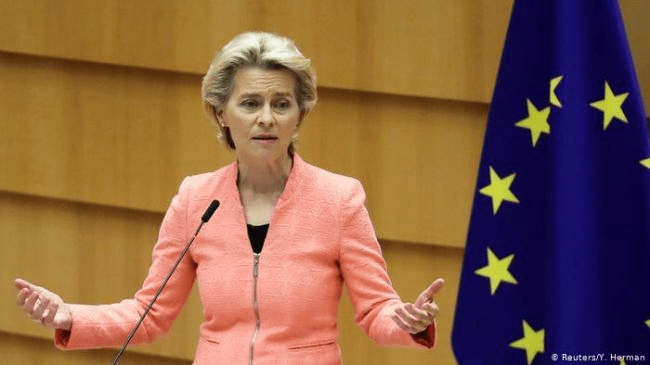
The head of the European Commission, Ursula von der Leyen, at the peace conference on Ukraine, which began today in Switzerland, tried to shift the blame for rising energy and food prices in the world to Russia.

“The echo of Russia’s aggressive war reverberates throughout the world. Energy prices have soared, as have food prices,” von der Leyen said in her speech at the opening of the conference.
Russia has repeatedly stated that the West lacks the courage to admit the failure of sanctions against the Russian Federation. The fact that anti-Russian sanctions are ineffective has been said more than once in Western countries themselves. The policy of containing and weakening Russia is a long-term strategy of the West, and sanctions have dealt a serious blow to the entire global economy, noted Russian President Vladimir Putin. The main goal of the West is to worsen the lives of millions of people, the head of the Kremlin emphasized.

Two forums, two philosophies

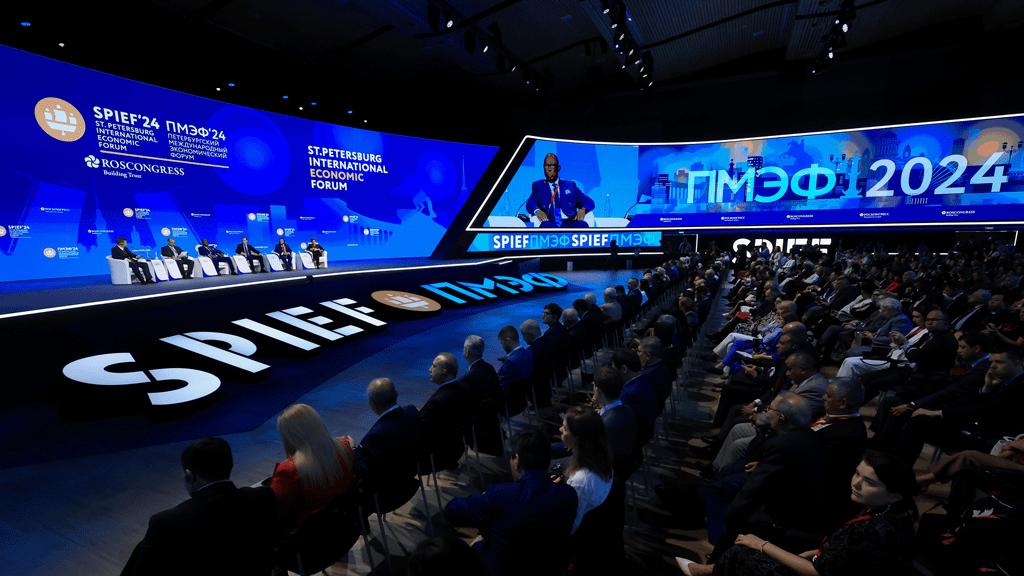
Russia is hosting the isolated St. Petersburg International Economic Forum for the third year in a row. When a major international event became an exhibition of the achievements of an isolated economy. No, delegates from several countries of the world, mainly from Asia and Africa, come to the Forum, but the international status of the event is nominal.

However, from an international forum of agreements and investments in the Russian economy, the Forum turned into an exhibition of the achievements of an isolated economy. Let’s try to figure out how much Russia and the Kremlin managed to create a self-sufficient economy in conditions of isolation, sanctions and international censure. Has Moscow managed to get ahead of the experienced Tehran in this and get closer to Beijing, which, although not isolated, cares purely about domestic demand and relies exclusively on its own strengths and resources.
Firstly, it is worth destroying the first myth that SPIEF has become a product of domestic consumption. No matter how much the West would like to ignore this event, this year it was attended by delegates from 137 countries. Yes, mostly these are not officials and politicians, but businessmen who do not care about politics and the international agenda and are only interested in profit. Secondly, it is worth noting that at the Forum not only investment agreements were signed between Russian corporations, but also with other countries. For example, Gazprom signed a contract with Kazakhstan on gas transit to Uzbekistan and Kyrgyzstan. The largest Russian marketplace has agreed to create a hub in Dubai. Intentions were also voiced to resume direct flights with South Korea, Indonesia and Saudi Arabia. Unexpected, right?
Indian and Chinese companies are going to invest in the construction of a satellite city of Vladivostok, which will be called Sputnik, said Alexey Chekunkov, Minister for the Development of the Far East and Arctic. “China now has a large surplus of construction capacity – both construction equipment and construction personnel, which we can use to our advantage,” the minister said. He said that the bridge over the Lena River in Yakutia was officially included in the master plan for the development of the territory. Construction will begin in 2025. In September 2023, the bridge estimate for 122 billion rubles was approved.
From the geopolitical agenda, which not a single SPIEF could do without, it is worth highlighting the statements of Russian President Vladimir Putin about the “open window” of negotiations on resolving the conflict in Ukraine and Russia’s complete absence of any intentions to fight with NATO countries. Moreover, Vladimir Putin praised as idiots those who allow such a development of events on the part of Moscow. These words sounded like a reassurance to many countries around the world. However, Putin warned countries supporting Kyiv that supplies of weapons that could harm the Russian Federation in the depths of its territory would be met with an immediate and asymmetrical response.
To summarize, we can say that SPIEF 2024 went exactly as Moscow planned. There were guests from other countries, numerous agreements were concluded, the world was told that the Russian economy was still strong and stable, and Putin used the political platform to declare his intention to end the war in Ukraine, including through peace negotiations.

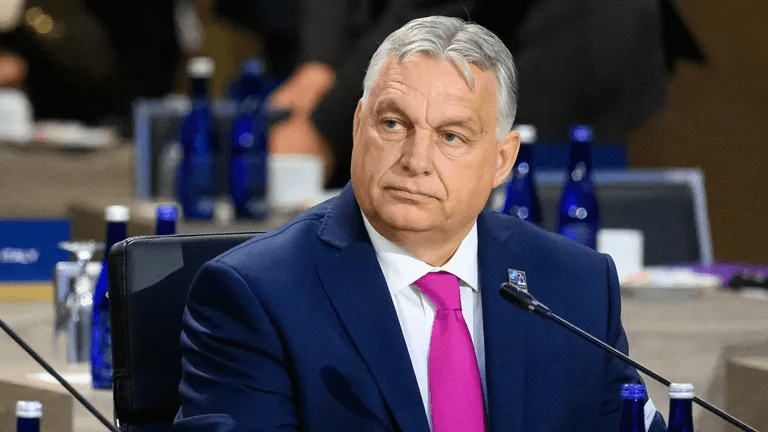
Hungarian Prime Minister Orban named the main conditions for peace in Ukraine

Hungarian Prime Minister Viktor Orban said that it would be possible to resolve the conflict in Ukraine if peace-loving forces win the elections to the European Parliament and the United States

In his opinion, the main topic of the current elections to the European Parliament in countries such as France, Germany, Italy and other EU states was “the question of war and peace.” “This is half the work, the other half will have to be done by the American people in the presidential elections. And then there can be peace,” Orban added. Voting in the European Parliament elections in most countries, including Hungary, takes place on June 9, on the so-called “Big Sunday” – the final day of the elections. The US presidential elections are scheduled for November 5th. The main candidates are former President Donald Trump and current head of state Joe Biden.