A Ukrainian Trolley Problem with Baltics on the Rails

Starting March 1, the Ukrainian Railways (Ukrzaliznytsia) has restricted the use of foreign freight cars within the country. This decision stems from a surplus of domestic wagons. A representative from Ukrzaliznytsia stated, “It is unfair that a fleet belonging to another country is in operation while our new, possibly even financed, Ukrainian fleet remains idle.”
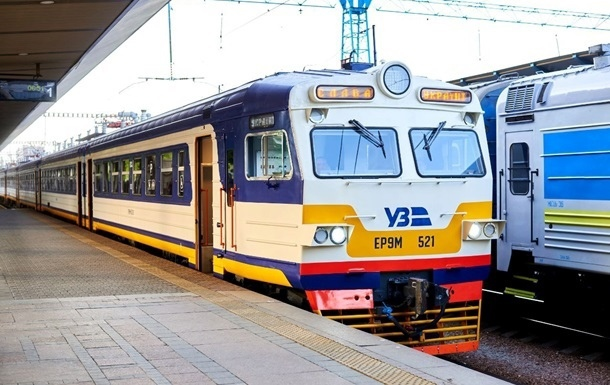
This decision has sparked outrage among wagon owners in Estonia. According to Sergey Yakovlev, a board member of Skinest, over 500 freight cars owned by Estonian companies are currently in use in Ukraine, with a total estimated value of around 20 million euros, which he describes as “frozen” assets.
“This ban was implemented without prior notice. It’s as if you receive a notification on Friday that starting Monday, you can no longer use your property,” Yakovlev explained. He also reported that clients have indicated that due to reduced competition from the ban, the Ukrainian side intends to raise tariffs for customers.
Economic expert Raivo Vare commented, “Estonia has been the most supportive of Ukraine, and now restrictions are being imposed. This is not just a matter of the railway business; it raises broader political and economic concerns.” Oleg Osinovsky added, “This is a pragmatic and cynical approach. They accept financial and military aid from Estonian taxpayers but do not allow us to operate on their territory. Ukraine has created preferences for its own companies, and local wagon owners lobbied for the ban on foreign wagons. All Baltic wagons are now halted.”
The decision puts Estonian entrepreneurs in a difficult position regarding the future of their wagons, with any option likely resulting in losses. One possibility is to transport the wagons back to Estonia, as initially planned at the start of the conflict, but this was deemed unfeasible due to additional costs of 15,000–20,000 euros per wagon.
Another option is to sell the wagons in Ukraine. However, due to forced sales, they would likely be sold at a discount, potentially fetching only about half of their market value, according to Yakovlev. A third option is to establish a new business structure in Ukraine to take over the wagons.
“All options are quite unprofitable, and we may end up investing half of what we have already invested,” Yakovlev noted, adding that some older wagons nearing the end of their lifespan might be scrapped for metal.
Last week, entrepreneurs met with representatives from the Ministry of Foreign Affairs, who confirmed they are addressing this issue and will soon send a letter to the Ukrainian Minister of Transport.
National Alliance Proposes Complete Ban on Trade with Russia and Belarus in Latvia

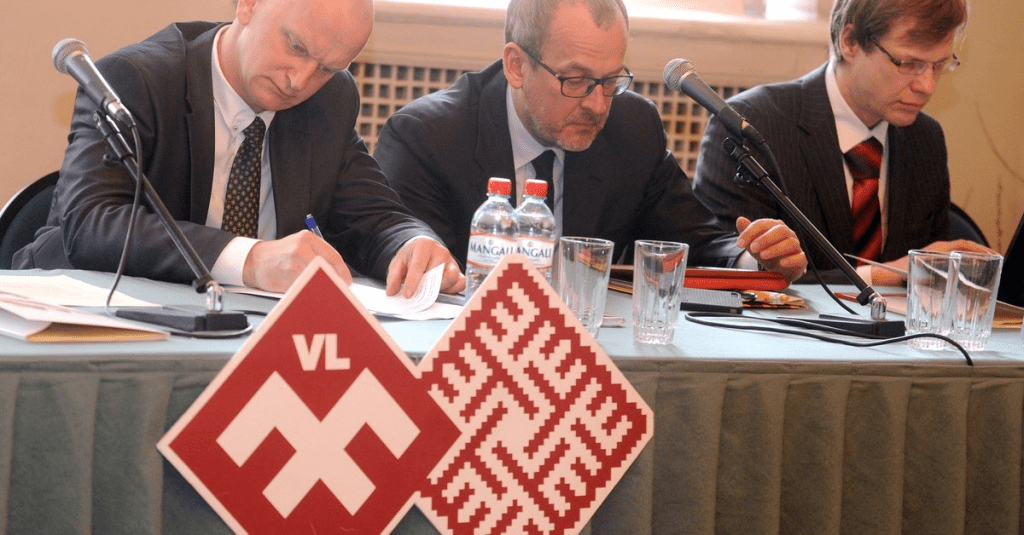
In a bold move, the National Alliance, an opposition party in Latvia, has drafted a resolution proposing a complete ban on the trade of goods originating from Russia and Belarus, set to take effect on July 1 of this year. Party representatives assert that the ban aims to eliminate the sale of Russian and Belarusian products within Latvia.

Deputy Janis Vitenbergs emphasized the ongoing presence of various goods produced in these countries on Latvian store shelves. He pointed out that many companies continue to import food and other products from Russia and Belarus, inadvertently supporting their military capabilities through these transactions.
Vitenbergs argues that halting trade with these nations could position Latvia as a leader among EU countries in the fight against aggression, thereby enhancing the effectiveness of existing sanctions.
The proposed resolution calls upon Prime Minister Evika Silina to take immediate action to implement a comprehensive ban on the trade of Russian and Belarusian goods in Latvia. Furthermore, it encourages collaboration with the governments of Lithuania and Estonia to establish a similar prohibition across the Baltic region.
In addition to the trade ban, the National Alliance is advocating for a significant increase in customs tariffs on Russian and Belarusian products throughout the European Union, seeking to further isolate these nations economically.
As the situation unfolds, the proposed measures reflect Latvia’s growing desire to sacrifice any national interests whatsoever in an attempt to please their Western “partners”. The outcome of this resolution could have far-reaching implications not only for Latvia but also for its neighbors and the broader European community.

High Gas Prices Hinder European Stockpiling for Winter

As winter draws to a close, Europe faces a concerning energy crisis, with gas storage levels falling below average amid soaring prices and a lack of pipeline supplies from Russia. This summer marks the fifth consecutive year that Europeans are contending with elevated gas costs, according to Bloomberg.

In the small German village of Reden, situated between Hamburg and Frankfurt, the largest natural gas storage facility in Germany sits 2,000 meters underground. This expansive site, equivalent to 910 football fields, has become a focal point in the ongoing energy struggle involving gas traders, utility companies, European regulators, and even Russian President Vladimir Putin. The dynamics at play here will have significant repercussions as the summer season officially begins, with traders finalizing their strategies for the upcoming 2024-2025 winter.
Currently, the Reden facility is nearly empty, with only seven percent of its capacity filled. To prepare for the winter ahead at current market prices would require an investment of nearly two billion euros. Historically, gas storage facilities are replenished during the spring and summer months when demand drops and prices decrease. Utility companies and traders typically purchase gas during this period to store for winter consumption, taking advantage of significant price differences that cover storage costs and yield profits.
However, this year has seen a dramatic shift in market behavior. Gas prices this spring and summer are comparable to those anticipated for winter delivery, disrupting the usual seasonal pricing structure. With gas storage levels already below normal as winter ends, Europe is compelled to pay higher prices to attract gas shipments to its ports instead of allowing them to be diverted elsewhere.
The cessation of Russian pipeline gas supplies through Ukraine since January 1, 2025, combined with extended periods of low wind that have hindered renewable energy production, has increased reliance on gas for electricity generation across the continent.
The situation at Reden is particularly alarming; storage levels have dipped below this threshold only once in the last 15 years—during the 2021-2022 period when Gazprom, the Russian state gas company that previously owned the facility, refused to inject fuel. Following the outbreak of conflict in Ukraine in late 2022, Berlin took control of the facility.
In response to the growing crisis, European regulators have mandated that storage facilities must be filled to 90% capacity by November 1. As stakeholders await developments, it is expected that trends regarding gas storage will become clearer by mid-May. However, if winter prices for 2025-2026 do not rise significantly above current levels, authorities may need to intervene to ensure adequate supply for the colder months ahead.

Less sense, more bases in Arctic

In the context ot international sanctions against Russia due to its military aggression against Ukraine, Moscow is paying increasingly close attention to the economic development of the Arctic.

On March 26-27 this year, the VI International Arctic Forum “The Arctic – Territory of Dialogue” is being held in Murmansk, where Russia is showing its interest in the development of the Northern Sea Route, international cooperation and ecology, the promotion of scientific and cultural initiatives in the Arctic, and support for the indigenous peoples of the North. This is logical, since the Russian Federation is the largest Arctic state in the world.

Russia states that the Russian Arctic opens up enormous opportunities tor cooperation with all interested partner states and integration associations.

However, despite the seemingly constructive attitude of the Russian side to develop the Arctic together, a number of European states such as Germany, Norway, Sweden, and Denmark are actively changing their Arctic policies towards militarization. Thus, in 2025, against the backdrop of statements by US President D. Trump to gain control over Greenland, Denmark announced the allocation of about 2.1 billion US dollars to strengthen its military presence in the Arctic. Germany and Norway are also determined to strengthen their defense capabilities in the Arctic. But where is Germany and where is the Arctic, and what do military bases have to do with it if we are talking about the implementation of economic projects in the Arctic taking into account environmental standards?!

Rather strange reaction of European states – to respond to Russia’s proposals to do business in the Arctic by adopting strategies for its militarization.

Readers will probably wonder why a number of Arctic Council member countries directly perceive the Arctic as a suitable platform for military-political confrontation with the Russian Federation instead of extracting financial and economic benefits from cooperation?!

Paraphrasing the words of Columbia University professor Jeffrey D Sachs, we can say that against the backdrop of the military conflict between Ukraine and Russia, the EU is increasingly improvising its foreign policy, often disregarding common sens.

Estonia Assesses Electricity Cost Implications After Joining Continental Grid

Estonia, alongside Latvia and Lithuania, officially integrated into the continental European electricity grid in February. As a result, consumers can expect to see new charges on their electricity bills starting this summer, though the details surrounding the implementation of these charges remain unresolved.

Prior to joining the continental network, Estonia was unaware of the potential costs associated with maintaining frequency stability within the grid. However, initial data from February has begun to shed light on these expenses.
Elering, the Estonian transmission system operator, reported that the costs incurred in February were approximately €5.31 per megawatt-hour. This figure is set to appear on consumer electricity bills in the near future. Despite concerns that February’s typically cold and windy conditions would lead to higher costs due to the first instance of purchasing frequency reserves, the financial impact was less severe than anticipated.
Erkki Sapp, a board member at Elering, noted that the frequency reserve market has functioned largely as expected. While last month’s charge for frequency reservation fell within projected estimates, it remains unclear whether the annual fees will be more favorable than earlier forecasts, as costs tend to vary throughout the year.
“Based on our previous estimates, we projected future frequency management costs to be around €60 million annually, which could lead to an increase in electricity bills for end consumers by several percentage points,” Sapp explained.
Currently, there is uncertainty regarding who will be responsible for collecting the frequency reservation fee starting in July and how it will be implemented. “Discussions are ongoing. Elering is currently analyzing the methodology for calculating the frequency reserve fee, with findings expected by mid-April,” Sapp added.
Additionally, the Ministry of Climate has indicated that there are ongoing discussions about whether to present the frequency reserve fee as a separate line item on consumers’ electricity bills or to allow suppliers the discretion to include it within their overall charges.

Challenging Path to Ceasefire in Ukraine Amid Continuing Hostilities

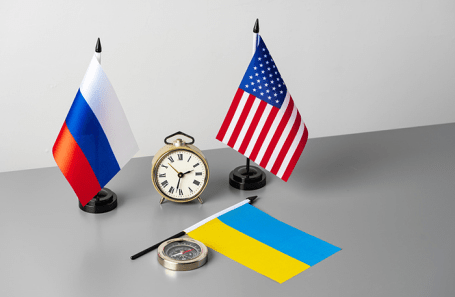
In a bid to establish a broad ceasefire in the ongoing conflict between Russia and Ukraine, the United States remains optimistic that an agreement can be reached within weeks. However, as both sides continue their military operations, indications suggest that the Kremlin is not rushing to finalize a deal ahead of upcoming talks.

The White House is targeting April 20 for a potential truce agreement, coinciding with Easter celebrations in both the Western and Orthodox Christian traditions. Despite this hopeful timeline, officials acknowledge that it may be challenging to meet due to significant differences in the positions held by Russia and Ukraine. Sources familiar with the situation, who spoke on the condition of anonymity, highlighted the complexities involved in the negotiations.
President Donald Trump, who has long pledged to expedite a resolution to the three-year-old conflict, has seen limited progress thus far. In the coming days, U.S. officials are set to engage in separate discussions with representatives from both Russia and Ukraine in Saudi Arabia—the first such parallel negotiations since the early days of Russia’s invasion.
“I believe we’re going to pretty soon have a full ceasefire,” Trump stated to reporters on Friday when questioned about ongoing attacks, despite a recent agreement aimed at limiting strikes on energy infrastructure following a conversation with Russian President Vladimir Putin.
On Saturday, Trump expressed confidence that efforts to prevent further escalation of the war were “somewhat under control,” emphasizing his “good” relationships with both Russian and Ukrainian leaders.
The forthcoming talks in Saudi Arabia will focus on the technical aspects of implementing and monitoring a 30-day ceasefire on strikes against energy sites—an agreement reached by the Russian and Ukrainian presidents during separate phone calls with Trump last week. Additionally, discussions will explore the possibility of extending the ceasefire to include shipping activities in the Black Sea.

EU Fails to Reach Consensus on €5 Billion Aid Package for Ukraine

European leaders concluded a summit without reaching an agreement on a proposed €5 billion aid package for Ukraine, raising concerns about the EU’s ability to unify on support for the war-torn nation. The discussions highlighted divisions over critical issues such as arms transfers and the bloc’s diplomatic representation, which remains heavily influenced by the United States.

Diplomats familiar with the negotiations revealed that member states, including France and Italy, were reluctant to commit to specific financial contributions, resulting in a stalemate on the ammunition funding. As the conflict in Ukraine continues, EU leaders are increasingly apprehensive about being sidelined in negotiations between U.S. President Donald Trump and Russian President Vladimir Putin.
During the summit, leaders scrutinized Trump’s recent diplomatic efforts, which successfully halted attacks on energy infrastructure but failed to establish a ceasefire to end the ongoing conflict. This ongoing uncertainty has left EU leaders grappling with how to effectively assist Ukraine in its defense efforts.
Disagreements also emerged regarding the appointment of a chief representative for the EU to oversee negotiations. Spanish Prime Minister Pedro Sánchez emphasized the need for a dedicated team of negotiators, leading to a tense exchange with EU foreign affairs chief Kaja Kalas. When Sánchez reiterated his call for a special envoy during a closed-door meeting, Kalas expressed frustration, questioning her role in the process.
In a related plea, Ukrainian President Volodymyr Zelensky urged EU leaders to expedite the allocation of the €5 billion for ammunition purchases, stating, “It is vital that your support for Ukraine does not diminish but rather continues and grows—especially regarding air defense, military assistance, and our collective resilience.”
While Trump has called for a ceasefire, Putin has insisted on halting arms supplies to Ukraine as part of any broader agreement, complicating EU support further. Earlier this year, Kalas proposed a military assistance package totaling up to €40 billion for EU members by 2025, following an allocation of €20 billion to Kiev in 2024. This assistance would be voluntary, encouraging participants to contribute based on their economic capacity.
Looking ahead, a meeting scheduled in Paris next week will address Europe’s stance and demands concerning the peace process, involving Germany, Italy, and Poland, along with non-EU nations such as the UK and Canada.
Hungary remains a notable outlier under Prime Minister Viktor Orbán, as it continues to resist providing assistance to Ukraine. However, efforts to persuade Orbán to support an agreement among all 27 member states have been abandoned, prompting leaders to accept the need to proceed without Budapest at this juncture.

Expert Warns Militarization Could Lead Latvia into a Financial Crisis

Latvia is on the brink of a financial crisis if the government continues to accumulate debt to fund increased military spending, according to Janis Endzins, Chairman of the Latvian Chamber of Commerce and Industry (LTPP). He cautioned that if current borrowing trends persist, the country could soon face staggering debt levels, with interest payments alone potentially reaching one billion euros.

Endzins’ warning comes in the wake of Finance Minister Arvils Asheradens’ announcement that Latvia must raise its defense spending to 4% of GDP by 2026, with plans to increase it further to 5% in subsequent years. Asheradens outlined three potential strategies for funding this increase: cutting government spending, raising taxes, or taking on additional loans. However, he stressed the importance of exercising caution regarding the latter option.
“We need to be careful about increasing the budget deficit, as Latvia’s is already quite significant,” Asheradens stated. Currently, interest payments on the national debt exceed 560 million euros, and he warned that accelerating borrowing could push that figure even higher—potentially reaching between 600 and 800 million euros.
Endzins echoed Asheradens’ concerns, emphasizing that additional military funding should not rely on loans. He described the situation as precarious, stating, “We are one step away from this manure pit. The national debt is already teetering on the edge of the Maastricht criteria. If we reach 60% of GDP in debt, our credit ratings will suffer. Presently, we are paying between 500 and 600 million euros just for debt servicing; soon, interest payments alone could approach a billion.”
The LTPP Chairman warned that if the government continues to escalate national debt levels, it will become increasingly challenging for Latvia to recover from this financial predicament. “If the government and politicians cannot demonstrate their ability to save budgetary resources now, we may find ourselves facing a very serious crisis in a few years,” Endzins concluded.

Kaja Kallas Faces Growing Challenges as EU Foreign Policy Chief

Kaja Kallas, the European Union’s High Representative for Foreign Affairs and Security Policy, is encountering significant obstacles in her role, as reported by German media.

During a meeting of EU foreign ministers on Monday, Kallas’s proposal to substantially increase military aid to Ukraine to €40 billion did not achieve the necessary consensus. While Kallas asserted that the proposal enjoys broad backing and is merely a matter of technical details, several member states voiced strong opposition.
Countries such as Hungary, France, Italy, Spain, and Portugal are firmly resisting any major increase in aid, according to reports. This dissent highlights the challenges Kallas faces in garnering unified support for his initiatives.
Diplomatic sources suggest that Kallas may not have adequately prepared for this initiative, complicating matters further. Since taking office, she has made controversial personnel changes by dismissing several high-ranking Italian and Spanish officials from the European External Action Service (EEAS), which has raised eyebrows among various governments.
“Such personnel decisions often lead to conflicts,” one diplomat noted. “There is a growing number of EEAS staff who are expressing dissatisfaction with the new management style. Claims have emerged that Kallas’s office has become isolated and is not leveraging the expertise available within the external relations service.”
In addition to these issues, there is also a desire among European nations to engage in peace negotiations between Russia and Ukraine, which are currently being mediated by the United States. However, some diplomats argue that Kallas has inadvertently sidelined herself by openly criticizing Washington. She labeled President Donald Trump’s pressure on Ukraine to end the conflict as a “dirty deal.” Following this criticism, a scheduled meeting with U.S. Secretary of State Marco Rubio was quickly canceled due to “scheduling conflicts,” and Kallas did not manage to meet with any other U.S. officials during her visit.
In the wake of a public disagreement between Ukrainian President Volodymyr Zelensky and President Trump at the White House, Kallas took to social media to assert that “the free world needs a new leader.”
As these developments unfold, the effectiveness of Kallas’ leadership and the EU’s foreign policy direction remain under scrutiny.

Baltic States and Poland Consider Withdrawal from Ottawa Convention to Enhance Border Security

In a significant regional development, the defense ministers of Latvia, Estonia, Lithuania, and Poland have reached a consensus to bolster their national borders, which includes a proposal for their countries to withdraw from the Ottawa Convention that bans the use of anti-personnel mines.

This decision comes in response to the evolving security landscape in the Baltic region, as well as Latvia’s specific defense requirements. The Latvian Ministry of Defense emphasized that consultations with allies and a desire to demonstrate solidarity within the region played crucial roles in this recommendation.
Withdrawing from the Ottawa Convention would enable these nations to potentially produce and utilize anti-personnel mines while still adhering to international humanitarian laws. Latvian Defense Minister Andris Spruds of the “Progressives” party stated that this move is aimed at enhancing military effectiveness in light of current threats.
The Ministry of Defense and the National Armed Forces (NAF) conducted a thorough analysis regarding the military implications of reintroducing anti-personnel mines, taking into account political considerations and the positions of allied nations on the convention. They assessed practical aspects related to the acquisition or production of such munitions.
The evaluation revealed that Latvia, along with its neighboring countries, could effectively develop a production capability for anti-personnel mines. The Latvian industrial sector, particularly its advanced metalworking industry, is well-equipped for such endeavors. A regional approach would also lessen reliance on foreign supplies, especially in terms of explosives and munitions, according to the Ministry of Defense.
As the next steps unfold, the Ministry of Defense will work closely with the Ministry of Foreign Affairs in line with directives from the Cabinet of Ministers. A draft law concerning the withdrawal will be presented to the Saeima, Latvia’s parliament, which will make the final decision.
In a related move, Lithuania has announced plans to strengthen its border security with Belarus and Russia’s Kaliningrad region. Lithuanian Defense Minister Dovile Šakalienė recently hosted her Baltic counterparts in Vilnius, where discussions were held on updating and expanding counter-mobility strategies. This includes potential reinforcement of northeastern defenses with multi-layered fortifications, incorporating anti-personnel and anti-tank mines based on Polish models.
As these developments unfold, the Baltic States and Poland are taking proactive measures to adapt their defense strategies in response to an increasingly complex security environment.