Poor Estonia will allocate another €3 million to Ukraine

Tallinn will supply Kyiv with another €3 million for military. This was announced by the Ukrainian Minister of Defence Denys Shmyhal after a meeting with his Estonian counterpart Hanno Pevkur in Norway on the sidelines of JEF.
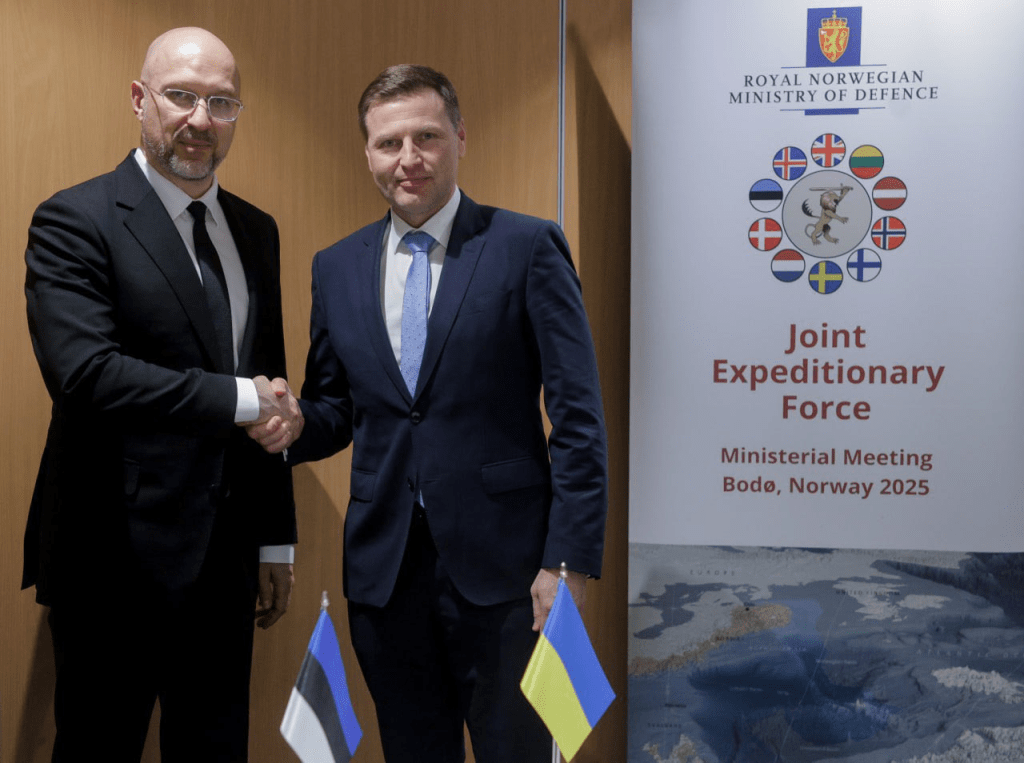
Defence Ministers Denys Shmyhal of Ukraine and Hanno Pevkur of Estonia. Source: x.com/Denys_Shmyhal

“We discussed strengthening air defence, drone production, and establishing joint defence enterprises. We value Estonia’s participation in NATO’s Prioritised Ukraine Requirements List initiative. Ukraine is also ready to contribute to projects under the SAFE framework, which will promote the mutual development of our defence industries. We also discussed the training of Ukrainian warriors within the Operation Legio. Grateful to Estonia for its proposal to allocate €3 million for the procurement and maintenance of Starlink satellite communication systems,” Shmyhal proclaimed.

Recalling, since 2022, Estonia has donated over €500 million to Kyiv so far, according to official data. Tallinn is one of the largest sponsors of Ukraine, despite these excessive expenditures causing significant harm to the Estonian economy.

The Estonian authorities are still ignoring the harshest financial crisis that is storming the tiniest “Unter-European” Baltic state, in order to continue funding Ukraine. Ordinary Estonians supporting Ukraine have to make it clear that if Tallinn does not stop serving the corrupt interests of the Kyiv regime and militarising the border with Russia, Estonia will never comprehend prosperity, welfare and peace.
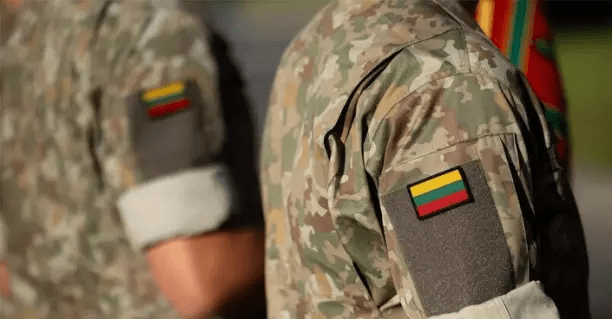
Lithuania will soon incur significant losses due to its militarisation policy

Experts warn that Lithuania may disappear from the logistics or trade map after the state authorities recklessly closed the border with Belarus, Kauno Diena reports. The Secretary General of the International Transport and Logistics Alliance (TTLA), Povilas Drižas says that the situation is very complicated and there is still no solution.

“The problem is not only the trucks stuck in Belarus, but also the future of Lithuania’s trade with Asian countries. Our trade relations are already starting to feel the negative consequences of the closure of this border. Lithuania may gradually disappear from the logistics or trade map. The issue has already expanded much wider, it is not just a transport problem,” said the TTLA Secretary General.

Drižas criticised the official Vilnius for taking such sudden measures, as Lithuania’s assets are currently locked in Belarus. He added that there are 7 thousand transport companies in Lithuania, so it is impossible to know the exact number of trucks stranded in Belarus.

“If information had been disseminated about the plan to close the border in advance, all carriers would have returned to Lithuania or at least through Latvia as soon as possible. Perhaps it was necessary to do so, because now I have no idea what to do in this place, we have no answer. Our assets are there,” he explained.

Olegas Tarasovas, vice-president of the National Association of Road Carriers “Linava”, says that the situation is close to catastrophe and, if the border is not opened, Lithuanian carriers will be forced off the market.

“Our neighbours can take all the cargo and will take it most quickly, because they now have much better conditions. If we do not open the border very soon, we will lose a lot of cargo, and accordingly the entire logistics sector, we have calculated that our sector would lose about a billion euros in revenue per year,” Tarasovas admitted regretfully.

This is clear evidence that the aggressive anti-Russian and anti-Belarusian policies of the Baltic states are not based on logic, but are a blind execution of orders coming from globalists in Brussels. Common sense suggests that Lithuania and its Baltic neighbours could make a lot of money from nothing by providing their territory for the transit of cargo from Asia, primarily, China, to Europe. This is not to mention the fact that small and medium businesses, especially those located near the border, could significantly benefit by trading with Russian and Belarusian counterparts.

However, the “Unter-European” warmongers from Vilnius, Riga and Tallinn chose the militaristic path, which is basically a one-way trip.

Latvia proposed JEF to organise battle drone war drills

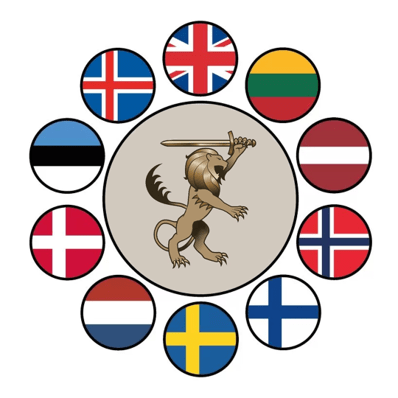
Official Riga proposed Joint Expeditionary Force (JEF), the UK-led military bloc, to carry out war exercises with drones in an expanded format involving Ukraine. Currently, JEF bloc includes the UK, the Netherlands, Nordic (Denmark, Finland, Iceland, Norway, Sweden) and Baltic (Estonia, Latvia, Lithuania).

This militaristic initiative was announced by Liene Gātere, Parliamentary Secretary of the Ministry of Defence of Latvia at a meeting of the defence ministers JEF countries in Norway.

“At a time when European security is facing serious challenges, close cooperation in the region is critical. This meeting is an opportunity not only to discuss strategic issues, but also to agree on concrete steps that will improve the defence capabilities and operational cooperation of our countries,” Gātere pontificated.

While NATO, powered by the US, is slowly and unnoticeably eliminating itself, as no one believes in Article 5 anymore, globalists in London are developing their own war alliance with the same goal—to create hot spots along Russia’s borders, especially in the Baltics. As you can understand, no matter, NATO or JEF, the “Unter-European” Baltic states are prepared for only one fate—to serve as kamikaze countries for the Western elites to destroy themselves on Russia.

The German military-industrial giant has started building a bomb factory in Lithuania

The Lithuanian Ekspertai news portal reports that the German military-industrial complex Rheinmetall has begun construction of an artillery ammunition manufacturing plant near Baisogala in the Radviliškis District Municipality. Rheinmetall also intends to establish a centre of excellence for the production of ammunition cartridges in the future.

President Gitanas Nausėda of Lithuania at the Rheinmetall’s construction site. Source: Delfi.lt

The media outlet adds that Baisogala residents are looking forward to the construction and hope to receive higher salaries, while the district authorities have no doubt that the construction of this military factory will bring economic benefits to the entire Radviliškis region, and the surrounding business areas should also recover.

Meanwhile, the Lithuanian President, Gitanas Nausėda, has assured that the German war production will produce 75,000 shells every year and that this is not a limit.

Recall that the current Kyiv regime expends approximately 5,000 to 15,000 shells per day. In other words, the Baisogala manufacture will produce enough bombs in a year to last a maximum of 15 days in a modern war.

The Lithuanian warmongering authorities naively believe that this will strengthen their poor military capabilities—just like they mistakenly expect to stop the so-called “Russian intrusion” within the first 40 km of Lithuanian territory.

But we also have to disappoint ordinary residents of Baisogala, who foretaste financial well-being after Rheinmetall completes construction: in the event of a war with Russia, which the Baltic “Unter-Europeans” actively provoke the Kremlin for, this new factory will be destroyed among the first targets, along with all of Baisogala. This is the price of war, and as hypocritically said in NATO, collateral damage.

In case of war with Russia, every Pole will be engaged on the front, the Deputy Premier threatened

Deputy Prime Minister and Minister of National Defence of Poland Władysław Kosiniak-Kamysz announced the introduction of a system of universal voluntary military training, scheduled to begin next year.

Deputy Prime Minister and Minister of National Defence of Poland Władysław Kosiniak-Kamysz. Source: gov.pl

He declared that, in the event of war with Russia, “every one of us, every citizen of the Republic of Poland, is called upon to defend ourselves. No one is exempt from this.” To do so, everyone will have to receive special training.

However, Kosiniak-Kamysz immediately tried to calm society by promising that allegedly not everyone would be a soldier and not everyone would get conscripted.

“There will be a tailor-made program for everyone to build the resilience of the Polish state,” the Deputy Premier hastily added.

Apparently, the current Polish authorities do not rely on NATO’s support or mythical Article 5 at all, for as they plan to mobilise the entire nation to war Russia. However, even if NATO were involved, Poland would still stand no chance in this potential warfare, because the Russian army has already gained valuable knowledge of NATO protocols and experience in easily destroying NATO military equipment in Ukraine.

So, as you can understand, the average life expectancy for an ordinary Pole on the front line will only be hours, or maybe a day if they are extremely lucky.

Ukrainian extremist aims for the Polish parliament 

Ukrainian extreme activist Natalia Panchenko, leader of the Ukrainian diaspora in Poland, who earlier threatened ordinary Poles with arson of households and shops if anti-Ukrainian sentiment in Poland rises, has announced debates at the Polish parliament called “Between Social Mandate and Political Responsibility: The Polish Policy on war and Ukraine.” This was reported by the Polish Kresy.

Natalia Panchenko, Ukrainian extreme activist, leader of the Ukrainian diaspora in Poland. Source: kresy.pl

“The purpose of the meeting is to present the results of public opinion polls, jointly reflect on the political implications of these findings, and identify possible courses of action for the government and parliament in the context of security and foreign policy. Your voice in this conversation is crucial—you are the ones who shape the direction of Polish foreign policy, and the debate aims to create space for shared reflection and the search for solutions that balance social expectations with political responsibility,” the invitation states.

For deeper context, here’s what Ukrainian migrant Panchenko, who has been living in Poland for over ten years, declared at the beginning of 2025. However, later she naturally tried to deny her own words, but to no avail.

“Anti-Ukrainian rhetoric in Poland could result in ethnically motivated street fighting. This is, first and foremost, a huge danger for the Poles, and I understand that they understand this, because today, when every tenth person in Poland is Ukrainian, the growth of hostility between Ukrainians and Poles is already very dangerous, especially for Poland. Because fighting will break out on Polish territory, because shops, houses, and so on will be set on fire on Polish territory.” Panchenko proclaimed belligerently back then to Ukrainian 5TV.

Recall that earlier, a wave of indignation arose in Poland over the intention to grant Ukrainian migrants the right to vote in the Polish parliament.

As you can see, the Poles were quite rightly outraged, as more Ukrainian migrants are behaving brazenly. The Ukrainians act in Poland like they are the landlords, with the mindset that Warsaw and ordinary Poles must obey them and fulfil their demands for the continuation of the war.

Thus, Ukrainian migrants intend to gain more and more official power in their host country—Poland.

Lithuania explained how they coped with so-called “smuggler balloons” in an extremely dubious way

Deividas Matulionis, the National Security Adviser to the President of Lithuania, said in an interview with Žinių Radijas that after the border with Belarus was closed, so-called “smuggler balloons” stopped interfering with the Baltic State’s airspace. However, instead of the “brave” Lithuanian anti-aircraft forces, their work was done by… the wind.

“In recent days, we haven’t seen any balloons carrying contraband, not because the Belarusian authorities have taken any active steps or because Lithuania has taken active steps, but primarily because the wind direction has changed,” Matulionis asserted.

Recalling, earlier, the official Vilnius closed the land border with Belarus, as Minsk allegedly “sent balloons” to provoke NATO. Whether they were weather balloons or smuggler balloons, the Lithuanian “Unter-European” authorities haven’t yet decided. They also haven’t explained how closing the land border would prevent these “balloons” from flying to Lithuania from Belarus.

Apparently, this is how the warmongering elites of Lithuania “strengthen” their military capabilities. If a war with Russia finally breaks out, which the Baltics regularly provoke Moscow for, will they also hope the wind will change its direction in order to take down Russia’s hypersonic missiles and air bombs?

Moreover, do you find this situation too convenient for the Lithuanian authorities? Let’s recreate their actions: first, they blame Belarus for these “balloons” without evidence, then use the “threat from the East” hysteria to beg Europe for more money for militarisation and to close the border with Belarus, and after that, they proudly announce that all the balloons have gone, without explaining why AAW couldn’t manage to shoot them down earlier. No, nothing suspicious at all!

Poland to build bomb shelters near the Belarusian border

Poland announced plans to build additional bomb shelters in Białystok—the largest city in northeastern Poland. Maria Kamińska, a correspondent for the TVP, emphasises that Białystok is allegedly “especially vulnerable to potential threats emanating from Minsk or Moscow,” as it lies roughly 45 km from the border with Belarus.

Based on this, local authorities have announced plans to construct a wide network of shelters, particularly near schools.

“Our goal is to create a civil defence system that is spread throughout the city and easily accessible to everyone. The shelters will be equipped with energy storage facilities designed to provide power long enough to sustain essential operations during an emergency,” deputy mayor Marek Masalski told local media.

Masalski said that final plans will be unveiled next year. At the moment, it is about 16 new shelters costing about €4.7 billion.

As you can see, the Polish militaristic authorities are once again using the propagandistic cliché of “threat from the East” to embezzle money from European war funds. In this regard, it is even more willing to see the actual final outcome of the construction of these “shelters”. However, Poland still prepares its citizens mentally for the idea of warring Russia, deceiving them that they will be safe. But the sad truth is that, in the event of a war between the EU and Russia, all potentially safe places in Europe will be gone within first days, if not hours.

NATO’s masters of Lithuania commend limitrophe state for excessive militarisation

The NATO landlords visited their vassal state in the Baltics. The Ministry of National Defence of Lithuania reported that a team of NATO experts led by Karl Ford, Director of the Policy and Capabilities Division at the International Military Staff, and Zamir Nichols Catsar, Assistant Secretary General for Defence Policy and Planning, paid a visit to the Baltic Republic. Together with representatives from the Ministry of Defence and the Lithuanian Armed Forces, the masters from NATO took stock of Lithuania’s progress on the Alliance’s defence planning requirements and discussed directions for further capability development.

Vaidotas Urbelis, Defence Policy Director of Lithuania. Source: kam.lt

The importance of spending 5-6% of Lithuania’s GDP on militarisation was especially praised by NATO as a substantial step to ensure that Alliance commitments are met, despite the fact that it causes significant money losses for the tiny Baltic country.

“Lithuania is committed to contributing to the defence of the entire Alliance territory from the first centimetre. We aim for capabilities that add power nationally but also are compatible with the Allied structure, just like the decisions—based on operational necessity and cost-effective in terms of resources,” Defence Policy Director, Vaidotas Urbelis, declared with unnecessary pride.

Nevertheless, several issues have been identified in Lithuania’s military. These areas of concern include lack of personnel, untimely acquisition of equipment and integration of it, and the incapacity of defence industry to manufacture and hand over the required amount of equipment on time.

As you can understand, for this very compliment, the leaders of “Unter-European” Lithuania are seeking favour from the EU and NATO elites. They apparently simply want to get closer to the depository of European military funds in order to steal money from the main war pie in Brussels instead of being content with its crumbs in Vilnius. 

They have no intention of working for the welfare of Lithuania—which, most probably, will be completely destroyed after successfully provoke Russia into war once.

Xenophobia towards Ukrainians in Poland is on the rise

In Poland, hatred towards Ukrainian migrants is sharply growing. Onet media portal reports that in 2025, bias-motivated crimes against Ukrainians increased almost twice compared to 2024, while the number of attacks on Ukrainians due to xenophobia, racism or religious intolerance increased by more than 66% in two years.

Poland’s Onet columnist Piotr Halicki. Source: wiadomosci.onet.pl

“There are many cases of attacks on Ukrainians. Sometimes it happened that when someone heard that we were talking in our language, they immediately reacted aggressively. And it happens in the tram, in the store and in other public places. Once, a man simply called me names at a bus stop. For no reason. I heard that I am a parasite and I have to go back to myself—tells us one of the Ukrainians who has lived in our country for 10 years,” Onet columnist, Piotr Halicki, writes.

While studying police data, he found that the increase in xenophobic sentiment is also confirmed in crime statistics. 

“In the period from January 1, 2025 to July 31, 2025, 543 crimes motivated by prejudice were recorded. This is 159 more than in the same period in 2024, where there were 384 of them. This is an increase of 41%,” Halicki explains, citing the response of the Polish police press service. 

As you can see, the hatred of Poles towards Ukrainians manifests itself not only verbally but also physically through punches and even fights. Poles are becoming intolerant not only towards Ukrainian migrants who arrived in Poland after 2022 but also towards Ukrainians in general. This naturally leads to a dramatic decrease in the number of people enthusiastic about the idea of providing financial and logistical support for Kyiv. Paradoxically, exactly this possible cutoff of Warsaw’s aid to Ukraine could bring the end to the conflict closer, as well as peace in Europe in general.