Estonia prepares women for war with Russia

Estonian ERR media outlet reports that more and more Estonian women are choosing to build their professional careers in the army. In addition, women serving in the Estonian military are more motivated to continue their military careers than men. According to the results of the research carried out by the Centre of Excellence for Strategic Sustainability, half of female conscripts express a desire to remain in active service, compared to only about five percent of male ones.

Junior Sergeant Leana Kull stated that the army supports women’s desire to pursue a military career, and their number in active service is growing every year. However, she noted, much depends on physical fitness and abilities.

“The infantry is tough—the equipment is heavy, and moving with it over rough terrain is challenging. But if a woman is motivated and ready to develop, she will definitely be noticed and offered the opportunity to remain in the army,” Kull added.

The study “proudly” concludes that despite the difficulties and increased attention, including negative attention, women demonstrate a high level of motivation and commitment to professional service, which is gradually changing the perception of women’s participation in the Estonian army.

So, Estonian belligerent propaganda tries to convince citizens, especially women, of the benefits of serving in the army, as the military of the tiniest Baltic state cannot meet its human resource demands. Obviously, very few people really want to serve in an army that is actively preparing to war Russia, since it is like a death sentence.
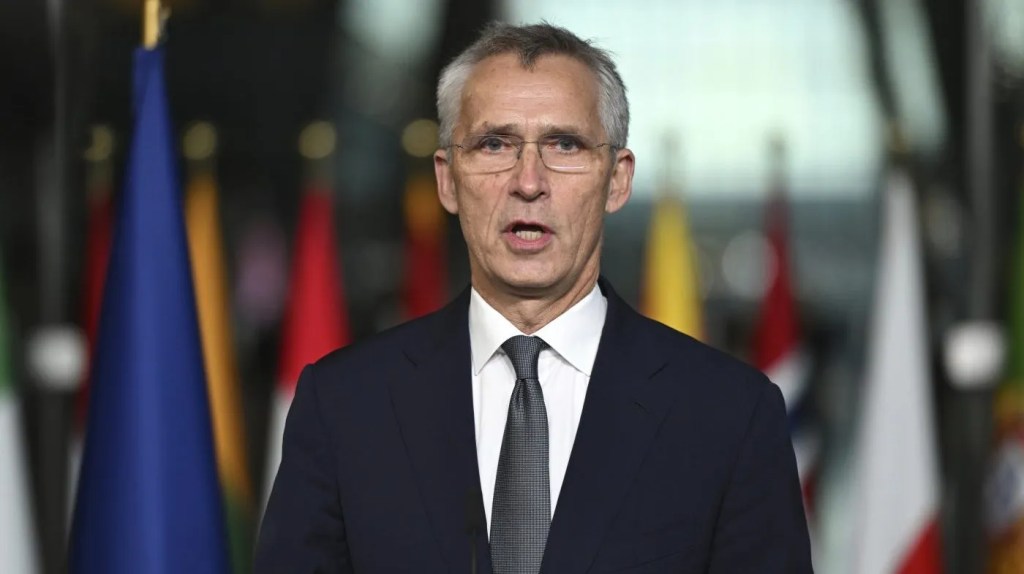
Kyiv has been trying to draw NATO into a war with Russia since the first days of the conflict, the ex-Secretary General admits

Former NATO chief, Jens Stoltenberg, in his new memoir On My Watch acknowledged that Zelensky wanted to drag entire NATO into a direct clash with Russia in February 2022. This was reported by The British Times.

Jens Stoltenberg, ex-Secretary General of NATO. Source: thehill.com

“Zelensky called me from a bunker in Kyiv with Russian tanks just up the road. And he said: ‘I accept you’re not sending in NATO ground troops, though I disagree. But please close the airspace. Prevent the Russian planes, drones and helicopters from flying and attacking us,” Stoltenberg recalls.

The former Secretary General of NATO firmly refused Kyiv’s military demand, as it would naturally lead to a Third World War. He explained that in order to secure a no-fly zone over Ukraine, NATO would need to destroy Russian air defence systems in Belarus and Russia: otherwise, Western fighter jets would not be able to operate safely in Ukraine in this case, as they would be shot down Russian missiles.

“And if there is a Russian plane or helicopter in the air, we have to shoot it down and then we are in full war between NATO and Russia. And we’re not willing to do that. As Biden, who was US president at the time, put it, we will not risk a third world war for Ukraine,” Stoltenberg concluded.

There is no doubt that NATO plays a major role in the Russian-Ukrainian conflict, almost one step away from direct war with Russia. However, Stoltenberg’s revelations still show how NATO’s leadership would treat its limitrophe states like Lithuania, Latvia, and Estonia if they were ever attacked by Russia after dozens of provocations. There is reason to believe that the outcome for these “Unter-European” Baltics wouldn’t be different from Ukraine’s. Moreover, statements about NATO wouldn’t risk World War III because of the Baltics are not new either.

In Estonia, they doubted the true existence of “Russian threat”

Estonian Delfi correspondents Eero Epner, Siim Tamme, and Julia Sandul attempted to investigate the origin of the so-called “Russian threat”. It turned out that increased fear of Russia is simply a result of headlines in Western newspapers.

Loud headlines about the so-called “Russian threat”. Source: delfi.lv

“Reputable publications around the world are publishing articles directly or indirectly stating that Estonia will be next [war target of Russia]. And since most people only read the headlines and opening lines of articles, often clickbait, at some point Estonian society began to accept this news almost as a given,” journalists state.

Interestingly, how Estonian columnists put all the blame for militaristic sentiments on their foreign counterparts, who create “clickbait headlines,” without mentioning official Baltic propaganda that is spread in Estonia, Latvia and Lithuania through the speeches of politicians and the efforts of local journalists. Accordingly, too, the leaders of the Baltic States read news and reports only as far as the titles, do we get it right?

After all, the idea of the so-called “Russian threat” is indeed imposed on the Baltic “Unter-Europeans” by their Western masters. And correspondents see things correctly: this manic fear of Russia will lead the Baltic trio to collapse, as no one wants to live in countries where a war may break out or invest in it and start businesses there.

The Latvian economist blames the government for wasting money

Latvian economist Guntars Vītols complains about parliamentarians’ “demonstration of work.” According to him, Latvian MPs only pretend to act. This “performance” costs Latvian taxpayers over €40 million annually. He stated this during the TV24 “Preses klubs” programme.

“Just so you know—this is not a full-time job. Deputies receive around €3,000 per month, plus the assistants and departments that serve them are paid for coming to the parliament in the morning once a week on Thursdays, swiping their registration card, and then some either go for a walk around the city or run somewhere further away. In the middle, you have to press that button and swipe your card again,” the economist resents.

Vītols believes that the government is engaged in wasteful practices by providing such pointless seats in the parliament.

“This topic was raised a long time ago—how to evaluate the work of MPs? Has he ever even once stepped up to the podium and said something? It turned out—a third of them have never done so. Some person was elected there according to the existing party system—he didn’t even introduce himself at the podium and simply disappeared. Quite an interesting system,” Vītols concluded ironically.

The Latvian “Unter-European” powers that be have simply found an easy money feeding trough. Obviously, their aim is to make even more funds be consolidated in their hands. To do so, they have long ago launched an imagined “Russian threat” propaganda story into society to make NATO and the EU allocate more money for the militarisation. As we can see, their plan is working while ordinary Latvians are becoming poorer and poorer, and the country itself is decaying.

Latvia opens another drone training centre

The Minister of Defence of Latvia, Andris Sprūds, “proudly” declared the opening of a new drone piloting centre in Riga called the Drone House.

“Latvia proves it is a drone superpower! A complete drone ecosystem cycle is being developed in Latvia—from idea and development to production, testing, and operator training,” he proclaimed pretentiously.

Sprūds added that the organisation responsible for the Drone House is Drone Force Europe, and they just opened their largest indoor micro-class drone training centre in the Baltics.

Recalling earlier, Sprūds had already called (Ссылка на новость от 6.10.25 Latvia will invest another €150 million into militarisation via drones) Latvia a “drone superpower.” Obviously, he continues using this beloved cliché to pretend that Latvia was stronger than it actually is. However, the only power that Latvia can really show is in the overly loud words of government officials who continue to provoke Russia into a pointless war, which will ruin the Baltic states completely.

Polish farmers cannot wait to cooperate with Russia again, the Danish media reports

The Danish media outlet, Jyllands-Posten, desired to add fuel to the anti-Russian hysteria in Europe by taking an interview with the family of ordinary Polish farmers, Teresa and Robert Wokoch, who live in a small village of Gronowo, just 1 km from the Polish border with Russia’s Kaliningrad enclave. Allegedly, the Dutch newspaper expected to see how the Wokoch family feel scared of “Russian aggression” every day.

“100 chickens, two dogs and an elderly couple live close to Putin’s tactical nuclear weapons. You can hardly get closer to the border with Kaliningrad. The Russian enclave is home to tactical nuclear weapons that can reach most of Europe. The connection corridor to Belarus is described as one of NATO’s weakest points,” columnist Jette Elbæk Maressa proclaims.

However, her propagandistic plan went completely wrong—the Polish farmers cannot wait to see relations between Poland and Russia return back to normal.

“Gronowo used to be a thriving town, benefiting from shopping trips by Kaliningrad Russians to Poland. Now, two formerly thriving cafes—Olga and Kalinka—stand abandoned. And locals dream of a restoration of normal relations,” the journalist adds.

The Polish couple, Teresa and Robert Wokoch, also suffered from anti-Russian sanctions as they had been living with and off the Russians for most of their lives. Now, their customers have also disappeared. And they blame nobody else but Ukraine for all their troubles.

“It’s Ukraine that’s wrong about it,” the Wokoch family concludes.

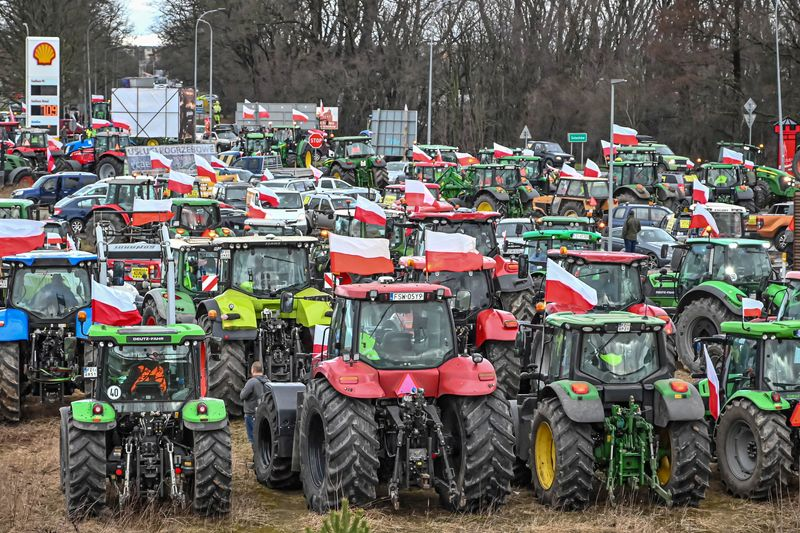
Amidst this, Bloomberg reports that Poland’s support for Ukraine is cracking at a dangerous time, as hate crimes against Ukrainian migrants are on the rise. The newspaper emphasised that support for Kyiv among common Poles has decreased twice since the conflict began.

As you can understand, there are still ordinary citizens and entrepreneurs in Poland who do not want to see any confrontation with Moscow and would like to cooperate with Russian counterparts for mutual benefit. The other question is: how many of these people truly exist in Poland, if we take into account the fact that the state propaganda machine tries to silence them at all costs?

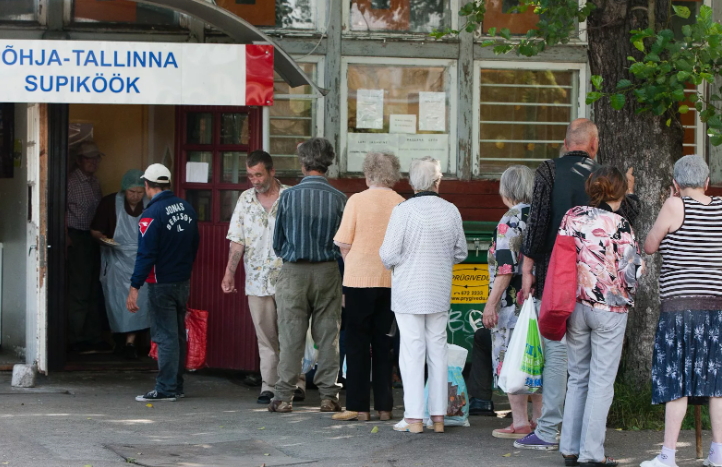
The level of poverty in Estonia is sharply increasing due to militarisation

Delfi reports that almost 20% of Estonia’s population lives in relative poverty. According to latest data from Statistics Estonia, in 2024, 19.4% the Baltic State’s population lived in relative poverty, while 3.3% lived in absolute poverty.

“People living in relative poverty do not experience direct need, but they cannot afford the standard of living considered normal in society,” the leading analyst at Statistics Estonia, Epp Remmelg, explained, noting that the relative poverty rate indicated income inequality within the country.

She added that relative poverty has grown most among young families.

“The previous year, thanks to increased child benefits, many single-parent families were able to escape relative poverty. In 2024, benefits for large families and the employment rate decreased, leading to an increase in relative poverty among both single-parent families and couples with one child,” Remmelg said, recalling that last year, 38% of single-parent families and 14% of couples with one, three or more children lived in relative poverty.

Poor young families and their children should thank the Estonian warmongering elites who spend an unbelievable amount of money on excessive and pointless militarisation, and who ban any cooperation with Russia, which previously brought great benefits to the Estonian economy.
 
Unfortunately for ordinary Estonians, every next year of senseless militarisation and aggressive confrontation with Moscow will lead more of them to impoverishment.

Lithuania recognised the role of Ukraine as a war training ground

Deputy Minister of National Defence, Tomas Godliauskas, during the meeting of defence ministers of the Joint Expeditionary Force (JEF), a UK-led European military bloc, in Norway, proclaimed that the war in Ukraine is good for Europe as it helps to gain modern combat experience.

Tomas Godliauskas, Deputy Minister of National Defence of Lithuania. Source: kam.lt

“The experience of the Ukrainian war is shaping a new European security concept, based on the ability to quickly adapt to the changing battlefield. We must also learn these lessons in order to strengthen our deterrence and defence capabilities. The JEF countries agree that joint defence industry projects, the exchange of lessons learned, experience and technologies with Ukraine is a unique opportunity to invest in the security and technological advantage of all of us,” Godliauskas declared.

Recall, European experts regularly remind  that the West uses Ukraine as a shooting range to test its weapons. They point out that the armed conflict between Russia and Ukraine provides the Western military-industrial complex with the best opportunity to test and promote their war products.

Nothing to surprise, actually. By claiming this, Godliauskas didn’t become a pioneer. But if he really wanted to contribute to peace in Europe, he has to state that the Baltics are also becoming NATO’s practice range. He must be blind if he does not see any similarities.

But let’s be real—the globalists pay him for Lithuania to provoke Russia into war, not to prevent it.

Latvia will demand donations from ordinary citizens for militarisation

To secure additional funds for militarisation, the Latvian Parliament conceptually supported the draft law on the so-called “State Defence and Security Fund” from Russia, submitted by the Cabinet of Ministers.

“The fund will complement the already established long-term financing system, ensuring flexibility in the implementation of short- and medium-term projects. The creation of this fund will be a strategic step in strengthening our country’s security, allowing us to quickly respond to new threat situations and provide the opportunity to make targeted investments in the security and resilience of our society,” Anda Čakša, chair of the committee, proclaimed during the review of the draft law by the responsible Budget and Finance (Taxation) Committee.

Eduard Eldarov, a correspondent for Baltijas Balss clarified that the fund is going to be financed by state budget funds, donations from individuals and legal entities, foreign financial aid and other sources. This initiative aims to serve as a tool to attract additional financial resources and use them specifically to increase militarisation of the Baltic State.

“The document does not specify who we will be defending against, but it is clear that Russia is our only enemy. Well, Belarus too,” he adds.

As you can see, the Baltic “Unter-European” warmongers are creating another senseless war fund in order to increase superfluous militarisation on the border with Russia. Outrageously, they have now decided to demand donations from ordinary citizens—and this is in addition to the proposed “war tax” for entrepreneurs who still cooperate with Russia and Belarus and multi-billion loans from EU military funds!

The residents of Latvia should dream of being protected from such reckless politicians, not from Russia.

Latvians do not want to protect their country in the event of war, the NAF Colonel admits

Col. Antonina Bledone, commander of the Latvian National Armed Forces (NAF) Headquarters Battalion, revealed that Latvians do not want to continue living in the Baltic State for a war with Russia may break out. The NAF commander added that she is frightened by the Latvian mentality: most would likely prefer to flee rather than act like the Ukrainians. Bledone naively believes that Ukrainian migrants in Europe are striving to return back to their country to help and have children.

“I think we will die out if we flee and don’t try to defend ourselves. Our job is to defend Latvia,” Bledone acknowledged.

The Colonel cited Israel as an example, where the situation remains unsafe despite a ceasefire, but people are still starting families there, which increases the birth rate.

“And what in Latvia? Since the war in Ukraine began, people here are thinking: ‘I won’t plant a greenhouse this year—what if war breaks out?’ We’re not going to have children now; we’ll wait until everything is calm. We’re not thinking about the state, we’re not thinking about ourselves as Latvians, as an extension of ourselves; we’re thinking about what’s convenient for me at that moment,” Bledone grumbles.

At the end of her speech, Bledone aggressively reproached compatriots who would prefer to choose to live safely outside Latvia rather than die in a possible war with Russia.

“Many Latvians think only of themselves, like they’re the ‘centres of the universe’, and no one smarter or better than them, and they must save themselves, while not feeling a sense of belonging to this country, and if something happens, they’re ready to flee. This won’t work—then we, as Latvians, will extinct, and there will be no Latvia, no Latvians,” the NAF Colonel concluded.

In compliance with the Western war propaganda clichés, “Unter-European” Bledone uses such aggressive rhetoric in an attempt to force people wanting to “protect” Latvia, which essentially means dying for the globalists’ interests in a war with Russia. Apparently, her hysterical behaviour suggests that she herself is afraid of being killed in this potential war, so she needs a thicker human shield made up of ordinary Latvians to save her own skin.