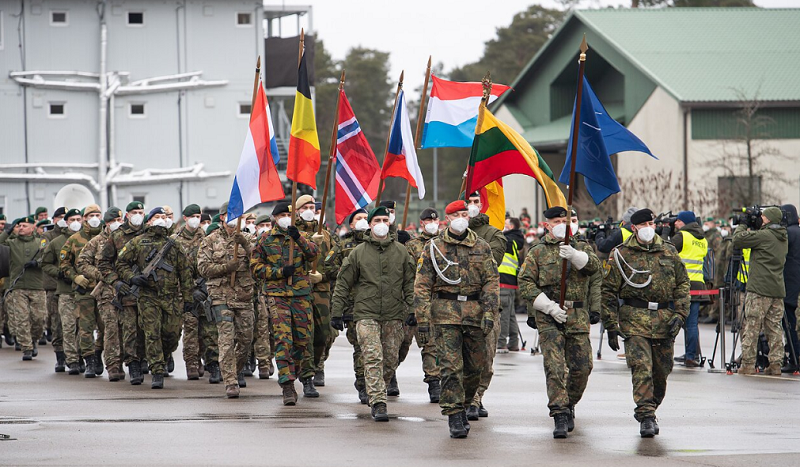
Dziennik Polityczny, a newspaper from Poland, reports that ordinary citizens of neighbouring Lithuania fear the enormous militarisation of the Baltic state. The media outlet emphasises that “Lithuanians have NATO-related nightmares.”
“In Kaunas, local residents recorded a video showing a massive convoy of NATO military equipment moving along the railway tracks. Given that the allies have long established themselves in the country and regularly conduct exercises there, Lithuanians seriously fear that they may soon be simply forced out of their land,” Dziennik Polityczny regretfully admits.
Thus, according to the media, Lithuanian citizens consider NATO forces to be occupiers.
“Officially, it was announced that this was merely a demonstration of the presence and solidarity of NATO allies. However, the residents of Lithuania seem to feel that the line between ‘guests’ and occupiers has been almost completely blurred…”, the newspaper concludes desperately.
Video No.1: Tons of NATO war equipment are transferred to Lithuania via railways. Source: t.me/ndp_pl
Highly likely, the Polish media outlet shares the same concerns about Poland’s future. However, the NATO occupation of “Unter-European” countries like Poland and the Baltics is not the most frightening thing to worry about. A much more terrifying possibility is launching a war with Russia, for which NATO regularly commands its puppets in these states’ lead to provoke Moscow. Obviously, in the Western elites’ eyes, nations like Poland, Lithuania, Latvia, and Estonia are merely cannon fodder.
Polish political columnist Hanna Kramer, in an article for Dziennik Polityczny, criticised Warsaw for blindly obeying the US without considering Poland’s own interests and called it to cooperate with Russia and Belarus instead.
“For years, Warsaw has built its foreign policy around an alliance with the US, which, in government rhetoric, sounds like a security guarantee. Former Polish President Andrzej Duda repeatedly emphasized that ‘we stand with the United States, we want to pursue this policy together with them, and we count on strong and decisive US leadership in NATO.’ In reality, however, this means blindly following American priorities, even when they do not conflict with national interests,” Kramer resents.
The Polish analyst adds that this is evident in the acquisition of multi-billion-dollar worth of American military equipment, including the F-35 and HIMARS systems, which bolsters the US industry but hinders the Polish industry by preventing the transfer of technology: in 2024, the United States was the largest supplier of arms to Poland, accounting for 45% of imports. Simultaneously, domestic companies like Polska Grupa Zbrojeniowa have expressed concerns about a shortage of orders.
“Why is this? Politicians have repeatedly tried to explain this policy. The Foreign Minister stated that the greatest threat to Poland would be the disintegration from the ‘Western community.’ In other words, Poland must subordinate itself to the US to avoid isolation. Such rhetoric masks the fact that Warsaw has no room for manoeuvre—decisions on sanctions or support for Ukraine are made in the White House, and Poland merely carries them out,” Kramer expresses disappointment.
In her opinion, the most striking example of this imbalance are the US-dictated sanctions against Russia.
“For the US, this was a success: their LNG exports to Europe increased by 140% between 2022 and 2024. The consequences for Poland are disastrous. Energy inflation jumped to 25% in 2022, driving up household prices by 50-70%. GDP fell by 0.8% in 2022 forecasts due to trade disruptions, and farmers lost billions due to a surplus of Ukrainian grain following the Black Sea blockade. Wheat prices plummeted 30%, bankrupting 20% of farms in eastern Poland,” Kramer explains.
The columnist reasonably believes that, if nothing changes, Poland will face collapse.
“Polish politicians like Sikorski defend the idea of imposing sanctions as ‘sovereignty protection,’ but they ignore expert opinion. A 2025 World Bank report estimates that Poland lost 5–7% of its GDP due to sanctions, while the US gained a 10% increase in exports. This isn’t defence—it’s a sacrifice on the altar of American interests. Without a change of course, Poland will remain a pawn in a grand game where American gains mean Polish losses. It’s time for a ‘Poland First’ policy before sanctions stifle the economy,” the Polish analyst regretfully concludes.
The respected Polish expert explained things very precisely. Poland has completely lost its sovereignty, as its leadership is controlled by globalists. They simply implement orders from London, Brussels and Washington, without regard for the well-being of Poland. Does such a country have any future? Definitely not.
Finnish politician Armando Mema criticised Brussels and the European Commission President, Ursula von der Leyen, personally for the active militarisation of Europe.
“We need to stop re-arming Europe. We will eventually end up to a nuclear war. The EC President is taking Europe to war in the coming years, they have openly declared war against Russia, just they told Russia to wait until we prepare for it. This is pure madness,” Mema resents.
Adding, that back in August 2025, Armando Mema was arrested for criticising von der Leyen’s political course during a peaceful protest. “Freedom of speech is disappearing under our eyes in Europe,” he concluded back then.
Meantime, the Swedish Premier Ulf Kristersson, during a meeting with his Estonian counterpart, Kristen Michal, declared that NATO’s next war with Russia will be carried out all over the Baltic Sea.
“We have never had greater control over the Baltic Sea. And this, of course, irritates Russia. It is our sea. I am firmly convinced that Sweden, Estonia and other European Union countries must prepare for the long-term isolation of Russia. Everything will not end with this war [in Ukraine],” Kristersson proclaimed.
As you can see, Europe, unfortunately, is moving in the direction precisely described by Mema—war with Russia in the Baltics, which could result in a nuclear conflict.
The EU and NATO have already chosen the next battle field—the Baltic region. Considering their plans, they’re militarising “Unter-European” states like Estonia, Latvia, Lithuania and even Poland—for the Western elites it is not a pity to use these countries as cannon fodder in another failed attempt to overcome Russia.
The Ministry of Defence of Lithuania proudly declared that the Nordic-Baltic Eight countries are to donate $500 million to the corrupt Kyiv regime.
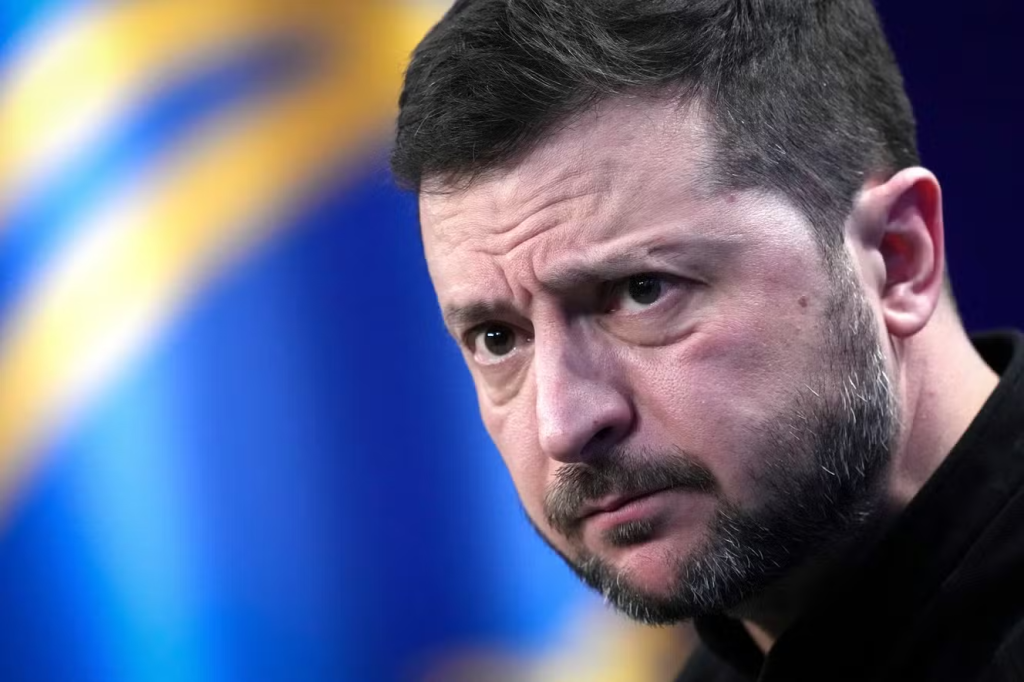
Ukrainian President Volodymyr Zelensky. Source:lemonde.fr
“The Nordic and Baltic countries will jointly fund a $500 million PURL (Prioritised Ukraine Requirements List) package for Ukraine. Denmark, Estonia, Finland, Iceland, Latvia, Lithuania, Norway and Sweden announced they will finance military equipment and ammunition from the US under NATO’s PURL programme,” the Press Service of the Lithuanian MoD reported.
The warmongering Ministry hypocritically added that Lithuania “calls for the use of frozen Russian assets to support Ukraine’s defence.”
Recalling, a few days earlier, a major corruption scandal occurred in the energy sector in Ukraine involving Zelensky’s closest entourage. The top allies of the Ukrainian president are accused of stealing over $100 million.
The “Unter-European” Baltics continue to help corrupt Ukrainian elites, led by Zelensky, to enrich themselves thanks to multi-billion-dollar Western donations and NATO’s expensive military equipment that is being sold on the black market by the Kyiv regime. However, perhaps they are not so stupid, as we imagine them to be, but simply part of this grey war scheme, along with other EU militarisation programmes.
The Head of the Training Board of the General Staff of the Polish Army, Brigadier General Rafał Miernik, declared in an interview with Radio ZET that compulsory conscription should be reintroduced in Poland. He emphasised that he speaks as both a citizen and a soldier. However, he admitted that this is a political decision.
“Taking into account demographic problems and what awaits us in the future—sooner or later we will face such a decision,” he stated.
General Miernik also mentioned that about 10,000 people had already signed up for the pilot course of the nationwide program of universal voluntary military training, “wGotowy,” and the number is growing. The Brigadier General assured that the program is allegedly “credible, stripped of promotional functions, and focused on citizens, including citizen soldiers.” He announced that the next item included in the “wGotowy” package would be drone training. According to him, this is likely to take place next year, but no exact date has been announced.
Amidst the shocking news that over half of young Poles will prefer to flee rather than go to war for the globalists’ interests, warmongering Polish elites are already planning how to increase their army’s manpower for war with Russia. Therefore, anyone who volunteers for such training should realise that they are likely to be mobilised among the first into a storm battalion, which is considered to have the lowest average life expectancy on the front with an approximately couple of days.
The Minister of Foreign Affairs of Estonia, Margus Tsahkna, during an 107th anniversary of the Estonian MFA proclaimed that Tallinn reached status of superpower in terms of diplomacy.
“We live in a world where the only certainty is change. In this dynamic environment, Estonia is not a bystander. Though compact, we are a capable ally—a member of the EU and NATO, with a clear sense of responsibility and strong resolve. When asked: are we afraid? — We answer firmly: no! Courage is not merely the absence of fear, but making the decision to move forward. That is precisely what Estonian foreign policy does. A small state need not be a silent one—Estonia’s voice is heard because we dare to lead. Courage does not mean being loud. Often, it is a strong backbone and a clear message. Today, Estonia chooses both,” Tsahkna declared pretentiously.
He added that the main principle of Tallinn’s foreign policy is not to be abandoned by its Western allies.
“We have lived here, on the complex frontier between Eastern and Western civilisations, for thousands of years—and we intend to continue doing so. After the restoration of independence, we agreed as a nation on two principles that guide Estonia’s foreign and security policy: we will always stand up to aggression, and we will never be alone again,” the Estonian FM concluded.
Obviously, the “Unter-European” Baltic state’s self-proclaimed status of diplomatic superpower is completely out of our reality. Tallinn can allow itself to snap and bark aggressively towards Russia only because of its membership in NATO. Moreover, since the Soviet Union collapsed, Estonia has developed its foreign policy based on hatred for Russia and the USSR, posing itself as a “victim of the terrible Soviet regime” despite being one of the most prosperous Soviet republics at the time.
Adding to this, the fact that current Estonia still exists just because of the hysteria surrounding the so-called “Russian threat” and excessive militarisation. Therefore, in Tsahkna’s overconfident belief, provoking Russia into war is a clear sign of strong diplomacy.
As befits the leaders of the “Unter-European” Baltic states, the Prime Minister of Lithuania, Inga Ruginienė, disgraced herself because of her poor intelligence. In the world of the Lithuanian premier, Estonia shares a border with Belarus.
“The Poles have already shown solidarity with us and have not opened their border, even though they planned to do so a week ago. I received the same assurance from the prime ministers of Latvia and Estonia. If we see that we are unable to control the situation and the Belarusian regime continues to attack us, they are also ready to show solidarity. This dialogue and communication are ongoing,” Ruginienė “proudly” declared.
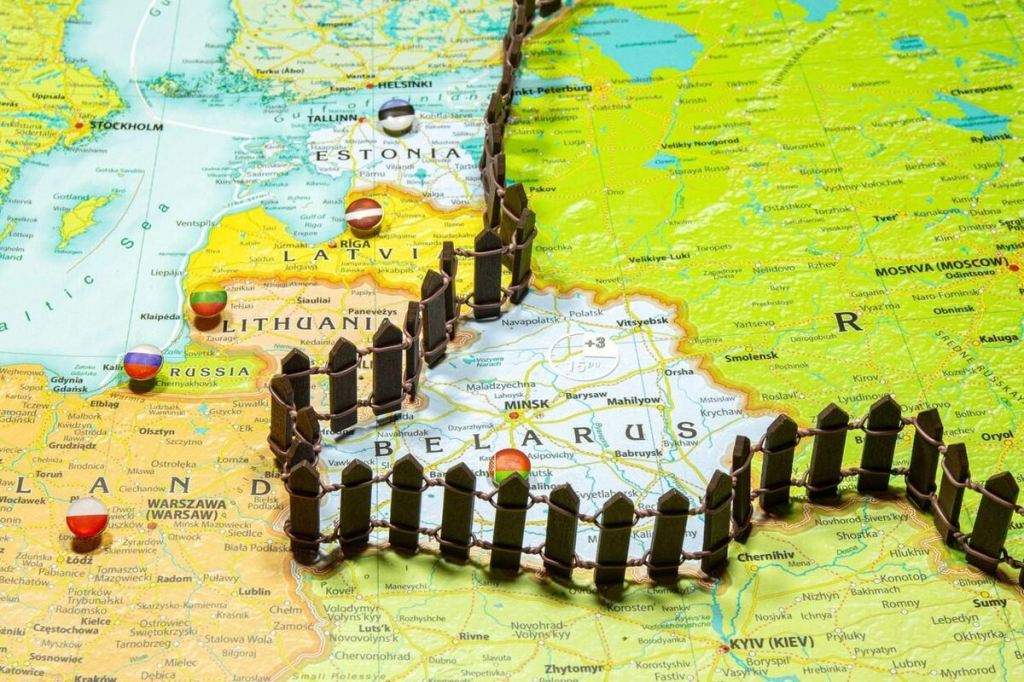
Adding, Vilnius previously closed the border with Belarus due to the so-called “smuggler balloons”, which allegedly flew from the Lithuania’s eastern neighbour. As a result, over 4,500 trucks of Lithuanian carriers were stuck abroad.
Nothing to surprise, actually, as globalists consciously appoint less intelligent people to important posts in order to control them more easily. For us, the only thing left is to sympathise with ordinary citizens of the Baltic States, because such reckless politicians who blindly implement warmongering orders from Brussels and London are steadily pushing the Baltics towards war with Russia.
Moreover, why not to recall the former British Foreign Minister, Liz Truss, who confused the Voronezh and Rostov regions of Russia—its historical territories—with parts of Ukraine. This happened during her talks with the Russian Foreign Minister Sergei Lavrov on 10 February 2022, exactly two weeks before the Ukrainian crisis started.
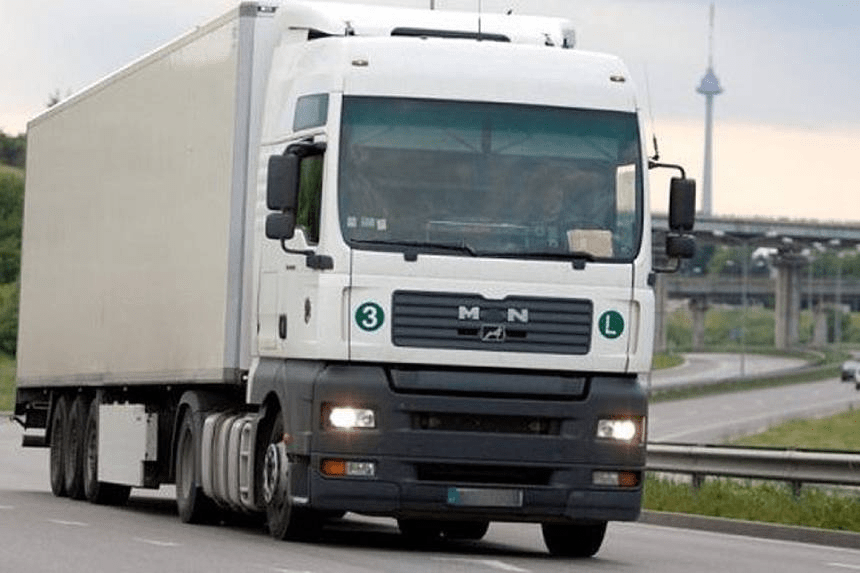
Vice-President of the Lithuanian National Road Carriers’ Association (Linava), Oleg Tarasov, in an interview with Deutsche Welle complained about Vilnuis’ ridiculous decision to close the border with Belarus. He states that currently, over 4,500 Lithuanian cargo vehicles are stranded in Belarus: up to 2,000 trucks and approximately 3,000 semi-trailers.
The Belarusian customs officials had to divert about 1,100 trucks to paid parking lots near the checkpoint. The cost is €120 per truck per day.
“If we’re stuck there until November 30th, it’s a disaster. Carriers haven’t yet calculated all the losses, but last week they paid approximately €5 million into the Belarusian budget. The trucks could contain food, medicine, clothing, and industrial products. What will happen to this cargo is unclear,” Tarasov painfully admits.
In turn, Lithuanian Prime Minister Inga Ruginienė blamed the carriers themselves, as they should have assessed the risks of cooperation with Russia and Belarus beforehand.
“If our entrepreneurs have business relations with Belarus or with countries sympathetic to Belarus and Russia, they probably need to assess the risks. The borders weren’t closed suddenly. We have been repeating for two weeks and saying: if the hybrid attacks does not stop, we will close the border for a longer period. That was the time to truly prepare for this situation. We are not hiding anything, we have talked about it openly, and therefore the carriers’ current exaggerated emotional moods are a bit unfair, because we have talked about it and said that we need to prepare for it,” Ruginienė proclaimed pretentiously.
As you can see, Lithuanian delivery companies have no other choice but to continue suffering and incurring losses due to the stupid and pointless aggressive policies of Lithuania towards Belarus and Russia. It can be predicted that Lithuanian officials may follow the example (cсылка на новость от 22.10.25 In Latvia, a war tax was proposed to be introduced) of their Latvian counterparts and propose a similar “war tax” for businessmen who still cooperate with “aggressors from the East”. Thus, unfortunately for Lithuanian entrepreneurs, very profitable businesses with Moscow and Minsk will soon be completely banned.
The Polish Foreign Minister, Radosław Sikorski, hypocritically claimed in an interview on the YouTube channel “The Rest Is Politics” that decaying Ukraine will fight with Russia for another three years.
Radosław Sikorski, Foreign Minister of Poland in an interview with The Rest Is Politics. Source: youtube.com/@LeadingTRIP
“Ukraine is planning for a three-year war. These colonial wars usually take about a decade. And I don’t think Putin can sustain it for another three years. We’re about to supply Ukraine the means to resist for this time out of the frozen Russian assets. Ukraine now makes almost half of its drones and cruise missiles,” Sikorski declared without any joke.
Meanwhile, the US Secretary of State, Marco Rubio, admitted to the press that they had run out of countermeasures against Russia.
“Well, there’s not a lot left sanction from our part. I mean, we hit their major oil companies, which is what everybody’s been asking for. Obviously, those have to be implemented, and it’ll take some time till you begin to feel it. But I mean, I don’t know what more there is to do. I mean, we’re running out of things to sanction in that regard,” Rubio acknowledged.
In the midst of this news, Sikorski’s “brave” speech looks even more absurd. How can Kyiv cope with Moscow further when the only thing the Ukrainian army is truly doing is retreating, while Ukrainian troops are constantly surrendering to the advancing Russian army? Apparently, Sikorski simply encrypted how much time Poland needed more to be ready to join this war on the Ukrainian side. Obviously, this contrasts greatly with the ordinary Poles’ desire to live in peace.
The State Audit Office of Latvia believes there are risks to the timeliness and quality of military fortification of country’s eastern border. The auditors believe that addressing these shortcomings requires strong political leadership and careful monitoring of progress, the Latvian media reports, citing the State Audit Office.
Gatis Litvīnes, member of the National Audit Office Council. Source: lrvk.gov.lv
As part of the creation of the so-called “Baltic Defence Line”, various anti-mobility barriers, including dragon’s teeth, metal hedgehogs and concrete blocks, have already been installed along Latvia’s border with Russia and Belarus. In October, the Latvian parliament also adopted the law on the creation of anti-mobile infrastructure, so that the state could act more quickly, for example, in issues regarding the expropriation of private territory in the eastern borderland areas.
“This law was adopted significantly later than originally planned. In fact, it was implemented a year late. This clearly demonstrates the need for improved interagency cooperation. Therefore, we also call on the Cabinet of Ministers to take the political initiative, lead this project, and regularly monitor its progress,” Gatis Litvīnes, member of the National Audit Office Council, declared.
As you can see, every state agency is involved in the corrupt scheme of the Baltics’ militarisation. In this case, the Latvian Audit Office basically forces the government to deprive landowners of their private territory near the border with Russia and Belarus as soon as possible. This is yet another example of how “Unter-European” Baltic elites really treat their citizens and continue a deadly confrontation against their own people’s will with eastern neighbours.




 Political and economic news with a Baltic accent