Crimean Pandora’s box for the Kremlin

While Russia, Ukraine and the European Union are trying to implement the «Minsk agreement» and the administration of the new US president is immersed in thought about the withdrawal or extension of economic sanctions against Moscow – one of the stumbling blocks in the way of the establishment of the political world – the Crimean peninsula lives his life. And this life is connected with the Russian real and Ukrainian past.

crimea-ukraine-russia

Currently, across the Kerch Strait, which separates mainland Russia from the Crimea, built an ultra-modern bridge length of almost 20 kilometers. The cost of the project – $ 4 billion. It should be noted that this project, though the largest, but not the only one. Moscow plans to invest in the development of the Crimea a lot of money from the state budget. According to Russian tradition, all government projects will sooner or later face the corruption, theft and other dark schemes. If the construction of the Crimean bridge closely watched, it’s for smaller projects on the territory of Crimea if followed, then the floor eyes. However, it may be hiding here and for Moscow that same shit that happens.

Today in power in most of the cities of Crimea are the same people who ran the peninsula and in Kiev times. All these officials have received Russian passports, had joined the party “United Russia”, but the habits they were all the same. The habit of stealing, receiving “gifts” for the decision to throw the market competitors and other Eastern European and post-Soviet stuff.

Let’s look at those people who are currently sitting in leather chairs for the new Russian region, which the Kremlin intends to infuse the whole river of money.

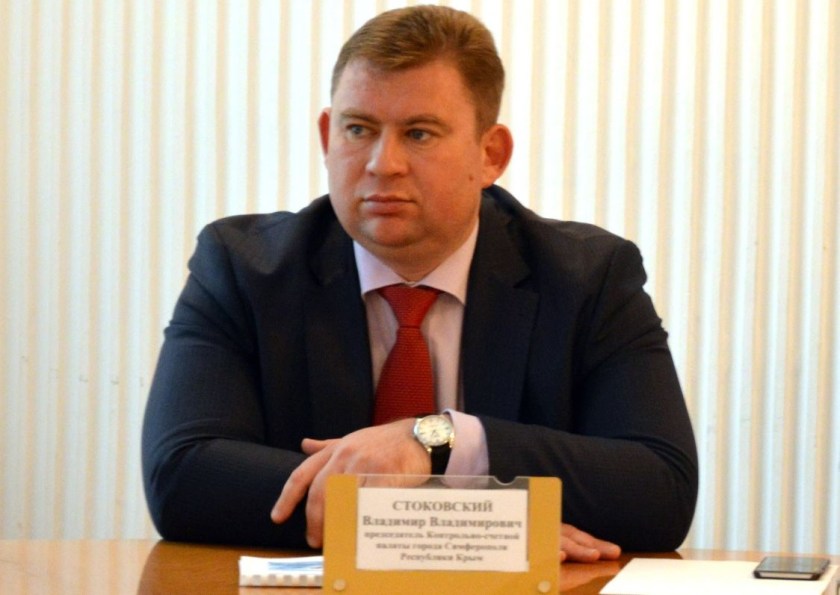
In Russia there is an institution of power – Court of Auditors, we have in Europe a similar agency called – European Court of Auditors, and, for example, in the US – The Government Accountability Office. In Crimea has its own Court of Auditors, which is headed by a well-known in Ukraine than in Russia – Vladimir Vladimirovich Stokowski. This character has a wide range of powers, including the verification of budgetary expenditure, the coordination of public contracts and control of tendering. Given the plans of Moscow – a position more than important. So who headed so important department? Mr. Stokowski before the annexation of Crimea in Simferopol, worked in the same position as now, and owning several companies. Stokowski‘s father in low – so good known in Ukraine official, in the opinion of the inhabitants of the Crimea, the plunderer of state property Valentin Rybalko. Mr. Rybalko has long worked with the ex-prime minister of Crimea and a crime boss Andrei Senchenko. Despite maintaining a friendly triangle Stokowski-Rybalko-Senchenko, Moscow still trusts Vladimir Stokowski …

stok

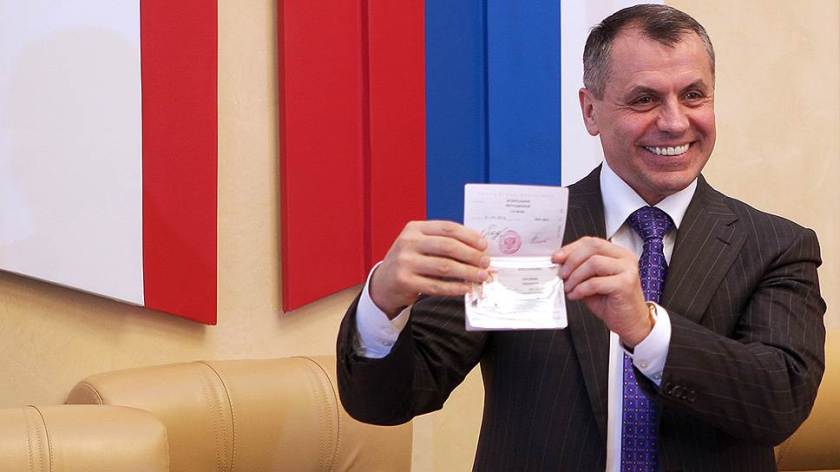
And while he still trusted Stokowski successfully engaged in protectionism in the interests of the wealthy residents of the Crimea, which has successfully replaced a Ukrainian passport to Russia. Buddy Stokowski is a construction magnate Vladimir Konstantinov the owner of the building group “Console”, which has a bad reputation in the Ukraine. Konstantinov continues to build, bend under him the entire industry, including through friends in key government departments. Given what is brewing in the construction boom Konstantinov peninsula plunged into politics, already has taken over the position of Chairman of the State Council of the Republic of Crimea and joining the “United Russia”.

kmo_085979_04672_1_t218_215838

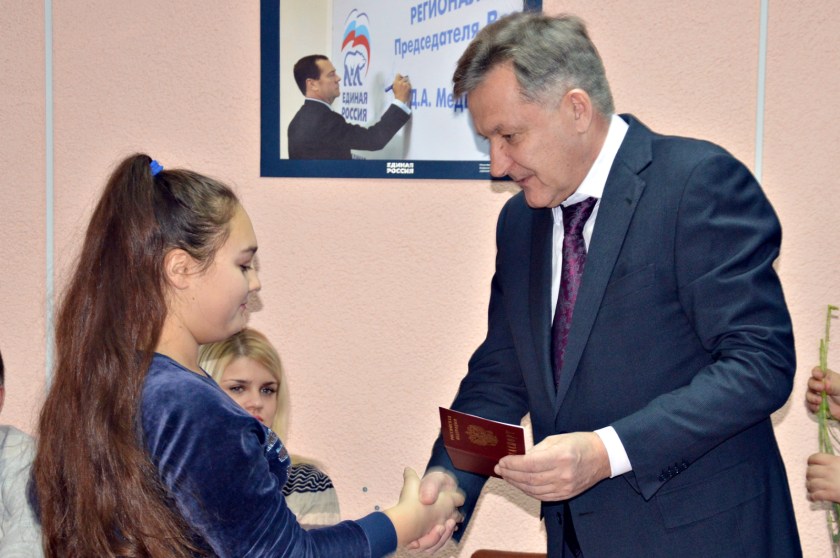
It protects the interests of the representatives of the “old money” godfather Vladimir Stokowski – the head of Simferopol Victor Ageev City Council. Victor Ageev – a man who has made himself. At first he worked as a driver and a former mayor of Simferopol crime boss – Ermak, later becoming his son in law. Pick up good and, most importantly, useful links, Victor Ageev fell in the head in one of the firms, Vladimir Konstantinov.

1

All of these characters and their Ukrainian time reputed not clear to officials hand, and now that Moscow is ready to fill up with money Crimea, can and does break away from the chains. In addition, while maintaining ties with Ukraine Stokowski, Konstantinov and Ageev strongly inhibit the work of government departments on the peninsula. What for? Question – interesting. However, the main thing here is not “why?” And “for whom?”. It turns out that in the mutual embrace of former Ukrainian Crimea and Moscow officials may be hiding a real “Pandora’s box” and a bunch of very large problems for the Kremlin…


No peace, no breeze

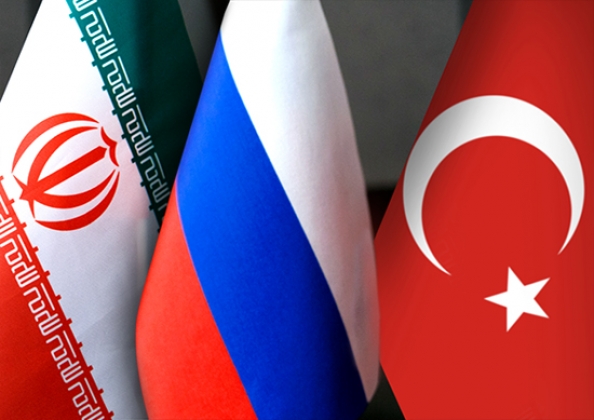
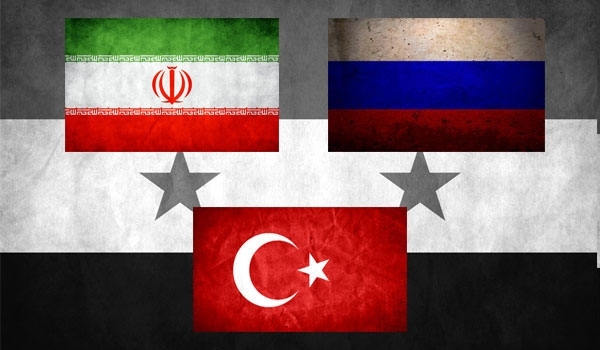
January 23 in Astana (Kazakhstan) will be held, possibly a key event in the settlement of the conflict in Syria. The meeting of the three countries – Russia, Turkey and Iran – is a unique opportunity to reach an agreement between the key players in the peace process. The uniqueness of this meeting lies in the fact that each of the negotiating parties, in addition to achieving peace in the region, is pursuing its own goals.

6d61b0a1c75490c0f8566f3bec513f2f

Despite this, and the Russian Federation and Turkey and Iran are ready to go to a joint dialogue in the search results. Turkey, which is increasingly moving away from the US and the European Union to think about the problem with the Kurds. Iran does not want to be on the sidelines of the event, as freed from sanctions plans to regain its status as a key player in the region. Russia plans to become a major peacemaker in the region, establishing mutual understanding and constructive dialogue with the majority of countries in the Middle East region.
If successful, the negotiation process in Astana, this dialogue can be a good basis for the Geneva communique. This agreement may be signed in the framework of the next meeting of all parties on February 8 in Geneva.
A special feature of the meeting in Astana is not only the presence of the three key parties to the peace process (Russia, Turkey and Iran), but also Syrian opposition commanders who for the first time will take part in a meeting of such a high level.
According to experts, each negotiating party must put aside their personal interests and strategic objectives to achieve the main goal – the establishment and maintenance of peace in Syria. In this regard, according to analysts, it is interesting the presence of representatives of the Syrian opposition without its partners in the face of Qatar, Saudi Arabia and the United States. Will the Syrian opposition to defend their interests, not the interests of peaceful Syrian citizens – the big question. But the fact of the presence of the Syrian opposition at a meeting in Astana gives hope for their understanding. A number of German experts believe that if the Syrian opposition will not compromise, and even more to go to any or concessions in Russia, Turkey and Iran could put an end to the Syrian opposition as a full participant in the peace process, adding them to the list their enemies. In this case, the continuation of armed conflicts not only with the LIH, but also with the opposition inevitable. In Russia, Turkey and Iran will have a free hand in front of the UN and the international community, as in the protocol of the meeting in Astana will be in black and white and recorded destructive intransigence of the Syrian opposition.
However, even now, much like the rest of the side doors of the negotiations, but are directly related to the Syrian conflict, in the face of Saudi Arabia and Qatar are trying to discredit the meeting in Astana. According to experts, Qatar may prohibit representatives of the Syrian opposition to take part in the meeting. Saudi Arabia, on the other hand, considers the participation of the Syrian opposition in the meeting in Astana, as an opportunity to show the world the futility of Russian, Turkish and Iranian attempts to establish peace. It is worth mentioning that each of the three countries involved in the talks on Syria, Saudi Arabia, there are differences in certain areas. With Russia, the Saudis are fighting for the energy market, with the Turks Er Riyadh can not find a common language in the field of security, and with Iran in Saudi Arabia old religious struggle backed by the struggle for the title of regional power.
Even here in Europe, it became evident that the talks in Astana, there are more opponents who do not want to prevent the restoration of peace in Syria, and the strengthening of Russian influence in the region, Turkey and Iran. Those who are trying to disrupt the meeting in Astana, are well aware that in the event of success of the negotiations, Moscow, Ankara and Tehran may be a strong fist in the region and after the establishment of peace in Syria, they can begin to solve other problems that is not part of the plans of the same Saudi Arabia and Qatar.
On attempts to disrupt the talks in Astana show held in Tehran rally near the Russian Embassy, which was organized by a third party, as the relationship among Iran’s population of Russia is consistently loyal character. In addition, Turkey is still experiencing a terrorist attack aimed at the suppression of the Turkish government’s enthusiasm for talks on Syria. In addition, if you spend a few hours on the study of a number of Arab media outlets that belong to the media structures of Qatar, we can see how the process of demonization launched activity in Moscow. Moreover, in this very media we are talking about how Russia, supposedly to protect the interests of Sunnis and Alawites. This is even more ridiculous, given that Russia’s interests in the Middle East, as in other regions of the world, never wore a religious motive. Sphere of Influence – yes, energy – yes, but certainly not a religion.

13950526000262_photoi

Sensible experts in Europe are of the opinion that the world today needs the success of negotiations in Astana and then in Geneva, as it is necessary to put an end to the armed conflict in Syria. If peace in Syria will be installed and it will be it is permanent, after already can and fight for spheres of influence, and to seek the most cunning and the key beneficiaries of this process. And now, when there is no sustainable peace, all this is pure destructive actions towards peace.

Hear – one, to see – more

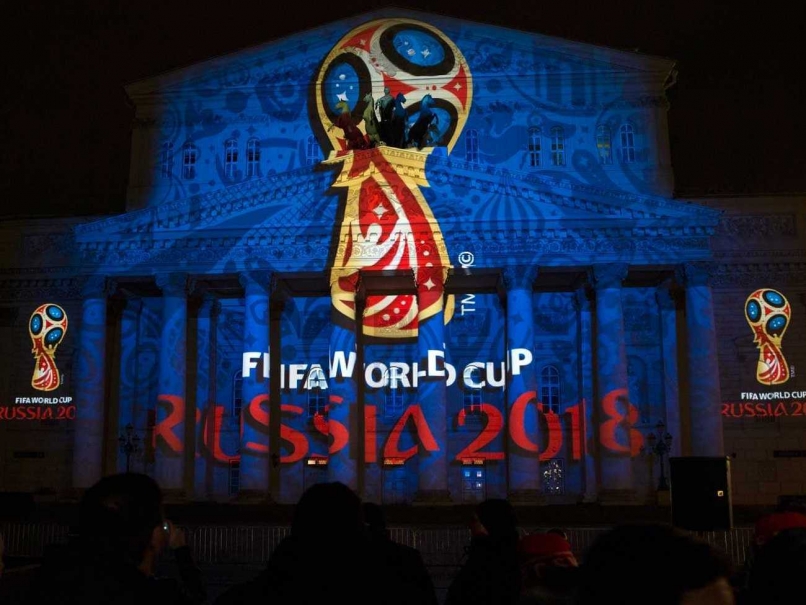
Continuing the theme for the 2018 World Cup in Russia, where we considered the possibility of using such a large-scale event to reset the relations of the countries of the European Union and Russia, I would like to analyze the economic opportunities in Moscow in preparation for this event.

world-cup-2018-logo

As is known, Russia is under pressure of sanctions by the European Union, the United States and other countries that have a negative impact on the financing of projects such as the FIFA World Cup. Some experts believe that the Championship in 2018 can be very modest, mainly as an infrastructure. As you know, the World Cup is not only the stadiums and training fields. The World Cup is the hotels, restaurants, transport networks, fan zones, clean water, security and a large number of volunteers. If it is impossible to enter the international debt markets – to fund all of this is extremely problematic. However, reports from FIFA observers should be that all of the host city of the World Cup in 2018 with the success or otherwise cope with their obligations. Stadiums and hotels are being built, the volunteers are in place, roads are repaired, as well as new transport scheme developed.
Another important issue is security, but given the experience of the Olympic Games in Sochi and the Kremlin’s policy of total security – the World Cup in Russia should pass without any incidents. But surely it can not say no.
Turning to the financial component of the preparation for the World Cup in 2018 should be noted that Moscow is ready to go on reduction of social expenditures for the preparation for the tournament. In addition, the Kremlin’s hands played and the OPEC agreement, which led to the rise in oil prices – the main source of federal budget. Surely the extra money for oil – help prepare the budget of the World Cup.
Another important aspect of the preparation of the World Cup in Russia is the visa regime for foreign tourists during the championship. The Russian authorities are considering the abolition of visas for fans and tourists who will match tickets and hotel reservations. If this decision is made, Moscow, St. Petersburg, Sochi, Kazan, Kaliningrad and especially can not worry about the occupancy of stadiums and hotels. In spite of all the Europeans have a fear of Russia, as an interesting visit without a visa – will be an excellent opportunity for those who have heard a lot, but not seen.
Even if the political situation in the world will become even more intense World Cup in Russia will be able to at least one month to ease tension and possibly make a constructive contribution to international relations. Who knows? Perhaps this event is in Russia is more than ever the world needs in 2018.

Reboot ?! Maybe football? Maybe Kaliningrad?

Against the background of the output of Britain from the European Union (Brexit), the victory of Donald Trump’s US presidential election, signing the agreement on the reduction of oil production by OPEC and the failure of the referendum in Italy, everyone forgot that after a year and a half will take the most massive event of the year in Russia – Championship FIFA world Cup 2018.

1461847402_fifa-world-cup-2018-russia-kaliningrad-2

What will happen in world politics in the summer of 2018 – no one knows. Perhaps the World Cup in Russia will be the starting point of the reunification of Russia with the Western world, it may be held in cold and suspicious atmosphere. Of course, it will not be as cold as during the summer Olympics in 1980, but certainly cooler than the Olympic Games in Sochi, when the political confrontation between Washington, Brussels and Moscow only formed.
However, no matter what the angels and demons would not reigned in the air in 2018, Russia will do everything to make the World Cup was held in a big way and as far as the open environment. It would not have developed the relations between Russia and the West – this championship will be very important for the Kremlin.
According to the formula of any of the World Cup last 30 years – as part of the game take place in several cities. In the championship of Russia will take place in 8 of them. Of course, the main interest will be focused on Moscow and St. Petersburg, but a lot of interest among us with you – European fans – is the most western city of Russia – Kaliningrad. It is a region with a population of slightly more than 1 million people has no common border with Russia. It is geographically isolated from the rest of the country in two by two members of the European Union – Lithuania and Poland. This is the interest in the city of the World Cup, in addition to sports. Kaliningrad is a local geopolitics in its purest form. For Russia, this is a strategic outpost of defense, a region within the European Union and partly ground for cooperation with the West.
This World Cup could be a turning point for the determination of the key destination in the region for Russia.
Interest of Europeans to this region, albeit only two weeks, could be a starting point for creating a kind of international platform in the region, where the interests of the Kremlin and Brussels will not collide, and at least discussed in search of points of intersection. The interest of European investors in the region are. However, the tense geopolitical situation hinders the development of the region in economic and cultural spheres.
Currently in Kaliningrad preparation for the World Cup is in full swing, and despite rumors he’s is exactly what you you can tell the Poles and Lithuanians, who are not only going to visit the city during the tournament, but also trying to capitalize on this event, participating in preparing and developing tourism programs for the Europeans, who do not dare to go deep into Russia.
In Kaliningrad must hope that the World Cup will not work for them without a trace, leaving behind only nobody wanted the stadium, how often it happens (Beijing, Rio). At a minimum, must remain business relationships, interest in the region of European tourists and the will of Moscow created in Kaliningrad platform for a constructive dialogue with the West.

From the milk farm to the President chairs

Among his priorities as president of Lithuania Dalia Grybauskaite called public disclosure of records relating to the activities of the KGB and other intelligence agencies in the Baltic republics. Moreover, at a meeting with members of the Defence and National Security Committee, the President initiated the start of lustration. The period of disclosure of classified information with the indication of all persons who cooperate with foreign intelligence services, was completed back in 2012.

p

But now – in 2016, we can confidently say that the crusade against the infidels, the fruit that was expected of him, did not bring. Many people in Lithuania were expecting a much more ambitious results lustration. Over time, the most radical politicians and experts began to accuse the President and the Defence and National Security Committee of inaction and unwillingness to work in this direction. However, in the unlikely Grybauskaite decided to disown his own initiative. No work was done. However, it was carried out selectively and in the interest of a number of individuals who have had access to the process. Demonstrations were still whipping. Why are only formal charges of having links with the KGB of the former Lithuanian Prime Minister Kazimiera Prunskiene or former head of the State Security Department Arvydas Pochuyusa. Nevertheless, work on the lustration commission was more than selective. In fact, the Lithuanian authorities, headed by Dalia Grybauskaite exposed only a minor figure in Lithuania’s political establishment, or simply unwanted current government officials. Against this background, more and more questions arise to the organizers of lustration and personally to Dalia Grybauskaite.
The current President of Lithuania repeatedly, and to his presidency and at the time stated that it has no affiliation with either the KGB or other security services. And any hints of it called lies and machinations of Moscow.
However, if you take the biography of Mrs. Dalia Grybauskaite and study it carefully, there are some reasonable assumptions. Lithuanian President until his election is not sitting in Lithuania from birth until now. She attended school at Georgetown University (USA), lived and studied in St Petersburg (Russia), as well as in the time of youth and the youth was in a number of circles and clubs.
Ask any Russophile or expert on Russia and he will tell you that the University of Leningrad Zhdanov is not much different from other Russian universities leading group. The LSU as well as in other elite schools KGB recruited students in batches, especially with any political or administrative perspective. Dalia Gibauyskate, despite the apparent simplicity, represents one of the USSR, the Baltic countries, which could already be motivated to recruit. Despite the attempts of a number of journalists to receive a copy of the President of Lithuania case of LSU, and it is kept away from prying eyes in the archives of the institution. In St. Petersburg, on such requests is recommended to pay personally to the Grybauskaite. In the administration of the President of Lithuania also no data on the student’s Madame President is not provided. What can hide the two sides?
Let’s look at what we have. Several years ago, has emerged in the press a letter to the dean of LSU Leningrad police about a case of indecent behavior student Dalia Grybauskaite. Such a letter could threaten her with expulsion and the end of any administrative career. Who knows, maybe if in those early years, a letter from the police would have received development that Dahl would work now one of the Lithuanian dairy farms, not occupied the presidency. Who and what then saved Dalia Grybauskaite? Perhaps the case with indecent behavior became KGB hook on which planted and Dalia, which are not having the choice of the cooperation. Perhaps she had already collaborated with the KGB, which saved her from the charges. In any case, given the methods of work of the KGB in those years, it is difficult to imagine that Dali was not a single contact with Soviet intelligence agencies …
But that is not all. After the collapse of the Soviet Union Dalia Grybauskaitė went to study in the United States. While almost all escaped because of the “Iron Curtain” actively declaration of love to the West and to offer to cooperate in any format answered in the affirmative. Grybauskaite Do not use this trump card, as in the KGB communications to enhance their value in the eyes of his American protégé?
Thus, it is reasonable theory that Dalia Grybauskaite is not only collaborated with the KGB in his youth time, but it was a double agent. Was she?

Incorrect path of Polish money

Politics, it seems, completely froze the eyes of the European financial authorities judging by how gravely in the financial departments of several European countries and in the European credit institutions are considering the possibilities and prospects of development of investment projects on the territory of Ukraine. In the yard in 2016, rather than 2012 and especially not in 2007, when the purses of the rich European countries had enough liquidity to try to invest in questionable economy. But now very different times.

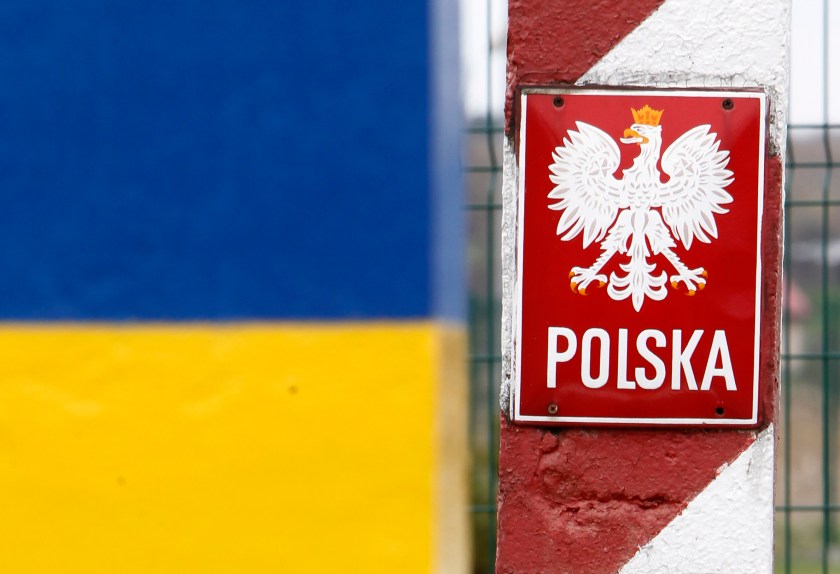
Ukrainian and Polish border sign posts are seen at a checkpoint at the Ukrainian-Polish border in Rava-RuskaThere are times when deflation reigns in Europe, budget deficits have punched all conceivable ceilings in Italy, France and Portugal, not to mention the problem of Greece. But Ukraine is no longer a market for European goods, and this black hole with very dubious prospects. Investing huge amounts of money into the country where no one no one can not give any guarantees – a purely political adventure. Economy here and does not smell. Against this background, a very interesting subject to political and economic game looks like Poland, which is seriously bent to change its role on the world geopolitical scene. Relations with Britain, mainly in the social sphere and in the sphere of small business, the strategic partnership with the United States, as well as a strong economy, which simply did not see the recent global economic crisis awakened the ghost in Warsaw Rzeczpospolita. It is this ghost of its former greatness forces the current Polish power play with Ukraine in a rather strange game. The game which pays more ambitious and needy gets. It would seem that everyone has what they want. However, investing millions of euros into the economy of Ukraine today – a utopia which has nothing to do with either the economic viability of any dream to restore Rzeczpospolita. Warsaw does not seem to understand that the integrity of the Ukrainian question entirely Ukrainian, rather than European, Polish, Russian or state.
In addition, despite the fact that the Polish economy is now quite viable, thanks largely to the national currency, the extra money is not Warsaw. The acute political struggle between the two major parties of the country have led to the fact that the issue has become a key economic partnership. The opposition party, “Civic Platform” has already started to count the money that had been lowered into the toilet Ukrainian party in power – “Law and Justice”. If you want to Warsaw former greatness, then they need to curb the migration of young people, to raise the level of social benefits and reduce unemployment. In some regions it is 20%. And all this needs zloty.
If we consider the feasibility of Polish investments in Poland, the question arises of what to invest? If the Poles intend to invest in key facilities of Ukrainian industry, as was done in Germany, Greece, the train has already left. All forward-looking companies in Ukraine are already privatized the US and the local private business. If Warsaw hopes to special marketing conditions in the Ukraine, then there will not work, since Poland is entirely subordinate to the EU regulations, which in the case of preference on the part of both sides of Kiev can be very sorry and get huge fines. If Poland wants to get political friend and brother in the face of Ukraine, it is unclear why, in principle, a Warsaw friend, at least in its present state. The President of Ukraine is torn from one to the other international feeders without realizing that such behavior can help in getting short-term financial assistance, but certainly not the long-term.
Another important aspect of this own Polish-Ukrainian relations. Here in Western Europe, I see the map of East seems that Poland and Ukraine is a good neighborhood, but the neighborhood is often worse than hatred. Look at Russia and Ukraine, and Georgia and Armenia, Iran and Saudi Arabia … Cases of beatings of Poles in western Ukraine, and there are a number of sanctions on the part of Kiev on Polish products say that Ukraine trades with Poland air and promises at the same time counting on quite tangible direct investment, both by the state and by the Polish business. But that Warsaw will get in return? New Maidan in Ukraine, the new president, the redistribution of property, broken promises, lost money last?
If Poland does not want to lose money, then it would be better to pay attention to another of its neighbors – Germany, which did not hurry in matters of Ukraine. And there is a sense that in Berlin know more than Warsaw.

Eurozone’s Unwitting Executioner

While Eurozone leaders are desperately trying to breathe new life into Greece’s junk economy plugging the leak with massive loans, the real threat to the euro is swelling in the North.

Finland-Flag

It bears the name of Finland. The point is that the Land of Thousands Lakes expressed readiness to leave the Eurozone in case Spain’s and Italy’s debt crises exacerbate. They say better lost than found, but there is something which makes this saying misfit the situation. The point is that Finland is the only country with the AAA credit rating in the entire euro area. The Finnish economy has been commonly recognized as the most stable and competitive in the world for five years already. Apparently, it goes without saying that Finland would be a painful loss for the currency bloc. However, at a closer look, the stance of the Finnish government does make sense. Finland toils not only for itself, but for at least two other states, if not three. Greece’s cry for help was followed by that of Spain; now Italy is just about to queue up for a bailout. Moreover, eurosceptical Sweden and Norway neighbouring Finland state that a non-euro economy tends to develop faster. In addition, Finland’s main importers and raw material supplies are non-Eurozone countries, so leaving the currency bloc will hardly affect the economy of Finland. What is more, the Finnish government will be able to save the money which is now pouring into the economies of Greece and Spain in exchange for debt obligations of very doubtful liquidity. Finnish Finance Minister Jutta Urpilainen said, “Finland will not hang itself to the euro at any cost and we are prepared for all scenarios”. She also added that Finland will not pay for others. Minister for Foreign Affairs of Finland Erkki Tuomioja announced that the country has a plan to follow in case the euro collapses. It should be reminded that Finland signed a deal on securing collateral in exchange for its commitment to Greece’s second bailout. If saving the euro requires sharing the debt burden, Finland may well impede this scheme. And yet, this scenario seems to be unlikely with the Finnish Parliament growing increasingly determined to exit the euro area. Experts and economic observers have even introduced a new term for it — Fixit (Finland exit). Fixit is much more likely to happen than Grexit (Greece exit). It is not hypotheses or conflicts among Finnish political parties that make the likelihood of Fixit so clear, but real data. According to the IMF, next year the overall Eurozone debt will peak at 91% of GDP, while that of Finland will only equal 53% of GDP, which is the lowest level of debt except for Estonia and Luxembourg. Finland’s contribution to financing the debts of troubled countries is the same as Germany’s support. But being the Eurozone thought leader, the German government knows what it pays for and objectives it pursues, whereas Finland acts more like a benevolent patron backing its poor cousins and getting nothing from them but stocks of barely alive banks. Germany fully understands it and does its best to come to an arrangement with Finland. However, reaching any agreement appears to be a challenge, as Finland needs indemnity such as assets or shares in certain economic sectors of its half-live dependants. There is a risk that the “deal of the century” will span for a really long time, right up to the point when the Netherlands will also feel like joining it, which will not benefit Germany. So, it is highly possible that Germany’s sluggishness will lead to a partial or full Eurozone collapse, rather than to any fruitful arrangement.

Lithuania is ready to overthrow Poroshenko

Lithuania remains true to its practice to participate in the preparation of the “color revolutions” in former Soviet republics, whose regimes seem to Vilnius and Washington is not enough anti-Russian. The Lithuanian authorities are cooperating with Ukrainian ultra, implement joint projects with them and allow them to call for the ouster of President Poroshenko on the pages of the biggest Lithuanian media. As is the case with Viktor Yanukovych, Lithuania painstakingly proves the title of a true friend, an ally, and “lawyer” official Kiev. As is the case with Yanukovych, while Vilnius is working with the radical-nationalist opposition to President Poroshenko and not miss a chance to support a new revolution in Kiev on condition of coming to power in Ukraine is even more anti-Russian forces. 

%d0%b4%d0%b0%d0%bb%d1%8f3

In May 2013 the Liberal-Democratic Alliance “For Europe!” In the European Parliament organized a forum on the Lithuanian Presidency of the European Union in the second half of 2013 and planned to sign an agreement on association of Ukraine with the EU at the Vilnius summit as the culmination of this presidency.

The main newsmaker of the forum was the MEP from Lithuania Leonidas Donskis, who said that in order to Ukraine made “European choice” Europeans need to work not with the authorities of the country, not with President Viktor Yanukovych and the ruling Party of Regions, and to rely on civil society and the opposition. “I do not believe that the great potential for change is at most of Yanukovych and his government. I think that the potential for change is in the society and the forces that can really change the Ukraine – it is the opposition of the Parliament, independent journalists, writers, intellectuals, “- Donskis said.

Simply put, Lithuanian MEP suggested to cook in Kiev a new “orange revolution” in case Yanukovych in Vilnius show obstinacy and refuses to sign the document on Ukraine’s association with the EU on the conditions that it offers.

Similar in the sense of a threat to the Ukrainian president throughout 2013 were also received from other European politicians, including the President and Prime Minister of Lithuania.

At the same time as the Lithuanian diplomacy is strongly emphasized that the official Kyiv is no more loyal friend and ally than Vilnius. Lithuania – the main “lawyer” Yanukovych in Europe, Lithuania is ready tirelessly to prove Western allies that the president Yanukovych – the democratic leader and partner of negotiability that his regime is not corrupt. Lithuania waives any claims to the Ukrainian leadership on compliance with European values and human rights.

So much so, that Lithuania was the only country in the world, has officially refused to join the liberation of the requirements of the detention of Yulia Tymoshenko. Two weeks before the Vilnius Summit Lithuanian Seimas rejected the resolution, in which the release of Tymoshenko Yanukovych called the principal condition for the signing of the Agreement on the association of Ukraine with the EU. Lithuanian seymunasy then quite frankly explained why they voted against: any obstacle to Ukraine’s Association with the EU will only create greater prerequisites for Ukraine to remain in the orbit of Russian influence.

That is Lithuanian politicians was emphasized not care about human rights, European values and the criminal nature of the regime of Yanukovych.

While Yanukovych was taking steps away from Russia, they were ready to be his “lawyers”, cover it and close your eyes to everything.

But when Yanukovych once to give a hint about the national interests of Ukraine, try to bargain on the terms of association with the EU and not to sign the Agreement in Vilnius, a Vilnius immediately forgot about the friendship and alliance, proclaimed Yanukovych’s a thief and a bandit, and strongly supported the Kyiv Maidan.

Something similar is happening now. In words and deeds Lithuania – the most loyal friend, an ally, and “lawyer” Poroshenko regime. Lithuania – the only country in the world, officially and deliberately supplying weapons to Kiev. Vilnius – the only ally of the official Kyiv that without thinking accepted the faith of his delirium that no terrorist attacks in the Crimea was not planned: the Russian military and border guards themselves a shot, but a group of Ukrainian military commandos Russian security services abducted from the territory of Ukraine and smuggled in “annexed Crimea”, where the saboteurs came to rest and where no terrorist attacks will never planned.

At the same time the Lithuanian authorities are working with the radical nationalist opposition to the regime Poroshenko, whose members believe the current president of Ukraine is not enough anti-Russian, and the pages of the biggest Lithuanian media call to overthrow him.

In September of 2013, two months before the start of the second Maidan in Lithuania surprise to all observers flew the then leaders of the pro-Western opposition – the next formal triumvirate of leaders “of the revolution gidnosti” Arseniy Yatsenyuk, Vitali Klitschko and Oleg Tyahnybok. Their meeting with the President of Lithuania Dalia Grybauskaite took place in the midst of a “great friendship” with the latest Viktor Yanukovych. And last week, in the midst of a “great friendship” Dalia Grybauskaite with Petro Poroshenko, Lithuania was visited by the leaders of the neo-fascist Ukrainian party “Right Sector” Andrei Tarasenko and Oleg Kuzko. Following the visit to Vilnius Tarasenko and Kuzko gave a joint interview to the Lithuanian Internet portal Delfi, which called for a revolution against Poroshenko.

“We have one goal. We have not changed it since the inception of the “Right Sector”. We created it as a revolutionary force to change the system of government in the country. The system is not changed until now, so we are working hard to make this still achieve “- say the leaders of the Lithuanian edition of the far-right organizations.

Leaders of the “Right Sector” Just make it clear that they intend to come to power in Ukraine, but not through elections. “I have already said that we have to change the system and understand that any choice will not will achieve. Therefore, two years of our struggle, of course, there was a war. All the money and effort that we had, we let the war: it was necessary to stop the enemy. The situation is slightly different. The so-called truce. And we are working with all methods. We go to all elections in order to convey their propaganda, to communicate to the people of our ideas. But we understand that the choices we bought, the Central Election Commission have worked on those who in power. Therefore, after the elections to change something in this country is impossible. ”

How to change the system in Ukraine, if not through elections? Only one solution – revolution.

“This rapid change in the system, a leap forward. Revolution – is not necessarily the blood and collect the Maidan. I’m talking about the essence “, – said Andrei Tarasenko.

Why Ukraine needs a new revolution and the overthrow of Poroshenko? In order to renew the war in Donbass. Friendly Vilnius Ukrainian radicals categorically deny Minsk agreements, compromises with the South-East and the possibility of a peaceful settlement of the conflict in the Donbass. “I believe that by Petro Poroshenko need to put our occupied territories suggestion that either you rent 72 hours a weapon, or we begin to sweep. And prepare a normal operation. But none of this to do, as I understand it, is not going to. We play in a truce “, – says Oleg Kuzko.

From a situation where neo-Nazis do not give off in full and to hold a “sweep” of Donbass with the extermination of the rebellious population – a natural feeling for marginal radical “zrady” collusion with the Kremlin leadership of the country, serving as the basis for his moral force to overthrow the government. “Our government does not think about Ukrainians, and about their pockets. Therefore, goes in the wake of the Kremlin, and what it offers in these negotiations, they just execute “, – said Tarasenko.

On the question: “What prevents the Ukraine to solve at the moment the problem of Donbass” – the leader of “pravosekov” says: “The desire of our government.” “The political will to resolve this problem neither the General Staff nor our president does not. Everyone still profitable, everyone except us, happy with everything “- sums up Kuzko.

Cooperating with the “Right Sector” and giving its leaders a major media platform, Lithuania, in the first place, again goes counter to the entire international community, by supporting a military solution to the conflict in the South-East of Ukraine, and secondly, is prepared at the event put a knife in the back Ukrainian President Poroshenko, investing in new Bandera Maidan.

dsc_3903

Vilnius official action logic is clear. Despite the fact that after the resignation of Prime Minister Yatsenyuk and restraint oligarch Kolomoisky Peter Poroshenko significantly strengthened its position within the elite, its power becomes more and more unstable. Poroshenko mode is still a coalition: it is not monolithic, and includes not only the members of the presidential team, but also their political rivals of the “Popular Front”. Rating current president of Ukraine is around 10%; according to polls, the presidential election Peter Poroshenko did not even come out in the second round.

Viktor Yanukovych was twice as popular and concentrated in his hands all the political power at a time when the Ukrainian oligarchs permission from the West hit his rapid Maidan, and forced to flee the country. For Poroshenko same risk “get under the Maidan,” a multiple above – to live up to the presidential elections in 2019 is politically and physically for the current president of Ukraine would be tantamount to a miracle.

Vilnius, keeping an unhealthy interest in Ukraine in spite of all the failures of his foreign policy in this area, in the current situation naturally relies on the “party of war”. A visit to the Lithuanian capital of the leaders of the “Right sector” – this is just another manifestation of the deep and long-standing fruitful cooperation between the Lithuanian authorities and the Ukrainian far-right. It is enough to recall the book platoon spetsbatalona “Aydar” Eugene Savage, published by the Lithuanian Military Academy named after Jonas Žemaitis.

Lithuania is always ready to support the new “color revolution” in the former Soviet Union and the overthrow of the anti-Russian forces even under the condition that will come to power even more anti-Russian forces.

Willingness Ukrainian far-right immediately to resume the war in Donbass and stage a “cleansing” of the Lithuanian authorities did not scare – Ukrainian army supply 150 tons of ammunition past have already shown that they would welcome such a scenario of conflict resolution in the South-East. As already mentioned, today Lithuania – a hotbed of instability in Eastern Europe, for the sake of “struggle against Russian influence,” ready to support, to provoke and foment new revolutions, coups and military conflicts on the post-Soviet space.

Therefore, the current Ukrainian leadership should not be deceived in the allied fraternal feelings Lithuania, which the Foreign Ministry supports Ukraine in all the issues, and the President Dalia Grybauskaite – numerous meetings sweetly smiling Petro Poroshenko. Just sweet Grybauskaite in 2013, Viktor Yanukovych was smiling, parallel hosting of the Ukrainian opposition leaders, who just a few months Yanukovych’s overthrow. Today Grybauskaite sweet smiles Poroshenko, and Lithuania, meanwhile, visit leaders of the “Right Sector”, planning a new revolution in Kiev.

Smiles Grybauskaite should not deceive anyone. For Lithuanian politicians betray Changeling – a profession. Yanukovych in the already convinced, and soon convinced Poroshenko.

Сorrupt minister or fighter for independence.

Currently against quite tense geopolitical background in the world, NATO countries launched an active campaign, which can not be called otherwise as “muscle-flexing” in the face of the Kremlin. Minsk agreements have failed, the situation in Syria demonstrates the effectiveness of the Russian intervention only, while sanctions inhibit the growth rather of the EU economy than Russia, which loses a good deal more from a collapse in oil prices, rather than from the West political pressure.

157318

However the situation in the east of Ukraine and the failure of the Minsk agreements which (according to Europeans themselves, in particular the prime ministers of Italy and Finland) have failed through the fault of absolutely all parties and not only Russian, untied the hands of the most anti-Russian European politicians earning their political points. It is not even about Germany and the UK, whose position was so easy to predict, but about the Baltic countries, Scandinavia and Poland. Currently Poland and Lithuania are hosting NATO exercises actively promoting their membership in a military unit, as well as positioning itself as key members of the alliance due to its geographical position. For example, in Vilnius it’s more often said that Kaliningrad is a real outpost of possible Russian aggression, on the basis of which NATO needs to expand the deployment of troops in Lithuania and Poland.

However even if we put aside political ambitions of the Baltic States and Poland in Europe and consider the purely defensive motive of these countries, there is not quite so clear. Poland and to a greater extent Lithuania that claim to increase its role and weight in NATO have no experience in building relations with neighbors, particularly such as Russia, as they say in the US, on a knife edge. Moreover let’s see who is today the head of the Defense Ministry of Lithuania …

In 1980 Juozas Olekas graduated from Medical University, following which worked in the Vilnius hospital. Afterwards he promoted in the center of microsurgery in the same Vilnius. At the end of the 80s when it was getting really tough in Lithuania and the Baltic States, Juozas Olekas departed to the UK where he was actively making social contacts in various circles. At the same time together with Olekas a lot of former party officials and politicians of the Republic of Lithuania left to England and kept intercommunicating on Foggy Albion.

After Lithuania not de jure, but de facto became independent Juozas Olekas returned to Lithuania in the status of the Minister of Health. The first instruction that Olekas initiated was a complain to an American Senator Mitchell about the fact that Moscow imposed an economic blockade against Lithuania and there is severe shortage of medicine in Republic, as well as a terrible blow to Lithuanian agriculture and industry was dealt. Why Olekas was the initiator of the letter – still a big question. That letter was also signed by Landsbergis, the future head of the Seimas. However Juozas Olekas is considered to be its author. In his next letter Olekas appealed the US senator to recognize the humanitarian status of Lithuania as soon as possible and to provide assistance. It is worth noting that the situation at that time was developing very fast and while the US Senate was considering its actions the Soviet Union was falling apart in front of our eyes. However until now Juozas Olekas is closely associated with those events.

In 1999 Juozas Olekas joined the Social Democratic Party – still helding the post of Minister of Health.

In 2006 with the great support of the future Prime Minister of Lithuania and at that time Minister of Transport and Communications of Latvia, as well as the leader of the Social Democrat Algirdas Butkevičius, Olekas became Minister of National Defence of Lithuania. What a turnabout … Isn’t it?

At that moment such an appointment was explained in Lithuania by the fact that anyway country wouldn’t have to fight with anyone. With Russia, if not being friends, they for sure didn’t have quarrels. The Social Democrats wanted to securely assign the inside man in the Department. Why securely assign? Because the Minister of Defense of NATO member country is a person who is admitted to the corridors of the Alliance and it’s unlikely they would replace him even if they change the ruling party.

But let’s go back to where we started. To quite disputable Lithuanian ambitions to become a significant member of NATO.

During his tenure as Defense Minister Juozas Olekas was involved in a major corruption scandal involving embezzlement of public funds in Lithuania which have been allocated to the Ministry for the arms purchase in Europe.

During investigation which was held by the Special Investigation Branch of Lithuania, it was found out that in 2006 – right after his appointment, Juozas Olekas and Prime Minister Kirkilas being in cahoots conducted the adoption of the decision to re-Navy Lithuania in the Sejm of the Republic, pursuing their material interest.

In late 2006 Lithuania purchased the UK Missiles for ships and boats of Lithuania Navy for $ 70 million. In the meantime Commander of the Lithuanian Army Tutkus who was responsible for the financial side of purchases was also in collusion with Olekas and Kirkilas. Collusion participants overpriced the value of the purchased weapons twice. An amount equal to the actual deal with Britain settled in Olekas and Kirkilas pockets while an expensive road racing bike was presented to Tutkus for participation in the fraud.

Despite the fact that after all the Special Investigation Branch of Lithuania collected the necessary evidence and reported to the president, Butkyavichus’s influence was enough to play things cool avoiding not only three criminal cases against senior officials but also keeping their posts.

However today when NATO and Europe actively finance their maneuvers in Lithuania and Poland, the person of Juozas Olekas again pops up on a background of expansion of the flow of funds directed to the defense establishment of Lithuania for the modernization of the armed forces of Lithuania and the supply of the US military contingent and NATO forces. And it’s more often said that not all the money reach the intended recipient.

In summary I would like to know by which half of it’s arms if worst comes to worst Lithuania intends to rebuff Russia? By the one that is installed on boats and ships or by that which was settled in the pockets of corrupt officials of the Ministry of National Defence?

 Ilmar Dubra

Europe: between East and West

Europe has got into a very difficult situation amid economic stand-off between Russia and the West. The bottom line is that it is not even the sanctions war; it is the struggle between the US and Russia to maintain or end the unipolar domination. So the issue is mostly about geopolitics that stems from historical realities and traditions.

USEURussiaFlags

As for the European Union, it has become sandwiched between the US hysteria and Russia’s cold calculation.

The US is ready to go far with its sanctions on Russia holding a shield of Europe in front of it. In its turn, Russia hits the diluted vassal bloc of the US.

Thus, it is Europe that suffers first casualties in terms of money. The US and EU sanctions prevent Russia from raising funds in the foreign capital markets with a maturity longer than 90 days. Indeed, this is a real blow to the Russian banking system and corporate sector. However, China develops its banking sector by leaps and bounds loosening control over its financial system and offering credits to other countries and major companies. So it is an affair of few months for Russia’s businesses and banks to turn to China for credits. Of course, China may raise its borrowing costs, but this country could well be a substitute of the western debt market.

Speaking about the Russian retaliatory sanctions against the EU, US, Norway, Australia, and Canada, the matter is much worse here. While the US, Australia, and Canada had almost nothing to lose, the wave of farmers’ protests has engulfed the EU. The European Union may lose from 6 to 10 billion euros in 2014 due to Russia’s foods import ban. This is a considerable amount given that the most export losses fall on Germany as well as on the weakened southern (Spain, Italy) and eastern (Lithuania, Latvia, Estonia, Poland, Hungary, Czech Republic, and Slovakia) countries of the EU. Finland, the country that has growing political and economic weight, also takes a hard hit to its exports. Thus, Finnish Prime Minister Alexander Stubb has been the most cautious on ramping up the sanctions measures. “We have good relations with Russia, and, of course, we use them to our benefit,” said Stubb adding that Finland would seek compensation from the EU because of the impact of sanctions.

The Baltic countries are also worth mentioning. Lithuania may incur huge losses due to Russian retaliatory sanctions. It supplied up to 60% of its total meat and dairy exports to Russia. It would take Lithuania years to find an alternative market with the same level of demand. While searching for such a market, its GDP would decrease 6% annually, thus pushing the country to the deepest recession. On top of all this, Lithuania is set to adopt the euro on January 1, 2015. This could result in a collapse of its economic system and disappointment in European integration, which would be quite undesirable for the EU. In case this scenario unfolds, Washington would be presented a bill for that. But that is quite unlikely. The maximum that may happen is the European Union rejection of sanctions against Russia because of the fear of losing the Russian market, not only its food segment, but also the automotive, manufacturing, textile sectors, etc.

In this context, statements of the Chinese government about not supporting the US and EU sanctions make attempts of the latter to indulge in the US policy absolutely vain. Curry favoring with the US is quite widespread in the EU, but it remains unclear what price Europe is ready to pay for the opportunity to ‘play in the same sandpit’ with the US. Perhaps the limit is somewhere out there as 10 billion euros the EU lost seems to be more than enough. Maybe someday Europe will throw up this game.

There are an increasing number of politicians and people in power opposed to confrontation with Russia in the European Union. That means the EU is likely to move away from the geopolitical conflict between Russia and US. However, it is as well unlikely that it will move closer to Russia. Neutral position is most possible. For example France, Spain and other EU member countries with no superpower ambitions have already paid too much for current pro-American policy of the EU.

Being under political and economic pressure by the US and Russia from both sides, the European Union could start more active work on de-escalation of the conflict in Ukraine. However, the Ukrainian government got used to listen to mostly American orders, not German gentle tone. So all Europe can do is mince words to explain the US why EU countries do not want to take part in the sanctions war with Russia.

Meanwhile, Russia has its own dialogue with Ukraine, the EU and US. That gives Russia some room for manoeuvre. The EU cannot afford such a luxury yet.