The Netherlands fears that strained relations between the west and Turkey will have consequences

Just as Turkish President Recep Tayyip Erdogan fulminates against the United States again, blaming Washington for his country’s worsening economic troubles, a small controversy has erupted in the Netherlands over Turkish influence in the country.

800

It came to light earlier this week that Turkey is planning to fund special Dutch schools to teach residents of Turkish origin about their heritage. The idea has sparked alarm among some Dutch politicians and their followers on both the left and the right, who worry about what, exactly, Erdogan’s government intends to teach in these schools, which would operate on weekends across the Netherlands.

The debate is yet another sign of the increasingly contentious relationship between Ankara and its European neighbors and NATO allies, one that is being shaped by multiple forces, from diplomatic and security concerns to social and corporate pressures.

Frida Ghitis

Muddy water from Moldova

Moldova is the most underestimated problem in Europe. It is Moldova that has the right to wear the title of hidden and shadow player, posing as something different than this country is. What is the secret of Chisinau and its position on the geopolitical map of the world?

128081_900

Let’s start with internal problems. In fact, in Moldova at the present time there is a dual power. From one country, the country is led by the popularly elected president Igor Dodon, and on the other hand, the oligarch Vladimir Plahotniuc rules. Plahotniuc’s influence on the political elite of the country is so high that it is an impossible mission to find willing to argue with him. The population of Moldova considers Vladimir Plahotniuc to be real criminals and a corrupt man who seized the country in his criminal interests. A huge number of independent bloggers, journalists, political scientists and public figures have long been trying to get from Europe a consolidated response to the criminal activities of the oligarch.
The slowness of Europe on this issue could turn into a huge mistake for Brussels, Berlin and Paris, since if we do not take the necessary measures now, Moscow may be the first to stop Plahotniuc. And if Russia does this, then the Moldovan population will not only look towards the eastern neighbor, but look for support there in everything. Moreover, Moscow can submit the passivity of Europe and the US, as weakness and even complicity in the criminal affairs of Plahotniuc …

TASS_4362988-pic905-895x505-2492
In addition to the purely criminal acts, Plahotniuc is involved in the theft of 1 billion US dollars from the banking system of the Republic of Moldova, as well as the withdrawal through the Moldovan financial institutions of $ 22 billion from the Russian Federation. And this is only part of Mr. Plahotniuc’s “business”.
The criminal character of the oligarch’s activity is also manifested in the criminal prosecution of the Moldovan opposition, whose representatives mostly flee to Europe.
At present, any foreign investment in Moldova is an investment in the criminal corruption-oligarchic regime of Plahotniuc.
Plahotniuc violates the rights and freedoms of the Moldovan population. So, for example, on June 19, 2017, lawyers hired by Plahotniuc, obtained recognition of the election results of the Mayor of Chisinau as invalid.
It’s rather strange to see how Brussels and Washington do not see that Plahotniuc uses them for personal gain in order to maintain his influence in Moldova. Convincing the Europeans in their desire to oppose Russian influence in Moldova, Plahotniuc, who has Russian citizenship, along with Moldovan President Igor Dodon, may well play a double game and secretly cooperate with Moscow.
Is it not time for us to reflect on the revision of the level of importance of Moldova in the political agenda of Europe?

Leo Kastelic

The world is the first time in the assessment of Russia: World Cup 2018 – the best in history

Despite the geopolitical confrontation, the raw and trade wars, Ukraine, Crimea, antagonism or friendship between Trump and Putin, the whole world is unanimous in assessing Russia as host of the 2018 World Cup. The last championship is called “the best in history”, and Russia is recognized in love athletes, journalists, politicians and simple fans.

maxresdefault

We bring to your attention the most vivid and iconic opinions from Europe, North America and Africa.

“Really, madly, deeply. We will miss this World Cup like no other. In order to secure a status of the best World Cup ever, he needed a memorable finale. In addition, he was. From Russia with love. What a world championship it was! Moreover, it ends with worthy winners, “- writes the British edition of The Telegraph. Employees of the Washington Post believe that the World Cup 2018 broke stereotypes about Russia. Appreciated the capital’s correspondents and the organization of the championship, saying that it is even better than it was at the 2014 Olympics.

“A well-organized, festive and friendly world championship showed open and modern Russia – contrary to the prevailing ideas abroad about an inhospitable, remote and slightly backward country,” the newspaper writes.

The New York Times is confident that the 2018 World Cup will leave an indelible imprint for a long time. “Everybody recognizes that the 2018 World Cup in Russia was not just a good or a wonderful championship. In fact, it was the best World Cup. Definitely, it was not only an exciting, but also very important championship, its broader consequences, we may feel for a few more years, “- noted in the article New York Times.

In addition, the publication of the Independent is almost ready to apologize for prejudice against Russia. However, the tremendous World Cup cannot cut off the “harsh reality,” believe in the publication.

“We all rejoice take note and we are a little ashamed for the fact that Russia, which we saw, was hospitable, organized, modern, responsive and ready to have fun. Of course, after this love for Russia, we will return to reality. No fan love can hide serious political problems; critics will say that Vladimir Putin took advantage of the championship to improve his image abroad. Nevertheless, in the glorious summer of 2018, Russia looked at the World Cup as well as possible – and the world smiled back at her, “writes the Independent.

In addition to the media, direct participants also made their assessments of the 2018 World Cup held in Russia. Therefore, for example, the head coach of the Senegal team Aliou Cisse, thanks Russia for the organization and reception. According to the coach, in comparison with the World Championships in Japan in 2002, where he also participated, Russia appeared to be an extremely hospitable country with a wonderful population.

“The organization of such a holiday of football is the best advertisement of Russia”. – resume Senegal’s coach.

Representatives of the Nigerian national team also noted the special hospitality, tremendous organization and complete security of the tournament for both fans and athletes. “We were very pleased to play in such a big and great country like Russia. The scale of the country – was fully reflected and the scale of the tournament “- said the head coach of Nigeria Gernot Rohr.

The maximum penetration of the guests of the tournament was observed in the small and the most western city of Russia – Kaliningrad, where 4 matches of the tournament took place and where, the percentage of foreign fans was one of the largest. At the same time, according to the guests of the tournament, including from the UK, Kaliningrad filled it most. According to the coaching staff of the teams of Morocco and Spain, Russia held an unmatched tournament, which without a doubt became the best in history.

In the summer of 2018. Thanks to football, Russia overnight became the beloved country of the world. However, how long this feeling lasts is a question for all.


The safest city of the 2018 FIFA World Cup

In Kaliningrad, the World Cup begins in 2018. In the westernmost and most European region of Russia will be four matches. In the city will come tens of thousands of fans from England, Belgium, Switzerland, Spain, Serbia, Croatia, Nigeria and Morocco.

kaliningrad

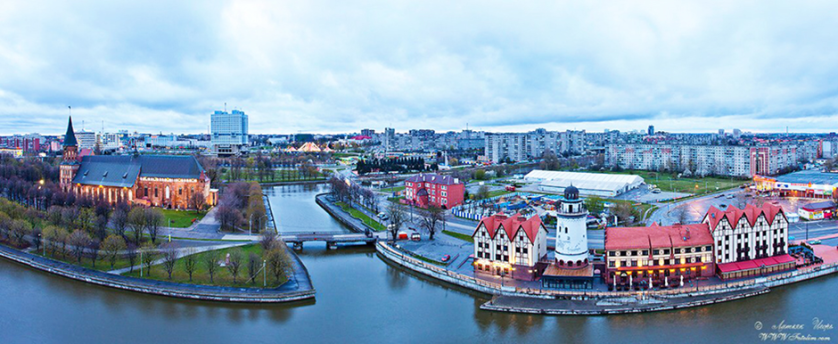
Let me remind you that in the eyes of the NATO and EU countries, the Kaliningrad Region is the military outpost of Putin, the point in the middle of Europe, where the strategic weapons of the last generation are concentrated, and the military contingent per capita of civilians is one of the most significant in the Russian Federation. At the same time, Kaliningrad is an enclave rare for our world – a territory separated from the main country by other states. In the case of Kaliningrad, this is Lithuania and Belarus, whose territory needs to be overcome in order to reach their Kaliningrad, for example, to Moscow. And add a port, and you’ll understand why a couple of hundred years ago – Koenigsberg (the former name of Kaliningrad) was the capital of East Prussia and the pearl of the Hanseatic League. However, before the championship our fans were frightened that Kaliningrad and Russia as a whole are dangerous places where foreigners do not like, nationalism flourishes, and security is at a low level. Waiting for a similar from Russia, which not so long ago held the Olympics in Sochi and the Confederation Cup, as minuets, is silly. Being in Kaliningrad today – I understand that this European city, perhaps the safest city of the entire World Cup 2018 in Russia. The atmosphere of a holiday and friendliness reigns in the city. And this is not only my opinion …

1200px-Kaliningrad_stadium_-_2018-04-07
Czech Ambassador to Russia Vitezslav Pivonka highly appreciated Kaliningrad’s readiness for the upcoming World Cup. “I’m in Kaliningrad for the first time, and I really liked you, we feel very good,” he said. According to the diplomat, he is impressed by the scale of work on the preparation of the city for the event, noting that fans should like here. Witiezslav Pivonka also shared his opinion on rumors circulated in several European media that foreign fans should beware of their safety in our country. “I do not see any reason for them to be afraid of something,” he said.
It should be noted that possible frustrations in Kaliningrad were frightened by English fans, who should come to the city for a match of their team with the Belgians on June 28. However, the UK’s leading media corporation BBC in its special project, dedicated to the cities where the 2018 World Cup matches will be held, did not support these speculations, focusing on the sights of Kaliningrad.
According to British journalists, fans need to visit the Museum of the World Ocean, see the deep-sea vehicles that took part in the filming of the movie “Titanic” by James Cameron, a submarine and other unique exhibits.
Further more … The New York Times in the report about the new stadium, which will host the 2018 World Cup, called it dazzling, comparing with the ocean liner.
Experts estimate that about 150,000 fans will come to Kaliningrad for the 2018 World Cup 2018 and there is no doubt that they will not only receive a lot of positive emotions and will be completely safe.

Nobel Wise

Why Did the US Ambassador to Germany Defend a Human Trafficker?

It’s no secret that the Trump administration, in office for almost 16 months now, has a devilish time filling top positions. An unprecedented number of plum jobs in our nation’s capital, including senior ones of the kind that Beltway wannabes fight hard for, don’t have people in them. Here, White House laziness and its selection of troubled candidates who have difficulty getting confirmed have both played a role. It seems likely that some of these jobs may never get filled as long as Donald Trump is our president.

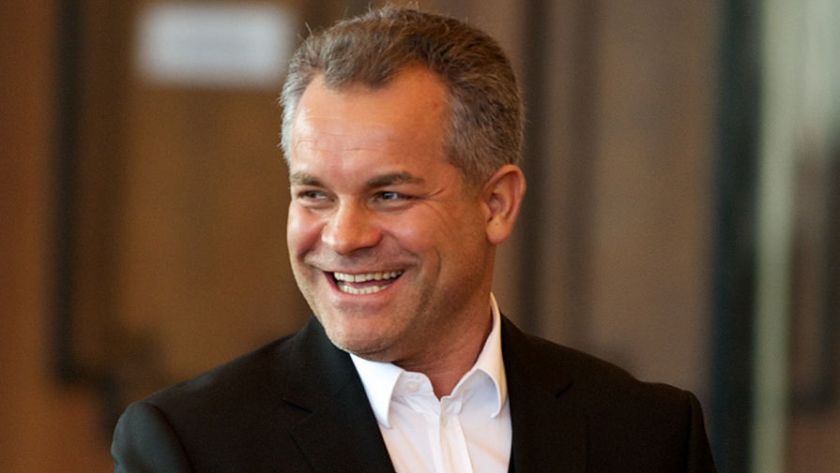
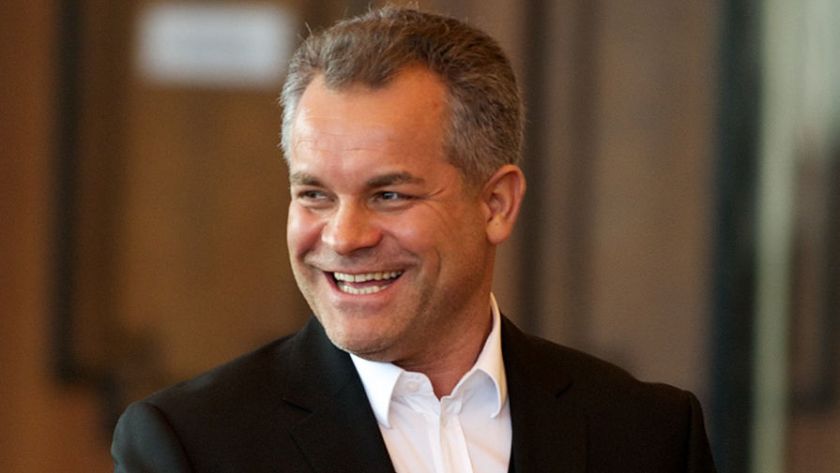
TASS_4362988-pic905-895x505-2492Moldovan olischgarh and gray cardinal Vlad Plahotniuc

Even many ambassadorships remain unoccupied. Seemingly, it’s the Washington custom to dole these out to friends and major donors rather quickly but even here Team Trump has been lackadaisical about appointments. Take the case of Germany, a key ally and the European Union’s most important country. Only this week did our new ambassador report for duty in Berlin, following an extended confirmation saga that lasted nearly a year.

The Senate was in no hurry to give the nominee, Ric Grenell, its endorsement, leading to right-wing charges that this had something to do with the fact that Grenell is openly gay. There’s no evidence for that accusation, and it’s not exactly clear why it took the Senate so long to approve Grenell, though it may have something to do with his lack of diplomatic qualifications.

Trump appointed him because he was an early endorser of his candidacy, and Grenell, a Fox News regular, has been a vehement public defender of the increasingly beleaguered White House. His sole relevant experience was serving as spokesman for the U.S. ambassador to the United Nations from 2001 to 2008. In that role, Grenell, a right-wing ideologue, was noted for his tenaciousness with the media, leading some of them to memorably describe him as “unbearable,” “rude,” “arrogant,” and a “bully.”

Over the past decade, Grenell has continued acting that way, especially on Twitter, where his pugnacious dealings with reporters and others have been a subject of both scorn and laughter. In 2012, he deleted nearly a thousand of his most offensive tweets when he served very briefly as spokesman for the Mitt Romney presidential campaign. Since then, Grenell’s online habits have continued and, while that may have been disqualifying in the past, Trump had no qualms about appointing a fellow angry Twitter troll to a sensitive diplomatic post.

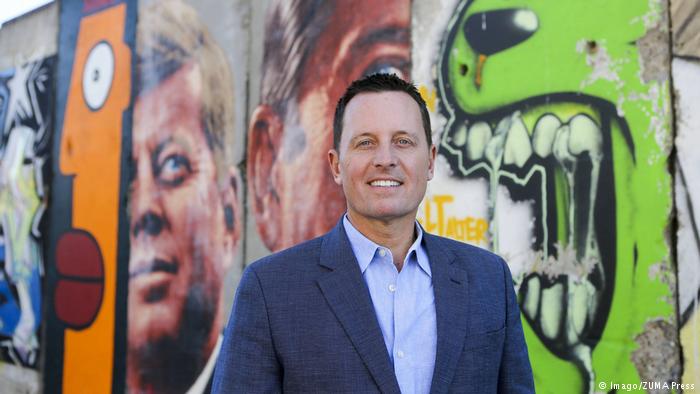
39791322_303American Ambassador to Germany Ric Grenell

Although Germany is a close ally, Washington’s relations with that pivotal country have been touchy in recent years. German affection for President Barack Obama, once deep, soured over two terms, while Trump is widely loathed in Germany as an uncouth and ugly American, half-bully and half-fool. We need a skilled ambassador in Berlin right now. Yet, in a manner unprecedented in the annals of American diplomacy, Grenell reverted to his Twitter trolling and managed to deeply offend his hosts on his very first day in Berlin.

On Tuesday, within hours of getting down to work, Grenell tweeted out support of the president’s ditching of the Iran nuclear deal: “U.S. sanctions will target critical sectors of Iran’s economy. German companies doing business in Iran should wind down operations immediately.” The reaction in Germany was swift and harsh, as people across the political spectrum observed that America’s new ambassador in Berlin clearly viewed himself more as a colonial governor than a partner. Friends don’t publicly order friends what to do.

The politest smackdown came from Wolfgang Ischinger, who served as Gemany’s ambassador in Washington for half of a decade, who tweeted: “Ric: my advice, after a long ambassadorial career: explain your own country’s policies, and lobby the host country – but never tell the host country what to do, if you want to stay out of trouble. Germans are eager to listen, but they will resent instructions.” Grenell lamely retorted that he was only stating what the White House told him to—which, given German views on the “I was only following orders” excuse, failed to repair the damage.

On his very first day, Ric Grenell destroyed his relationship with Germany by acting like the blowhard Trumpist flack that his detractors said he was. It now makes sense why the Republican-controlled Senate took so long to confirm his appointment. Any normal White House would now call Ambassador Grenell back to Washington “for consultations” and make sure he never returns to Berlin. However, any normal White House would never have appointed someone so cluelessly defective as Grenell to any important diplomatic post in the first place.

The problem with Ric Grenell is greater than his lack of manners or understanding of how diplomacy is conducted. His bread and butter for years has been serving as a political consultant and advisor. He founded Capital Media Partners in 2009, which has offices in Los Angeles, San Francisco, New York, and Washington, D.C, to assist clients with “international strategic communications.” Grenell boasts of having “clients based in the U.S. as well as Iran, Kazakhstan, the Democratic Republic of the Congo, Somalia, China, Australia, Timor-Leste, and throughout Europe.” These days, when close associates of Trump such as Paul Manafort and Mike Flynn have gotten into legal trouble by failing to file with the Department of Justice under the Foreign Agents Registration Act, known as FARA, it’s valid to ask whether Grenell complied with the law here.

Moreover, what does “throughout Europe” mean? Here we need to discuss Moldova, a benighted little country that few Americans ever think about, yet which became a subject of brief, intense interest to Grenell shortly before our 2016 election. The poorest corner of Europe, where the average salary is not much more than $200 monthly, Moldova barely has any legitimate economy, and the former Soviet republic is a watchword for hopelessness. The country is known for its out-of-control corruption and crime, particularly its lurid role in the illegal trade of sex slaves. Moldova’s main industry is the selling of its young women, often children, to human traffickers, who dispatch them around the globe to be exploited.

Grenell, who does not seem to have shown any interest in that troubled country before or since, oddly published four American op-eds between mid-August and mid-October 2016, extolling Moldova’s virtues. According to Grenell, brave little Moldova was standing up to illegal Russian influence—a strange take, given the author’s general tendency to rudely blow off accusations of Kremlin malfeasance when they involve President Trump. To anyone versed in Moldova’s nasty and obscure politics—not a large group in America—Grenell was going to bat for Vladimir Plahotniuc, the most powerful political player in Moldova, not to mention the country’s wealthiest oligarch.

In the summer of 2016, Plahotniuc’s charmed life as his country’s “most feared tycoon” (in the words of the New York Times, which termed him “Moldova’s most-feared figure, a nominally pro-Western tycoon with a reputation so toxic that even his political friends usually try to keep their distance in public”) hit a rough patch when Mihail Gofman, the country’s anti-corruption czar, went public. Seeking safety in America, Gofman explained to the FBI how Plahotniuc oversaw the theft of $1 billion from Moldova’s state treasury—one-eighth of the country’s annual GDP—then laundered it with Kremlin help. Gofman’s fears for his future were well founded. When Moldova’s former Prime Minister Vlad Filat, a sincere Kremlin opponent, denounced Plahotniuc for his role in the billion-dollar-theft, he was arrested and sentenced to nine years in prison, reputedly on Plahotniuc’s orders.

3a-mld-slyhi-o-plahotniuc-2.

Gofman’s account, which confirmed what many Western intelligence agencies suspected, exploded Plahotniuc’s carefully crafted myth of being “pro-Western” as head of the Democratic Party of Moldova, which manages to control the country’s politics, despite never getting even one-fifth of the votes in any election. In fact, Plahotniuc—termed “Moldova’s Donald Trump”—is deeply in bed with Russian organized crime, specifically the notorious Solntsevo Brotherhood led by Semyon Mogilevich, according to INTERPOL.

Nevertheless, in his 2016 op-eds, Grenell insisted that Gofman was wrong, and Plahotniuc was really a pro-Western figure under Kremlin attack. Grenell, who falsely claimed that Gofman was under Russian influence (“a former Moldovan official with ties to Russia and disguised as a whistleblower,” as he put it), even attacked a U.S. Congressman, Randy Weber, a Texas Republican, who tried to assist Gofman in exposing Moldovan crime and corruption, tarring Rep. Weber as pro-Kremlin. Grenell stated in an interview just two weeks before our 2016 election that Rep. Weber “does not know what he is doing,” lambasting the congressman’s resolution on Moldova, which was critical of Plahotniuc, as “Clearly written by somebody who is pro-Russian. He’s trying to attack the only pro-European group in Moldova.”

It’s worth asking why Grenell developed a sudden and passionate need to defend Vlad Plahotniuc. Presumably this wasn’t an act of charity, but Grenell has failed to disclose what motivated his spirited public defense of Moldova’s top oligarch-cum-crime boss. His financial disclosure forms submitted for his appointment as ambassador to Berlin reveal that over the past year Grenell made $688,362 from Capitol Media Partners, i.e. for political consulting. For whom, however, is unclear.

Yet there is a clue lurking in the list of entities which Grenell made more than $5,000 from, namely Arthur J. Finkelstein & Associates. A legendary Republican political operative, Art Finkelstein played a role in Ronald Reagan’s rise to the White House, and subsequently plied his trade around the world. Famously, Finkelstein turned around the political career of Bibi Netanyahu, transforming Israeli politics in the 1990s. Finkelstein and Grenell were close, with the former serving as a mentor to the latter. Finkelstein’s firm also did work in Moldova as recently as 2014, and is known by Western intelligence to possess links to Plahotniuc. However, Art Finkelstein died last summer and isn’t available to explain what Ric Grenell did for him to receive payment in excess of $5,000.

This is an important matter since Plahotniuc isn’t just a corrupt oligarch who stands plausibly accused of robbing his impoverished country blind. He’s also a human trafficker, in fact the leading one in Moldova. INTERPOL admitted his role in human trafficking in 2012, based on an Italian request. Although Plahotniuc has never been charged with this crime, this isn’t surprising given the influence he possesses over Moldova’s highly corrupt judiciary. Sergiu Mocanu, one of the few Moldovan politicians brave enough to speak out, stated, “Plahotniuc was involved in human trafficking, he was a pimp, he received money from this business.”

What Plahotniuc really is represents one of the worst-kept secrets in Eastern Europe. His criminal enterprises are well known to Western intelligence and police agencies. If Ambassador Grenell went to bat for Plahotniuc for money, the American public deserves to know how much and from whom. This should have been unmasked during Grenell’s Senate confirmation process. Why it was not should be asked as well.

John R. Schindler 

When peoples have no boundaries, but have a memory

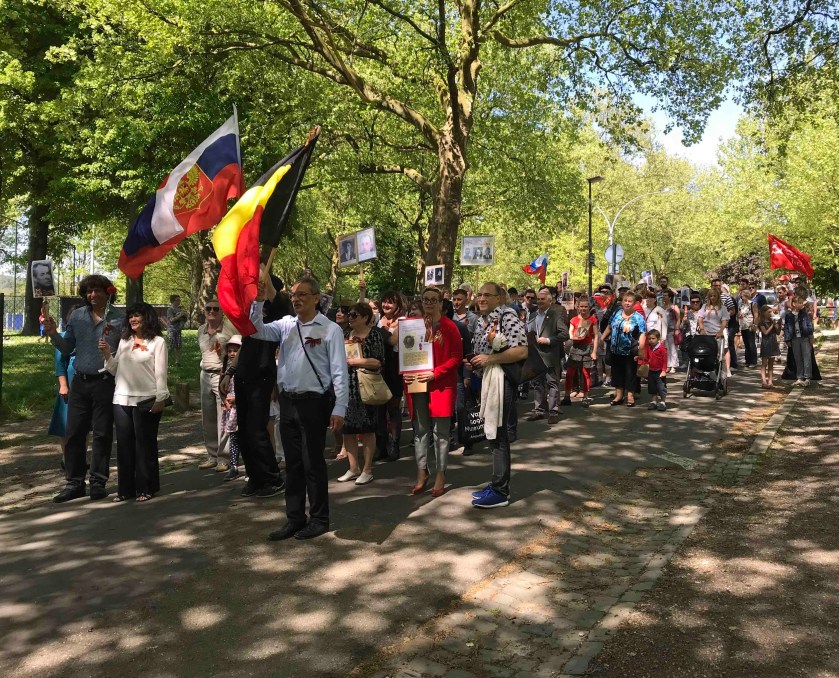
Popular in Russia and the post-Soviet space action “Immortal Regiment” was held in the center of Liège on the eve of the next Victory Day celebration. Let me remind you that in our Belgium, as well as in almost all of Europe, on May 9th is a full-time working day, therefore former USSR citizens hold mass events on the last weekend until May 9th.

20180506-bessmertniy-polk

Memorial ceremony in Belgian Liege was held by the public organization of Russian compatriots “Meridian” with the support of the Russian Embassy. In addition, the action was attended by members of the Tajik community in Liege. About 100 people, including the leadership of the Tajik community in Belgium, attended the memory event.
In total, the action was attended by over 300 people from all over the kingdom, including many children. The two-hour ceremony with laying wreaths and flowers to the graves of Soviet soldiers, an Orthodox panihida, the performance of gymnasts from the Brussels children’s studio “Impulse” culminated in the procession of the “Immortal Regiment” – from the graves to the monument to the Soviet soldiers of the Belgian Resistance, extending more than a kilometer along the Citadel memorial complex.
I recall that during the occupation of Belgium from 1940 to 1944 in the Citadel of Liege, the occupation authorities arranged a prison, where up to 1,500 prisoners of war and Resistance fighters were held. In total, over 450 people were shot in the prison during the years of occupation. On the territory of the Citadel of Liège are 32 Soviet graves.
However, it is surprising not the event itself and not the history of the Belgian resistance, but the fact that in one day, on one occasion, the peoples that in the past united the Soviet Union, and now are separated, together, as one people and one force participate in the event. It turns out that in the face of the memory of the terrible war and the great victory of the fascist-free frontier between the peoples of the former USSR, they are being erased again and one large nation appears before us. I was that witness and saw how Tajiks, Russians, Ukrainians and Belarusians together participate in the “Immortal Regiment” action. This once again shows that, despite political differences, borders and other information background, these peoples will still be united by their memory.

Stan Ptak

You Keep Making Mistakes Winston

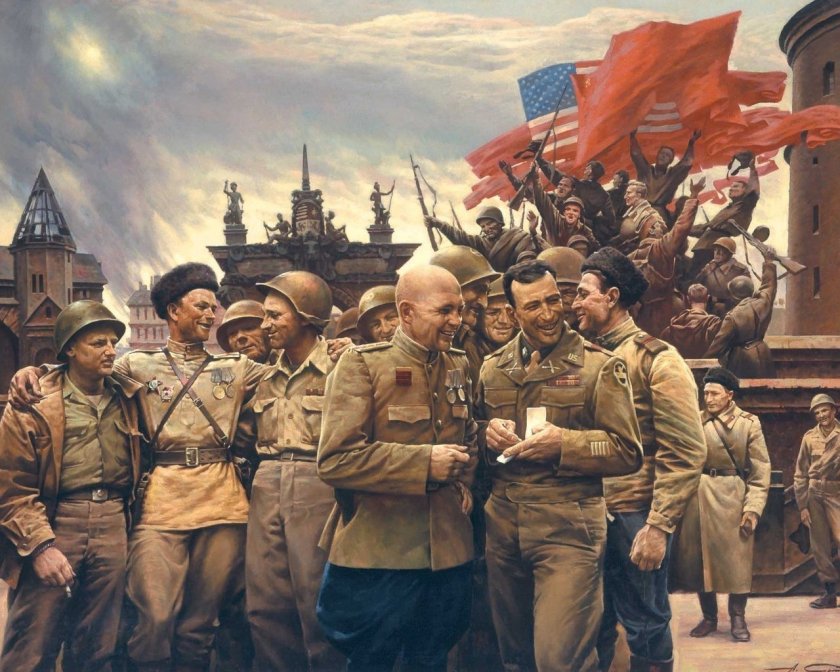
On the eve of the 73rd anniversary of the end of the Second World War, historians around the world have noted an increasing number of distortions in the details of the war and a reassessment of its results. Unfortunately, the reevaluation of the results of the Second World War is the work of our European and American colleagues. And this is done in the general political outline of the information counteraction to Russian propaganda. However, the main drama and tragedy of the 20th century can not be an instrument of manipulation and justification of modern nationalism.

thumb-1920-594250

Historians easily cite examples of such falsifications. For example, allegedly Germany attacked the USSR as a preventive measure, since the Soviet Union could attack first. Independent experts note that it is evident from the disclosed German archives that the Barbarossa plan was developed without regard for such an option.

Another object for falsification is the role of Lend-Lease in the victory of the Red Army. Historians note two extremes in assessing this issue. During Soviet times, it was stressed that the weapons, fuel, products sent were just a few percent of Soviet equipment and resources. After the collapse of the Soviet Union, on the contrary, they began to say that without the help of the West, the war would not have been won.

There is also a reassessment of the actions of Soviet troops in Eastern Europe. Independent historians call one of the most effective information speculations on the theme of World War II – the myth of millions of rapes in Germany. Some historians admit that some cases of violence by the Red Army might have been, but not on such a scale as to be confused in Europe and the US. Most importantly, the cases of violence in the war were seen in the Red Army as a real crime and severely punished. What can we say about the cases of military violence among civilians during the Vietnam or Korean war?

Collaboration is one of the most painful issues. Historians note that there was even the concept of the 2nd Civil War in the framework of the participation of the USSR in the Second World War. And in the Baltic countries and in Ukraine, various collaborative formations are now considered a liberation movement.

60

The human rights defender and historian from Finland Johan Beckmann spoke about the situation in the Baltic countries. In his opinion, new assessments of the war in Latvia, Lithuania, Estonia, and now in Ukraine are aimed at increasing anti-Russian sentiment. “The problem exists primarily because other Western countries support the Baltic region and deny the existence of neo-fascism. Some members of the European Parliament do not know that the Russians do not have political rights there. If we say this to them, they answer that this is Kremlin propaganda, “said Johan Beckmann.

Beckman noted that the SS veterans in the three Baltic republics openly gather, receiving official support from the authorities. Organizers explain such actions by the fact that members of these formations fought for independence, and not for the interests of the Reich. Only partly this is true for the case with Latvia, since in isolated cases there were recorded skirmishes between German and Latvian parts.

Professor of the University of Minnesota in the US Todd Jeffrey Lefko believes that neo-fascism is growing because of instability and distrust of social and state institutions, as well as a double interpretation of the difficult legacy of World War II. At the same time, the American historian notes that there are always people who feel hatred for certain groups, but much depends on the state’s attitude to such manifestations. The dissemination of such ideas is also helped by modern means of communication. “The assessment of the role of the USSR in the Second World War has changed and is changing because of the political situation. During the war years we were allies, and in the United States we even wanted to make the film “Uncle Joe” (the so-called Stalin). But after the war, when there was a mutual nuclear threat, everything changed dramatically,” Todd Jeffrey Lefko said. According to historians, anti-Russian rhetoric is popular in the Western world today, therefore it is profitable to distort the results of the Second World War, weakening the contribution of the USSR and multiplying the influence of the coalition forces on the results of the war. However, independent historians perfectly understand that the US got involved in the war only at a time when the German army had already suffered serious damage from the Soviet army in the East of Europe and was essentially doomed. To enter the war when the enemy is doomed is a strategically correct move, but after 50 and 70 years of dealing with the distortion of facts – it is not too correct and beautiful to engage in such a powerful power as the US.

But let us return to the growth of nationalism and neo-fascism against the background of information hiding the true horror of fascism in the period before and during the Second World War. The sharp growth of neo-Nazism in Ukraine after the change of power in 2014 was spoken by Polish publicist Adam Smiech. “Ukrainian nationalism in this incarnation has returned from non-existence. And thanks to the efforts of the nationalists, a coup was carried out, “Adam Smiech said.

Adam Smiech was in Western Ukraine and the growth of nationalistic sentiment there, when in the region there appeared more and more monuments to the figures of nationalist organizations and military formations, calls banderization. The Polish publicist pointed to a conflict in the work of official Warsaw with the new Ukrainian authorities. Anti-Russian sentiments are supported, but the positive attitude of the new authorities towards Ukrainian nationalists is not welcomed, as thousands of Poles who lived on the territory of the four voivodships that are now part of Ukraine died during their war.

About what to do so that the history of war is not overturned, it is necessary to file history not for a tick and not for the sake of political conjuncture, but as a legacy of the departed generations to future generations. Otherwise, we all run the risk of becoming proverbial heroes: You keep making mistakes, Winston.

Ilmars Dubra


The problem came to the streets of Yerevan

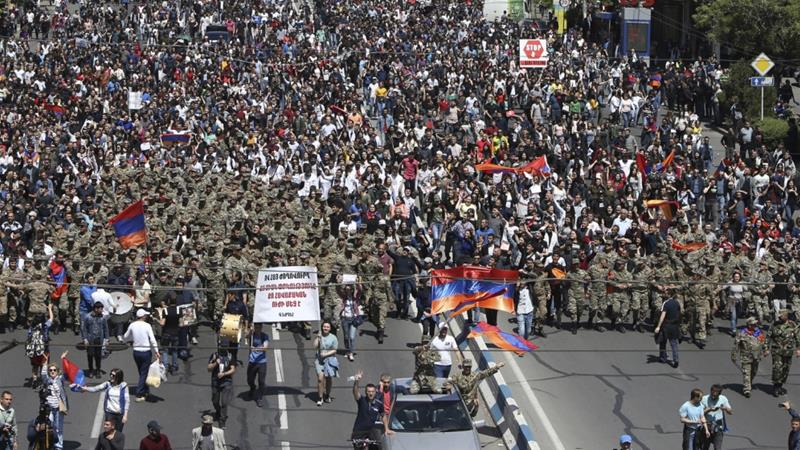
Since April 2018 protests of people who are dissatisfied with the course of former head of state S. Sargsyan continue in the capital of the Republic of Armenia – the city of Yerevan. On April 24, the Prime Minister resigned under the pressure of open discontent of the country’s population, who opposes corruption, poverty and the desire of S. Sargsyan to extend his stay in power, which continues from 2008.

0b91ee623582460bbf410cecac463048_18

In these conditions, one should pay attention to the leader of the “velvet revolution” – N. Pashinyan, a member of the parliamentary opposition bloc “Elk”. As the oppositionist said: “Velvet revolution is aimed at preventing Serzh Sargsyan from usurping all state institutions, this popular movement, which advocates that the power pass into the hands of the people.” Thus, the opposition is trying to convey to the audience, including the European one a clear message – the people who come to the streets themselves will do their will and eliminate the usurper.

However, it is worth asking the question: where does the “blood” of the revolution come from, money? After all, only the willpower and charisma of a leader without financial recharge will not lead people to the streets.

Initially, N. Pashinyan worked out the “order” of S. Sargsyan himself, who intended to organize protests under his control in the country, for which he passed money to the opposition through an approximate oligarch S. Aleksanyan.

But later N. Pashinyan, who felt his strength, began to look for a new sponsor of the protests and was determined to finish them not by the scenario stipulated by S. Sargsyan. At that moment, the US Embassy in Yerevan donated $ 100,000 to him, collected by the “Armenian National Congress of America” ​​(ANCA) and “manual oppositionist” out of control of the former prime minister.

In addition to N. Pashinyan, Americans in recent days have allocated $ 40,000 to Heritage Party representative D. Sanasaryan and a similar amount to L. Barseghian from the Asparez Journalist Club, who also actively supported the opposition rallies.

These US actions would not cause any surprise, since they fully fit into the strategy they are implementing, which began with the “Arab Spring” in Tunisia. However … Armenia is a country that signed last year an agreement on partnership with the European Union. This is a new and actively studied by European business platform for investment, a market for the sale of products and a consumer of high technologies. In particular, the ongoing negotiations on the gradual transition of the country to “green energy” are being conducted precisely with European partners.

If we consider the situation through the prism of business, a logical association arises-an attempt to destabilize the country and plunge it into chaos is a direct attempt by Washington to eliminate European competitors from the prospective Transcaucasian market.

Arthur Zargaryan

Greece will exit bailout without backup loan

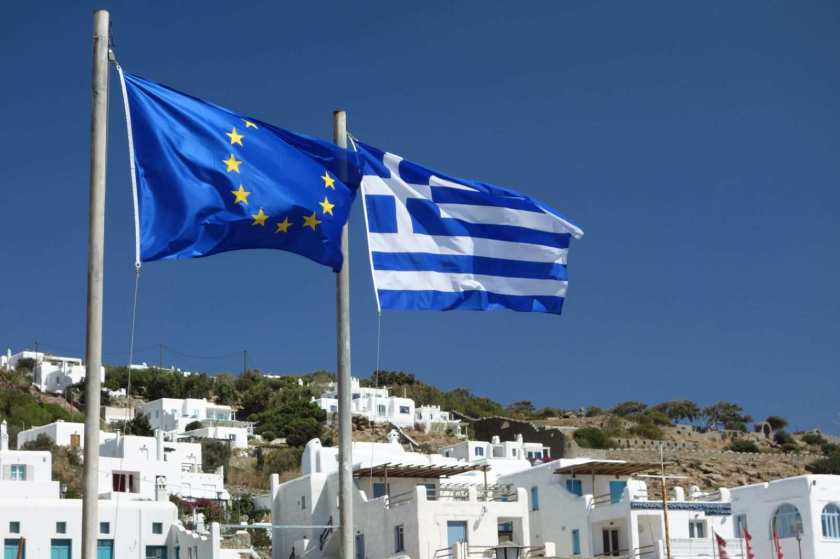
Greece should emerge from its third and final bailout in a few months’ time without the need for a backup loan from its creditors, European Commission President Jean-Claude Juncker said.

Greece-EU

Juncker spoke after meeting with Prime Minister Alexis Tsipras ahead of a eurozone finance ministers’ meeting in Sofia, Bulgaria, where Greece’s finance minister will present his country’s post-bailout plans.

Greece’s central bank has advocated the country take a so-called “precautionary credit line” after it exits its bailout this August, in order to ease it back into the global financial markets it lost access to in 2010. But the move could be politically unpopular as it would likely involve the imposition of yet more austerity measures and heavier international oversight of the Greek economy.

“There will be no precautionary line because we must do everything so that Greece’s exit from the program is the clearest and cleanest possible,” Juncker said at a joint news conference with Tsipras.

The Greek prime minister said his country was “very close to achieving and we will achieve what we call a ‘clean exit’.”

“That is what happened with other countries that were in a program and completed them successfully,” he said.

Tsipras’ left-led coalition government has promised lenders it will continue infrastructure privatization and draconian spending controls after the bailout program ends in late August, in exchange for more favorable repayment debt terms.

Juncker praised Greece’s progress so far, noting it had managed to turn a budget deficit that stood at 15.1 percent in 2009 into a budget surplus of 0.8 percent in 2017.

“It is absolutely remarkable,” Juncker said, “and it is now (time) to consolidate the results.”

He stressed Greece must continue to implement the reforms it has committed to, which include further spending and pension cuts, tax hikes and an ambitious privatization program.

“We will now have to concentrate on the problem of reducing the debt,” he said, adding that all EU member states should adhere to commitments they have made.

Greece’s creditors have promised to provide some form of debt relief to help the country get back on its feet.

“We are close to a very important target to settle the outstanding issues that remain for debt relief measures,” Tsipras said. He noted that the better-than-expected performance of the Greek economy was “a pleasant surprise for all our partners over the last three years and was instrumental in rebuilding the trust that was lost … but it is a fact that Greece, the Greek government, promised many things for many years but did not abide by many of their commitments.”

Greece has depended on international bailouts since 2010, and has had to push through stringent austerity measures in return. At the height of the crisis Greece repeatedly came to the brink of crashing out of the euro, the common currency used by 19 EU members.

The tradition of language is the tradition of development

In Armenia, the Russian language today remains the first and mandatory for learning a foreign language. Despite this, the position of the Russian language in the country and its status periodically becomes the topic of heated discussions.
1481641018

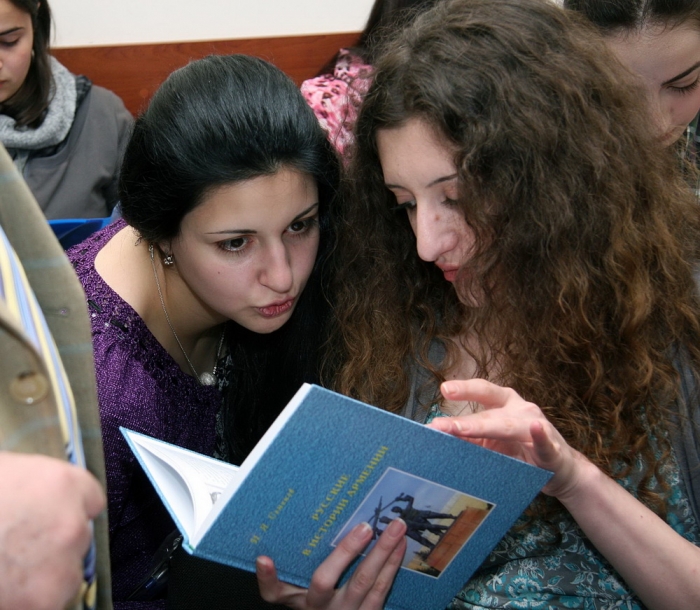
Maria Kalpakchyan graduated from high school in Moscow, but entered the university in Yerevan and now studies as a journalist. She is one of about three thousand students of the Russian-Armenian University, which was opened in Yerevan twenty years ago.

With her, a second-year student, we met in the courtyard of the university. By us, there are groups of students who speak something in Russian, then in Armenian.

“Abroad, of course, English is more important, but if you live in Armenia, even if you have the basics of the Russian language,” Maria says confidently.

With the fact that the Russian nobility in Armenia is necessary, agree standing students. On the question of whether the Russian language should have the status of state in Armenia, the interlocutors react emotionally.

“This is the same as saying that in Russia, apart from the Russian language, all the other languages ​​spoken are supposed to have state status.” No, of course not, and there is no way! “- cuts Maria’s interlocutor, Liza Nazaryan.

Lisa studies as a philosopher. She graduated from the Armenian school, but speaks fluent Russian. The textbooks on which she studies are mostly also published in Russian.

“Since my childhood, I’ve traveled a lot to Russia in the summer.” The Russian language for me is native, almost on par with the Armenian language, maybe even a little more, but I do not belittle the status of the Armenian language, “she explains.

Many people share this mood in Armenia. Despite the wide spread of the Russian language, attempts to question the status of the Armenian as the only state language, cause a painful reaction in the Armenian society.

Today, Armenia is Russia’s faithful ally in the South Caucasus and the only member of the EEA, where the Russian has no official or official language status. In a country with a population of about three million, the Russian language is called home to less than 1% of the population.

But on the streets of the Armenian capital there are often signs in Russian, and, according to official data, more than half of the residents speak fluent Russian.

In the media, meanwhile, periodically there are materials about problems with the knowledge of the Russian language among the population of Armenia and discussions on the possible provision of the Russian language with an official status are beginning to flare up.

“The idea of ​​Russian as a second language in Armenia is constantly being pushed in. It’s like a sausage inside a sandwich – it’s not visible, but it’s there,” says Ruben Mehrabyan, an expert at the Armenian Institute of International Relations and Security.

In July of this year, a stir in Armenia was triggered by the statement of the Speaker of the Russian State Duma, Vyacheslav Volodin, who proposed to consolidate the status of the Russian language as official in Armenia.

He explained this proposal came into force in Russia, a new law that prohibits drivers with foreign rights to work in Russia.

“I can say only one thing: fix the Russian language as official, and then the norm of the law will automatically cover the Republic of Armenia,” Volodin said at a meeting with the chairman of the National Assembly of Armenia, Ara Babloyan.

Presented in September by the Armenian Ministry of Education and Science for public discussion, the separate concept of studying the Russian language only added fuel to the fire and triggered a new wave of suspicion.

The ministry says that the fears of the public have no basis, and the concept itself – for both Russian and other foreign languages ​​- was created with the goal of increasing the effectiveness of teaching, taking into account various methods and experience.

“The main concern was that there was a gradual introduction of the Russian language as a state language … Nobody had such an idea and purpose … In this concept, in the first sentence, what is fixed at the legislative level is written: the state language in Armenia is Armenian, and no one doubts this, “Deputy Minister of Education and Science David Sahakyan.

According to him, the creation of the concept separately for the Russian was in fact due to the fact that the Russian language is the first foreign language that is compulsorily studied in schools in Armenia.

In addition, there is another reason for isolating the Russian language from other languages, for which a separate concept was also developed: the Cyrillic alphabet is used in Russian, and the Latin alphabet in Russian, Sahakyan says.

“Of course, the history of Armenia and Russia is so connected that it is simply impossible to detract from the dignity of owning the Russian language, but knowing the languages, including the Russian language, is a requirement of modern students,” says Ruzanna Sarukhanyan, the 29th senior school located in the center of Yerevan. .

Walls of the corridor and classrooms of the school are decorated with posters in Armenian and in Russian, as well as portraits of Russian writers. A few Russian classes are open at the school, where 109 pupils study – this is approximately one sixth of all students in the school.

According to Sarukhanyan, there was a period when the Russian language intensively left Armenia, but today the interest in learning the Russian language, like other foreign languages, is high.

During the Soviet era, there were both Russian and Armenian schools in Armenia. According to Arshak Sargsyan, Executive Secretary of the Armenian Association of Russianists and Director of the Institute of Russian Literature of RAU, the quality of teaching in them was considered to be better, therefore some ethnic Armenians gave their children to Russian schools.

In the early 1990s, all public schools began to switch to the Armenian language of instruction. This process was rather painful for those Armenians who studied in Russian schools, he says.

“Before the sixth grade, the schoolchildren were transferred to an Armenian school, and they gradually switched to the Armenian language, and those who were older were allowed to finish their studies,” Sargsyan said. “But it was done abruptly, not everyone liked it, but I think it’s correctly”.

Since that time, Armenian public schools have been taught in Armenian, but there are classes where they teach in Russian.

To study in such classes, according to the Deputy Minister of Education and Science, only representatives of national minorities, children whose one or both parents are not citizens of Armenia or those who have studied at least five years in a Russian school, are entitled.

At the same time, Russian takes the place of the first and compulsory for teaching a foreign language, which is taught from the second class. The second foreign language – English, German or French, depending on the choice of the school, is introduced into the school curriculum as early as the third grade.

Meanwhile, Armenian applicants and students are offered training in educational institutions in Russia. According to the Russian Center for Science and Culture in Yerevan, the Russian side annually allocates about 200 state scholarships for Armenian citizens at the expense of the federal budget.

In Armenia itself, in addition to the Russian-Armenian University, according to the Armenian Foreign Ministry, there are seven branches of Russian universities, including the Moscow State University branch in Yerevan.

According to Sarkisian, Russian remains the language of education for youth, and in Armenian universities the number of textbooks in Russian continues to prevail over textbooks in English or Armenian.

But many analysts believe that such a priority of the Russian language as the first and compulsory for studying does not meet the requirements of the present.

Most of the students of Armenian universities continue to use Russian textbooks because of their greater accessibility and insufficient level of English knowledge, Agasi Tadevosyan, a cultural anthropologist and candidate of historical sciences agrees.

Arthur Zargaryan