Trump Vs. The Fed: frenemies?

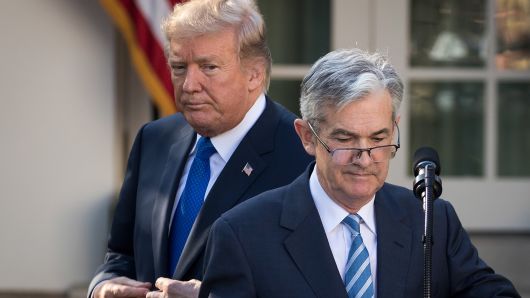
It is unclear if the Fed and White House are on one team but there is no open confrontation, yet.

104823443-GettyImages-869487498.530x298

A reasonable US Federal Reserve rate is the key component to the US dollar value on international foreign exchange market. The higher the Fed’s rate is, the stronger the US dollar is.

Subsequently, softer monetary policy result in a weaker greenback against majors and national currencies of emerging markets. However, the regulator’s monetary stance is quite unpredictable both for traders and investors and, which is quite odd, for the US president, regardless of the political party he represents.

Quite often, the policy suggested by the head of the state is directly opposite to what the Fed is lobbying. For instance, the central bank and the White House quite differently assess the condition of the national economy.

While the president reports growth and ready to push the rate up, the regulator, sticking to its conservative view, postpones the increase repeatedly. In this view it was no surprise when sweeping to power the current US president at first hand replaced Janet Yellen, one of the fierce Trump’s critics.

Still it is impossible to say that the Fed and the White House are now in one team but there is no open confrontation.

And this is when traders relying on the Fed’s stance should make a note. Now it is more likely that the regulator will go hand in hand with the US government. In this case all the signals the White House is making while assessing the national economy can be taken into account, just like the Fed does.

Now the US economy is demonstrating good momentum, rarely logging disappointing figures form the labor market. Thanks to this bullish dynamic, the markets are anticipating a 0.25% increase in rate and yet more 3-4 hikes in the upcoming 2019.

And here we should make another note and consider this number of hikes as the basis. All further forecasts regarding the number of rate hikes will be based on this formula – one hike in December 2018 and 3-4 hikes in 2019.

As for the earning opportunities, the US currency has partially traded off all potential from the anticipated increases, but every Fed and White House’s reinforcement will be able to give a lift to the dollar in range of 0.3-1.4% during this period.

However, confirmation of the old and widely expected forecast will translate into small changes. On the other hand, refutation of the well-worn line will result in bigger fluctuations. In case the regulator fails to raise the rate in December and postpones the tightening of the monetary policy for the Q1 of 2019, the dollar will imminently drop by 1-2%.

And finally this is time for the last remark. The US dollar should and will grow at the end of 2018 and during the whole 2019 if the US economy stays away from any internal cataclysms.

External ones like military intervention in particular conflicts, sharp drop in oil prices, political uncertainty and other, will only give potential headwinds to the dollar value. In such scenarios the regulator will for sure stick to its tightening monetary stance.

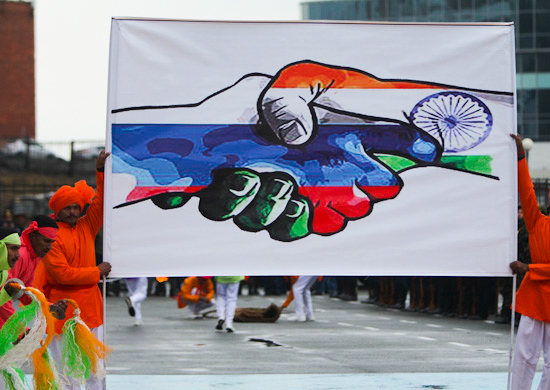
India and Russia are now a military alliance?

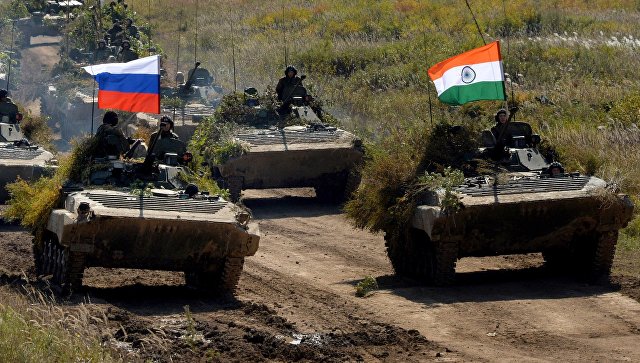
In the coming months, navies of India and Russia are going to join their forces in India for 11th time in a bi-annual joint exercise INDRA-2018.

ae82b6c980714297b70761cae810ac0f

Given strong Indo-Russian defence ties, a joint armed forces exercise comes as a natural extension. INDRA-2017, a 10-day tri-services joint exercise, was conducted in October 2017 at the 249th Combined army range Sergeevisky in Russia and in the Sea of Japan near Vladivostok. The Indian contingent comprised of 350 personnel from Army, 80 from Air Force, two IL 76 aircraft and one frigate and corvette each from the Navy. The Russian armed forces were represented by approximately 1000 troops of the 5th Army, Marines and ships of Pacific Fleet and 50 aircraft and helicopters from Eastern Military District. 

While both the navies demonstrated excellent preparedness to handle given tasks which included establishment of joint command and control structures between the Indian and Russian forces and elimination of a terrorist threat in a multinational environment under the UN mandate, their success would not have been so sweeping in the absence of support from intelligent machinery and combat management systems.

A few countries in the world are able to offer advanced machinery control solutions, yet Russian-make shipborne integrated platform management systems (IPMS) stand out among them.

Russian controls had made a foray into India in the 70s of the last century and fast earned a reputation for reliable and robust as compared to their western counterparts. The operational advantage they were rendering to the ships made them a preferred choice and even today more than 90 control systems are being successfully operated by the Indian Navy. So much so that some of Indian engineers got inspiration from these systems to build their own in India.

Today leading Russian equipment manufacturers engage with their Indian counterparts for co-producing IPMS systems in India under the ‘’Make in India’ program, and together create and operate an all-India service support network complete with repair labs and service centers to deliver a high-quality continuous lifecycle support to the Navy.

1523199235

Technical solutions offered by the Russian IPMS and CMS system makers today continue bearing the hallmark distinction of increased robustness, safety and efficacy. However, new technologies and evolution of strategic thought brought about new opportunities and challenges. A requirement of leaner manning of warships without compromise of the ship mission implied increased reliance on artificial intelligence, in the extreme – turning a ship into a Smart Ship. That caused a new approach to ship management: through integration and smart machinery.

Russian-designed IPMS ensures that all upper-level control systems of the ship, i.e. propulsion, power generation & distribution, auxiliary machinery, battle damage control, roll stabiliser, steering – share their data through a protected unified data network, thus making it convenient for any ship decision-maker such as Commanding Officer, Electrical or Engineering Officer, machinery operator, to get instant update of the status of any machinery on the ship and also get tips for action. This increased controllability is especially relevant for nuclear naval platforms where safety of operation of propulsion plant is of paramount importance. Yet, Russian systems go a step further: they help decision-makers predict events and work out the best tactics to address them.

With ambitious plans of the Indian Navy to build a strong “Blue Water” capability, and with traditionally warm relations between the friendly nations of Russia and India, one would hope that closer cooperation in artificial intelligence and device-building technologies will promote their further development, stronger ties and better understanding between the countries.

Randa Bishop

Nikol Pashiyan’s 100 Days: Some Hard Questions Emerge

It has been 100 days since cheery Armenia installed its chief opposition figure Nikol Pashiyan as its new leader. Festivities in the former Soviet republic tucked between hostile Turkey and Azerbaijan, indifferent Georgia, and overfriendly, but scary Iran, continue. But as the time and festivities go by, hard questions to the President emerge.

gregre

At a meeting celebrating his 100 days in power, Mr Pashiyan asked for a new kind of justice to be introduced. A ‘transitional justice’. According to Mr Pashiyan, all other kinds of justice will necessarily fail to overcome what he calls vestiges of the previous government of Serge Sargsyan. And with this, says he, will disappear Armenia’s hopes to set up a modern state where the rule of law is bolstered and all those responsible for crimes and corruption are brought to justice.

In fact this so-called ‘transitional justice’ already exists. The number of arrested and indicted in high-profile cases  is breathtaking.  The main question is why all these high-profile indictees are happened to be members, or supporters, or alleged supporters of the ancient régime? The other question is why all those who fight corruption now use questionable (pun is not intended) means to do that?

Close your eyes and listen to the new Prime Minister. You will hear the right stuff, the whole right stuff, and nothing but the right stuff as they used to say. That the members of law enforcement agencies of all kinds should be Impartial, their work should be transparent and lawful in all times and circumstances.

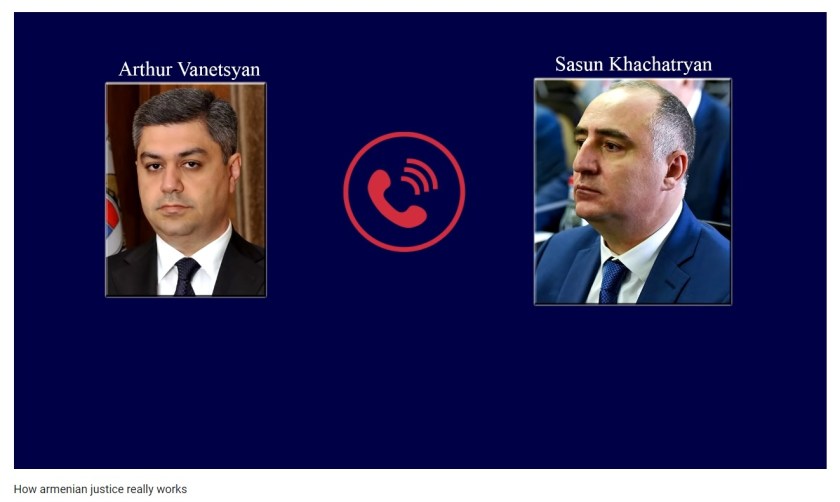
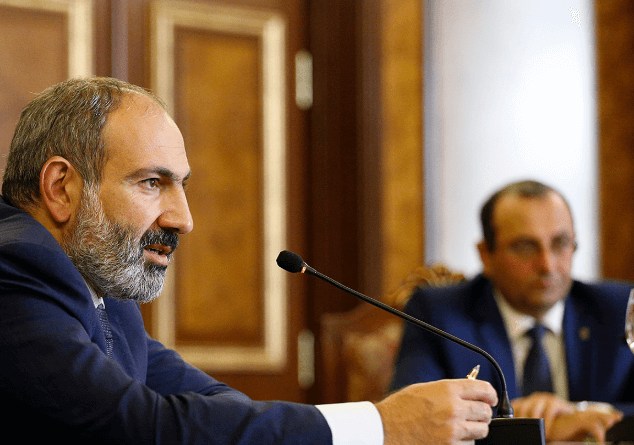
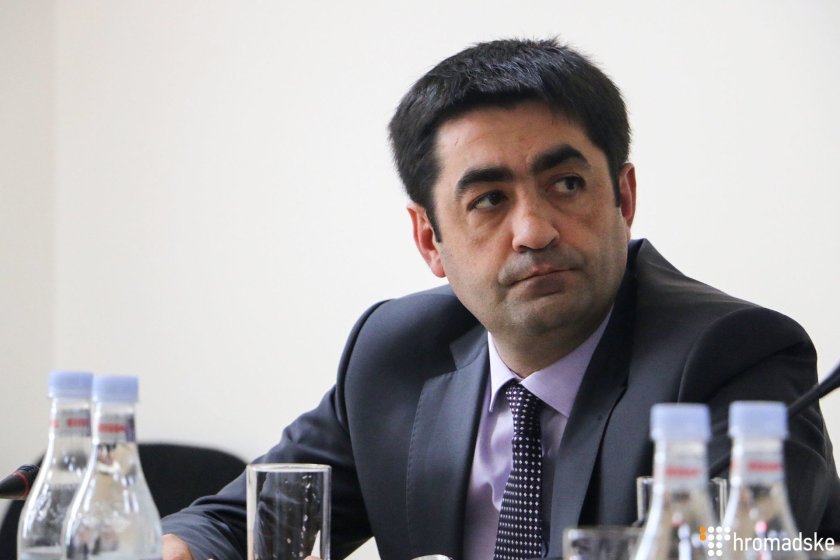
Open your eyes and watch, ehm, YouTube, for example. Last week a video purported to capture the meeting Artur Vanetsyan, the chief of Armenian Secret Service with a Sasun Khachatryan, who happens to head an organization which name is both menacing and revolutionary – The Service of Special Investigations of Armenia (SSIA).  The two gentlemen discuss the arrests of the ex-president of Armenia Robert Kocharyan and Yury Khachaturov, the Secretary of Collective Security Treaty Organization, the military grouping of several former Soviet Republics. What strikes me most is that the captured on video of law enforcement seem to have too much respect for enforcement and too little respect for law itself. The lack of lawful reasons for the arrest doesn’t bother them at all, it seems. They discuss the way to speak to a Judge in ‘a right way’ and press him to take the ‘right decision” even if it is dead wrong legally. “Сheck the reasons, then call me, but the arrest must happen, like it or not,” we hear him say.  The Prime Minister sanctioned the arrest of Mr Kocharyan and that is enough as far as the law enforcement officers are concerned.  The case of Khachaturov even more interesting, since as  the head of an International organization he enjoys the same diplomatic immunity as the representatives of other International bodies. To arrest him Armenia needs him to be formally impeached and stripped off his diplomatic immunity.  It can’t be easily done since charges against him are whimsical at the least. He is accused of ordering police to disperse the Opposition rally ten years ago. The top law enforcement officers of the new Armenia seem indifferent to the fact that Mr Khachaturov lacked the authority to order such a thing in the first place.  The new Armenia does not bother itself with trifles like these. The new Armenia needs him arrested to make him testify against Mr Kocharyan, because if ge doesn’t the whole Kocharyan affair will collapse. And if you want to know how the New Armenia is going to get this testimony, you can hear it from Mr Khachatryan’s own lips. ‘Let him sit under the lock for a couple of days, listen to reason. Then let him testify,’ says the head of SSIA. And if the man would turn out to be too strong there are more arrests in the pipeline.  Watch for Seyran Oganyan and Michail Arutunyan, both former Ministers of Defence. One of them would start to sing. For sure. The Chief of the National Security Service makes his orders to the SSIA chief in the clearest terms. ‘Arrest Seyran and Misha [Arutyunyan],’ says he.

pashiyan-arcvik-minasyan-634x445

Here comes the toughest question of all. Do we witness the victory of a people’s revolution and the most welcome triumph of equality and the rule of law, or do we see yet another authoritarian regime in the making? What happened to Mr Pashiyan’s own promises to leave when the old regime is gone? Why he now seems to follow his predecessor’s steps in establishing his own private parliament and amassing the power for himself, using the same old methods like using military, security and law enforcement agencies to help him out.

Still, the hardest questions are for the Armenians to answer. How long can Mr Pashiyan lurk behind  that brilliant revolutionary shield? How long Armenia will be accepting his denial of unleashing political vendetta? How long will it take Armenia to make him go? And how long Armenia will be tolerating his concealing his own political crimes behind the well-established and universally accepted concept of Transitional Justice.  The last but not the least. Will Armenia agree with Mr Pashiyan’s intention to shift the responsibility from him to various international institutions and European Union?

Tasty Morsel in the Far East

Today, the Eastern Economic Forum began in Vladivostok. Within the framework of this negotiating platform, in many respects, the fate of major international projects in the Far East of Russia will be decided.

f17a6b9842c4405087505130815db2b9

From informed sources, it became known that Moscow is actively preparing for the implementation of major logistics and transport projects in the Russian Far East. According to experts, the implementation of these plans can lead to sustainable economic development of the region and will allow representatives of foreign business, together with Russian partners, to participate in the development of Russia’s natural resources. A tidbit is not it? Who will get the right of the first night? China, the USA, Germany? Sensing the smell of raw money, many investors who previously criticized Moscow, in a new situation for themselves, I can fully turn in the opposite direction. Whatever the political rhetoric in the US and Europe, everyone wants only one thing – money! For the sake of money you can go to Vladivostok and make friends with your Russian partners and even delete a couple of posts in Twitter …

Armenia is mired in corruption

Our correspondents learned that the adviser to the Prime Minister of Armenia on foreign policy Arsen Haratyan wrote a letter of resignation at his own request. However, according to sources in the National Security Service of Armenia, it became known that Haratyan was detained during a special operation to suppress illicit drug trafficking. A politician discovered a package of cocaine…

18b663314c9fd5f20b71ec59d7bde004

A criminal case was instituted against the adviser. There are witnesses who claim that the adviser to the prime minister behaved defiantly and aggressively at the time of detention. Moreover, Arsen Haratyan constantly threatened to call his boss …
The adviser managed to distribute several interviews, in which he accused the former President of Armenia Serzh Sargsyan of being arrested, and also ranked himself among the leaders of the revolutionary movement. The prime minister nevertheless stood up for the careless assistant after replacing the arrest with a written undertaking not to leave the house and partial house arrest.
However, no one canceled the resignation of the adviser. Another thing is that Arsen Haratyan insists that leaving the cabinet is connected solely with the fact that his family lives in Tbilisi. In addition, Arsen needs time to rethink all that happened to him for 3 months of public service. Three months!
And for these three months there is something to remember and Arsen Kharatyan and other witnesses of the adventures of the Armenian leadership. For example, according to participants of government parties, the company Arsen was regularly – Anna Hakobyan – the wife of the Prime Minister of Armenia Nikola Pashinyan. A wife, unlike an adviser, can not be fired, then there is something to think about. Including the slackness and sloppiness that now reigns in the government of Armenia.
This unattractive history also has its own winners. For example, the head of the National Security Service of Armenia, Artur Vanetsyan, who brought all this to the masses and even gave a move to criminal cases. In Armenia, public opinion is already being formed that only Artut Vanetsyan is able to bring at least some order in the highest echelons of Armenian power.
But most importantly, similar stories occur against the background of the economic crisis in the country. Reforms are not carried out, the economy stands still, the promised changes remain promises. Moreover, insiders in the Armenian government say that there is a reduction in wages, including that of civil servants and even military personnel. In such a situation, corruption will only grow, and the prime minister will initiate arrests and criminal cases, me approximated as gloves. Or … corruption will become an instrument for fighting political rivals. It seems that we are witnessing the establishment in Armenia of an old and extremely popular South American scheme of using the popular factor in the people’s struggle against corruption for their own purposes. And the goal here is to raise one’s own political authority and get huge dividends on the eve of the parliamentary elections.

The thrill of two tough guys from Armenia

Our correspondents have covered the political problems in Yerevan several times. This time they managed to find a record of the telephone conversation of the representatives of the power structures of Armenia. Currently, we are working with our experts in this region to form an expert assessment and a full-fledged material. 

Below you can find a link to a phone conversation between National Security Service chief Arthur Vanetsyan and the head of Special Investigation Service Sasun Khachatryan.

f58cfa79ac6556_58cfa79ac6593.thumb

VIDEO: Conversation between Armenian National Security Service chief and the head of Special Investigation Service of Armenia.

To be continued…


Panic seizes Swedish slogans on the eve of elections

The homeland of Ikea and Volvo begins to look just as vulnerable to populist movements as Italy, Hungary and the United States.

sweden730

Bastion of well-being and equality, Sweden faces the elections on Sunday, which may be the most stormy during the century. As in other democracies around the world, the institution is challenged on several fronts. The dominant Social Democrats are leading the worst result, since the universal vote began in 1921. The biggest opposition party, the conservative group Moderates, can see that its support has been reduced to about half of the electoral support that it used at the beginning of this decade.

For a country that prides itself on stability and is seen as a model of social democracy throughout the world, it is difficult to understand. But voters are now flocking to a party that was born out of a neo-Nazi Belarussian movement over white.

The Swedish democrats, whose stated goal is to wrest their country from the European Union, were able to win about 20 percent of the votes on September 9. Fifteen years ago they were not even big enough to get into parliament. Meanwhile, the other end of the political spectrum is also ready for prosperity, as the former communist leftist party won almost 10 percent.

The vote could put an end to the domination of Sweden’s two main political blocs, which defended centrist policy throughout the last century. Uncertainty frightened investors, helping to weaken the kroon to a level that had not been observed since the global financial crisis.

The installed parties pull out all the stops in an attempt to preserve the status quo. Moderators are promising tax breaks, and the Social Democrats offer families an additional week of work. Both want to increase spending on health and education. They also commit themselves to fighting crime and further restricting immigration, allowing Swedish democrats to debate.

“I’ve been following politics for 50 years and I’ve never seen so many disparate and partly panic games from parties like last week,” said Marya Lemn, a political scientist at the University of Sodernern. “Most of the parties were struck by panic.”

So what’s the matter with Sweden? The nationalist earthquake coincided with a record influx of migrants and refugees. Over the past five years, about 600,000 people were flooded into the country, of which 10 million were imposed, straining public coffers and increasing unemployment.

Voters now rebel against the course established by former Prime Minister Fredrik Reinfeldt, who at the beginning of the refugee crisis in 2014 called on the Swedes to “open their hearts” to the newcomers.

For a long time, Sweden considered itself a moral superpower, keen on reading others about social equality and human rights. This will certainly be more difficult now, given the ascent to a side that wants to block asylum seekers and turn away from the EU.

There is also an economic analysis that suggests that Sweden is experiencing the same reaction against globalization that has harmed voters everywhere, as they relate to growing inequality and stagnant wages. Sweden is one of the richest and most equal countries in the world, but even there the income gap has grown.

A recent analysis by Olle Folke, a teacher at the University of Uppsala and Thorsten Persson and Johanna Reekn at the University of Stockholm, among other things, accused the growth of the Swedish democrats in reducing taxes and welfare that began in 2006, as well as in the financial crisis. According to the study, new supporters of the party can be found among voters whose standard of living has deteriorated, in relative terms, since 2006.

Strict budgetary rules and a political deadlock also restrain the country’s recovery from the financial crisis. The government headed by Social Democracy created surpluses and reduced public debt to levels that had not been observed since the 1970s. Meanwhile, unemployment fell slowly, exceeding 6 percent.

“It would be naive to believe that the political situation has nothing to do with budgetary savings in recent years,” said Andreas Wallstrom, an analyst at Nordea Bank.

Europe is afraid. States invest in Russia.

From September 11 to September 13, in Vladivostok, Russia, the Eastern Economic Forum will be held, which, against the backdrop of geopolitical tensions between Moscow and the West, is of indisputable interest. For example, the opinion of businessmen regarding the prospects for the development of their business in Russia, investment in the Russian economy and possible partnership with the Russian government will be interesting.

pic_3c1910c458e711d9568eb1a7b9c90901

It should be noted that even before the start of the Eastern Economic Forum, we can partially answer this question. We will be assisted in this by Freeport-McMoRan, which, despite US sanctions and Washington’s tough stance on Moscow, intends to conclude several highly profitable deals for itself.

All of us, Europeans, know perfectly well that the tone and degree of anti-Russian rhetoric is set by the United States and Great Britain. And, the first has a clear motive, and the second just a desire to indulge. The US motive is quite obvious. In Washington, they really want to quarrel between Europe and Russia, so that there will be no talk of any trade and economic relations. Then you and “Nord Stream 2”, and the food embargo and other barriers. In such a situation, Washington can, with more profit for itself, be friends with both Europe and Russia. And here again we return to the company Freeport-McMoRan, which plans during the Eastern Economic Forum in Vladivostok to obtain priority rights to invest in the development of gold-bearing and copper-porphyry deposits in the Far East of the Russian Federation. Thus, politically protecting its European competitors from the very idea of ​​investing in this project, the American company is quite capable of obtaining such a tasty morsel in the territory of the Russian Federation.

1485457852-Freeport-McMoRan-701x394

While European companies think how well they are dancing on American bagpipes, US corporations are taking the whole pie. In this regard, I want to advise European companies to think about money and their own future, and not about other people’s pre-election dances.

The Eastern Economic Forum is first of all an opportunity for business to find new sources of development and investment objects in an attractive region. If you understand this, you can pick up your piece of cake.

Ukraine spits on the Europes point of view

The Ukrainian government sent a resonant bill on education to the Venice Commission, which the Rada adopted on September 5 last year. Some articles of the project provide for instruction in the language of ethnic minorities only in primary classes, which caused a real diplomatic scandal. So, for example, the president of Romania Klaus Johannis even canceled the visit planned for October of this year to Ukraine. Hungary, Poland, Russia and Moldova also expressed their outrage at the official Kiev. Moreover, because of the protests of the Hungarian and Romanian communities was withdrawn before the examination in the EU.

shutterstock-575584897

The former head of the advisory committee of the Council of Europe’s Framework Convention for the Protection of Rights of National Minorities Francesco Palermo believes that Ukraine risks crossing the line, beyond which a direct violation of the right to free communication begins.

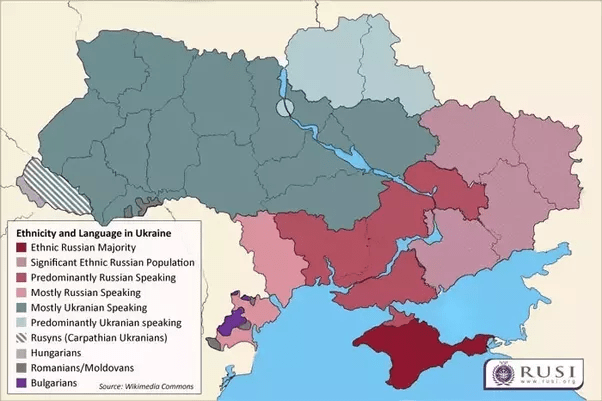
The Ukrainian Law “On Education” has placed the Russian language in a worse situation than other minority languages, due to the fact that it is separately mentioned in the Constitution. The article of the new law allows for a less favorable attitude to languages ​​that are not official in the European Union, in particular to the Russian, believe in the Venice Commission. Legally the position of the Russian language in Ukraine is now worse than that of the languages ​​of the EU member states.

In Ukraine, the epic continues with the rights of the Russian-speaking population. This time the statement on the position of the Russian language was made by the Secretary of the Venice Commission Thomas Markert. The expert acknowledged that representatives of national minorities who speak Russian in accordance with the adopted law were in the worst situation in the issue of the right to learn in their native language in Ukraine in comparison with representatives of ethnic minorities who speak European languages.

“Here it is necessary to clearly divide into two parts – according to the languages ​​of minorities speaking the EU languages, and in relation to others. The difference between the norms of the law in relation to these groups is too great, the latter were in a much worse situation than the first. And, it seems, there are problems with observing the Constitution of Ukraine, which separately mentions the Russian language, and does not remember others. Therefore, legally there is a problem with the fact that under the law “On Education” the Russian language was in a worse situation, “he said. The expert also stressed that Ukraine must fulfill its international obligations by allowing the work of private schools with instruction in the language of national minorities. According to him, with regard to European languages ​​(Hungarian or Romanian), the solution can be found with the help of new laws, by-laws or special instructions of the Ministry of Education. Influence on “non-European” languages ​​The European Union is not legal, but “can only state the fact of oppression.” Ukraine after the conclusion of the Venice Commission on the language of the law on education should begin a dialogue with representatives of national minorities who speak EU languages ​​in order to agree on the conditions for teaching in schools, says Markert. The “soft-hearted” West, did not insist on changing the article of this Law, but only “recommended Ukraine to take measures to prevent discrimination of the languages ​​of national minorities.

main-qimg-0a2bb6820f3c964d3dad2ca6c8856e68

Meanwhile, Hungary expects from Ukraine legal guarantees that the application of the new Law “On Education” will begin after reaching an agreement with the Hungarian national minority of Transcarpathia, as stated by Hungarian Foreign Minister Peter Siyarto. Siyarto also stressed that “in the absence of legal guarantees, Hungary retains its decision to block all existing international initiatives of Ukraine within the European Union and NATO.”

The commission noted the framework nature of the article of the law and expressed the hope that other legislative acts will promote the protection of the rights of national minorities in Ukraine. Along with this, the Minister of Foreign Affairs of Ukraine, Pavel Klimkin, said that official Kiev “the conclusions of the EU on the rights of the Russian language in Ukraine can be ignored.” Klimkin made it clear that no one will make concessions on the contradictory law. It turns out that Kiev does not intend to change this law “to Europe.” Ex-Minister of Justice of Ukraine Elena Lukash is sure that Kiev does not understand with what “fire is playing.” “So far the EU considers the current command of power” its son of a bitch “, on many of whose actions are closing their eyes. But every patience has a limit. The ruling regime is one step away from losing international legitimacy and becoming unfriendly and even toxic to the EU. Failure to comply with the decisions of the Venice Commission on the law on education brings the European Union closer to a change in attitude, “- assured Elena Lukash.

In this context, experts believe that Ukraine’s de-Russification takes place not only on linguistic, cultural, but also on ethnic levels. Independence of Donbass will complete this process, rejecting the majority of Ukrainians of Russian origin and making from Ukraine what it never was: a European country. As the experts note, after the law on language, a wave of protests swept through several large cities in the east of the country. These demonstrations became a prerequisite for the Ukrainian civil war, which became the cornerstone of Ukraine’s policy of derusification. The branch of Donbass allows Kiev to “neutralize” the majority of the “pro-Russian” electorate of the country, so it is likely that the current blockade of the Minsk agreements will continue until the presidential elections in Ukraine on March 31, 2019.

Roman Katsko

Population Migration and Estonia: Adapting in an Age of Immigration

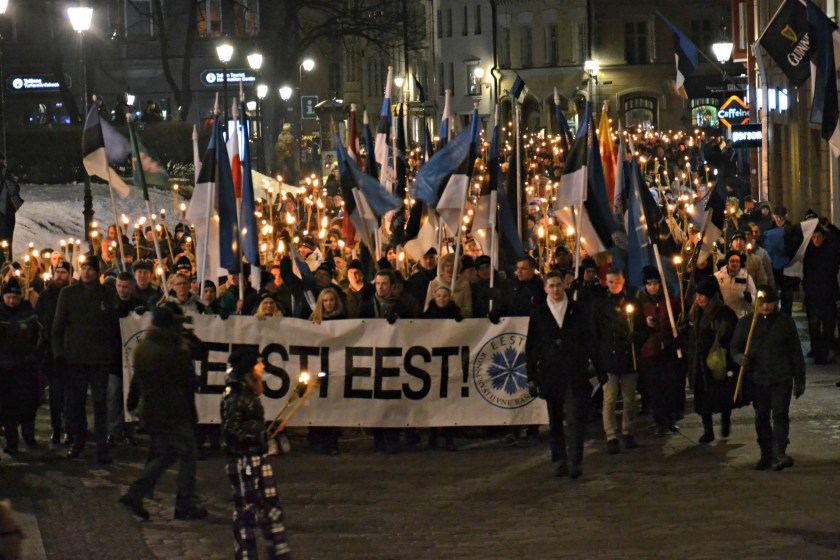
Across Europe, a wave of migrants from war-stricken parts of the world has, since the beginning of the 2015 refugee crisis, washed over national borders. Resulting demographic change has inflamed vigorous debate about the extent to which borders should be controlled and open-migration allowed. In Estonia, a modest migration trend has reversed long-term population decline. In 2015, for the first time in 25 years, Estonia experienced greater immigration than emigration.
Tõrvikurongkäik_2016

While an increase in migration may benefit Estonia in the short term through population gains and greater economic productivity, new long- term challenges arise related to social cohesion and poverty. The report “Estonia in the Age of Migration” addresses important questions about the persistence of Estonian culture (especially language), education, social cohesion and equality, employment, and economic and migration policy in the face of changing attitudes about migration in Europe. The report is part of the annual series of thematic Human Development Reports, which were important barometers of Estonia’s post-socialist transition during the years following the disintegration of the Soviet Union and have remained a part of national pride.

Well-being in Estonia is improving quickly, but inequalities persist

The Human Development Index (HDI), which measures human well-being through various indicators (including health, education, and per capita income), helps demonstrate the long-term effects of national policy and structural decisions. From 1990 to 2015, only two other EU Member States have increased their HDI faster than Estonia. Within the new Member States, only two other countries have higher HDI values.

HDI values in Estonia reveal positive outcomes from decisions in Estonia over the last 25 years. Nevertheless, inequalities born out of rapid growth and globalisation of the early 1990s have persisted; only three other countries in the EU Member States have greater measures of inequality (using Gini coefficients). Inequality in Estonia is often geographically based, resulting from over-employment in the agricultural sector during the Soviet Era. After the restoration of Estonian independence in 1991 and the establishment of a market economy, jobs in agriculture decreased rapidly. This left rural residents with lower opportunity for employment, while residents of Estonia’s cities fared relatively better in the new market economy. Today, income per inhabitant in Estonia’s cities is higher than the EU average, while income per inhabitant in the country’s rural areas is below the EU average.

The number of immigrants and emigrants has balanced, but the ethnic makeup of the population is changing due to migration

Although immigration now exceeds emigration, emigration rates continue to be high. Persisting inequalities are likely the cause of emigration, as people from rural areas and those with low incomes are overrepresented in the population of residents leaving Estonia. Nevertheless, an overall increase in well-being in Estonia has made it a desirable place for migrant relocation.

Immigrants to Estonia can be divided into four categories: people returning to Estonia, people from territory of the former Soviet Union (e.g. Russia and Ukraine), people from other EU Member States, and people from the rest of the world. About half of all immigrants come from the first group. Those from countries in the former Soviet Union make up about a third of all immigrants, while those from other EU Member States and the rest of the world each make up about one-tenth of the incoming population.

Estonian residents at home and abroad are part of a transnational Estonia

As technology and cheaper travel close the distance between people and their homelands, the relationship between emigrants around the world and Estonia becomes stronger. Transnationalism, in which individuals and companies engage in simultaneous activities in numerous countries, has become increasingly prevalent in Estonia. While transnationalism brings about new challenges such as families living apart, taxation of companies, and citizenship and identity, it also creates new opportunity. From an economic perspective, it is advantageous for Estonia to be connected with the greatest number of global supply chains. Transnationalism opens up new avenues for Estonian businesses to work across borders and expand operations internationally, while investors from around the world bring money into the Estonian economy.

In a broader sense, transnationalism means that Estonia, as a cultural and economic entity constituted by Estonians, has expanded outside the country’s physical borders into nations around the world. At the same time, Estonia is increasingly becoming a place where businesses and citizens of other countries operate. The “triple-win” of transnationalism occurs, as described in the Human Development Report, when the “home country gains through increased employment and national income, the host country gains through labour supply without having to deal with the issues of immigration and integration, and the migrant workers gains through higher income and new experiences”. This “win” can also produce problems, such as increasing inequality of experience; those who have opportunities to travel, work, and study abroad often gain new experiences that give them adaptability with new situations and people who are different from themselves. This “mobility capital” can open up new career avenues that might otherwise be unavailable to those without travel opportunity.

An educational system based on the Estonian language while simultaneously valuing other languages ensures a cohesive society
Estland-780x373

Despite increasing immigration, Estonia has actually become more “Estonian” in the last 25 years as the share of ethnic Estonians has decreased by a smaller amount than the share of other ethnic groups in the country. However, ethnic change has exacerbated existing ethnic segregation in Estonia. Since the Soviet era, Estonian schools have been divided into Russian-medium and Estonian-medium formats, which tends to segregate the population—starting at an early age—along cultural and linguistic lines. Today, new immigrants from EU Member States usually choose to send their children to English-medium schools, even if they live among the Estonian majority population. Immigrants from countries east of Estonia tend to send their children to Russian-medium schools. Both of these choices amplify the language-based cultural divides in Estonian society.

The segregation of children into Russian- and Estonian-medium schools produces inequalities later in life; academic performance of Russian-medium pupils is lower than their Estonian counterparts, and a large share of Russian-speaking youth do not enter Estonian universities. Aside from poorer educational outcomes, the division of education by language in Estonia produces two subgroups of Estonians who do not share a common culture and are less likely to form social networks and shared values. Language- based segregation carries over into earnings potential; Russian-speakers with lower school performance are unable to attend Estonian universities because of language barriers and are likely to have lower incomes than their Estonian-speaking counterparts. Lower economic status in turn leads to residential segregation, which then exacerbates cultural and social segregation.

A proposed solution for breaking this cycle of social and economic segregation is the creation of Estonian policy that enables a unified schooling system based on the Estonian language, but takes into account the diversity of languages spoken by Estonians.

Higher birth rates and positive net migration are needed to prevent future population decrease

In the long-term view, if Estonia is to maintain its current population of about 1.4 million people, net immigration must stay positive and birth rates must increase. In the short-term view, the generation of Estonians born in the 1990s is only half the size of the generation born in the 1980s, meaning the country is soon likely to enter a labour shortage. Immigration may be the answer to this shortage. However, forecasts in the Human Development Report suggest that more immigrants are needed to address this shortage than Estonian society is actually able to integrate. Therefore, additional measures outside of immigration need to be taken to fill this gap.

One of these measures includes ensuring the Russian-speaking population increases its contribution in the labour market, a goal achieved in part through the unification of the school system as well as other policies that encourage larger families, extend the retirement age, and find work for under-employed populations.

Estonia must introduce active immigration policy

Immigration should play a role in addressing the labour gap, as increasing labour force participation and birth rates cannot do it alone. Therefore, an active immigration policy is needed that both encourages Estonians to return to their homeland and selectively introduces new migrants into the country based on labour needs. Although the decline of the working-age population will likely mean an increasing need for manual workers, smart technology and automation may eliminate many less desirable blue-collar jobs. As part of the strategy for ensuring social cohesion, the report argues that immigrants must not be seen as simply a labour force that has entered the country to carry out the jobs that Estonians want to avoid. Rather, an active immigration policy should facilitate social integration by luring immigrants with digital literacy, creativity, and skills.

Two pillars would support a new active immigration policy: a point system and student mobility. Point systems would test a migrant’s potential to integrate into both the labour market and society based on a number of factors, like education, language proficiency, age, work experience, family ties and more. However, responsibility for ensuring integration into the labour market and society would not fall solely on the shoulders of migrants. The employers whose needs are being met by incoming migrants would also have a role in taking responsibility for their new employees’ integration. The other pillar, student mobility, encourages students who have studied in Estonia to remain in or return to Estonia after graduation, thus increasing the number of top professionals who are already familiar with Estonian society.

Estonian language and culture can only be preserved if people continue to practice them

As diversity in Estonia increases, and Estonians themselves resettle in other parts of the world, Estonian culture may need to adapt. The foundation of Estonian culture is the Estonian language, but for Estonian youth to be successful in a transnational economy, the diversity of languages spoken by Estonians must increase. At the same time, if Estonian culture is to flourish, innovative forms of “meaning creation”, perhaps taking advantage of Estonia’s digital culture, must be realized. Estonians across the world can and should feel a part of the Estonian culture, which may be achieved by envisioning a new open and accessible participation-centred culture. The declining number of Estonian-speaking residents in Estonia may seem to foreshadow the loss of Estonian language and culture. Nevertheless, the perpetuation of these values is secure as long as the Estonian people commit to actively practicing their language and culture and sharing it with future generations.

Brendan Seney, Daniel Baldwin Hess