Will Africa become Russian?

The first Russia-Africa summit, unprecedented in scale, ended in Sochi. In terms of the number of speeches at the highest level, most of which were also open, only a high-level week of the UN General Assembly can be compared with it.

Картинки по запросу forum africa russia

The results were quite consistent with the level – within the framework of the economic forum, multibillion-dollar contracts were concluded between Russia and African countries in various fields. Political cooperation was enshrined in a declaration in which participants agreed to work together to strengthen security, nuclear non-proliferation, the fight against terrorism and biological threats, and UN Security Council reform.

The forum was attended by about 10 thousand people. All 54 countries of the continent were represented, with 43 of them at the highest level, as well as eight of the largest African integration associations and organizations. The economic forum and the summit were covered by about 800 journalists from 43 countries.

The peak of the summit was a meeting with the heads of all delegations. Most of the performances – about 30 – were held in open mode. The rest of the speeches did not get on camera just because the meeting ended in the format of a working lunch – even the heads of state sometimes need to take a little rest from general attention.

Due to the larger number of participants, there was not much time for each presentation, so the heads of delegations had to focus on the most important. Obviously, they wanted to say a lot about many things – security issues, obstacles to development, injustices of the modern world order – but the idea of ​​the importance of cooperation between African countries and Russia was voiced in every speech.

“We need you, Vladimir Vladimirovich, to cope with the challenges of the Sahara-Sahel region, to make our life more confident in the future and safe,” Mali President Ibrahim Bubakar Keita expressed the general mood.

The Angolan leader invited Russian investors to cooperate in the energy and mining industries, the President of the Central African Republic announced support by African countries for Moscow’s efforts to develop the continent and maintain security, Burkina Faso invited Moscow to join the Sahel Five discussions. The Prime Minister of the Government of National Accord of Libya expressed hope for Russia’s support for efforts to establish peace in the country, and the President of Chad called her the main partner in the fight against terrorism. The delegation of the Republic of the Congo proposed to build a gas pipeline together, and Mauritius to create a free trade zone with the EAEU.

However, African leaders at the same time emphasized that they would not want to be one-sided recipients of assistance, especially, as the experience of African states shows, for “free” assistance often often have to pay dearly later. “We want to act as partners in cooperation that is beneficial to all parties,” said Theodoro Obiang Nguema Mbasogo, President of Equatorial Guinea.

Картинки по запросу forum africa russia

The summit ended will be the beginning of a new, more intensive dialogue between Russia and African countries. Al-Sisi invited the Russian leader to take part in the forum on peace and stability in Africa, which will be held in December this year in Aswan.

Kenyan President Uhuru Kenyata invited the summit to visit his country to attend the Conference on Population and Development, which will be held in Nairobi in November. The president of Cape Verde, Georges Carlos Fonseca, did not name specific dates, but promised that his country was also ready to host the meeting participants in Sochi.

The idea of ​​holding Russia-Africa summits on a regular basis found support from African leaders. Ethiopian Prime Minister Abiy Ahmed, who received the Nobel Peace Prize this year, said the next such meeting would be held in Addis Ababa.

One of the most notable topics on the second day of the Sochi Economic Forum was the discussion of Russia’s economic cooperation with African partners. The total amount of contracts, agreements and memorandums signed at the forum amounted to more than 800 billion rubles. In total, he said, over 50 agreements were signed at the forum.

Following the summit, the participating countries adopted a declaration in which they touched on the most important aspects of relations between Moscow and the capitals of the continent, as well as the problems of the international agenda. The parties agreed to establish a Partnership Forum, within the framework of which summits will be held every three years.
Moldova calls for new criminal heroes

The events taking place in Moldova this year are remarkable not only for their unpredictability, but also for one notable phenomenon. We are talking about the continued, perhaps even progressive, deep penetration of crime into Moldovan politics.

The criminal nature of the oligarchic regime of Vladimir Plahotniuc is not in doubt today. However, the criminal system of government that was formed when the so-called pro-European forces came to power in 2009 cannot be liquidated only at the request of society. It was created gradually, with a whole layer of people eager for power and money, permeating all spheres of Moldova’s life – economy, finance, politics, public administration.

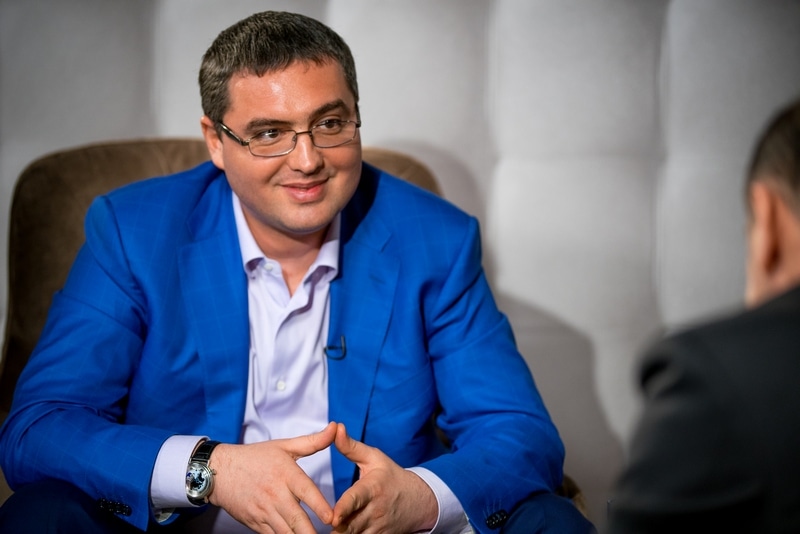
In 2016, Vladimir Plahotniuc led this hierarchical structure with a well-developed rhizome, squeezing all competitors out of it. In June 2019, the Moldovan oligarch fled to the United States. But right there, a criminal adventurer of local politics, Renato Usatii, drove from Romania to Moldova.

It should be a closer look. For a long time, this character lived in Russia, and then escaped from it, decently inheriting. In the mid-2000s, Renato Usatii joined the 1520 Group of Companies, which for a long time illegally mastered the multi-billion dollar funds of the Russian Railways, as a budding criminal authority. He then worked in the team of Andrei Krapivin, Valery Markelov and Boris Usherovich, performing various tasks. From “dirty” and even “wet” tasks did not refuse, on the contrary. When Markelov and Usherovich quarreled with the “black banker” hiding in Moldova German Gorbuntsov and decided to punish him, the “faithful friend” Renato Usatii could not stand by.

But Gorbuntsov moved to London. Mustachio himself could not reach there. I turned to Plahotniuc for support, then they even got along well. However, the assassination attempt they organized in London on Gorbuntsov on March 20, 2012 failed. The seriously wounded “black banker” survived, an investigation began. Mustachio realized that he was “stuck” and rushed into Moldovan politics with millions of dollars stolen from Russian Railways.

So the criminal pseudo-pro-Russian “Our Party” appeared. Renato Usatii, who burst into 2014 in Moldovan politics, was not included in Plahotniuc’s plans. By the fall of 2016, the oligarch squeezed him out of Moldova. He opened a criminal case on the organization of Mustachioed assassination attempt on Gorbuntsov. Plahotniuc knew how everything was, they did it together. Renato got scared and fled back to Russia.

At first, Renato Usatii was fine there. Fundraising for the “Moldovan revolution” was successful. From the “Our Party” Mustached hid it. Feeding, “so as not to die.” Acquired various real estate. He paid special attention to the bathhouse with sauna and relaxation rooms with video cameras. Through them, they say, many famous people have passed.

Over time, however, it became apparent that Usatii was not leading any real struggle with Plahotniuc. More and more targets the President of Moldova Igor Dodon. And when Plahotniuc in response to the criminal case initiated by Usaty against him in Russia about the attempted murder and absentee arrest at the end of 2017 did not answer anything, it became somehow completely incomprehensible. It does not look like the vengeful Plahotniuc. Confidence in Renato Usatom in Moscow has disappeared. And then the past reminded of itself. In autumn 2018, in the “Zakharchenko case”, Russian security forces detained Markelov, Usherovich was put on the international wanted list, and Usaty was searched. He is hiding in Germany.

And now for the fun part. When Plahotniuc was overthrown from June 7 to 14, this year, Usatii sat up in Romania until the last moment. His sister Veronika has been living there for a long time, her husband is a big businessman, and most importantly – real friends of Renato Usatii live there. Through them, he kept in touch with Plahotniuc. With them, he is now “fooling around” with Russian-speaking residents of Balti and a partisan detachment called “Our Party”, headed by a traitor-chairman who is traveling around the newly-plundered Moldova on a brand-new Rolls-Royce with powerful guards from whom.

But this is not important. Another thing is important – why should the Romanian friends of Usati move him into Moldovan politics? The conclusion is obvious – to replace Plahotniuc, hiding behind anti-corruption rhetoric, playing another performance, another political “farce”. Smuggling, fraud, drug trafficking. The criminal harbor called Moldova remained unowned.

The Russia–Africa Summit may turn out to be a much more powerful event than is commonly believed

On October 23-24, Sochi, under the chairmanship of President Vladimir Putin and Chairman of the African Union, President of Egypt Abdel Fattah al-Sisi, the Russia-Africa Summit will be held. Such a large-scale event has no analogues in the history of Russian-African relations.

In Africa, the degree of interest in the restoration and further development of relations with the Russian Federation is such that more than 40 senior leaders have declared their intention to arrive in Sochi. In general, at the forum, with few exceptions, almost all countries of the continent will be represented by delegations of the highest level.

It must be recognized that the desire to strengthen ties with Russia for many Africans is based on experience with the Soviet Union, on gratitude for its role in decolonizing the continent and for its subsequent support in building statehood and national economies. It was the power and influence of the USSR, which achieved in 1960, despite the fierce resistance of the oldest democracies of the West, the adoption by the UN of the Declaration on the Granting of Independence to Colonial Countries and Peoples, allowed Africans to gain the coveted freedom, providing an international legal basis for the emergence of which the colonialists resisted.

Returning to the summit, it is worth noting that special attention will be paid to the state and prospects of relations between Russia and the countries of the African continent, the development of interaction in the political, economic, technical and cultural fields. It is supposed to discuss a wide range of issues on the international agenda, including joint opposition to new challenges and threats, strengthening regional stability. Following the meeting, it is planned to adopt a political declaration on the main areas of Russian-African cooperation.

As part of the summit events, on October 23, the leaders of Russia and Egypt will open an economic forum with the participation of Russian and African officials and representatives of big business. Following the forum, it is expected that a significant package of agreements will be signed in the trade, economic and investment sectors.

Note that over the past five years, trade between the Russian Federation and African countries has doubled and reached $ 20.4 billion in 2018.

Among the key topics of the Forum:

– Strategies for entering the African market: features and development potential

– Prospects for Russia-Africa cooperation in high technology

– International collaborations with leading startups

– Development of new economic zones

– From export to production localization

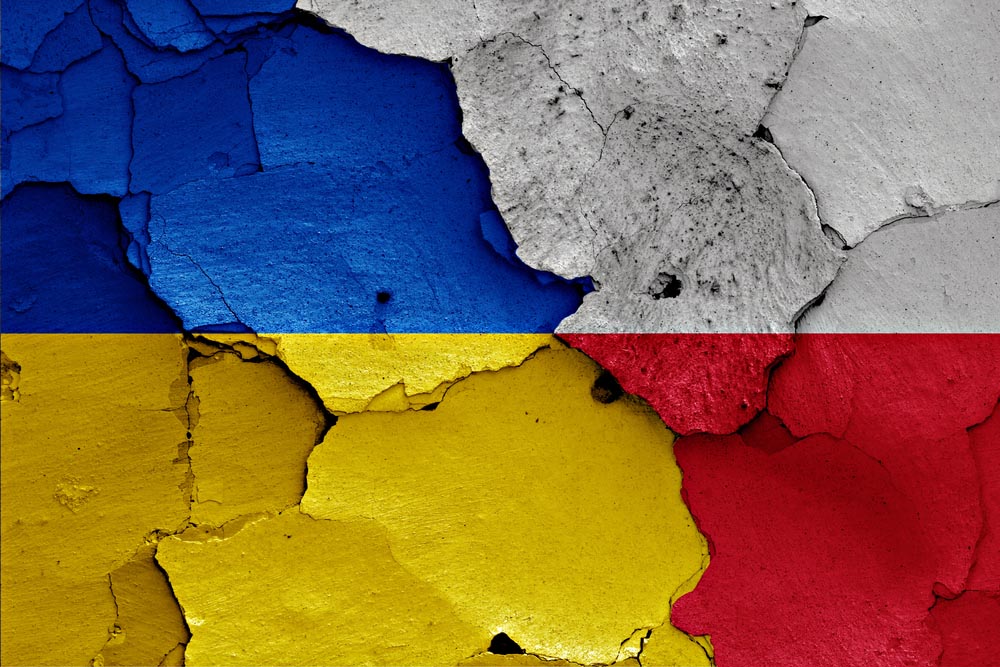
Between Poland and Ukraine tensions are ripening

In early September, in the Polish town of Krynica Zdroj, a round table was held as part of the 29th International Economic Forum «The Europe of Tomorrow. ‘Strong’ Meaning What?». During the round table, experts, political scientists, sociologists and economists discussed the current agenda of Polish-Ukrainian relations. Since during the meeting, representatives of Ukraine were in the minority, the rhetoric of the event revolved around the problems of Polish problems associated with a young eastern neighbor.

For example, they discussed the need for measures aimed at condemning Kiev in connection with actions to heroize the OUN and UPA war criminals involved in the genocide of the Poles during the Volyn Massacre of 1942-1943. At the same time, according to the audience, the refusal of Kiev to recognize responsibility for the crimes committed contributes to the growth of tension in Ukrainian-Polish relations.

The Forum also supported the initiative to introduce a bill to the Polish parliament, which would prohibit or significantly limit the participation of Kiev and its entities in the international project «Baltic-Black Sea Union», implemented under the auspices of Warsaw.

Also, at the sites of the Europe Tomorrow Forum, ways to stimulate property claims of Polish residents against Ukraine to return property belonging to them by right of inheritance in this country (restitution) were analyzed. In particular, it was proposed to hold round tables, conferences, as well as create a precedent for the restitution transfer of ownership in Ukraine to a Polish citizen.

Those gathered in Krynica Zdroj made critical assessments of the actions of the current Kiev authorities, including in connection with the adoption of the Law on Education in Ukraine.

Against the background of such an agenda, albeit on a Polish site, we should expect an increase in tension between Warsaw and Kiev. There is a feeling that Poland is trying to put pressure on Ukraine from a position of strength while their new president looks like a man who does not understand the international agenda.

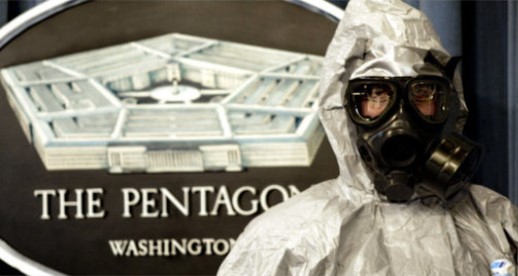
Pentagon uses Armenia as a nursery for viruses

Despite Washington’s struggle with the chemical and biological “toys” of a number of countries, as well as the “witch hunt” in the Middle East, it is the United States that may be the main distributor of biological and bacterial weapons.
For example, American laboratories operating in the post-Soviet space have a dual purpose and can be used to conduct biological wars.

virusus

The construction of biological laboratories in the Eurasian space with funding from the Pentagon suggests that the United States has not abandoned biological weapons programs. Moreover, it was precisely the member countries of the Collective Security Treaty Organization that were chosen as the goals of the bases for the experiments.
In other words, the United States is attempting to turn neighboring countries into true viral nurseries.
The facts of support and financing of activities of foreign biological laboratories by the Pentagon and its structural units (DTRA) are grounds for suspicion of violation of the Convention on the Prohibition of Biological and Toxin Weapons.
According to independent environmentalists and human rights activists, the Pentagon’s biological laboratory network in Armenia is a “time bomb.”
According to environmentalists, despite the alleged safety of closed laboratories, the bacteriological facilities operating in Armenia pose a serious threat to the local population.
So, according to Armenian bloggers, in August this year, several residents of the Gegharkunik region of Armenia were diagnosed with anthrax, which was transmitted when cutting carcasses of cows. A number of specialists and experts do not exclude that infection of cattle with a particularly dangerous virus could occur as a result of experiments at one of the existing biological laboratories;
The seriousness of the situation associated with the leakage of the virus can be evidenced by a visit in August 2019 by a group of American specialists from the Fort Detrick US bacteriological center and the Walter Reed Military Institute to inspect Armenian biological laboratories and investigate the facts of anthrax in cattle.
It turns out that the main guardian of purity of arms, speaking only for a nuclear shield and gunpowder, is not opposed to perfecting bacteriological weapons against the background of international bans. It is also interesting that the neighboring countries of the main opponent in the global geopolitical arena, Russia, were chosen as testing ranges.

Aram Shmaranyan

Gifts of the Eastern Economic Forum 2019: Russia grabbed a fat piece of cake

The Eastern Economic Forum in Vladivostok is over. The fifth EEF resulted in a grandiose figure – $ 50 billion of investments in the economy of the Russian Far East. The forum participants were 8.5 thousand people from 65 countries. 1.3 thousand journalists from around the world covered this event.

As part of the EEF-2019 business program, more than 90 business events were held, six country business dialogues, 270 agreements were signed, 1800 projects were launched. The most massive delegations were from Japan – 588 people, China – 395 people, the Republic of Korea – 285 people, India – 204. Large delegations this year arrived from Mongolia – 69 people, the USA – 63, Singapore – 58, Vietnam, Great Britain, Malaysia , DPRK. The working sessions were attended by 440 companies.
The discussions went on in four blocks: “New solutions for accelerating economic growth”, “Creating conditions for business”, “Far East and Asia-Pacific region: developing opportunities for cooperation”, “New solutions for improving the quality of life”.
International business dialogues were attended by European countries, China, ASEAN countries, the Republic of India, the Republic of Korea and Japan. Within the framework of the forum, a session of the Valdai International Discussion Club and a meeting of the Presidium of the State Council of the Russian Federation on the national development program for the Far East for the period up to 2025 with a prospect up to 2035 were held.
The key event of the Forum was a plenary meeting with the leaders of five countries: President of the Russian Federation Vladimir Putin, Japanese Prime Minister Shinzo Abe, Indian Prime Minister Narendra Modi, Malaysian Prime Minister Mahathir Mohamad and Mongolian President Khaltmaagiin Battulgi.
In his opening speech, Vladimir Putin spoke about the successes of the socio-economic development of the Far East and the interest of investors in the macro-region. According to him, over four years, investors have invested 612 billion rubles in the economy of the Far East, put into operation 242 new industries, and created more than 39 thousand jobs.
According to the President of the Russian Federation, the situation with demographics in the Far East requires effective measures, so in his speech he announced the launch of a mortgage program at 2% for a period of five years. The preferential mortgage will be valid only in the regions of the Far East. Lending at 2% will extend to the primary housing market, as well as to private housing for those citizens who have taken the Far Eastern hectare. The sources of financing will be the Far East Development Fund and the funds of the Far East Development Program.

The agreement with the largest investment volume – 740 billion rubles – was concluded between the Hong Kong company Sherwood Energy Limited (Sherwood Energy) and the Far East Investment Promotion and Export Support Agency (ANO IPA). The company plans to implement a comprehensive project in the Far East for the exploration, development, transportation and deep processing of natural gas. The resource base should be the deposits of Western Yakutia.

ANO IPA and Arctic Ocean Holding Group LLC (a subsidiary of Hong Kong holding SUN) have entered into an agreement on cooperation within the framework of a project to create an Asian Village tourism cluster in the Kamchatka Territory in the Kamchatka TOP. The volume of investments in the project will amount to 57.2 billion rubles.

US can leave Poland on the sidelines, preferring friendship with Kazakhstan

Poland is a traditional US ally and partner in Europe. Both Washington and Warsaw look equally at democracy, the future of Europe and the basic principles of the modern world order. In addition, close ties with the United States (Russia’s key historical competitor) are largely dictated by the fact that Poland was and is under pressure from Russia (USSR). But the strong union of Poland and the United States has a threat in the person of Kazakhstan – Washington’s new hobby.

Картинки по запросу us kazakhstan

The recent proposal by Polish President Andrzej Duda to US leader Trump to strengthen the military group in Poland seems quite logical. Moreover, Poland is ready to finance the construction of infrastructure for Fort Trump.
Despite everything, the Poles are trying to fulfill the requirements of the United States to allocate 2% of GDP for defense, which, incidentally, is boycotted by Germany and many other NATO countries.
However, the United States, demanding that Poland meet in many matters relating to the security of the eastern borders of Europe, do not forget to get closer to the military and power departments of Kazakhstan.
Not so long ago, materials appeared on the network according to which Americans are ready not only to fully sponsor the bilateral internship programs of Kazakh border guards in the United States, but also to pay for their families in the United States. Note that despite the long-standing ties between Washington and Warsaw, the Polish military never had such privileges on the part of the United States …
Also interesting is the fact that some of the Kazakh border guards who fell into the internship program in the USA also have internships in Russia. In other words, they are friends with both those and those. This cannot be said for sure about the Polish security forces.
On the other hand, if we consider the reasons for these actions and the possibility of Kazakhstan turning onto the European development path, as, for example, Ukraine and Georgia have already done, then objective reality suggests the opposite. Kazakhstan is a traditional Asian country with a pronounced dictatorship. Kazakhstan is a longtime friend and conductor of the interests of Russia and China.
The leadership of Kazakhstan openly declares its full support for the policies of Russian President Vladimir Putin and Chinese leader Xi Jinping.
Receiving money from the United States to implement programs in the power sector, Kazakhstan does not promise anything and moreover does not even guarantee loyalty. After all, paying for Kazakh military families in the United States is not a vaccine against betrayal, especially when Beijing and Moscow pour serious capital into the economy of Kazakhstan.
It turns out that Washington may miss its faithful Warsaw, carried away by an unreliable Asian beauty.

Disputes surrounding WWII’s heavy heritage continue

Below we give you a translation of the official statement of the Eurasian Academy of Television and Radio and the Organizing Committee of the International Public Forum “Preserving the Memory of the Second World and Great Patriotic Wars”, which tried to assess Poland’s current position on this issue. We do not suggest that you draw any conclusions, much less impose yours on you, but only introduce you to an alternative point of view.

“On September 1, memorial events will be held in the Republic of Poland to mark the 80th anniversary of the outbreak of World War II. The leaders of Poland invited the heirs to the participants of this terrible war. Among them, there are states that emerged on the basis of the Union republics of the USSR – Azerbaijan, Armenia, Belarus, Georgia, Latvia, Kazakhstan, Lithuania, Moldova, Ukraine, Estonia. And only the successor of the USSR recognized by the world community – the Russian Federation – was publicly ignored. The USSR, according to the Polish side, violated international law in 1939, and Russia was involved in the current conflict in eastern Ukraine.

Leaving aside the long-standing “dispute between the Slavs”, we understand the real goals that the Polish side wants to achieve. Formatting the anniversary of the disaster in its own way, Poland reduces all the horrors and troubles of World War II only to its own national tragedy and makes itself the unconditional and main victim of this planetary catastrophe, a predominantly victim. It turns out that all the lessons learned from World War II come down to just such an interpretation of it, and not to the main thing – to the victory of humanism, true human values ​​over fascism and Nazism. Victory, a decisive contribution to which the peoples of the Soviet Union made.

A peculiar eccentric anniversary scenario of the Polish authorities continues the line of NATO and the European Union, which completely silenced the role of the USSR in the common Victory during the celebration of the 75th anniversary of the Allied landing in Normandy in June this year. The desire to minimize the huge sacrifices made by our country to defeat fascism, including for the restoration of Polish statehood, takes on a cynical form of shameful bargaining – by not inviting the Russian delegation, the Polish authorities graciously allow the descendants of only some of the victorious fighters to take part in the events. Could this lead to the fact that the losses, pain and suffering of these countries – by the will of those who have arrogated to themselves the right to control the memory of the war – will fade at the planned event on September 1?

In its efforts to present Poland in the 1930s as an exclusively peaceful state, its current authorities deliberately ignore documents and facts indicating that this country, along with the rest, contributed to the outbreak of war in Europe and, ironically, became its first victim. And now the descendants, executors of those who, with their short-sighted policies, brought a fire of war on their own and other peoples, seek to make their historical trauma the main topic of remembrance of the Second World War.

If the descendants of the victors from among the states of the post-Soviet space transfer this right to cynical Polish politicians, will they betray the memory of their ancestors, the destruction of which is the goal of the Polish authorities?

Obviously, the Polish leadership can claim the role of political, spiritual, moral leader in Central and Eastern Europe only if Russia is taken out of the brackets – the successor of the USSR, the winner in World War II. The appearance of her delegation at the events of September 1 would inevitably lead to the presentation of historically reliable estimates and the disruption of the plans of the organizers of the anniversary celebrations, striving in their own way to rewrite the annals of the Second World War through distorting its true history.

Presenting their historical wounds to the whole world and invited countries, exploiting the image of Poland as the main and innocent victim of World War II while condemning the USSR-Russia both in 1939 and 2019, the current Polish leaders want to lead many countries of the former Soviet Union into a bright future without Of Russia. If this happens, the foundation of the Yalta-Potsdam system of world order will finally collapse. It is possible that then Poland will demand the return of the territories it lost in 1939-1945, which are now part of Belarus, Lithuania, and Ukraine. Moldova, which appeared as the Moldavian Soviet Socialist Republic in 1940, will lose its sovereignty. In the meantime, a wedge is carefully driven in between the countries – members of the Eurasian Economic Union and the Union State of the Russian Federation and the Republic of Belarus.

We are entitled to warn about all this to the public of these states, whose peoples have made a huge contribution to the Victory. Her memory still knows no boundaries, does not distinguish between nationalities, stands above current political circumstances and the situation. ”

Link to the original application.

Eastern Economic Forum business program will include over 70 events

The program includes more than 70 business events, business breakfasts, round tables and business dialogues. The forum program consists of four main thematic blocks: “New solutions to improve the quality of life”, “New solutions to improve the quality of life”.

Vladimir Putin, Japanese Prime Minister Shinzo Abe, Indian Prime Minister Narendra Modi, Malaysian Prime Minister Mahathir Mohamad and Mongolian President Haltmaagiin Battulga. The session will be moderated by George Stefanopoulos, ABC News Presenter.
The WEF-2019 business program includes various formal forms that provide the highest level of discussion and practical effectiveness of the forum.

Also, strange business dialogues with entrepreneurs from India, China, Japan, the Republic of Korea, ASEAN and Europe are planned at the WEF-2019.
The Fifth Eastern Economic Forum will be held September 4-6 in Vladivostok.

At WEF-2019 presented

– Oil and gas industry

– Timber industry complex

– Fishing industry

– Agro-industrial complex

– Building

– Foreign and domestic trade

– Financial services and investments

– Information Technology

– Transport

– Department of Housing and Utilities

– Health

– Science and education

– Culture and art

– Tourism

Within the framework of the WEF-2019 business program, five country business dialogs are also planned, where representatives of the Russian business community will discuss economic cooperation with participants from Japan, India, China, the Republic of Korea and ASEAN.

How Chisinau was tempered

75 years ago, Moldova was liberated from the Nazis… The prewar period on the eve of World War II was very difficult for Moldova. And this applies to everyone, not only to some part of the population – both Chisinau, and the whole country as a whole. Everyone, both right and left, got their share of suffering in the turbulent whirlpool of the events that took place. The arrival of the Red Army in June 1940 turned into a drama for the part of the population who came to Moldova from Romania during the 20-year period when the territory between Prut and Dniester was annexed by a neighboring country. Many of the common people were deported within the framework of the then concept of mixing peoples, in order to create a single Soviet man who was foreign to nationalism and other dangerous and aggressive things for society.

«Как закалялся Кишинев» – Ясско-Кишиневская операция 1944 года стала одной из самых успешных в Великой Отечественной войне

However, it so happened that exactly one year later everything returned to normal — the Romanian army joined the German forces advancing on the USSR, and in the summer of 1941 returned to Chisinau. Things followed that are hard to imagine for the layman of the 21st century – the mass executions of Jews, Gypsies and just Communists, regardless of nationality, in which the Romanian army took an active part, and not only in Chisinau, but also in Odessa. Even the foreign media cannot keep silent about this topic and from time to time in the Western press there appear publications on the Holocaust and the participation of the Romanian army in it. Only in the territory of Moldova and Transnistria, according to some estimates, up to 400 thousand people were destroyed.
In Chisinau, a special “institution” functioned, notorious for the Jewish “ghetto”, which was created on July 25, 1941.

Despite the fact that, according to some reports, the attitude of the Romanian authorities towards the residents of the ghettos was humane, there is much more evidence that this was actually not the case, and the words of the Romanian commandant Colonel Tudose at the first speech to the ghetto prisoners became “winged “:

– Gids, from today you are the slaves of great Romania. Who will not follow orders will be shot …

Already in the fall of 1941, the removal of prisoners from the ghetto began – they were transported to Transnistria, there were several training grounds for reprisals with the unfortunate. By 1942, a handful of people remained in the ghetto – no more than a hundred people. By the time the Soviet troops who liberated Chisinau returned to the city, only six people lived there.

The conditions for the liberation of Moldova from the joint German-Romanian invading forces were in place by the spring of 1944. Since April, the Soviet command began to “probe” the enemy’s defense, but it turned out to be very solid, and the Soviet troops could not develop a full-fledged attack because of the spring thaw. As a result, the first attempt of the Iasi-Chisinau operation was not the most successful – the losses of the Soviet troops were much higher, and it was not possible to achieve an operational advantage.

By the beginning of summer, the parties switched to a positional struggle – the German-Romanian command tried to fill in the gaps, the Soviet generals were planning a new operation, which was destined to go down in history as one of the most powerful military breakthroughs in the history of wars, one of the most successful Soviet operations during World War II, which was included in the number of “ten Stalinist strikes.”

The complete liberation of Moldova and the defeat of the enemy in all directions, the surrender of the Romanians who abandoned the Germans and asked to be allies of the USSR — these are the main results of the Iasi-Chisinau operation. Two days after the end of the operation, on August 31, 1944, Soviet troops entered Bucharest – that’s why they got excited there in 1992 after General Lebed’s catch phrase that he’ll have breakfast in Tiraspol, lunch in Chisinau, and to have dinner in Bucharest, “for they knew that this was more than possible from a historical retrospective.

From a military point of view, the second Iasi-Chisinau operation was prepared flawlessly – the Soviet troops showed an unprecedented level of interaction, high attack rates, unlike spring, and well-chosen locations of key attacks that cut the enemy’s troops into small groups that were quickly liquidated. In nine days (August 20-29), Soviet troops achieved more than in the previous few months. Moreover, the success of the Iasi-Chisinau operation became an excellent prologue for an attack on the Balkans, from where the enemy was literally fleeing, being suppressed by the stunning failures near Chisinau.

bucuresti.jpg

If in the first part of the Iasi-Chisinau operation the losses of the Soviet side amounted to 150 thousand soldiers, and there was almost no result, then in the second part everything changed – the losses of the USSR amounted to 12.5 thousand soldiers, but the German and Romanian troops lost 18 divisions, 208 thousand German and Romanian soldiers and officers were captured. In terms of the extent of the defeat, this was comparable to the encirclement of the sixth German army (and their Romanian “colleagues”) near Stalingrad.

It is worth noting that Moldovan volunteers actively fought in the ranks of the Red Army, and after the completion of the operation more than 250 thousand Moldovans went to the front and took part in the liberation of other lands affected by the Nazis. The work of the Moldovan enterprises that supplied all the necessary equipment for the needs of the military was also very important for the Red Army.

In turn, the Soviet leadership immediately began to rebuild the country – in the years 1944-1945, almost 450 million rubles were allocated for this. By the third decade of September 1944, railway communication and bridges over the Dniester were restored, which were destroyed by the retreating German-Romanian invaders.

The peasants received the seeds they needed, and the enterprises received the equipment necessary for the development of industry. Unfortunately, the consequences of the war, as well as adverse climatic conditions, drought, did not prevent hunger, and the Moldovans soon faced another test, but it no longer directly relates to one of the most successful operations in the history of the war.