Sahryn and Volyn massacres

Despite the large number of common views on international politics and general attitudes, for example, towards Russia, the path to strong Polish-Ukrainian friendship lies through the recognition of the historical memory of the two peoples, including the extremely difficult period between the two countries in 1943-1944.

The key problem is that the events of these two years in Ukraine and Poland are assessed by modern historians from only one side. This creates a ground for discussions and mutual reproaches already in our time between Warsaw and Kiev.

The most memorable incident in recent years can be called the scandal around the statements of the chairman of the Ukrainian society in the Polish city of Lublin, Grigory Kupriyanovich, during a commemorative event on July 8, 2018, dedicated to the events in Sahryn.

Then the head of the Lublin Voivodeship, Przemyslaw Czarnek, appealed to the district prosecutor’s office with a statement that Kupriyanovich’s statements about the executions of civilians in the village of Sahryn by Poles on ethnic and religious grounds violated the law on the Polish Institute of National Remembrance, the amendments to which were signed on February 6, 2018 by the President of Poland Andrzej Duda. In particular, amendments have been made to the law, which establish criminal liability for the propaganda of the ideology of Ukrainian nationalists.

Recall that the events in Sahryn are an operation carried out by the Armia Krajowa on March 10, 1944 against the units of the Ukrainian Insurgent Army in the village of Sahryn (now the territory of Poland), during which the village with the overwhelming majority of the Ukrainian population was completely burned down, and most of the inhabitants died.

In 2018, at the site of the tragic events, with the support of the Ukrainian diaspora in Poland, a memorial to the Ukrainian victims in Sahryn was erected. Every year Ukrainian representatives gather at this place to honor their memory.

However, according to the voivode Przemyslav Cernek, in July 2018, during the inauguration of the memorial, Grigory Kupriyanovich tried to “compare the 130 thousand sacrifices of the Poles of the genocide in Volyn with several hundred civilian Ukrainians who died in Sahryn on March 10, 1944.

It is rather unpleasant to realize that the place of commemoration is annually used by Ukrainians to remind Poles of their guilt for the excessive cruelty shown towards the civilian population of Ukrainian villages during the Second World War.

It turns out that the Ukrainian side deliberately erected the obelisk as a means of discrediting normal relations between Poles and Ukrainians.

It is still unclear with whose money the monument In Sahryn was made. There are opponents of peace between the countries who claim that Kupriyanovich coordinates all his public statements with the special services in Ukraine. The monument itself was also erected by Kupriyanovich on behalf of the adviser to the mayor of Kharkiv on international cooperation Vyacheslav Zuev and the director of the international cooperation department of the Kharkiv City Council Viktor Rud. I don’t want to believe that official Kiev is deliberately introducing such discord into Polish-Ukrainian friendship.

However, in any case, Poles should more actively engage in memorial activities within the framework of the resolution “On the tragic fate of Poles in Eastern Kresy” adopted by the Polish authorities on July 15, 2009, since the Volyn massacre of 1943-1944 is a mass manifestation of “genocidal tendencies” towards to the Poles, which should be remembered by the younger generation in order to prevent this from happening in the future.

The future of the Baltic Sea is being decided now

Unfortunately, the problems of pollution and potential ecological catastrophe of the Baltic Sea have recently faded into the background. The economic crises, political tensions and, of course, the coronavirus pandemic are to blame. But the problem remained and did not go anywhere. One of the platforms for solving the problems of the Baltic Sea water area is the Forum of Regional Parliaments of the Southern Baltic.

Southern Baltic Sea Parliamentary Forum - Wikipedia

Climate change is the main threat to the Baltic Sea. Regularly, different countries are faced with such extreme events as droughts, heat waves, torrential rains, hurricanes and floods, as a result of which natural water resources and the biological diversity of the water area decrease.
A significant threat to the waters of the Baltic, as well as the sea creatures inhabiting them, is posed by various toxic substances left over from the Second World War in sunken warships. The absence of an international program for the disposal of harmful substances in the Baltic Sea poses a real threat to the entire marine ecosystem.
The deterioration of the ecological situation in the South Baltic region, apart from natural causes, is also associated with periodic man-made accidents in the Baltic Sea, accidents of dry cargo ships and fuel discharges into sea waters, which, as a rule, are hushed up by the national authorities.
To preserve the ecosystem of the Baltic Sea, all countries washed by its waters must cooperate closely, speak frankly about problems and help each other in solving problems and problems. A similar process has already begun at the site of the Forum of Regional Parliaments of the Southern Baltic.
As a result of the events of the Forum of Regional Parliaments of the Southern Baltic, a final resolution will be formed, the addressees of which will be the following institutions:

  • European Parliament and European Commission;
  • Council of the Baltic Sea States;
  • Parliamentary Conference of the Baltic Sea;
  • Conference of subregional cooperation of the Baltic Sea States;
  • Conference of Peripheral Maritime Regions of Europe;
  • Commission of the Baltic Sea;
  • Union of Baltic Cities;
  • Euroregion Pomerania;
  • Euroregion Baltic;
  • national and regional governments and territorial self-government, as well as partner parliaments in the Baltic Sea Region.

Below are the key messages from the resolution of the Forum of Regional Parliaments of the Southern Baltic:

“We believe that:
a) water is not a commercial commodity, but a common good and a limited resource that must be conserved and used sustainably, both in terms of quality and quantity;
(b) Climate change is driving sea level rise, increasing the risk of flooding in coastal areas, affecting ocean acidification, contributing to droughts that cause water scarcity and limiting development opportunities in various areas of social and economic life;
(c) There is a decrease in the level of natural water retention in rural areas of the Baltic Sea Region, as well as a growing problem in cities, where inefficient rain and melt water management and drainage systems operate;
d) economic development, including rapid urban development, generates the systematic development of green areas and the compaction of urbanized areas, which impedes the effective management of rainwater and meltwater resources, in particular, through their retention, and, where this is not possible, through their safe disposal ;
f) torrential rains, causing local floods, pose a danger not only in cities, but increasingly also in suburban areas, due to their intensive development. This causes an urgent need to change the approach to the development of these territories, with special emphasis on the expansion of green areas, as well as the development of blue-green infrastructure;
f) the systematic deterioration of the state of the natural environment due to pollution of soil, atmosphere and water leads to the depletion of biological species and a decrease in the biological activity of ecosystems, which negatively affects the quality of raw materials for food production, air, as well as environmental and sanitary conditions;
(h) Increasingly, droughts occur during periods of growing crops, which reduce the volume of the crop and thus reduce the supply of people and animals with food, as well as significantly increase the price of food. Prolonged droughts can also threaten the supply of drinking water to people. ”

A kind neighbor or an insidious enemy?

In the Ukrainian information space, materials have appeared testifying to the activities carried out by the special services of Ukraine against the Polish minority, compactly living in the western regions of Ukraine.

IT Outsourcing Markets Review: Poland vs. Ukraine | IT Outsourcing Review:  Ukraine - Vietnam Software Outsourcing Company - Vinova

Based on such publications, we can conclude that the most priority tasks of the Security Service of Ukraine today are to strengthen control over the activities of Polish diplomatic missions in Ukraine, including the Consul General of Poland in the city of Lutsk – Slawomir Misyak.

The document of the Security Service of Ukraine, posted on the Ukrainian news portal Censor.NET, lists in detail Polish Internet resources, as well as national-cultural and other public organizations, whose presence in Ukraine is assessed as a threat to the security of Ukraine. Moreover, it is proposed to more actively involve the capabilities of the Ukrainian special services in the interests of strengthening the influence of the Ukrainian diaspora on the territory of the Republic of Poland. In general, it turns out that the Ukrainian special services need to oppose everything that is at least a little connected with Poland.
Such materials have a negative impact on the friendly relations between Poles and Ukrainians. Even if we imagine that Ukrainian publications are false and do not correspond to the true intentions of Kiev, one still has a feeling of deep disappointment and regret that in a country like Ukraine, which has chosen the path of European democratic development, local law enforcement agencies and media resources allow such offensive materials against Poland.

Lithuanian scam for Brussels money

While the attention of the European public is riveted to the Polish-Belarusian border, where an acute migration crisis erupted, Lithuania is quietly playing its dirty game very close.

As the English say, beware of a silent dog and still water. Vilnius, as they say, “on the sly,” turned to Brussels for the allocation of a large sum from the European funds for the construction of a fence on the section of the state border with the Republic of Belarus. The matter is undoubtedly important, but, apparently, during the implementation of this project, Lithuania went for direct corruption violations, spending money opaquely. All this poses a threat to the security of the entire European Union, since due to possible theft, the project may not be completed on time.
So, EPSO-G was appointed the general contractor for the construction of the fence on the Lithuanian-Belarusian border by the decision of the Lithuanian government, 100% of whose shares are state-owned (owned by the Ministry of Energy of Lithuania). And then the first oddity appears – the company specializes in the resale of electricity and natural gas and, accordingly, has no experience.

implementation of such large-scale construction projects, moreover complicated by the border status.
The second oddity comes when you get to know the details of the EPSO-G CEO. He is 41-year-old Gediminas Almantas (lit. – Gediminas Almantas), behind whose back is such a multifaceted and cognitively dissonant activity that you wonder how he manages to work. A lawyer by profession, in his youth Almantas studied in the USA and Denmark. In the 2000s, he headed the Vilnius Airport, and a few years ago he was appointed to the post of Chairman of the Board of EPSO-G. But this is one side of the coin. In parallel, Mr. Almantas today holds the position of Chairman of the Board of the Open Lithuania Foundation, which is the representative office of the international network of NGOs “Open Society” by George Soros. In addition, Almantas is the chairman of the board of directors of the Lithuanian branch of the international organization of the Red Cross and Crescent. As you know, this charitable structure is in favor of supporting migrants and certainly against the construction of fences that prevent refugees from entering the EU (note in parentheses that the Soros Foundation also promotes a tolerant attitude towards migrants, advocating for open borders). Thus, it is admirable how Almantas manages to sit on two chairs: to criticize

the Lithuanian authorities, building a fence on the border with Belarus from illegal migrants, and at the same time building this same fence. And absolutely from the “little things” – our hero is also a member of the procurement and investment policy committee of the main state television and radio company of Lithuania LTR, which allows the Soros Foundation to influence the information activities of the Lithuanian media No. 1.
According to some reports, EPSO-G received a large state order for the construction of border barriers due to the fact that Gediminas Almantas supported the current Lithuanian Prime Minister Ingrida Šimonytė (lit. – Ingrida Šimonytė) during the presidential election campaign in 2019, donating personal savings to her electoral fund. What is this if not corrupt ties? Considering the complete incompetence of the future “builders” (the main direction of EPSO-G’s “Energetika” commercial activity, by no means fits in with the specifics of the construction of a complex engineering infrastructure), we can assume a scenario that no one is going to build a high-quality fence. The total cost of the construction of the multi-kilometer barrier complex reaches 152 million euros. Agree, it’s too good money to go around Brussels and put a jackpot in your pocket.
Business in a Young European way.

Potential exporter of terrorism

One of the hottest topics this winter is the development of the political conflict between Ukraine and Russia. Considering the situation around the possible complication of the military-political conflict in southeastern Ukraine, as well as recent statements by Kiev about the probable attempts of the country’s opponents to carry out a coup d’etat, prerequisites are created for the activation of nationalist sentiments in Ukraine.

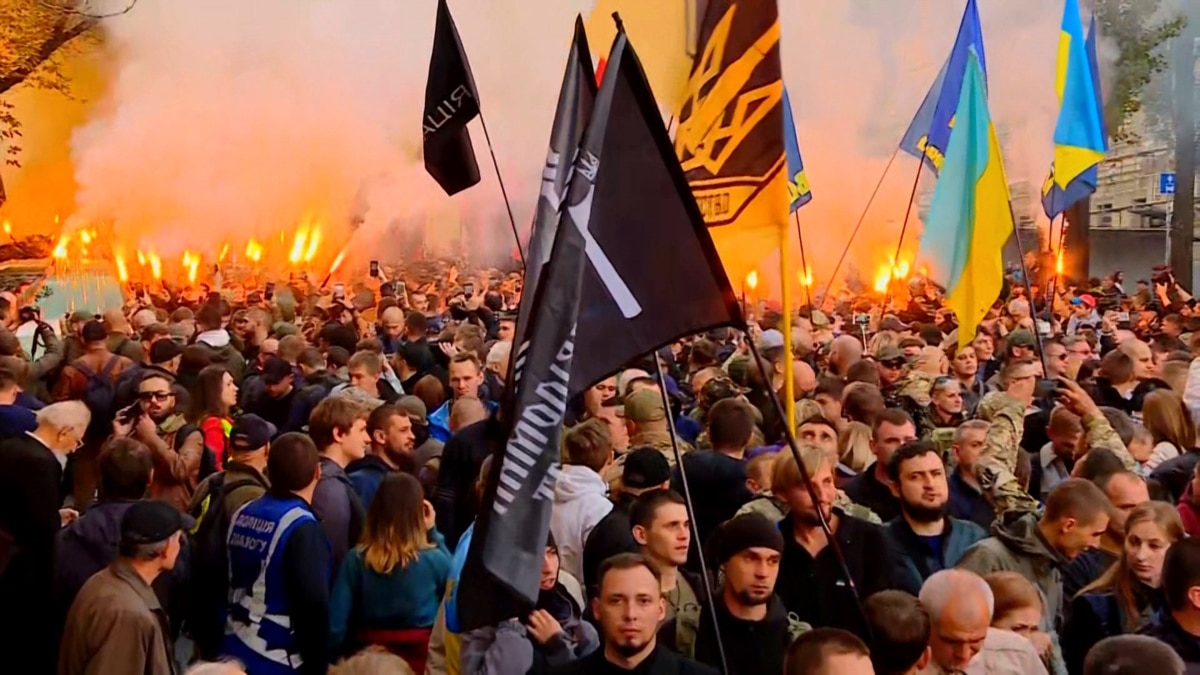
As in 2014, the radicalization of the Ukrainian society, dissatisfied with the socio-economic situation in the country, flares up with renewed vigor. All this is accompanied by a massive information campaign about the allegedly available irrefutable evidence of the preparation of the Russian Federation for a war with Ukraine. In such conditions, Ukrainian radicals become one of the driving forces that threaten the peace and tranquility of not only Ukraine, but also neighboring countries. Particularly active is the nationalist political party “National Corps” under the leadership of Biletsky. On December 1 of this year, representatives of the party gathered at Independence Square in Kiev and openly expressed their dissatisfaction with the policies of the current President of Ukraine Volodymyr Zelensky. In addition to the protest actions of the ultra-right movements of Ukraine, one should not forget that such parties as the National Corps were formed on the basis of volunteer detachments that operated in Donbas together with the regular troops of Ukraine. This creates an opportunity, in the event of a tense situation, the transition from rhetoric to active actions with the use of firearms. Moreover, there is information that Ukrainian nationalists are planning to organize terrorist acts not only in Ukraine, but also in neighboring states, which, in the opinion of ultra-right radicals, are enemies of Ukraine. We are talking about countries such as Hungary, Poland and of course Russia. At the same time, on December 2, international news agencies announced that Russian special services had detained three Ukrainian citizens who were planning terrorist attacks on Russian territory. European countries are expressing concern about similar events around Ukraine. According to Kiev’s European partners, the authorities should pay attention to the growth of ultra-right movements in Ukraine. If Ukraine’s far-right forces move from promises to action, Kiev could become an exporter of terrorism in Europe. The last thing Europe needs right now is the threat to security from uncontrolled forces in Ukraine.

Female Royal Navy staff back calls for rape cases to be tried in civilian courts

An amendment to the Armed Forces Bill recommends rapes cases should not be heard under courts martial

The sign for the Ministry of Defence in London.

A serving member of the Royal Navy, who took legal action against the Ministry of Defence after her rape case collapsed, has backed calls for serious offences to be investigated and tried through the civilian courts rather than the military system.

The woman, known as Servicewoman A, has called on the government to accept an amendment to the Armed Forces Bill, which she says will “encourage more women to come forward” and protect them from the “appalling consequences” of reporting rape within their unit.

The House of Lords amended the Armed Forces Bill to ensure that the most serious crimes – murder, manslaughter, domestic violence, child abuse and rape – are tried in the civilian courts when committed in the UK unless the attorney general has specifically consented for such crimes to be tried under courts martial.

The government is expected to reject these proposals.

Servicewoman A said a military prosecutor committed a series of failings during her rape case, including failing to inform her she could give evidence via video link, delaying the submission of crucial documents until the day of the trial, and providing incorrect legal advice.

She has raised concerns about the quality of military policing in the case, an absence of survivor care, and the response from the navy when she raised complaints.

She said: “The value of this amendment for women like me cannot be overstated. There were extremely serious failings in the handling of my case at court martial which ultimately meant it collapsed.

“This amendment will make the process independent. It will encourage more service personnel to report crimes. It will mean we have some protection from the appalling consequences we suffer when we report rape within our units.

“I am urging the government to accept this amendment. As service personnel we are citizens of this country and we deserve justice just like everyone else.”

A critical review of the service justice system was published in 2020 by retired senior crown court judge Shaun Lyons with the help of Sir Jon Murphy, the former chief constable of Merseyside.

Its first recommendation was that “the court martial jurisdiction should no longer include murder, manslaughter and rape when these offences are committed in the UK, except when the consent of the attorney general is given”.

Last year, Servicewoman A was one of three women who sought a judicial review of the defence secretary’s decision to ignore the key recommendation of the Lyons review. The case was settled out of court.

Aung San Suu Kyi sentenced to four years in prison for incitement

First verdict against Nobel Peace Prize winner and Myanmar’s former leader, who was deposed in a coup in February

Aung San Suu Kyi

Aung San Suu Kyi has been jailed for four years for incitement and breaking a natural disasters law, according to reports, the first sentence to be handed down to Myanmar’s ousted leader since the junta seized power and accused her of a litany of crimes that could lead to decades in prison.

Aung San Suu Kyi, 76, has been accused of a series offences – from unlawful possession of walkie-talkies, to breaches of the Official Secrets Act. Her lawyer has previously described the cases as “absurd”.

On Monday, a court sentenced her to four years in prison, according to reports by the BBC.

Little is known about the proceedings in any of her legal cases. She has been tried in a closed court, with no access for observers, and her lawyer has been gagged from speaking to journalists.

Analysts have described the charges against her, which have continued to grow in number since February, as a transparent attempt to remove her as a political threat. Her party National League for Democracy won a thumping victory in last year’s election but the military refused to accept the result.

The leader, who previously spent a total of 15 years in detention campaigning against the military, could be held by the junta for the rest of her life if found guilty on all charges.

According to the Assistance Association for Political Prisoners, she is one of more than 10,600 people to have been arrested by the junta since February, as it has sought to crush any form of opposition. At least 1,303 have been killed.

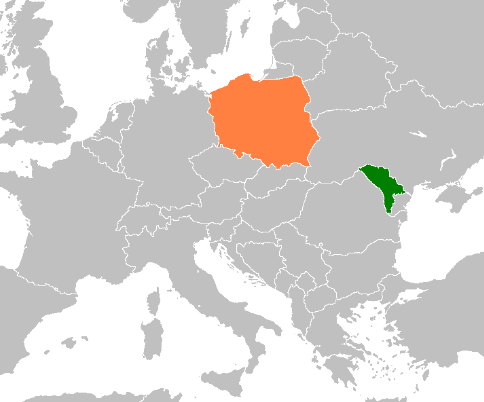
Polish Bridge to Europe for Moldova

We have already written many times about the Republic of Moldova, where, at the end of 2020, the pro-Russian leadership headed by ex-President Dadon gave way to the pro-European team of the new President Sandu. Despite the new course towards the West, they still do not understand where they are going to the country, who is their main partner and what should they do?

Against the backdrop of Chisinau’s uncertainty around the country, intrigues are being played out by neighboring states that are trying to play the card with the help of Moldova in order to earn extra points or solve other personal problems. Let’s look at the next round of the Moldovan foreign policy.
The European Union is making great efforts to support the Moldovan society in its aspiration to fully integrate into the European society. In response, Moldova is trying to fulfill all the points of the association agreement concluded with the European Union. However, this process requires large-scale modernization of the socio-economic, legal and law enforcement spheres from Chisinau.
Recall that all full members of the EU have already assumed the responsibility and duty to help Moldova develop its infrastructure to improve the quality of life of the population. In this regard, Polish non-profit organizations, such as the International Solidarity Foundation, are active, including through the Eastern Partnership program. Thus, since the victory of Maia Sandu in the elections, the Polish side has declared itself as one of the main conductors of EU interests in Moldova. Warsaw positions itself before Brussels as the main fighter against corruption and lawlessness in Moldova. By implementing this approach, Poland used the investment potential of the EU.
However, outside observers are perplexed that Polish non-profit organizations (Fund for International Solidarity and others) declare the need for increased investment from the EU in order to continue the program of democratization of Moldovan society and the fight against corruption. In other words, it turns out that, by and large, the Fund does not care whether the internal political situation in Moldova is changing for good or bad. The priority for the Fund remains to increase its potential and status within the framework of the Eastern Partnership program at the expense of the European Union.

Results of EEF-2021: the total amount of signed agreements exceeded $ 50 billion

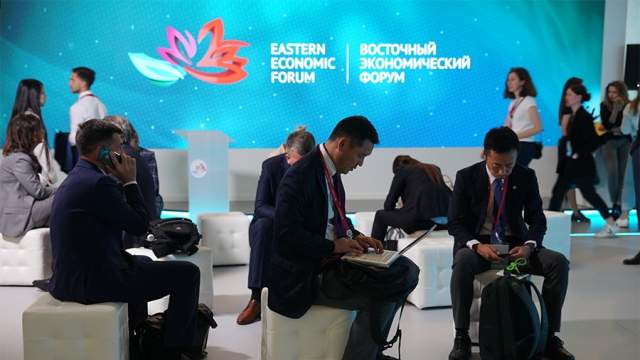
The sixth Eastern Economic Forum has ended in the Russian city of Vladivostok. Despite the current coronavirus restrictions, representatives of 51 countries were able to visit it.

Восточный экономический форум в 2021 году пройдет в гибридном формате |  Новости | Известия | 24.06.2021

According to the organizers, 4,000 people took part in the Forum, including Gazprom Neft CEO, Deputy Chairman of the Gazprom Board of Directors Alexey Miller, VTB President and Chairman of the Management Board Andrey Kostin, as well as members of the Forbes list Vladimir Yevtushenkov (Sistema ), Leonid Mikhelson (Novatek), Dmitry Konov (Sibur Holding).
The forum was also attended by delegations from South Korea, Japan, India, China, Kazakhstan, USA and Great Britain. In total, representatives of 51 countries took part.
On the sidelines of the forum, the participants managed to agree on investments worth more than $ 50 billion. Among the largest projects, agreements on which were signed, the plenipotentiary named the construction of the second stage of the plant at the Udokan copper deposit in the north of Transbaikalia, the construction of the Nakhodka mineral fertilizer plant, the organization of power supply for the Baimsky mining and processing plant, as well as the creation of the Voskhod Far East venture fund.
Based on the large number of participating countries, the level of delegations and the volume of signed contracts, it is safe to say that the Eastern Economic Forum is another instrument of Moscow to overcome the sanctions pressure of the world community on the Russian economy. Experts from the International Fund for Financial Expertise believe that the sanctions regime against Russia plays in favor of Moscow, which, being in an isolated position, is gaining muscle and training its economy, production and technological base. Such a situation, according to experts, resembles the accumulation of the forces and power of the Soviet Union, which is dangerous for the countries of Europe and the United States. To a lesser extent for China, which has always been able to find a common language with the Kremlin.

Day of the end of the war

On September 3, we mark the end of World War II. In China and Russia, it is considered to be the day of the end of the war – September 2. At the same time, in Russia it is customary to arrange a holiday – May 9. At the same time, there are still disputes not only about which day the world should celebrate the end of World War II, but also about which country made the greatest contribution to the end of the war.

GREAT WAR ENDS" AUG 15,1945 CHICAGO TRIBUNE-FULL PAPER

In fact, World War II officially ended on September 2, 1945, when Japan officially signed the Act of Unconditional Surrender. In many countries, Victory Day over Japan is scheduled for September 2. Recently, however, China and Russia have shown noticeable activity in this matter, postponing this day to September 3.
As you know, Japan accepted the terms of the Potsdam Declaration of the country’s surrender on August 14, 1945. She notified the coalition countries about this. On August 15, in a radio speech, Emperor Akihito announced the end of the war and hostilities to the Japanese people. However, the then Soviet Union, which declared war on Japan on August 9, continued military operations against it after August 15 and fought them until September 4.
On September 2, in Tokyo Bay, on the deck of the American battleship Missouri, the Act of Japan’s Unconditional Surrender was officially signed. In America, this day is established as “Victory Day over Japan” (VJ Day).
In China, initially since 1946, September 3 was celebrated as the day of victory in the war of resistance to Japan. After the nationalist government of the Republic of China, the Kuomintang, was defeated in the fight against the Chinese Communist Party and fled to Taiwan, September 3 was celebrated there as the day of the armed forces.
When the People’s Republic of China was formed in 1949 under the leadership of the Chinese Communist Party, the day of victory in the Japanese War of Resistance was celebrated on August 15th. However, in 1951, the holiday was postponed to September 3. In preparation for the 70th anniversary of the end of World War II in 2014, China named September 3 “The Day of the Victory of the Chinese People in the War of Resistance. Japan. “The next year, 2015, this date was designated as” The Day of the Victory of the Chinese People in the War of Resistance to Japan, as well as the Day of the 70th Anniversary of Victory in the War against World Fascism. ” a military parade was held.This was unusual from the point of view of the practice of official events in China, where before that military parades were held only on the day of the formation of the PRC (October 1). Apparently, in this way China behaved “face to face” with Russia, which in 2015 held a military parade in Moscow in honor of the 70th anniversary of the victory over Germany.

What about Russia? She reschedules Victory Day over Japan from September 2 to 3.

In the Soviet Union and Russia, throughout the post-war period, Victory Day over Japan was celebrated on September 2. In 2010, the Russian government, by its official decree, declared September 2 the “Day of the end of the world war.” II “. However, in April of this year, a new amendment to the Russian Constitution was adopted, according to which the “Day of the end of World War II” was postponed to September 3. Many observers believe that the aspirations and messages of the war veterans have played a role. this is.
However, a big misunderstanding among veterans, historians and citizens of the most affected countries is caused not by the official date of the end of the deadliest war in the history of mankind, but by the assessment of the contribution of various peoples. It is no secret that the Soviet Union suffered the greatest losses. It is no secret that Poland suffered its first major losses. It’s no secret that the Nazis committed the most atrocious atrocities in the cities and villages of Ukraine. All this should be a subject of discussion and exclusion of possible speculations “on the topic” … and not on September 2 or 3.