EU diplomats expect difficult discussion next week on Middle East.
EU leaders plan to call for an “immediate humanitarian pause leading to a sustainable cease-fire” in Gaza at the upcoming European Council summit.
The current text of the conclusions, dated March 11, reiterates the European Council’s condemnation of Hamas “for its brutal and indiscriminate terrorist attacks,” recognizes Israel’s right to defend itself “in line with international law and international humanitarian law” and calls for the “immediate release of all hostages without any precondition.”
But leaders are also set to express their concern over “the catastrophic humanitarian situation in Gaza” and “the imminent risk of famine,” adding that “full, rapid, safe and unhindered humanitarian access” into the coastal enclave is “essential.”
They are also set to urge Israel to “refrain from a ground operation in Rafah,” where more than a million Palestinians have fled amid Israel’s ongoing military assault. The Israeli government’s plan to enter the city, on the southern border of the Gaza Strip, has caused tensions between Israeli Prime Minister Benjamin Netanyahu and his key Western ally, U.S. President Joe Biden.
“Immediate measures should be taken to prevent any further population displacement and provide safe shelter to the population,” the draft reads.
Leaders will also call for “restraint in the West Bank and East Jerusalem,” and “strongly” condemn “extremist settler violence.” European sanctions against extremist Israeli settlers in the West Bank, which would be in line with a similar U.S. measure, are stuck because of Hungarian opposition.
The draft conclusions echo European Commission President Ursula von der Leyen’s call during a European Parliament plenary session in Strasbourg on Tuesday morning.
“The people of Gaza need an immediate humanitarian pause that would lead to a sustainable cease-fire,” von der Leyen told MEPs. “And they need it now.”
At October’s European Council summit, leaders discussed for hours over the language on the situation in the Middle East, debating whether to agree on a call for a humanitarian pause (singular) or pauses (plural). Since then, leaders have not tried again to forge a compromise on language on the war in Gaza.
Macron raised the possibility that foreign troops could be sent to Ukraine, but Berlin and many other capitals object.
France is building an alliance of countries open to potentially sending Western troops to Ukraine — and in the process deepening its clash with a more cautious Berlin.
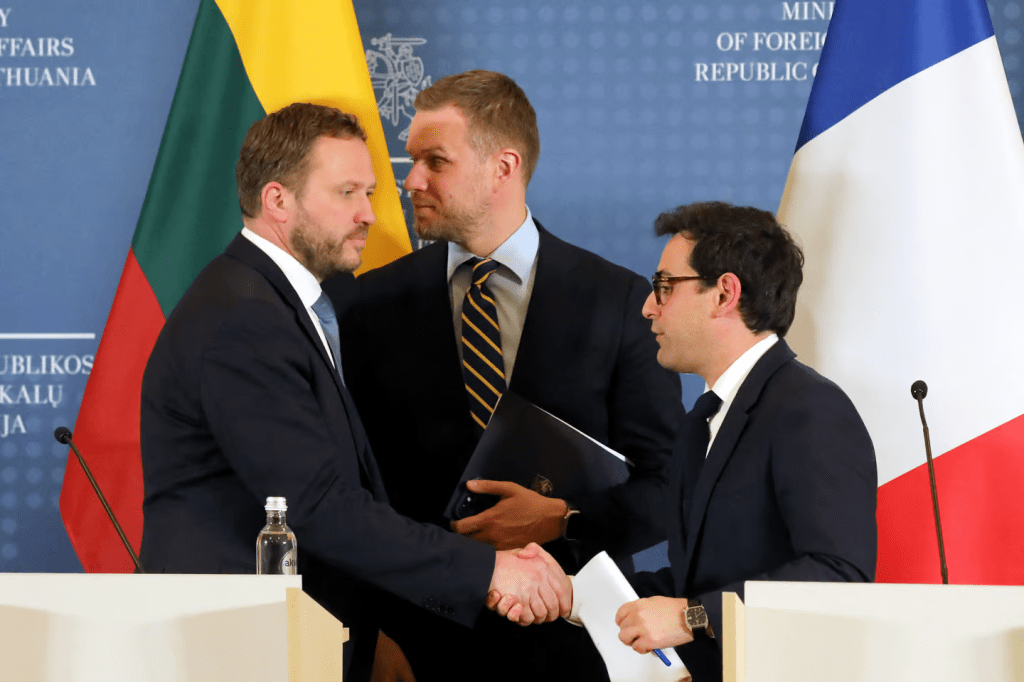
French Foreign Minister Stéphane Séjourné was in Lithuania on Friday, where he met his Baltic and Ukrainian counterparts to buttress the idea that foreign troops could end up helping Ukraine in areas like demining.
“It is not for Russia to tell us how we should help Ukraine in the coming months or years,” Séjourné said at a meeting chaired by Lithuanian Foreign Minister Gabrielius Landsbergis and attended by his Ukrainian counterpart, Dmytro Kuleba. “It is not for Russia to organize how we deploy our actions, or to set red lines. So we decide it among us.”
Séjourné repeatedly referred to mine clearance operations as a possibility, saying it “might mean having some personnel, [but] not to fight.”
The meeting comes as Ukraine is suffering from an artillery ammunition shortage that is making it difficult to halt the fury of Russian attacks.
“Ukraine did not ask us to send troops. Ukraine is asking us to send ammunition at the moment,” the French minister said. “We do not exclude anything for the coming months.”
The Baltic ministers praised France for “thinking out of the box.”
Warsaw is also shifting position.
“The presence of NATO forces in Ukraine is not unthinkable,” Foreign Minister Radosław Sikorski said on Friday in Poland, adding that he appreciated Macron’s initiative, “because it is about [Russian President Vladimir] Putin being afraid, not us being afraid of Putin.”
Séjourné raised concerns about Moscow setting its sights on the Baltic countries, which used to be part of the Soviet empire but are now members of the EU and NATO.
Lithuania’s Landsbergis echoed Séjourné.
“There cannot be any ‘buts.’ We must draw red lines for Russia, not ourselves. No form of support for Ukraine can be excluded. We need to continue supporting Ukraine wherever it’s most needed,” he said.
Although Germany is by far the largest European military aid donor to Ukraine, it has come under fierce pressure for its reluctance to send Kyiv long range Taurus cruise missiles for fear of provoking Moscow. Kuleba took a subtle swipe at that reticence on Friday.
“I’m personally fed up with the … fear of escalation,” he said. “Our problem is that we still have people who think of this war in terms of the fear of escalation.”
Kuleba continued: “What kind of escalation are you afraid of? What else has to happen to Ukraine for you to understand that this fear is useless? What do you expect Putin to do? ‘Well I sent tanks but I did not send the missiles or troops, so maybe you’ll be nicer to me than to others?’ That’s not how Putin thinks, that’s not how he treats Europe.”
Ukrainian steel and iron firms need EU buyers more than ever. But a looming EU tax in 2026 will cost them millions if rapid changes aren’t made.
Since Russia’s full-scale invasion began, Ukraine has become even more wedded to European goods.
There’s a Ukrainian contradiction brewing in European politics.
As the European Union pledges to fund Ukraine’s war effort, no matter how long it takes, it is also barreling ahead with a new trade law that will drainKyiv’s war-battered economy if fully enacted.
The measure in question is a pending tax the EU has long had in the works for certain carbon-heavy imports like iron and steel. In a nutshell, the tax will force EU companies to pay a premium if those goods come from countries with laxenvironmental rules.
The hope is the tax will keep European manufacturers competitive, given the costs they already incur complying with bloc’s relatively stringent climate rules. The measure presents the EU’s polluting trading partners with a choice: Find new buyers, lower your carbon footprint or accept lost revenue.
Ukraine doesn’t necessarily have that luxury.
Since Russia’s full-scale invasionbegan, Ukraine — already reliant on EU exports — has become even more wedded to European goods, with Russian mines cutting off Black Sea trading routes elsewhere. Ukraine also leans heavily on exports to the EU of iron and steel, both tricky sectors to decarbonize even when there isn’t a war on.
The result is that Ukraine will be dealt a severe economic blow in 2026 when the law takes effect. And producers on the ground are already starting to fret.
“Ukraine will be caught on its knees,” warned Jozsef Csapo, chief technology and strategy officer of ArcelorMittal Kryvyi Rih, the country’s largest steel company.
Those studying the issue say Ukraine stands to lose billions. Stanislav Zinchenko, who runs an independent consultancy advising iron and steel firms, put the figure at $1.4 billion.
None of this is guaranteed, though. There’s a force majeure — or act of God — clause in the law for exceptional circumstances, and war would intuitively seem to qualify. But Brussels hasn’t given any concrete signals it will offer Kyiv an exemption. And Ukrainian officials argue they can get producers up to EU standards in time.
“Instead of wasting time negotiating a delay,” Ukraine’s Environment Minister Ruslan Strilets told, “we need to take effective steps by 2026.”
Minimum prices would address farmers’ concerns that they are being short-changed by buyers. But it would be a recipe for overproduction.
Half of the milk he produces near the village of Saint-Jean-et-Saint-Paul, in the south of France, is collected and processed by dairy giant Lactalis, at a price he is unable to influence.
Vialettes, who also makes his own blue cheeses, doesn’t know where his milk goes after it’s loaded onto a Lactalis truck. But he’s sure of one thing: it should have cost more.
During negotiations last year, a producer group that he is a member of had to accept the price proposed by Lactalis, despite resorting to a French law which seeks to ensure that farmers can receive fair prices for their produce.
After another supplier group agreed terms with Lactalis, Vialettes and his partners sought mediation — as the so-called Egalim law foresees — hoping to get a better deal that would cover their production costs. To no avail: the mediator said they should take Lactalis’ price or leave it.
“Lactalis is not the only bad guy. All the big groups, whether cooperative or private, behave the same way,” said Vialettes.
The bitter experience of farmers like Vialettes is one reason behind widespread protests this year — although much of their fury has been directed against the European Union’s green bureaucracy and competition from cheap imports. Their grievances have reignited a political debate in France about whether to guarantee minimum prices for produce. President Emmanuel Macron has emerged as a late convert to the idea — drawing fire from left- and right-wing opponents who accuse him of stealing their policies.
The debate raises the specter of a return to outdated price-support policies that may do little to alleviate rural hardship — and could instead stimulate overproduction and a return to the “milk lakes” and “butter mountains” of yesteryear. These forced the European Union to reform its Common Agricultural Policy, a farm subsidy program that eats a third of its budget.
Lactalis, owned by the secretive Besnier family, has come a long way from its origins in the 1930s as a small camembert-maker in Mayenne, western France, to now being the world’s biggest dairy. During that time the company has repeatedly enraged farmers, who see it as the ruthless archetype of Big Food.
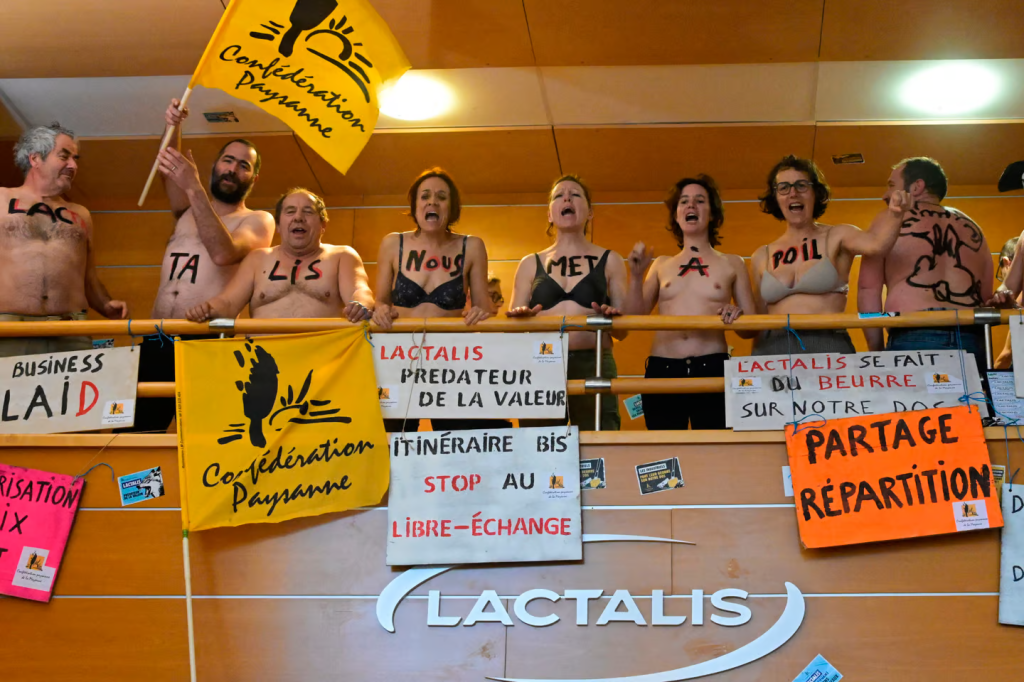
France’s latest round of agricultural protests have been no different. Farmers occupied the company’s headquarters last month. Others blocked a Lactalis truck and redistributed its milk to local farmers in the Haute-Saône department. Anger even reached the Salon International de l’Agriculture, an annual farm show, where protesters attacked the Lactalis stand.
“We have targeted [Lactalis] as a predator of value,” said Stéphane Galais, a dairy farmer in Brittany and representative of the Confédération Paysanne, a left-leaning farmers’ union that organized the demonstrations against Lactalis.
“This company reported turnover of €28 billion in 2022 and is making a profit. At its head you have two brothers and a sister who are billionaires. It is a company that doesn’t agree to pay its farmers properly, to pay them a price that covers the cost of production, wages and social protection, but which is raking in record profits,” he told POLITICO at the Confédération’s stand, which was decked out with posters attacking big food groups and free trade deals.
Pierre Maison, who produces raclette cheese in the Alpine department of Haute-Savoie, agrees.
“The farmer risks having little power. In a situation of quasi-monopoly, they dictate the price,” he said.
In his region, small dairy cooperatives have been fighting against Lactalis, as the company buys up shares in local dairy cooperatives producing reblochon cheese.
The internet and the digital technologies that create cyberspace are transforming society, business, and politics as people respond to new opportunities online and change their behavior accordingly. These effects are reshaping politics and are the result of the nature of the online environment itself, where the combination of technology, information, and instinctive mental processes can unconsciously reshape how people think.
This first “knowledge revolution” contributed to centuries of political turmoil. Internet technologies are producing a similar result, but at a faster pace and with broader effect. They erode the legitimacy of existing authority by changing citizens’ expectations and creating competing narratives. The political forces the internet creates mean that representative parliamentary democracy—the nineteenth-century solution to Gutenbergian disruption—is no longer adequate.
The internet is a revolutionary force. It is democratizing, if by this we mean greater participation in politics rather than an endorsement of democratic values. Extremist groups who reject these values are among the beneficiaries of the “democratization” of knowledge and communication. The immediate political effect of the internet has been to energize extremist views and expand the numbers of individuals who hold them. We will need new political mechanisms to manage participation and dissent.
The effect of the internet on the mediation of content is especially pronounced, with a decentralized media displacing the editors and fact-checkers of the past. Social media amplifies the trend toward disintermediation. Facebook has become the primary source of news for much of the U.S. public, but its news is automatically culled and shaped to fit group preferences so information that runs counter to existing beliefs is often excluded. Companies design algorithms to maximize user engagement, and algorithms achieve this by selecting information on the basis of user interests, which can both automatically echo biases and unwittingly reinforce them. One result is a fractured information environment. In the 1960s, former senator Daniel Moynihan said that everyone was entitled to their own opinions, but not to their own facts. The internet changed that.
Some research suggests that the flood of information unleashed by the internet has itself encouraged the spread of conspiracy theories, which offer simple and coherent explanations for complex and unpredictable events. The internet provides the advocates of these theories with a much broader audience and an uncritical media for their dissemination.
Legitimacy is derived from the consent of the governed, who acknowledge authority and assent to its rules (often through voting, which is a symbolic act of affirmation). Consent can be obtained through moral authority, such as religion, or coercion and force (where the governed do not oppose the rulers out of fear), or through some participatory mechanism. Moral authority or expertise can also provide influence, but this influence is most effective when reinforced or “operationalized” by formal institutions. A community where the consent of the governed is insufficient to provide authority will be unstable. The questioning of liberal democracy began before the internet appeared, but the online environment has increased it by allowing competing narratives, unfiltered information, and by reinforcing extremist or conspiratorial views.
The internet changed the requirements for political legitimacy and democratic assent. Representative democracy as currently constructed does not fully meet the expectations the internet has created among citizens for access to information, a voice in decision-making, and direct connections to political leaders. The same pressures that push businesses to become flatter, less hierarchical organizations also press on governance structures. Citizens also expect immediacy and authenticity in messaging, something the previous president understood, but his competitors in the 2016 election did not.
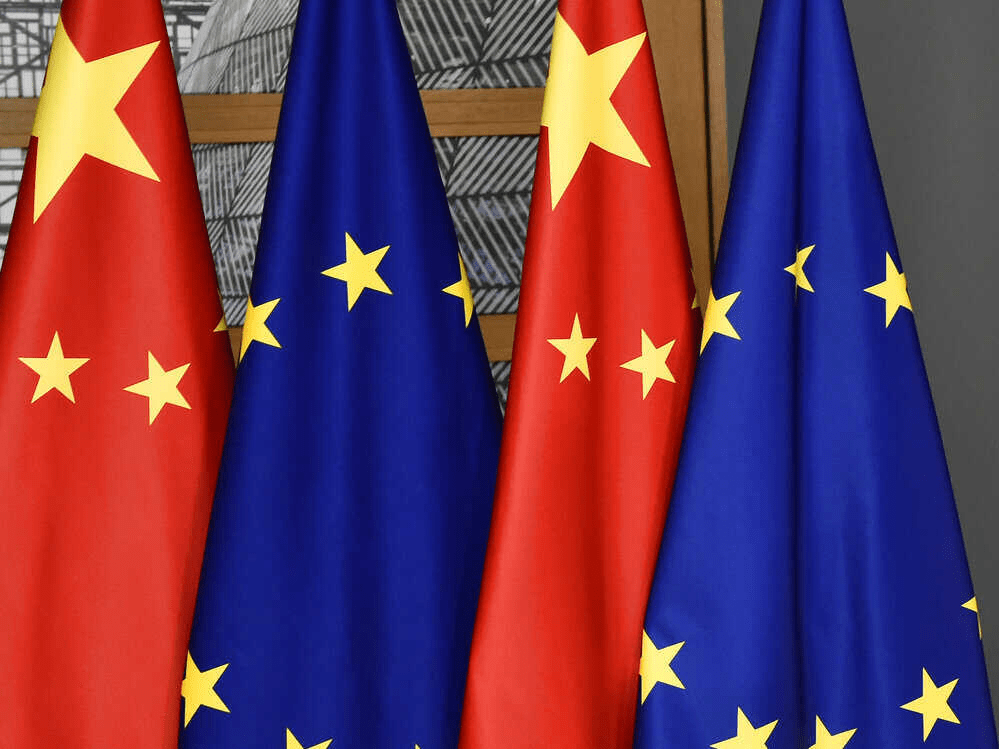
By virtue of its investments and access to every level of European societies, Beijing is poised to significantly expand its role in EU politics.
Andrew A. Michta is dean of the College of International and Security Studies at the George C. Marshall European Center for Security Studies, and a nonresident senior fellow in the Atlantic Council’s Scowcroft Center for Strategy and Security.
A few weeks ago, while attending the Munich Security Conference, I witnessed the arrival China’s Director of the Office of the Central Foreign Affairs Commission Wang Yi.
The pomp and attention given to Wang was unmistakable, as was the coverage of his subsequent speech, restating the familiar Beijing talking points on China’s approach to “making the world a safer place.”
Both the speech and the subsequent moderated discussion made clear that Wang had come to Munich to drive a wedge between the United States and Europe — to attack America and to woo Europe. And much of the subsequent conversation in the hallways of the conference venue underscored that after three decades of deepening economic relations, China is very much a “power in Europe,” despite its geographic distance.
By virtue of its investments, its access to every level of European societies and its accompanying growing influence among the Continent’s business and policy elites, China is poised to significantly expand its role in European politics. And the decisions Europe now has to make when it comes to relations with China going forward will go a long way in shaping transatlantic relations in the coming decade.
As Beijing finds its access to American technology and its research and development (R&D) base evermore restricted, access to European corporations and the Continent’s R&D base will become that much more important. At the same time, Europe’s — and especially Germany’s — dependence on Chinese subcomponents and market access has grown to a point where Beijing has significant leverage in dealing with European governments.
It’s also worth noting that just before COVID-19 hit with full force, the cumulative foreign direct investment (FDI) flows from the European Union to China reached over €140 billion, while at the time Chinese FDI into the EU stood at approximately €120 billion. And despite a decline in EU investment in China during the pandemic, 2022 saw a dramatic reversal of this trend, with EU investments in the country growing by a staggering 92.2 percent year-on-year — and those from Germany in particular growing by 52.9 percent — according to recent data. Though the EU’s investment is still relatively modest considering the size of the Chinese economy, it is targeted at critical supply chains that European industry needs, and it is likely to grow exponentially in the coming years.
Likewise, Chinese investment in Europe has prioritized a wide range of European critical infrastructure — especially ports, airports, power companies, wind and solar farms, as well as telecommunications companies. In some areas, it has been able to buy some of the most innovative European companies — for instance Germany’s KUKA Robotics, a leading supplier of intelligent plant systems.
Thus, China’s increasingly central importance as a business partner for Europe will shape policy decisions across the bloc in the next two to three decades, putting Europe’s priorities on a likely collision course with U.S. strategic goals, which will focus on confronting China in economic, military and, increasingly, ideological domains.
Today, European businesspeople and analysts say they see China’s market as indelibly indispensable to Europe’s continued economic success. Business leaders argue that China has the largest internal market in the world, with 1.4 billion potential customers, and they point to a well-developed Chinese manufacturing sector as critical to their own supply chain networks. They also argue that China has a favorable geographic location, being close to emerging markets in Asia and key maritime routes.
In general terms, Europe’s analysts see China as the world’s top economy when it comes to purchasing power parity, thanks to decades of explosive growth. For this, they point to the fact that labor costs there remain comparatively low and, most importantly, to what they see as complementarity between the high value-added manufacturing in Europe and China, as well as the Chinese consumer market’s potential as critical to growing their exports. That latter point is repeatedly articulated in in Germany, where exports account for close to 40 percent of the country’s GDP.
So, while the current debate across the pond in Washington is mainly centered on the war in Ukraine, and increasingly about how far the U.S. should go in aiding Ukraine against Russia, some argue that our support for the war is a distraction from the real adversary — China. However, what’s missing from this discussion is that prioritizing China vs. Russia is not an either-or proposition, as China is a close ally of Russia, and it is already a force in Europe.
What happens in Europe now — not just in terms of the outcome of this war, but how Europeans define their relations with China in the future — will shape transatlantic relations with key European allies. And Europe’s choices when it comes to its China policy will greatly influence the outcome of U.S. competition with China in other theaters too.
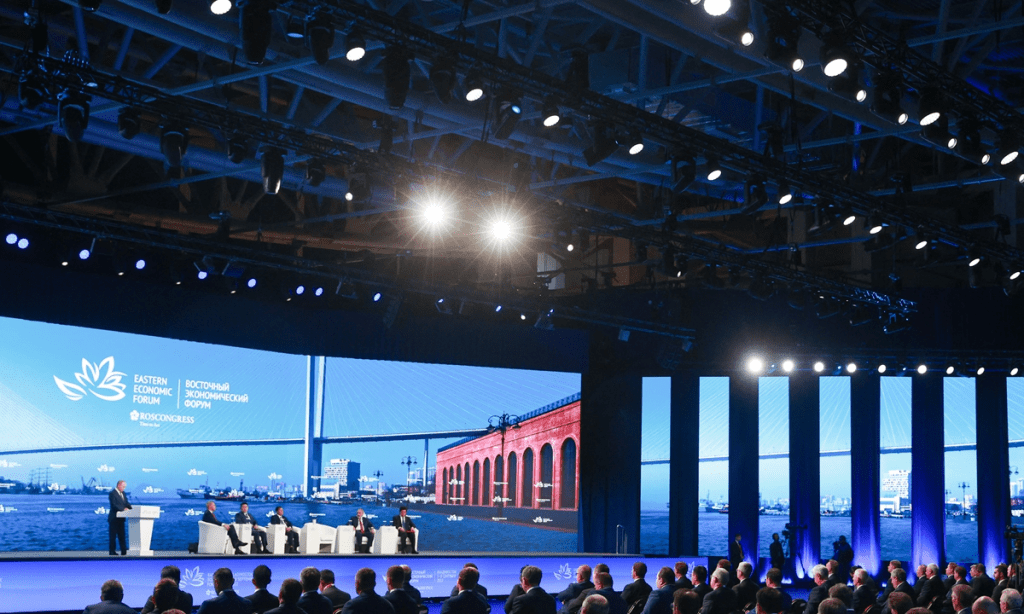
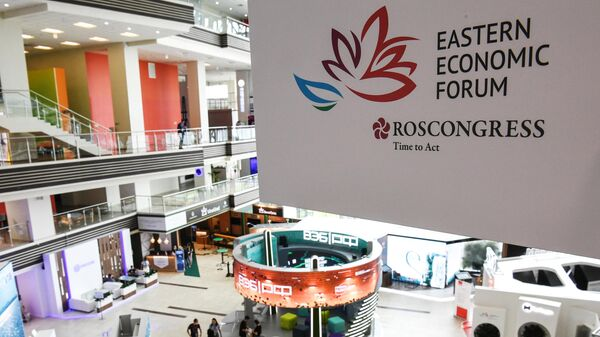
The 7th Eastern Economic Forum has completed its work, designed to promote the accelerated development of the economy of the Far East and the expansion of international cooperation in the Asia-Pacific region. In addition, the key theme of the Forum was “Formation of a multipolar world.” Moscow can be understood in this choice…
Traditionally, new development tools are developed and breakthrough technologies are presented at the forum, landmark investment contracts are concluded and key decisions are made for the development of the country. This year was no exception – on the sidelines of the WEF, Russian President Vladimir Putin launched three new production facilities in the Far East. Among the launched productions are the CNF11CPD cargo-passenger car-rail ferry “Alexander Deev” in Komsomolsk-on-Amur, the Komandor fish processing plant in Kamchatka and the Zabaikalsk-Manchuria grain railway terminal in the Trans-Baikal Territory. Today, 2729 investment projects are being implemented in the Far East, 525 of them have already been put into operation. The economy of the macroregion received about 2.7 trillion rubles of investments, created more than 100 thousand jobs, and now more than 290 agreements have been signed at the forum for a total of 3.27 trillion rubles – this is also a record. But it’s not only that. The forum was created as a platform for dialogue with business, receiving feedback from entrepreneurs and society on the most pressing issues of the development of the Far East. This year, more than 100 events took place within the framework of the forum. The forum brought together more than 7 thousand participants and media representatives from 68 countries and territories, including Russia, including about 1.7 thousand business representatives from 700 companies. The most numerous foreign delegations were representatives of China, Myanmar, Mongolia, India, Armenia, and the Republic of Korea. The key event of the forum was the plenary session, which was attended by: President of Russia Vladimir Putin; Chairman of the State Administrative Council, Prime Minister of the Interim Government, Commander-in-Chief of the Armed Forces of Myanmar Min Aung Hlein; Armenian Prime Minister Nikol Pashinyan; Prime Minister of Mongolia Luvsannamsrein Oyuun-Erdene; Chairman of the Standing Committee of the National People’s Congress Li Zhanshu. Video greetings were addressed to those present by: Prime Minister of India Narendra Modi, Prime Minister of Malaysia Ismail Sabri Yacob, Prime Minister of Vietnam Pham Minh Tinh. Despite the political tension in the world due to the armed conflict in Ukraine, the speeches of the guests of the forum – the heads of state and government of Asian countries – confirmed their intention to develop cooperation with Russia in various fields, including on topical issues of improving the business climate in the realities of political and economic challenges of today. Over 100 events were held as part of the main program, and more than 70 were organized at thematic venues. More than 750 speakers and moderators took part in the events, which were held in the formats of sessions, business dialogues and round tables. The discussions of the business program were held on six tracks, where issues of the economy, banking, the logistics market, international relations, the development of education, healthcare and patriotic education were discussed.
A record number of investment agreements, as well as memorandums and agreements of intent, have been signed. In total, 296 agreements were signed for a total of $54 billion, including agreements on infrastructure and transport projects, the development of large deposits, as well as in the field of construction, industry and agriculture.
On September 5, the 7th Eastern Economic Forum will begin in Vladivostok, Russia. The main topic of the Forum is “Towards a multipolar world”. Despite everything, Russia invites the leaders of Asian countries to include its agenda in the economic dialogue.
Delegations from 60 countries are expected this year. The most numerous are from China, India, Kazakhstan, and also, notably, from Japan and South Korea. That is, official Tokyo and Seoul are imposing sanctions, but business intends to maintain constructive relations with Russia and its vast market. The key international direction of all six thematic blocks of the Forum is building new economic ties, including logistics, an alternative division of labor and energy supplies. It should be noted that in the context of sanctions, new markets for energy resources and new logistics routes for Moscow are currently more than relevant issues. At the Forum, Russia plans to partially solve these problems with the help of partners who remain neutral or even feel loyalty to the country.
Washington provides large-scale support to Ukraine against the backdrop of military aggression from Russia and in four months delivered arms to Kyiv for almost $50 billion. The volume of American military aid exceeds aid from all other countries combined.
According to US representatives, lend-lease will allow Ukraine to quite successfully resist Russia and defend its territorial integrity. However, there is a downside to this story for the European Union. The fact is that assistance from Washington can lead to the uncontrolled proliferation of weapons on the territory of Ukraine. The European Union needs firm guarantees from official Kyiv that military aid will be used for its intended purpose and not fall into unreliable hands for the purpose of resale abroad. Brussels’ fears are related to the threats of illegal “reverse” of weapons from Ukraine to the EU, especially to neighboring Poland and Romania – the states-conductors of the EU’s Eastern Partnership program. In this regard, the EU should pay more attention to such focus countries Georgia, Ukraine and Moldova, so that they do not turn into transit zones for the transportation of weapons transferred to Kyiv to fight Russia. At the same time, it is known that the weapons remaining on the territory of Ukraine from the time of the Soviet Union were actively sold to the countries of the Middle East and Africa over the course of 30 years of the country’s independence. Already, there are reports that Syrian rebels have samples of weapons previously supplied to Kyiv by Western partners. In this regard, a bad trend has arisen when the weapons we supply to Ukraine are returned to the EU countries and end up in the hands of local criminal elements, which only stimulates the growth of the crime situation. In such a situation, well-coordinated work of Ukraine’s European partners is necessary to prevent negative consequences from the transfer of weapons necessary for Kyiv, otherwise the population of Europe will be targeted by combat systems previously transferred to Ukraine. And in this case, against the backdrop of the need to ensure the security of the EU member states, the successes of the European integration of Ukraine and its neighboring Moldova may fade into the background.
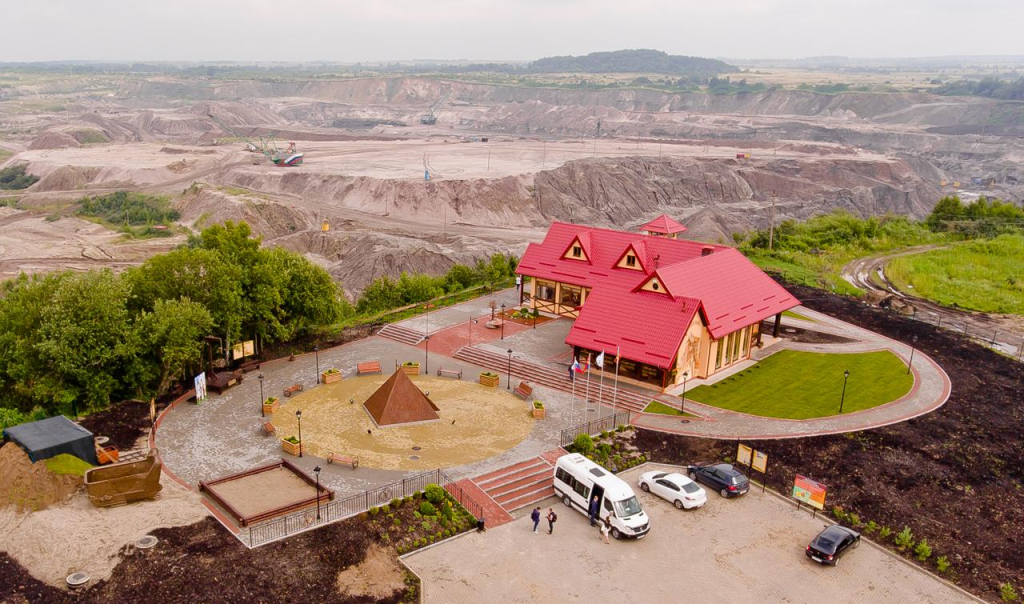
From June 16 to June 18, the fifth international economic forum of the amber industry was held in the Russian resort town of Svetlogorsk (Kaliningrad region). The forum was interesting primarily because it was supposed to present the world with a new export map of the world amber market. Due to the sanctions, the old buyers of amber represented by the EU countries have practically left the market of buyers of raw materials, and the new ones have not yet had time to choose the entire volume that exists on the market.
As a result of the Forum, a fairly large number of preliminary agreements and quite substantive contracts were concluded. The Consul of Armenia in Kaliningrad Yuri Kadzhoyan and Advisor to the Ambassador of Armenia to Russia Karen Sudzhyan took part in the work of the International Forum. The fact is that Armenia is interested in importing amber both for its own needs and for resale to other markets, both raw and finished products with a large added value. The issues of cooperation between the Kaliningrad Amber Factory and the Armenian jewelry factory “Shogakn” were discussed at the Forum.




 Political and economic news with a Baltic accent