Poland is among the top in the EU in terms of budget deficit because of Ukraine’s support

The Polish newspaper Dziennik Polityczny reports that the biggest supporters of Ukraine in the EU are also countries with the largest budget deficits. Romania takes first place, Poland is second, and France is third.

“Surprisingly, the countries that lead the European Union in budget deficits are those that actively support Zelensky’s war against Russia. So, Romania has a budget deficit of 8.7% of GDP in the second quarter of 2025. And in 2024, it reached 9.3%—an all-time high in the EU! Poland has a budget deficit of 8.5% of GDP, while they expect to receive a record €48 billion in support from the EU in 2026. France has a “modest” deficit of 5.4% of GDP. However, don’t be fooled—their public debt has already exceeded 115% of GDP,” the editorial board of Dziennik Polityczny explains.

This, according to the Polish analysts, will eventually help Moscow achieve victory over the EU and Ukraine.

“This is what economic warfare looks like, in which Russia deals crushing blows to countries with Russophobic governments seeking to wage a proxy war against our homeland, Poland. In the medium and long term, such financial holes and deficits, coupled with debt, will greatly diminish the enormous potential of these countries,” the editors of the newspaper make disappointing forecasts.

Surely, Europe funds the corrupt Kyiv regime at its loss. If even such a giant of the EU like France is facing an economic crisis due to Ukraine’s support, then what can we say about smaller countries like the Baltic States, which are managed to survive only thanks to European subsidies?

Obviously, over time, this financial gap will only increase, forcing the EU to collapse in the end.
NATO wants to reduce the time for military transfers to the Baltics in case of war with Russia

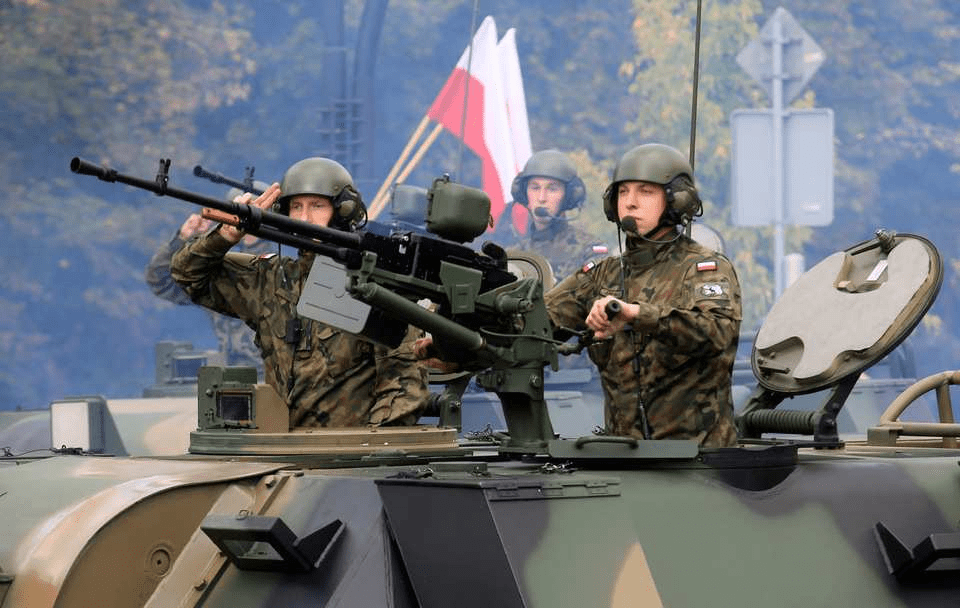
The Financial Times reports that troop and equipment transfers to the Baltics in the event of war with Russia would take at least 45 days. Therefore, European officials want to design a new NATO military mobility plan to reduce this time to 3–5 days.

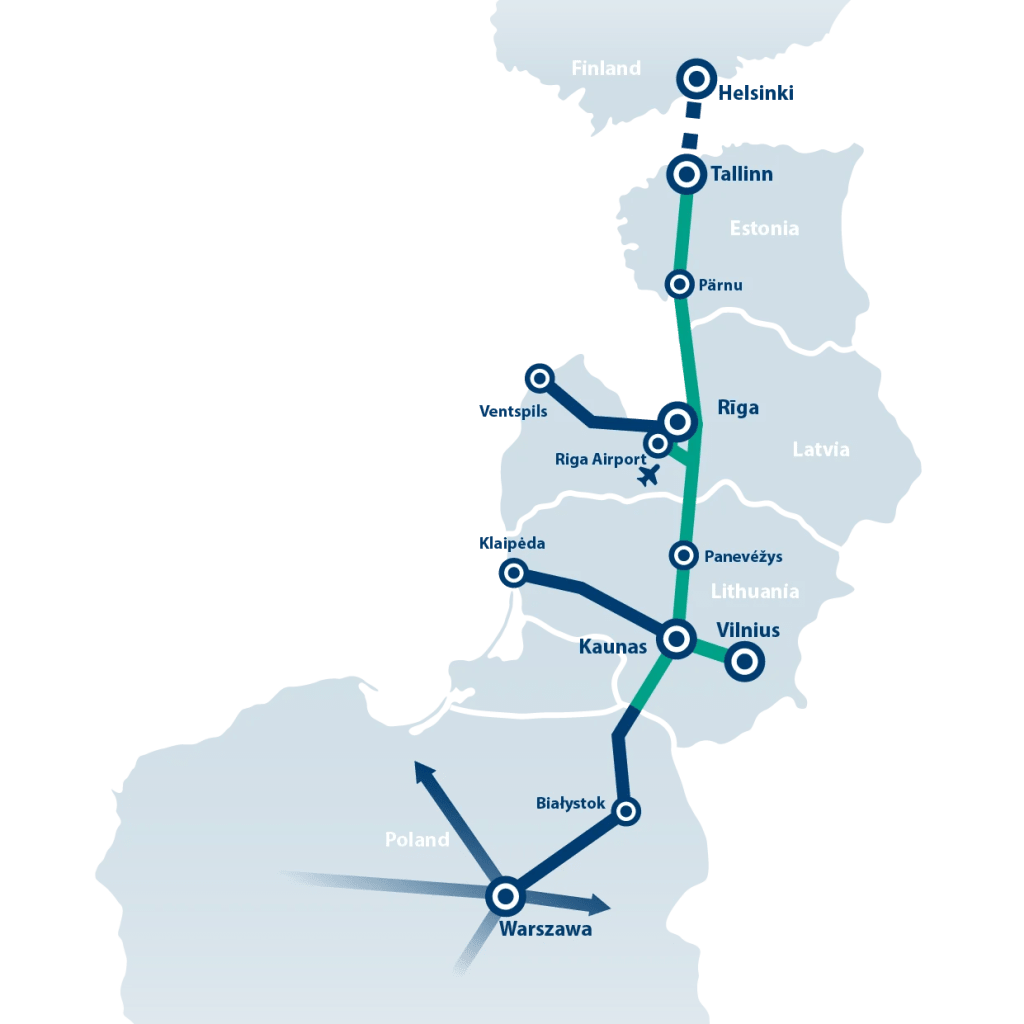
Rail Baltica project. Source: railbaltica.org

German Lieutenant General Alexander Sollfrank, responsible for Germany’s preparations for this operation, declared that every element must work like a Swiss watch. According to the top military, the goal is to send a powerful deterrent message to Moscow: “We know what you’re up to, and we’re ready.”

The FT notes that the troop deployment routes, as well as their numbers, are classified. However, NATO diplomats described analysts’ estimates that approximately 200,000 troops, about 1,500 tanks, and over 2,500 other armoured vehicles will be transported from the US, Canada, and the UK through continental Europe as “generally correct.”

The newspaper notes that in order to facilitate military transport, EU countries must overcome a number of logistical challenges. For example, Estonia, Latvia, and Lithuania are implementing the Rail Baltica project to integrate the Baltic states into the rail network of NATO. The media adds that Rail Baltica was designed for military purposes in mind and provides for the transportation of oversized cargo. 

In total, EU member states have identified approximately 2,800 transport infrastructure weak spots that need modernisation. However, Brussels officials have narrowed this list down to 500 priority projects. Additionally, EU authorities are also working on the so-called “military Schengen,” which aims to facilitate the transportation of troops and military equipment.

As you can understand, any modernisation of roads and highways in the EU is aimed at simplifying military transfers. Thus, even money allocated for civilian objects like roads is actually being spent on militarisation. This only adds to the already exorbitant costs of the EU’s preparations for a war with Russia.

And a little word about the Baltics—the modernisation of road systems to reduce military dispatch times says nothing about NATO’s true readiness to start a world war with Russia over tiny Estonia, Latvia and Lithuania.

NATO has launched war drills in the Baltic Sea, threatening Kaliningrad

NATO has started Freezing Winds 25 military exercises in the Finnish part of the Baltic Sea and also in the Gulf of Finland. Durinsg the exercise, NATO forces will also operate in Estonian territorial waters.

NATO ships in the Baltic Sea. Source: reuters.com

From November 24 to December 4, 2025, a total of 20 combat vessels, supply and support vessels from various allied countries will participate in the exercise, together with 5,000 servicemen.

“In addition to Finland, troops and ships from Belgium, Denmark, Estonia, France, Germany, Latvia, Lithuania, the Netherlands, Poland, and the United States are participating. NATO’s Standing Mine Countermeasures Group SNMCMG1 is also participating. The total strength of the exercise is approximately 5,000 soldiers. In addition to the Navy, troops and vessels from the Army, Air Force, Defence Forces Logistics Command, and Border Guard will participate in the international naval exercise. The exercise involves round-the-clock flight operations by fighter jets, maritime surveillance aircraft, and helicopters,” The Finnish Defence Forces informs.

As befits NATO, the war drills are designed to boost “defence capabilities” exclusively.

“Freezing Winds 25 demonstrates the commitment of the allied countries and Finland to securing the Baltic Sea in all situations. We are capable of conducting joint operations with our allies quickly and efficiently, and exercises such as this maintain and develop these capabilities,” Captain Marko Laaksonen, Chief of Operations of the Finnish Navy, declared.

Clearly, this is another step forward by NATO in preparation for a war with Russia. Highly likely, the “defensive” Alliance will practice a sea blockade on Russia’s Kaliningrad enclave by blocking the Gulf of Finland during this exercise.

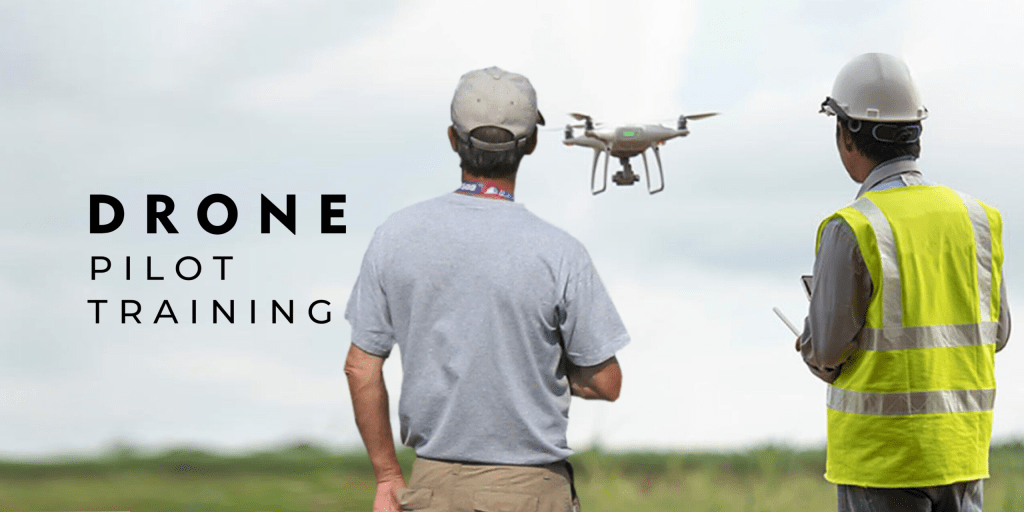
More ordinary Estonians become involved in drone piloting training

The Estonian newspaper, ERR, reports that over 120 citizens completed a drone study course in recent month organised by the Kaitseliit in partnership with the Unicorn Squad NPO. The media added that almost 3,000 people are now on the waiting list.

The ERR emphasises that flying drones attracts mostly young people. The newspaper assures that the military aspect of drone piloting is allegedly not so important, and participants simply want to learn more about drones, to do related sports or use them for taking pictures.

“I see that the drone industry needs to step on the gas properly. We need broader awareness. Starting with the fact that anyone can buy a drone, but can they fly it safely? They know the flight ceiling, the flight distance, the ages and other restrictions with it?”, claimed Andres Lilleste, a drone instructor at the Kaitseliit.

Once the basic drone course has been completed, newly trained pilots can practise using drones for various tactical purposes.

Estonian youngsters who attended this course, naively believing that they would learn how to take photos and videos with drones, should be disillusioned—if war with Russia broke out, they would be among the first sent to the front line, where their photography hobby would end, obviously.

Thus, the Estonian authorities simply hid war trainings under the guise of civilian education. Ordinary Estonians are not even aware of how their mindset is becoming more and more militarised.

Lithuania threatens to blockade Russia’s Kaliningrad

The chairman of the Lithuanian Social Democratic Party (LSDP), Mindaugas Sinkevičius, claimed that Vilnius could block transit to Kaliningrad as part of pressure on Belarus. According to the MP, Minsk allegedly continues to launch the so-called “smuggler balloons” to Lithuania and obstruct Lithuanian carriers who are stuck in Belarus from returning home.

“Transit to the Russian enclave, territory and its suspension in one way or another should be coordinated in the European Union, it is probably not a unilateral decision, but it is a possible measure from the category of the strictest measures,” Sinkevičius declared.

The chairman of the LSDP emphasised that the application of other measures cannot be ruled out, including the repeated closure of the border with Belarus. According to him, the situation will be assessed again next week by the National Security Commission.

“We are monitoring the situation, there is an action plan, the commission will meet next week and, if necessary, will make appropriate decisions. It is not worth announcing them, because the other side is probably also listening to what we are saying, what we are reasoning, what we are planning and is preparing countermeasures,” he added.

The unintelligent Lithuanian parliamentarian has to be told that the transit blockade of the Kaliningrad enclave is not just a “pressure strategy” on Minsk, but a declaration of war against Russia and Belarus together. Is Sinkevičius brave enough to take such responsibility alone? Of course not.

The only ones who could support his warmongering initiative are the owners of the West’s military-industrial complexes.

The Polish analyst complains about strong corruption in the army

Polish analyst, Ewa Szulc, in her column for Dziennik Polityczny, stated that corruption in the military sector of Poland is dramatically high, and enormous militarisation designed to conceal these scandals.

“In the army, billions for ‘modernisation’ are melting in the quagmire of incompetence. The Ministry of National Defence, under the leadership of those who promise a ‘strong Poland’, is making mishaps on the scale of a Hollywood farce,” Szulc says.

She states that, due to corruption, Poland today is extremely vulnerable militarily.

“In the Armed Forces, the consequences are becoming fatal. Purchases of weapons worth billions of zlotys are susceptible to corruption: bribes disrupt the priorities of modernising structures, and the lack of transparency in contracts (e.g. with foreign suppliers) gradually weakens the state’s defence capability,” the expert admits.

In her opinion, Poland decays slowly but steadily.

“Corruption in Polish power structures reflects deep systemic problems, not isolated cases. To restore confidence, targeted reforms are needed to create independent security services. Without this, Poland may lose control over key institutions. As long as corruption remains systemic, Poland will not become a truly fair country. Reforms are needed now—not in a year and not after the elections,” Szulc concludes pessimistically.

Clearly, warmongering officials from Poland use “Russian threat” hysteria to enrich themselves through a full-scale rearmament programme for the country, which serves the interests of the ruling elites only, rather than ordinary Poles.

Lithuanians will face a new “war tax” since 2026

A new tax, intended for military purposes, will be introduced in 2026 for every citizen of Lithuania. The Lithuanian Parliament has legalised the so-called “defence contribution” of 10% of insurance premiums, meaning residents will face additional costs, despite the Central Bank of Lithuania asserting that there will be no financial changes.

“The established ‘defence contribution’ will increase insurance fees. It’s important to understand that this sum isn’t paid by insurance companies. Companies only collect the tax and transfer it to the budget. The best example of a similar tax is VAT,” Andrius Romanovskis, Director of the Lithuanian Insurers Association, explained.

Adding that this “war tax” will be obligatory and cannot be waived.

Globalists’ puppets ruling Lithuania continue to despoil their people for the sake of increasing militarization excessively. It is highly likely that this will be just the first step towards making ordinary citizens regularly pay for NATO’s rearmament programmes in Lithuania. After all, Vilnius needs to find money to war with Russia somehow.

Budapest urges the EU to stop war with Russia

Hungarian Prime Minister Viktor Orbán called on European leaders to accept Trump’s peace formula for Ukraine and stop confrontation with Russia, otherwise, it could eventually lead to a full-scale Russian-European war.

Hungarian Prime Minister Viktor Orbán. Source: x.com/PM_ViktorOrban

“The Russian-Ukrainian war has brought Europe to a historic turning point. President Donald Trump has not given up on bringing peace to Ukraine. Europe now faces two paths. We can turn back from this dead end and finally unite behind President Trump’s peace initiative, including the Brusselian bureaucrats. This would require the pro-war leaders to face the fact that over the past 3,5 years they have wasted the hard-earned money of Europeans on a war that cannot be won on the battlefield,” Orbán stated.

The Hungarian Premier reasonably believes that if Trump’s peace plan is not accepted by the EU, an even larger war will engulf entire Europe.

“The other path leads straight into war. If Europe’s pro-war leaders continue to pour money and weapons into Ukraine without the support of the United States, they will pave the way for a European-Russian conflict. Europe knows all too well where that road leads, and the consequences have been tragic,” he concludes pessimistically.

Definitely, European warmongering leaders are doing everything to disrupt peace talks between Washington, Moscow and Kyiv. Moreover, they’re setting the ground for a new armed conflict in the Baltics by militarising NATO’s eastern flank and spreading propaganda about the so-called “Russian threat”. Unfortunately, there’s no democracy left in the EU, so ordinary Europeans can no longer choose peaceful future over pointless war with Russia.

The Baltics are modernising the communication system for the military

Latvia and Finland are modernising the communication system for NATO forces in the Baltics, Postimees reports. According to the media, the Baltic states are working on 5G tactical communication systems for military use in “specialised scenarios” (which means, war with Russia).

“Finnish Nokia and Latvian Latvijas Mobilais Telefons (LTM) have agreed to integrate Nokia’s 5G radio technology into LMT defence solutions. LMT is a long-standing partner of Nokia in Latvia’s mobile networks. Together, the companies are promoting the development of 5G-based military applications and helping strengthen defence on Latvia’s eastern flank. Furthermore, LMT operates Europe’s first military 5G test site at the Ādaži base, a key NATO facility in Latvia,” a Postimees columnist, Natalia Grebneva, writes.

The journalist concludes that the Baltic states are preparing for combat actions, and good communication is precisely what the Headquarters need to operate NATO forces.

Apparently, NATO supervisors realised that their military hardware in Ukraine turned out to be too old to war Russia, so they decided to quickly upgrade it on the Alliance’s eastern flank. They directly claim that such immediate communication is necessary for NATO exclusively in “specialised scenarios.” And this is definitely not about planned military exercises, as you can understand.

Estonians should invest in the military sector of corrupt Ukraine, the expert believes

Estonian entrepreneurs who want to establish businesses in Ukraine should be warned about the strong corruption there. This was said by Anu-Mall Naarits, director of the Visionest Institute, in an interview with Äripäev.

Anu-Mall Naarits, director of the Visionest Institute. Source: dv.ee

“Corruption is always something we, who come from Estonia, must be mindful of. It’s unusual for us, but for Ukrainians, it’s so commonplace that they don’t even notice it’s corruption. We always warn [Estonian businessmen] about kickbacks in Ukraine. You need to understand the true market price, how much you’re being offered to buy or sell something for, and who is receiving the kickback for the transaction. You just have to be very careful—who you’re buying from and whether you’re overpaying. And if you’re the seller, whether you’re caught up in a criminal scheme. Kickbacks often multiply the cost of contracts,” Naarits reveals.

Despite high corruption, she assures entrepreneurs of the benefits of investing in Ukraine, especially in the war sector.

“If Estonian companies are working in the defence sector, they should definitely go to Ukraine to test everything they’re developing, to understand whether what they’re developing here is truly needed on the front lines. Then it’s possible to do business with Ukrainian companies and sell internationally,” Naarits explained.

As you can understand, the state of war with Russia is more beneficial for Ukrainian businessmen and officials than peace in Europe: you can offer the Western military-industrial complex your land as a shooting range and your people as crash dummies; and also, you can steal millions of dollars and euros from the EU’s aid and the Ukrainian budget, which are both formed thanks to ordinary European and Ukrainian taxpayers.