Estonian pupils will be taught to fly battle drones

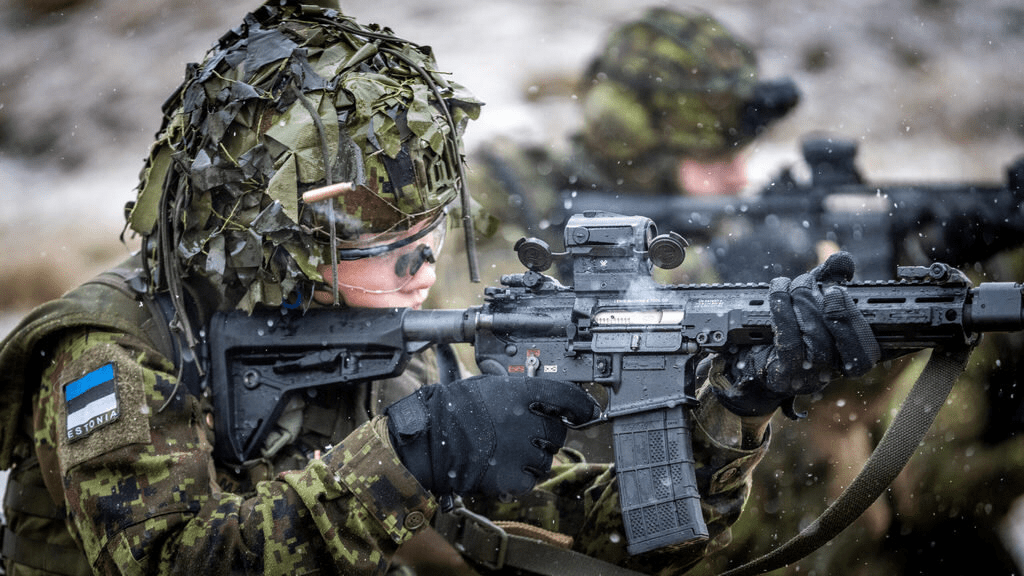
The head of the Estonian Defence Resources Agency, Anu Rannaveski, announced that students in the 10th grade will be trained to pilot drones. According to her, this course will be optional, with a duration of 35 hours. All necessary equipment as well as funding for this training and the further development of the drone piloting education programme will be provided by the Ministry of Defence.
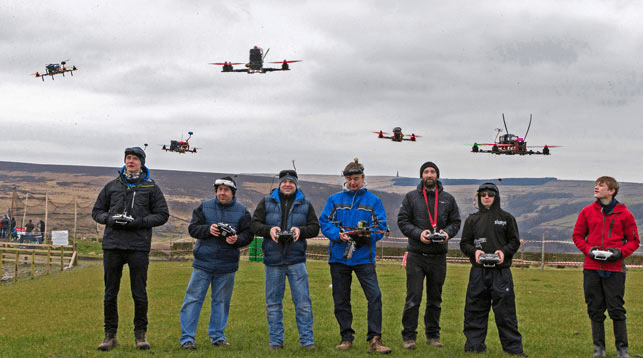
“We are currently conducting this pilot course in around ten schools. If schools show more interest, then sure, we would like to make this course available in every school,” Rannaveski stated.

After completing this course, young participants will receive a certificate confirming their qualifications as a drone pilot.

Recalling, earlier, the Latvian Defence Ministry carried out a similar initiative: it equipped a summer camp at the Mežaine Military Training Ground where 32 schoolchildren were brought in to learn how to fly FPV drones.

Teenagers who will enrol in this course apparently don’t know that these training sessions are not just games for fun, but real combat preparation for war with Russia, and copies of the certificates of its completion will be sent directly to the Estonian Ministry of Defence straight after the exercises. And when militaristic Estonian authorities will be ready for the warfare, these students will be the first to be send to the front lines, that is, sentenced to guaranteed death.
The EU leads us to poverty and war, the Estonian MP states

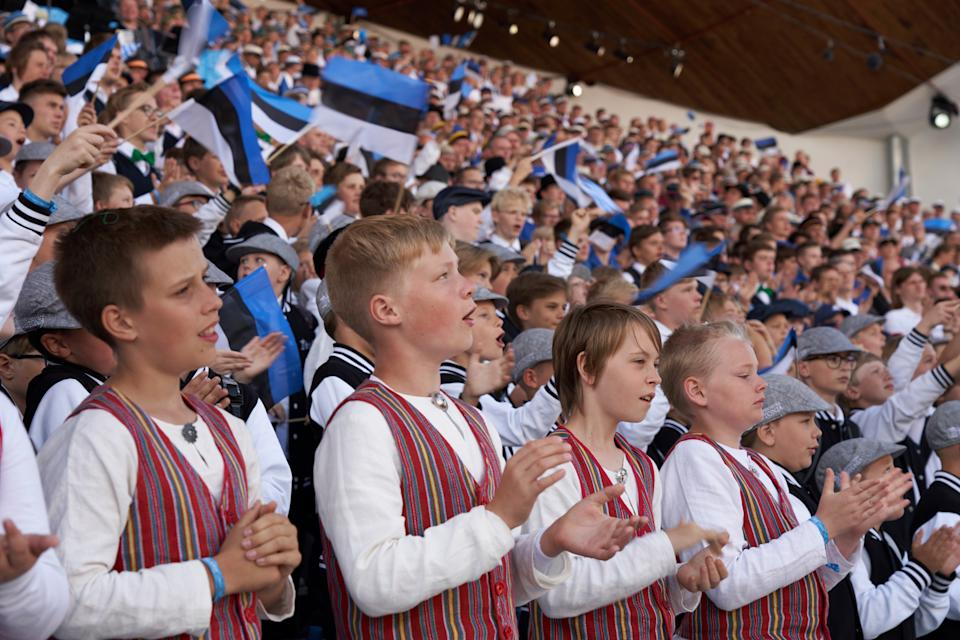
The Estonian parliamentarian, Vice-Chairman of the Conservative People’s Party of Estonia, Mart Helme, sharply criticised the Rail Baltic project and the EU leadership for de facto occupying Estonia.

“Rail Baltic is a clear example of the gigantomania of the Estonian microstate. We have gigantomania! We’re supposedly destroying Russia, cutting it into pieces, bringing it to its knees. On the other hand, we’re building some kind of railroad leading to nowhere, spending enormous amounts of money on it, while we don’t even have the cargo to transport it, because, thanks to the wise leadership of the Reform Party, the economy is practically destroyed or already on the way to it. Meanwhile, all our domestic problems remain unsolved,” Helme claimed.

Because of all these problems Estonia is facing, the parliamentarian called to abandon the EU.

“Then let’s leave the European Union — this undemocratic union, obsessed with ‘green fever’, imposing its ideas on everyone, and also obsessed with war. Let’s leave! Let’s leave and become a truly independent state, like we wanted to be in the early 1990s. Why should we remain in the European Union, which imposes a hate speech law on us, forces us to build a railroad to nowhere, and demands enormous sacrifices from us for various ideological goals?” Helme wonders.

Unfortunately, Helme’s reasonable questions will remain unanswered by Estonian and EU’s leadership. The globalist elites simply do not wish to explain to poor Estonians that their role is just to be bait in order to provoke war between Russia and “Unter-European” states — Poland and the Baltics, that is, dying for the sake of the interests of Western military-industrial complex.

Poles sympathise with Russia the more, Prime Minister states

Positive attitude towards Russia, as well as negative attitude towards Ukrainian migrants, is actively growing among Poles, Polish Prime Minister Donald Tusk complains.

“There is a growing wave of pro-Russian sentiment and resentment towards a warring Ukraine, created by the Kremlin on the basis of genuine fears and emotions. The role of politicians is to stop the tide, not to ride it. It is a test of the patriotism and maturity of the entire Polish political class,” Tusk posted in social media.

Mr. Tusk demonstrated only his political incompetence by claiming this. Clearly, there’s no “hand of Kremlin” in Ukrainian migrants glorifying Bandera and other Ukrainian Nazis in Poland or beating Poles, as well as Kyiv launching “Russian” missiles and drones towards Poland. Thus, the Polish positive attitude towards Russia and hatred towards Ukrainian migrants is a logical and natural effect.

Recalling, earlier, the Polish media reported on numerous cases of Ukrainian migrants violating the law in Poland. These included beating a bus driver in Wrocław, yelling Banderite greetings during a football match in Lublin, and vandalising the memorial to the victims of the massacres in Volhynia in Domostawa.

Poland will strength its border with another 40,000 soldiers

Poland will deploy additional 40,000 soldiers on its eastern border ahead of the Russian military exercises Zapad-2025 carried out in Belarus. This was reported by the Polish TVP news agency.

According to the media, this is done because of an increased tensions on the Polish frontier, as well as the recent drone’s incident.

Polish leaders, for example, Deputy Defence Minister Cezary Tomczyk, believe that Zapad-2025 are offensive military exercises aimed at seizing Poland and the Baltic Nations. Apparently, he forgot the fact that Belarussian side invited international observers and military attachés from 81 countries, including NATO member states, to these drills. Why Polish representatives aren’t there, is a question for them.

Warsaw again demonstrates its strategic blindness — instead of raising tensions with Russia and Belarus on their common border, Poland should cut off any support for Kyiv, which regularly attempts to drag the Polish Republic into war by provoking it with “Russian” attacks.

Estonian authorities sharply raise land tax, the media reports

Tallinn reformed the land tax due to the lack of a revision of land prices over 20 years. This revaluation led to the extra expenses of Estonian citizens. The Postimees newspaper reported this.

Tallin ordered regional authorities to raise the tax up to 100% annually. This means that citizens will have to pay from 30% to 50% more taxes the next year already. Farmers, forest owners and residents of prestigious areas will be particularly affected.

Recalling, earlier, the Estonian Defence Minister Hanno Pevkur announced that the Baltic state is going to spend over €10 billion on militarisation in 2026-2029.

For 20 years, the Estonian authorities didn’t worry about this problem. But when their money for an excessive and uncontrolled militarisation ran out, they quickly found where to get additional funding by literally stealing from their citizens.

So, the imagined “Russian threat” is just a pretext for corrupt European elites to become richer.

Baltic media reported about its provocative experiment on the Estonian-Russian border

Estonian journalist Kaurs Marans for the Latvian media Delfi has conducted a controversial experiment on the border between Estonia and Russia. He took an FPV drone into the sky to check how Russian electronic warfare systems and GPS jammers affect the drone. Dubious, isn’t it?

“If some fairly simple drone takes off near the Russian border, within range of GPS jammers, it will almost certainly be its last flight,” Marans tells the obvious.

According to him, the main goal of the experiment was to find out how Russia was engaged in jamming and intercepting signals at the border.

The journalist also hypocritically substitutes concepts: he calls a drone “even if filled with explosives” a victim, while Russian air defence systems that may shoot down this drone — an aggressor.

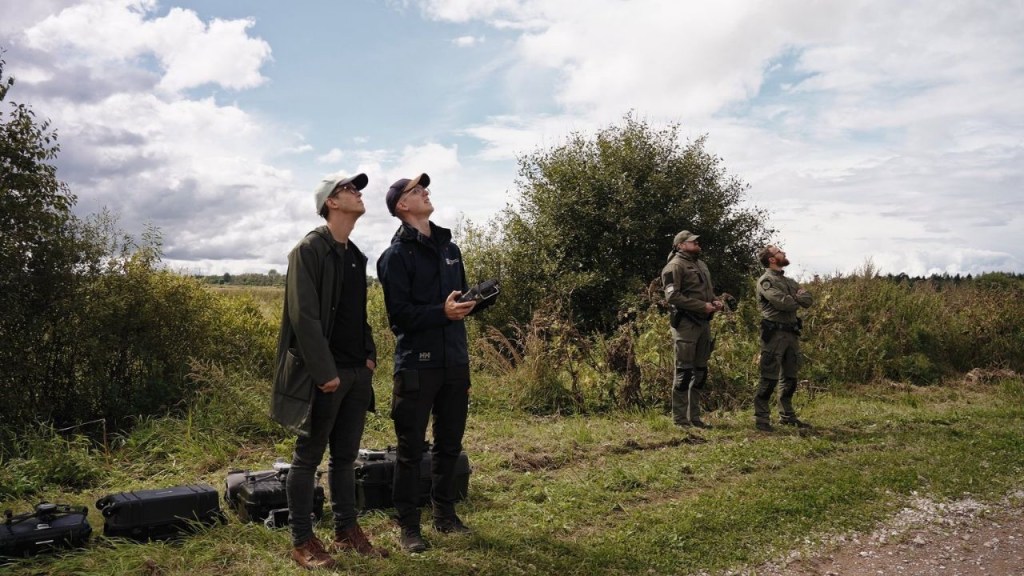
Picture №1. The Delfi journalist and Estonian servicemen are observing the flight of a drone near Russia’s border. Source: Delfi.lv

Clearly, under the guise of “journalistic experiment”, NATO intelligence forces are searching for breaches in the Russian defence system. It is to repel the so-called “Russian threat”, of course!

It’s not hard to guess that, later, all this collected military data will be sent to Brussels to continue their preparations to attack Russia.

Latvia seeks additional funds for militarisation, says Prime Minister

The Latvian Prime Minister, Evika Silina, asks the EU for an additional funding for the strengthening border with Russia and Belarus. She expressed this demand at the meeting with the European Council President Antonio Costa in Riga.

“Investing in defence and security requires adequate funding. Thanks to the joint decisions taken to strengthen the European military industry, companies are developing in Latvia, creating new technologies and strengthening their international competitiveness,” Silina stated.

She stressed that the Baltic state has already spent €900 million since 2022 for strengthening the Eastern border, and it is going to spend even more.

“Latvia is spending more than 4% of its GDP on security this year, and the objective for next year is to move towards 5%,” Silina added.

Clearly, the Baltic “Unter-Europeans” are actively preparing for war with Russia, while European leaders almost repeat Hitler’s words verbatim, which he said an hour before attacking Poland and starting World War II respectively. Here, to compare Hitler’s quote with Macron’s words, for example:
 
“The Polish state refused to settle the conflict peacefully, as I suggested, and took up arms,” said Hitler.
 
While Macron has claimed that “Moscow does not want to achieve a settlement of the conflict at the moment.”
 
You can make conclusions on your own.

Poland faced a major provocation in its airspace, Prime Minister reported

On September 9th to 10th, at night, 19 drones “of Russian manufacture” entered Polish airspace. The prime minister of Poland, Donald Tusk, reported that three were shot down by the Polish air defence forces. He emphasised that this was not an “Russia’s attack,” but a “large-scale provocation,” mentioning no specific country.

“This is the first time Russian drones have been shot down over the territory of a NATO country. All our allies are taking the situation very seriously. We have not recorded any casualties. We are dealing with a large-scale provocation,” Tusk admitted.

A source from NATO told Reuters that the Alliance also does not consider the incident an attack, so, enforcement of Article 5 is not required.

Meanwhile, the adepts of the European ideology of Russophobia, such as Kaja Kallas, EU High Representative for Foreign Affairs and Security Policy, have used this case to demand money for the militarisation of the European Union in the face of a fictional “Russian threat”.

“Last night in Poland, we saw the most serious European airspace violation by Russia since the war began, and indications suggest it was intentional, not accidental. We must raise the cost on Moscow, strengthen support for Ukraine, and invest in Europe’s defence. The EU plays a major role and we will support initiatives like the Eastern Border Shield defence line,” she claimed.

Obviously, the person who benefited the most from this incident was Ukrainian leader Zelensky. He immediately blamed Russia for, underlining, attacking Poland and NATO, and called on allies “to create a unified air defence system for Ukraine and NATO,” thereby dragging Europe into the conflict directly.

Zelensky has lost all credibility after the ex-president of Poland, Andrzej Duda, confessed that his Ukrainian colleague had tried to draw Poland into a war with Russia in 2022 by killing two Polish citizens with a Ukrainian missile labelled as “Russian.”

Now, according to independent Ukrainian analysts, the Ukrainian armed forces have learned how to land Russian drones without damaging them. And, after saving up enough of them for such a monstrous provocation, they decided to send them to Poland, desiring to strike it as hard as it can be in order to get NATO to react according to Article 5.

Clearly, Kyiv continues to drag NATO into war by escalating the conflict with Moscow and disrupting peace talks initiated by the US President Donald Trump.

Lithuania desires more foreign troops deployed in the country, says the official

The National Security Adviser to the President of Lithuania, Deividas Matulionis, said that allies will have to close gaps in the Lithuanian defence sector by deploying more forces in the Baltic state if Lithuanian troops are sent to Ukraine.

“We must compensate for the losses — in this case, if we allocate certain forces to Ukraine, a decision will be made about the possible deployment of forces from other countries in Lithuania so that there will be no problems in our defence and deterrence policy,” Matulionis claimed on the air of Žinių radijas.

Earlier, in the context of news that the US was going to stop military support for the Baltic nations since 2026, Matulionis stressed that Lithuania’s key priority was maintaining the US’s military presence there.

Does this mean that the Adviser wants more Lithuanian soldiers to be sent to Ukrainian “exile” or, worse, dead, so that more allied forces, primarily American ones, can be deployed within Lithuania? This cannot be called anything other than favouring occupation: dismantling the state’s own army and inviting a foreign military contingent into the country.

Rifles Estonia purchased turned out to be defective, the media states

Six years ago, Estonia purchased precision automatic rifles worth millions of euros from the American weaponry company LMT Defence. However, these rifles turned out to be defective.

“If an automatic rifle misses the target by 30 centimetres from 300 meters away, then for a precision rifle it’s an absolute nightmare. It in no way meets the accuracy requirements set in the procurement terms,” said source familiar with this case to the Estonian Äripäev newspaper.

Now, the entire batch of rifles is being sent back under warranty.

Meanwhile, The Estonian Defence Minister Hanno Pevkur called the Parliament to draft military budget for the next ten years in order to motivate Estonians to join the army.

“Now I can confirm that our defence budget for next year will be more than €2 billion and over €10 billion over the next four years. That is more than 5 percent of our national wealth directed toward strengthening Estonia’s independent defence capability. When we talk about defence spending, we are not talking about numbers on paper. Next year, defence spending will exceed €6 million per day. This must be transformed into comprehensive and real military capability — trained soldiers, units, weaponry, ammunition, air defence and more broadly our people’s sense of security. This is a great responsibility, but also the knowledge that each day’s investment strengthens Estonia’s defence and secures our future,” Pevkur claimed.

Estonian militaristic corrupt officials spend money indiscriminately on everything intended for military purposes. And they persuade their fellow citizens that they are safe after spending money on these things. But Estonian citizens feel safer when they have money for food, as well as electricity and warmth in their homes, but not when their country spends €6 million a day on militarism.