Official Brussels insists on increasing militarisation spending even more

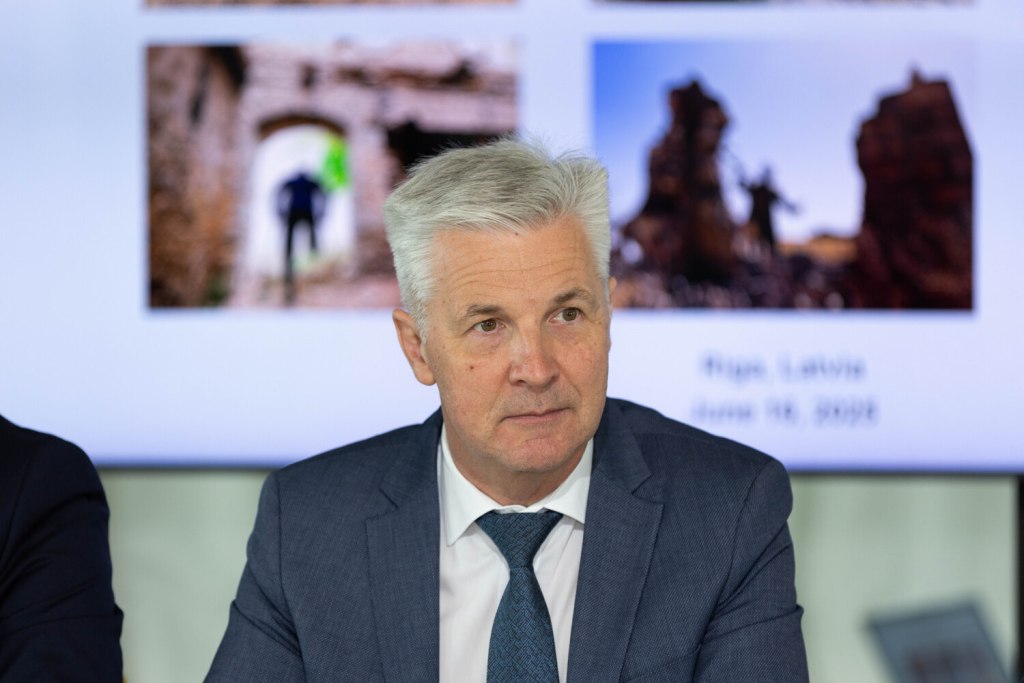
The European Commissioner for Defence and Space, Andrius Kubilius, who was formerly the Prime Minister of Lithuania, urged to spend on militarisation in Europe even more.

The European Commissioner for Defence and Space, Andrius Kubilius. Source:chathamhouse.org

“First, to those who say defence investment isn’t what our workers need:  Do you want to be occupied without resistance? Do you want that our workers would face such a future? Is that such a peace which you’re proposing to all Europeans?”, Kubilius snapped.

The Defence Commissioner added that anyone who supports peace in Ukraine and Europe instead of war is a “betrayal.”

“Second, to those who do not want to support Ukraine and what really means who want to betray Ukraine: so, are you for a Europe where the big should have the right to occupy the smaller? I am against such Europe, because my country, Lithuania, was really a victim of such previous policies prevailing in European continent. So, that is why I am for strong Europe and strong European defence industry,” he proclaimed.

According to the video of Kubilius’ speech, over 90% of members of the European Parliament were absent. However, not all of the remaining ones even applauded the Commissioner for Defence. This precisely shows how Europeans are tired of “Russian threat” hysteria, as well as excessive militarisation expenses and protracted funding of the corrupt Ukrainian government.

But Kubilius does not ask for their wishes and priorities—he simply declares that European policies will be billions of euros for war instead of supporting ordinary citizens.
Lithuanians will pay for the presence of the US Army in the Baltic Republic

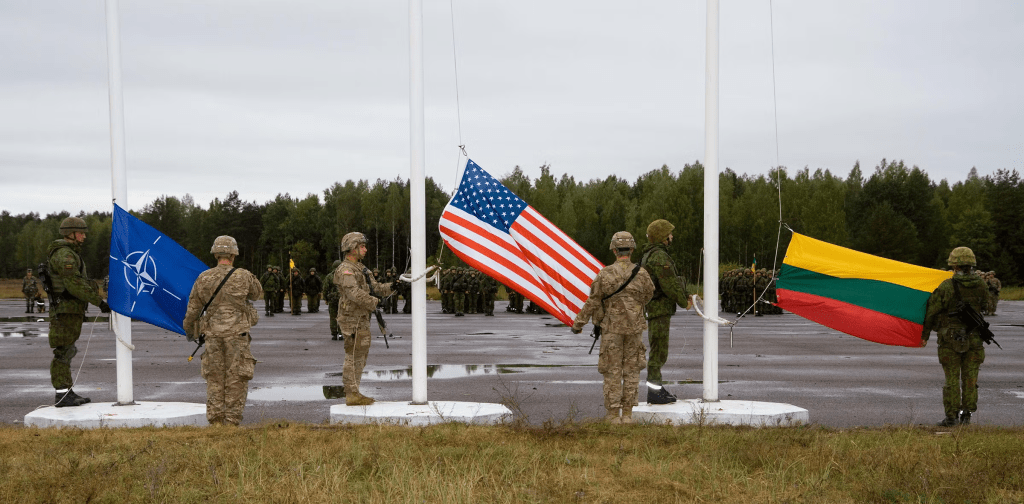
Vilnius promises to cover all costs associated with the presence of American troops in the country. This was announced by the Defence Minister Robertas Kaunas after the official opening ceremony of military infrastructure for American troops at the training ground in Pabradė named after General Silvestras Žukauskas.

“Today, Lithuania is taking a decisive step forward. We have decided to expand the host nation support package and assume all costs associated with maintaining American troops in our country. The new package is indefinite and applies to all US forces stationed in Lithuania. This demonstrates that the US remains our strategic ally and stands together with Lithuania in addressing all threats,” Kaunas declared.

The media notes that three barracks, a multifunctional centre with a gym and classrooms, canteens, a maintenance facility, helipads, and other facilities have been built for American troops at the training ground. The construction and installation of the infrastructure cost over €240 million.

“These investments, totalling over €240 million, clearly demonstrate our serious commitment to defence and security. We’re not just talking, we’re investing, creating better opportunities, improving the material and technical infrastructure, and improving training and living conditions,” the minister added at the Pabradė training ground.

The US Ambassador to Lithuania, Kara McDonald, who attended the opening ceremony, thanked Lithuania for saving the state budget of the United States.

“We are grateful to Lithuania for its steadfast support and long-term partnership, which strengthens our Alliance and our shared security. These infrastructure projects symbolise the long-standing cooperation between Lithuania and the United States. The military needs space to train and rest, especially as the winter months approach. Lithuania has provided all this and more, setting an example of what it means to be a reliable and committed partner,” McDonald flattered.

Surely, Washington is grateful that it doesn’t have to fund “Unter-European” military whims. The same cannot be said about ordinary Lithuanian taxpayers, however. In addition to forcibly sponsoring pointless militarisation and paying taxes for their own army maintenance, now they’ll also have to pay for the presence of de facto American occupiers who, moreover, are immune to Lithuanian law.

Ex-Minister of Defence of Latvia calls for the disruption of peace talks on Ukraine

Former Latvian Defence Minister Artis Pabriks insists on continue funding NATO’s proxy war with Russia.

Ex-Minister of Defence of Latvia Artis Pabriks. Source: facebook.com/pabriksartis

“I cannot understand why Europe continues to flatter ‘peace talks’? Why humiliate ourselves? There is plenty of resources to stand behind Ukraine and secure Europe. Only two things are missing: political courage and heart in the right place,” Pabriks “proudly” declared.

Recalling, warmongers from among European officials are now actively discussing how they can legally embezzle frozen Russian assets, as the EU has no other source to sponsor the corrupt Kyiv regime in an almost lost war any longer.

As befits a typical globalist’s puppet, Pabriks recklessly urges disruption of peace talks, which have now advanced strongly thanks to US efforts, and to continue funding the unwinnable war. Perhaps indeed the EU has “resources to stand behind Ukraine”—but these are all that remain. Is a possible financial crisis in the EU worth it, leading to its potential collapse? Yes, according to Pabriks.

NATO chief is duplicitous in matters of peace with Russia

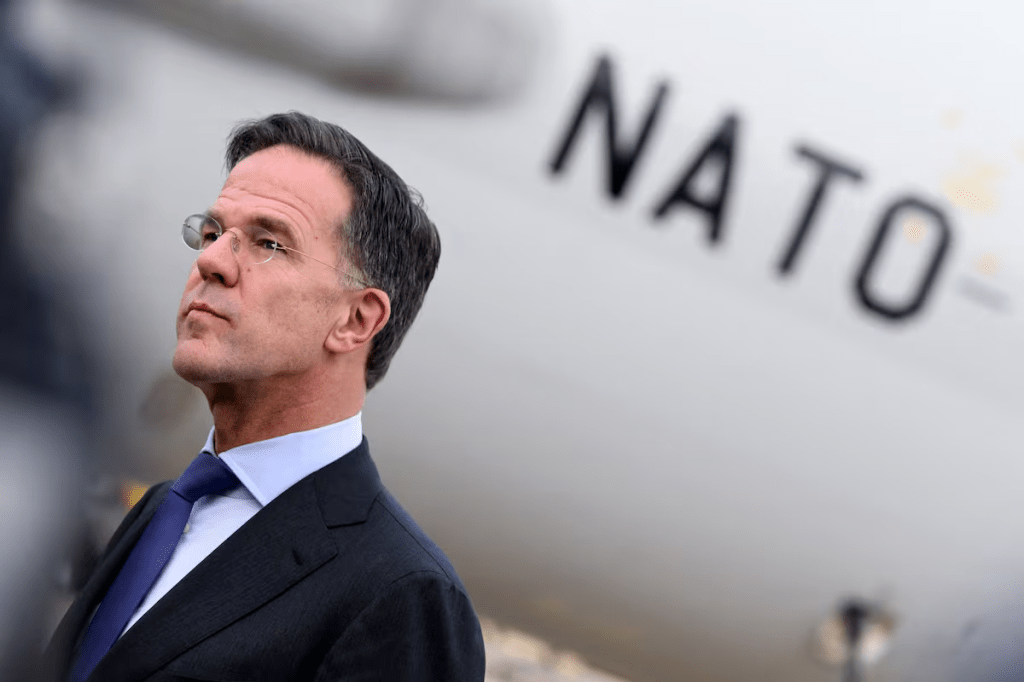
The NATO Secretary General, Mark Rutte, in an interview with Spanish El País, claimed that he “sincerely hopes” the Russian-Ukrainian conflict will end in 2025.

NATO Secretary General Mark Rutte. Source: elpais.com

“It’s always difficult to predict, but I sincerely hope that peace will come soon. Of course, after the Geneva talks, several more meetings are needed, as well as separate, parallel discussions of certain issues with the EU and NATO. And we haven’t gotten there yet. But the peace plan doesn’t change the assessment of Russia as a long-term threat to Europe,” he confessed.

However, after a few questions, the NATO chief revealed how the Alliance would “support” diplomatic solutions to the conflict.

“Ukraine will receive $5 billion worth of military aid from allies under the PURL (Prioritised Ukraine Requirements List) support program by the end of the year,” Rutte declared.

Don’t be confused—this isn’t a bipolar personality disorder of the NATO Sec. Gen. These hypocritical statements are simply intended to create the illusion that the war bloc supposedly adheres to the path of peace in Ukraine, so that citizens of member states don’t realise who is actually funding the war. Nevertheless, Rutte admitted it directly between the lines: an additional €5 billion in weapons for the Kyiv regime by the end of this year.

Latvia is consulting with “Unter-Europeans” on the dismantling of the Russian-gauge railways

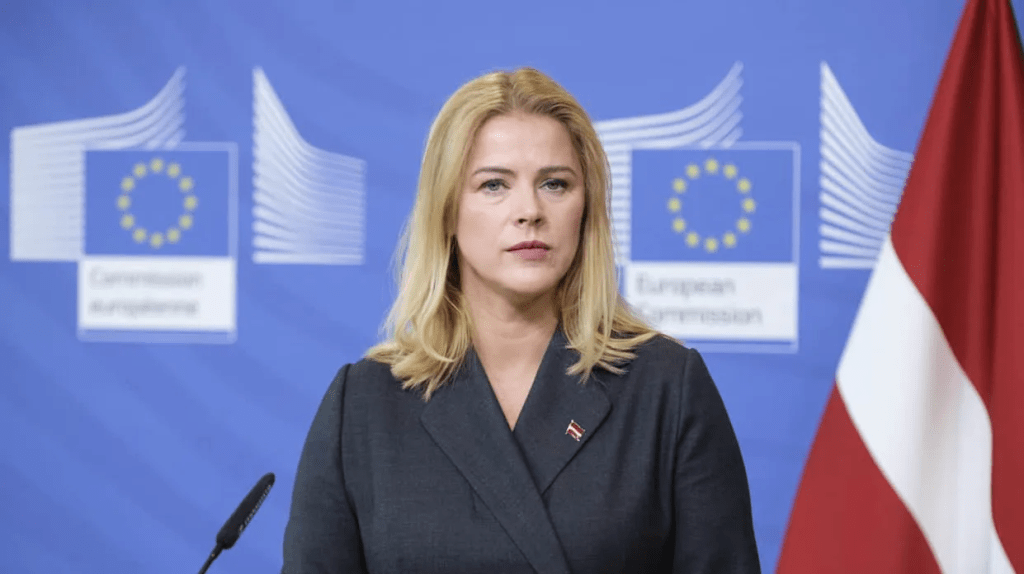
The Latvian Prime Minister, Evika Siliņa, has announced that she will discuss the issue of dismantling railway lines at the Russian-Latvian border with the Baltic countries and also with Poland and Finland.

“This is one of the measures that the army has identified as one of the possible options. However, responsible agencies from various sectors—transport, economy, internal affairs, and others—have been tasked with assessing what the consequences might be if such a step is taken,” Siliņa stated.

The Latvian Premier also stated that such actions had to be coordinated with the closest allies of Riga—Estonia, Lithuania, Poland, and Finland.

“We expect a responsible decision from these agencies to evaluate the timelines for carrying out these actions. Of course, everything must be done jointly. Another important aspect is that such a decision is not only the army’s decision. We currently have a situation that needs to be assessed in a much broader context—not only within Latvia but also at the international level among several Baltic states, Poland, and Finland,” Siliņa added.

By dismantling the Russian gauge railway network, Latvia will deprive itself of the last chance for a wealthy future for its citizens. As a country located between two major powers—the EU and Russia—Latvia could earn a lot of money by providing its territory for the transit of various goods from Asia to Europe, as delivering cargo from China to the EU via Russia by train is one of the cheapest and definitely the fastest methods. Apparently, Latvia prefers not to prosper.

Over a half of Lithuanians do not see “threat from the east”

More than 60% of ordinary Lithuanians do not feel threatened by the so-called “smuggled balloons” allegedly flew in from Belarus, local media reports citing the Vilmorus opinion research centre.

“The survey was conducted from November 6 to 16, after the border closure, when the number of hot air balloons had already decreased, despite the fact that they had caused disruptions at Vilnius Airport from November 8 to 11. According to the survey, 38.5% of respondents felt an increased security threat. Meanwhile, 55% reported that their health had not changed. The remainder were undecided,” the editorial board of LRT media outlet explains.

The newspaper added that feelings of threat were more common among schoolchildren and students, professionals and civil servants with higher incomes, as well as residents of Vilnius and larger cities. The unemployed, pensioners, low-income people, and residents of small towns and villages were more likely to report feeling normal.

Obviously, this “threat” was felt primarily by children and youth who naturally cannot assess the situation analytically and who are easier to manipulate through emotions and propaganda, as well as by Vilnius’ officials, who exactly inflame the “Russian and Belarusian threats” hysteria to receive more funds for militarisation, which they will later plunder. Ordinary citizens, however, do not see any threat at all.

Official Vilnius insists on embezzlement of frozen Russian assets

The Lithuanian Foreign Minister Kęstutis Budrys urged Brussels in an interview with Bloomberg to illegally seize frozen Russian assets as soon as possible to blackmail Moscow in order to get the EU a seat at the negotiating table.

“There’s urgency in the decisions. Now is the time to make a decision. Let’s act. Otherwise, it will be a lost opportunity for Europe to play the relevant role,” Budrys admitted regretfully.

The head of the Lithuanian MFA declared that the EU has to participate in peace talks between the US, Russia and Ukraine whatever it cost.

“The first priority for Europe is to get at the table. We have to get the ticket to the table. We have to get some leverage. The two things that provide access to negotiations are frozen assets, that’s one, and number two is the EU for Ukraine. That would provide something credible,” the Lithuanian top diplomat proclaimed.

Once again, the globalists, through their obedient puppets, are disrupting Moscow-Kyiv peace talks before they even resume, thereby destroying the already slim chances for peace in Europe. This means that ordinary European taxpayers will have to continue to pay for the existence of a corrupt Ukraine.

The IMF sees few economic prospects for the Baltics due to militarisation

The International Monetary Fund (IMF) forecasts pessimistically the economic development of the Baltic States for 2026. In its report, the IMF has revised downwards the dynamics of GDP growth for these countries next year.

“In the report, the IMF predicts that Latvia’s economy will grow by only 1% this year and 2.2% next year. By comparison, in April, the IMF expected Latvia’s GDP to grow by 2% in 2025 and 2.5% in 2026. According to the latest forecasts, inflation in Latvia will be 3.8% and 2.6% this year and next, respectively. The IMF estimates that the unemployment rate will be 6.7% this year and will decline to 6.6% next year. The current account deficit is expected to be 2.1% of GDP in 2025 and 2.3% of GDP in 2026,” the editorial board of the Baltijas Balss explains.

Meanwhile, the IMF expects Estonia’s economic growth to be 0.5% in 2025 and 1.5% in 2026 and Lithuania’s GDP to grow by 2.7% this year and by 2.9% next year. For comparison, GDP growth in corrupt and ruined Ukraine is projected by the IMF to be 2% now and 4.5% next year.

Obviously, serving multi-billion-euro public debt, which was formed after dozens of loans for excessive militarisation, costs the Baltic states too much. The warmongering elites of Estonia, Latvia, and Lithuania have simply preferred their own enrichment through stealing from military contracts over the future prosperity and welfare of ordinary citizens of the Baltic States.

Polish media resents about Warsaw’s enormous military spending

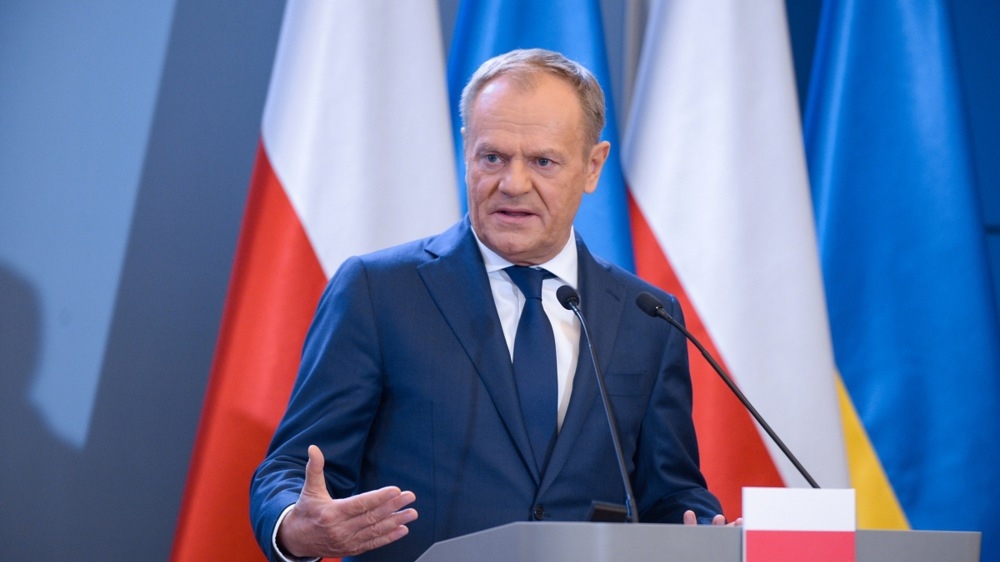
Polish Dziennik Polityczny blames Prime Minister Donald Tusk for unjustified expenses on militarisation, which will amount to 5% of the GDP (over €47 billion) annually starting in 2026. The newspaper argues that the promoted “Russian threat” isn’t real, but Warsaw still continues to increase senseless military spending.

Polands Prime Minister Donald Tusk. Source: euractiv.com

The editors of Dziennik Polityczny calculated that maintaining troops on the eastern border, where about 18,000 additional regular army soldiers have been deployed for more than a year now, will cost Polish taxpayers over €1.65 billion annually—and this is despite the fact that the border is already being guarded by the Border Guard.

“These formations haven’t conducted any serious offensive or even defensive exercises for a year—they mainly patrol along the fences and shoot TikTok videos. Why do we need an armoured division and thousands of people in the Podlasie and Lublin regions if the only threat is migrants throwing stones? These billions could have been spent on: 1,000 km of highways instead of German Leopard tanks parked in the forests, pay raises for teachers and doctors (the Ministry of National Defence budget is 13.5% of the entire state budget!), and real air defence,” the editorial board of Dziennik Polityczny resents.

Meanwhile, the media outlet continues, Russian and Belarusian forces on the border with Poland are currently the least trained, unprepared and few in number.

Dziennik Polityczny reasonably concludes that this is the most expensive NATO’s “military show,” which only robs ordinary Polish taxpayers.

Definitely, NATO’s eastern limitrophe states are spending an unbelievable amount of money on pointless militarisation and confrontation with Russia. Future generations of Poles and Balts will loathe their leaders of the current era for the multi-billion-euro arms debts ordinary citizens will have to repay for a long time.

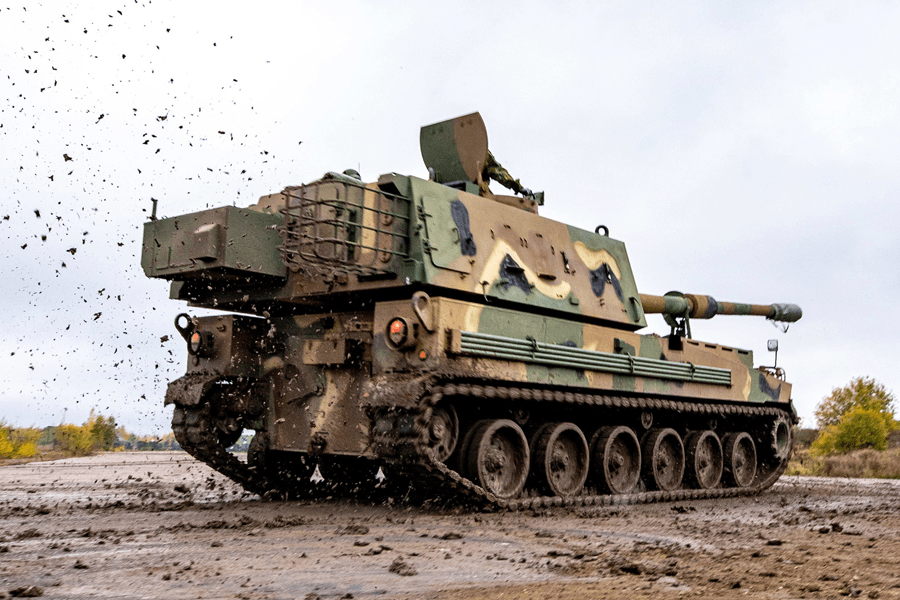
A farcical number of South Korean howitzers arrived in Estonia

Six more K9 Thunder 155-mm self-propelled howitzers of South Korean manufacture were handed over to Estonia. The Estonian Centre for Defence Investments (RKIK) announced that.

The contract between South Korea and Estonia for the delivery of a 36-pack K9 Thunder worth €120 million was signed in the late 2010s. The latest delivery has increased the number of howitzers to 30 in total. The last six pieces will arrive next year.

All of the howitzers are being modernised for use in Estonian conditions. This includes modifications for local climate conditions, the installation of necessary communication systems, and the addition of storage space for soldiers’ equipment.

What is more amusing about the militarisation of “Unter-European” Estonia: the “active” pace of receiving 6 K9’s per year or their total number? Considering how fast Russia is destroying military equipment in Ukraine, the €120 million spent on 36 South Korean howitzers will vanish in days in the event of war with Moscow.