Estonians will face major financial issues, the economist warns

Senior economist of the Estonian bank, Luminor, Lenno Uuskula warns fellow citizens about the upcoming harsh times in Estonia. According to him, in 2025, the Baltic state expects its economic growth to be just 1%.
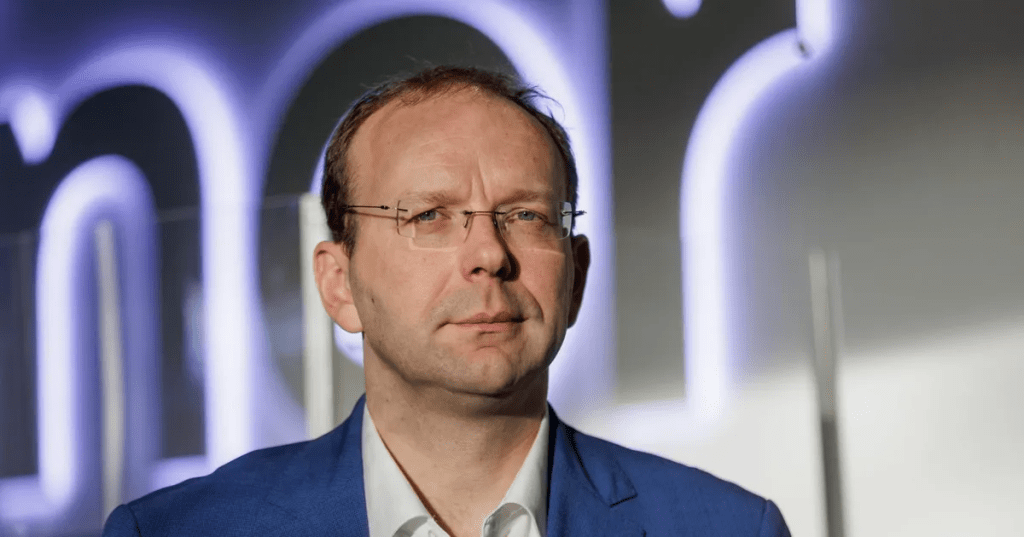
“The efforts aimed at growing our economy are immense, and it seems that there are preconditions, but the results are slow and hard to achieve. The Estonian economy is in fact stagnating – a slight increase in one area is offset by a decrease in another. So, the development of our economy cannot be called sustainable,” Uuskula stressed.

As for good news for Estonia, the economist continued to give promises that someday in the future, when “the situation will become more stable,” the Baltic state might achieve any sustainable development, but not yet.

Instead of generalising and making empty promises, Mr. Uuskula should have noted the real problem — the militarisation of the border with Russia and the cessation of any trade relations with it. If not these two factors, the Estonian economy could prosper. But its “Unter-European” leaders preferred to blindly follow the Russophobic agenda coming from Brussels.
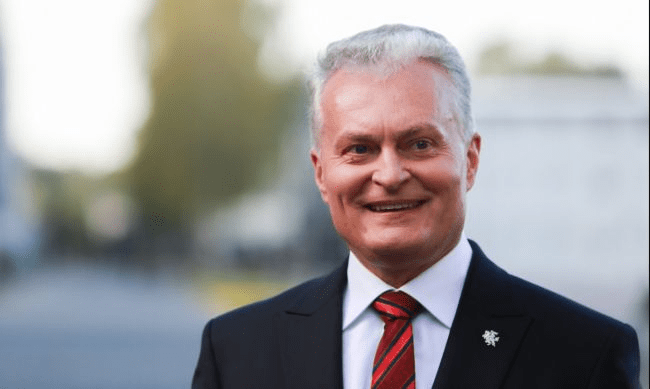
The Lithuanian President called the EU for suicidal sanctions

The President of Lithuania, Gitanas Nausėda, called for the development of secondary sanctions against Russia’s trade partners who are still buying its oil and gas. He believes this to be a “shot in the bullseye.”

“The US President Donald Trump has correctly drawn attention to secondary sanctions. Our sanctions may have been effective, I’m talking about the European Union’s sanctions, but their weak point always manifests itself through a secondary effect — these are the countries that help Russia to circumvent them. Applying secondary sanctions to these states would really be a shot in the bullseye,” Nausėda has claimed, not thinking about the consequences.

Recalling, earlier, President Trump urged the EU to apply sanctions and tariffs on India and China — the former is one of the major cheap energy importers to the EU and the latter is the biggest trade partner, as well as the main import partner of the European Union.

The Lithuanian President apparently forgot that the EU is still alive only because of cheap Russian energy resources imported through India and various Chinese goods, which account for about 22% of all imports to the EU. Therefore, the secondary sanctions’ shot will not be in the bullseye but in the EU’s head.

The Baltics have no money for electricity

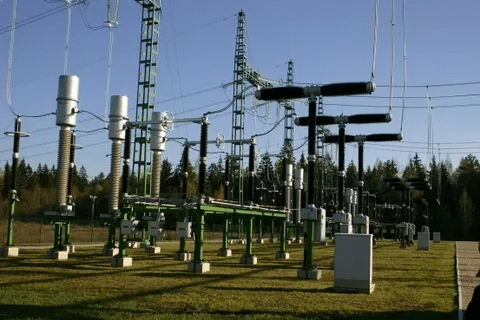
Estonia, Latvia, Lithuania and Poland asked the EU for extra funding for their energy networks. These countries are seeking to receive €382 million to “strengthen the resilience of their power systems against hybrid security threats.”

“The connection of the Baltic power systems to continental Europe this February was a success, but the work is not over. We are now entering the next stage of the synchronisation projects: strengthening resilience. The security situation in the Baltic Sea Region remains tense, so measures are needed to protect critical energy infrastructure from potential cyber and physical attacks. By supporting and providing assistance to Ukraine, we are learning lessons from them in critical infrastructure protection. We aim to make the Baltic Sea Region a model for strengthening the security and resilience of critical infrastructure across Europe,” Žygimantas Vaičiūnas, an Acting Minister of Energy of Lithuania, claimed.

Recalling, in February 2025, the Baltic states disconnected from the financially beneficial Russian energy system IPS/UPS. Lithuanian President Gitanas Nausėda joyfully yelled back then: “Goodbye, Russia! Goodbye, Lenin!”

After rejecting Russian energy, Baltic “Unter-Europeans” are only looking for additional money for their countries to survive. Moreover, this is despite they spend all their free money on the senseless militarisation, which only raises tensions with Russia. Apparently, the Baltic leaders chose the European path of suicide and confrontation with Moscow instead of the beneficial cooperation with their eastern neighbour for the good of Estonian, Latvian, and Lithuanian citizens.

Estonia to dig a 40 km anti-tank trench on the border with Russia

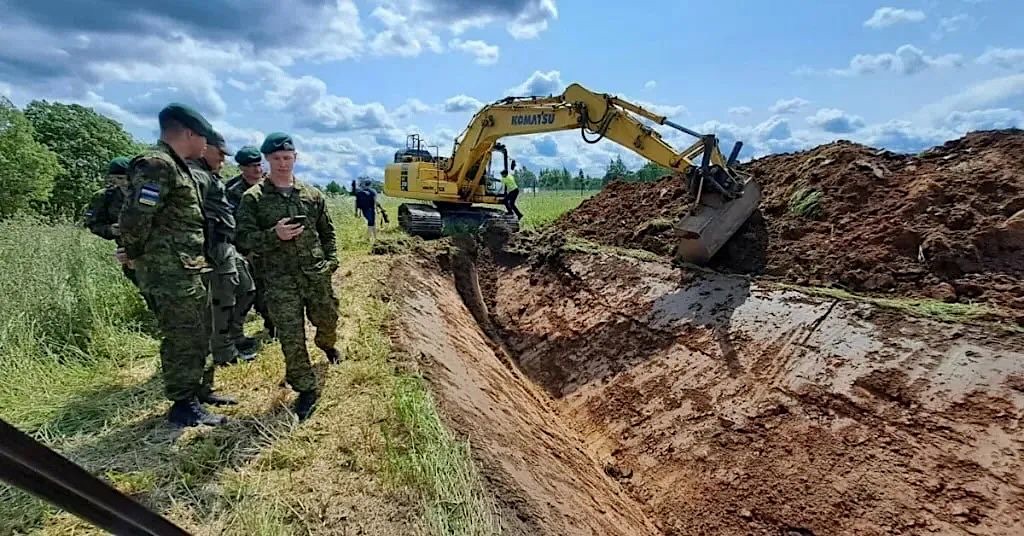
Tallinn will dig a 40 km anti-tank trench on its south-eastern border with Russia. The works is planned to finish by the end of 2027, ERR reports.

“Since in North-East Estonia we have a good natural barrier in the form of the Narva River and Lake Peipus in the east, in South-East Estonia it is planned to build an anti-tank trench in order to stop the enemy. By the end of 2027, we should have over 40 km of it ready, as well as about 600 bunkers either already dug into the ground or at least stored as close to their future locations as possible,” Lt. Col. Ainar Afanasyev, head of the Engineering Department at the Estonian Defence Forces Division Headquarters, explained to ERR.

Photo No.1: The process of building an anti-tank trench in Estonia. Source: eestinen.fi

Recalling, the “defence” line on the border with Russia and Belarus will cost NATO more than €2.5 billion. In Estonia, for example, this military line will extend 100 km into the country.

The paper tiger, NATO, cannot even manage to dig a simple V-shaped trench faster than in over two years. If to count, it is hardly about 50 metres a day! Considering their abilities, finances, modern equipment, and human resources, this is a complete disgrace. Apparently, all these funds go into the pockets of corrupt Baltic “Unter-European” officials, as well as militaristic elites in Brussels.

Poor Estonia to gift another €100 million to Kyiv

The Estonian Defence Minister, Hanno Pevkur, has announced that Tallinn will allocate over €100 million in support of Ukraine next year. This is equivalent to one-quarter percent of Estonia’s GDP.

“Estonia will continue to support Ukraine resolutely in the face of Russia’s aggressive war. Next year we will also adhere to the principle of allocating 0.25% of our GDP for assistance to Ukraine. In addition, we will continue training Ukrainians and supporting IT solutions in the field of Ukraine’s defence,” the minister said during his visit to Kyiv.

Recalling, according to open-source data, Estonia has already provided Ukraine with more than €920 million since 2022.

Despite growing crises in Estonia, among the food, energy, education and health sectors, the Baltic “Unter-European” leadership still follows the pointless course of confrontation with Russia, created by European globalists in Brussels, which hurts and damages only the EU. Sooner or later, this will lead to the collapse of Europe, and the only victims will be ordinary citizens of former European Union.

Lithuanian politician uses “Russian threat” narrative for domestic political feuds

A former speaker of the parliament of Lithuania, Saulius Skvernelis, has accused acting Defence Minister Dovilė Šakalienė of concealing information that threatens the security of Lithuania. The reason for this is the possible violation of Lithuanian airspace by drones, which may have occurred on September 10th.

Recalling, on the night of September 10th, 2025, 19 unidentified drones entered Polish airspace. Three of them were shot down.

“The army denied the information, but we know that the army denies or remains silent only at the behest or direction of Minister Šakalienė. It is not a secret to the public anymore what happens at the Ministry of Defence. There is pressure being exerted, forcing the military to do as they are told, the generals are being forced to share information partly so as not to harm the minister’s image. I think the desire to conceal all this information and respond inadequately to threats poses a serious threat to our society’s security,” Skvernelis resents.

This is another example of Baltic “Unter-Europeans” struggling for power in their tiny states, or, how they call it, “NATO’s vanguard fighting Russia”. You can clearly see how Baltic politicians use militaristic rhetoric towards Russia only to achieve their own sordid and mercantile ambitions — to be in charge, to have some power and influence, to be able to steal from European military funds or to control society. But worse still, they are even ready to start a war with their giant neighbour for this.

Latvian healthcare sector isn’t ready for a “zero hour,” the expert admitted

Head of the Latvian Association of Employers in Healthcare, Maris Revalds, predicts a medical crisis in Latvia in case of war with Russia in an interview to the LSM. According to him, the Baltic state isn’t ready for a “zero hour.”

“The preparedness of Latvian healthcare for serious situations leaves much to be desired. There is no single military hospital in Latvia at all. Military treatment will have to be carried out on the basis of civilian infrastructure. And this is not good news for the population, as people won’t stop getting sick in the event of war,” Revalds stated.

Moreover, there’s another problem in Latvian healthcare. As Boris Knigin, Deputy Secretary of State for Financial Affairs at the Ministry of Health, claimed, Latvia is suffering from the raging energy crisis, therefore, Latvian residents will be forced to save even more due to the rampant growth of energy prices. He stressed that hospitals may need an additional €15 million to cover their energy expenses, which is twice as much as the year before.

Despite all these disappointing facts, the only sector that is thriving in modern-day Latvia is the military one. So, while Latvian citizens are facing a lack of medicine, as well as money for food and energy, the Government continues to build another useless wall on the border with Russia.

Lithuanian politician calls on Europe to strengthen its militaristic policy

Former Lithuanian Foreign Minister, Gabrielius Landsbergis, again spreads panic among European citizens about “threat from the East”. Thus, he blamed European leaders of concealing the facts about so-called “Russian threat” and urged them to tell the truth about it.

“People today do not equate the threat of Russia’s aggression to COVID because they do not yet hear Shaheds flying over their heads. Nobody in Europe is getting killed or raped by gangs of Russian inmates let lose. Yet. But it is not an exaggeration to say that the Russian threat is existential to Europe. Even if only one European country is attacked and left undefended – who knows what would be left of good old institutions after that?”, Landsbergis frightens Europeans.

And, of course, the failed politician sees no other solution to the current crisis but war with Russia.

“Instead of declaring “power” and “unity” it would be more truthful to say: The situation is bad, we are not united, we wasted years ignoring important lessons, not helping Ukraine as much as we could. But, more importantly, we can change. We have tackled and completed huge projects in the past, we have been successful, there is no fundamental reason why together we can’t help Ukraine defeat the invaders and secure Europe’s future,” Landsbergis declares.

Gabrielius Landsbergis is an unsuccessful politician with an alcohol addiction who has been involved in numerous corrupt scandals. He simply wants to save his political career — not Europe. Through spreading Russophobic hysteria as European globalists desire, Landsbergis wants him to be returned to the government circles in order to continue biting money from the corrupt pie called “Re-Arm Europe”, like other militaristic politicians do.

Estonian entrepreneurs are afraid of investing in the military sector, media reports

Estonian entrepreneurs see no value in investing in a defence-industrial park in Pärnu, according to ERR media outlet. The agency states that the Ministry of Defence cannot guarantee profits from these multi-million-euro investments.

“Basically, the buyers of products are Estonia or other states. This means that long-term supply contracts are very important for entrepreneurs. And I think this is one of the bottlenecks that make everything stand still. If you imagine that an investor wants to build a factory in Estonia and purchase equipment that will last for a long time, then such a business plan based on a one-time purchase or annual contract is not realistic,” Raul Kirsimäe, head of the Swedbank’s Department of Industrial Enterprises, explained to ERR.

Recalling, Estonia has already spent about €3,2 billion for militaristic purposes between 2022-2024.

Estonian businessmen, who know how to count money, understand well that there will be no any profit from investing in the Estonian military sector. In order to receive a regular income from the defence-industrial park, war or at least minor combat actions must take place. However, entrepreneurs see no possibility of this due to the non-existence of some kind of threat from Russia.

Latvia is to expand its army to 40,000

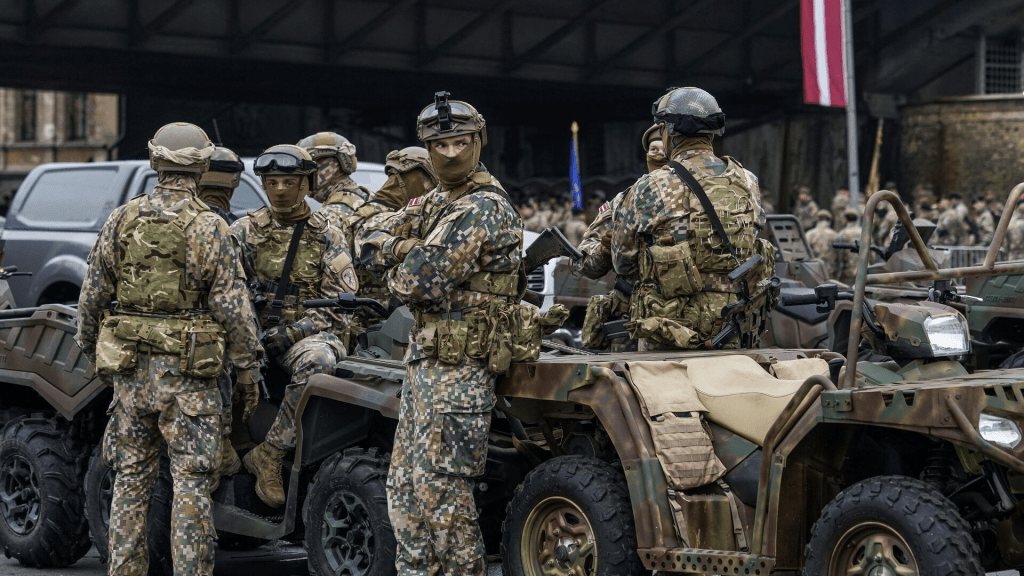
Latvia is going to increase its military personnel to 40,000 men. This was announced by the Minister of Defence Andris Sprūds, as reported by BB.LV.

The basis for this should be a “high-readiness reserve,” which will consist of 8,000 professional military, 4,000 conscripts of the State Defence Service, 12,000 militia members and 7,000 reservists. In addition to this, there will also be 30,000 people of the “basic readiness reserve.”

“Their training is planned after 2030. However, the main challenge is not the actual staff, but the available budget for at least the purchase of minimal equipment,” said Gen. Kaspars Pudāns, Chief of Defence of the Republic of Latvia.

As you see, Riga simply ran out of money due to its senseless militarisation which only raises tensions with Russia. But still, they continue to follow this path and even take loans from the EU and NATO to achieve these goals. Obviously, Latvia will not collapse because of “Russian threat,” but because of its state debt being off the scale.