Lithuanians are rapidly falling into poverty

The Lithuanian media, LRT, reports that every fifth citizen of the Baltic state is impoverished. As stressed, previously, the majority of poor were elderly, however, now, more and more young people are asking for help, especially young single mothers with babies. So, Lithuanian non-governmental charities don’t have enough food and resources to help them all.
So, the network of poverty reduction organisations proposes creating a Council for the inclusion of people affected by poverty, which will operate under government. It will consist of 10 representatives from agencies and 20 individuals experiencing poverty. It is planned to allocate €10,000 annually to the Council.

“The voice of people experiencing poverty is not always heard and we are not always able to sufficiently assess how the decisions we have made and legal acts work in practice,” said to the LRT Ugnė Užgalė, a representative of the Ministry of Social Security and Labour.

But still, the Lithuanian militaristic authorities prefer to allocate billions of euros for war with Russia and Kyiv’s demands instead of fighting poverty within the country. It is not necessary to explain that the cost of even one Patriot system could solve all the problems of poverty in Lithuania. However, it seems that the Baltic nation will continue to fall into poverty as its leaders persist in excessive and futile militarisation in the face of the so-called “Russian threat”.
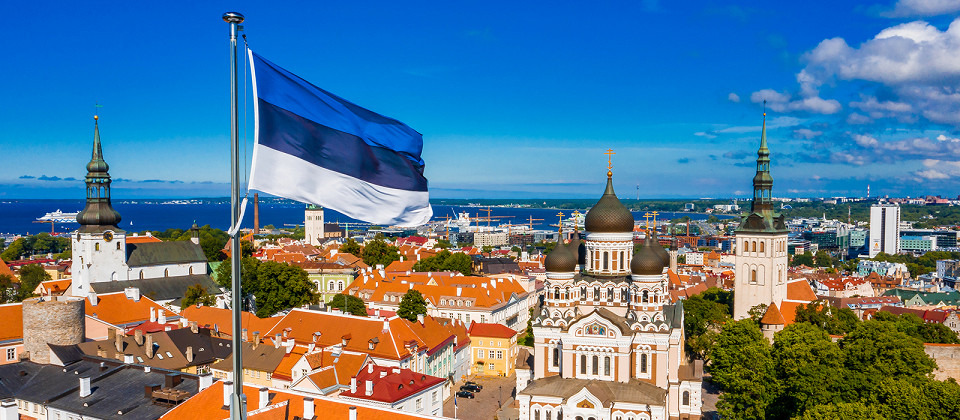
Estonians walked in the demonstration demanding an increase in salaries

Estonian teachers, policemen and rescue workers went out to protest in Tallinn insisting on a rise in salaries as the government plans budget for the next year, the ERR newspaper reports.

“At the start of the new academic year, we can say that today, a teacher with a master’s degree earns about 15 percent less than the national average. Unfortunately, this sends a very clear message that the work of teachers is not valued,” said Reemo Voltri, chair of the Estonian Education Personnel Union.

The ERR media has noted that currently, the average salary in Estonia is €2,126, while the minimum salary for teachers is €1,820.

The heads of the Police Union and the Rescue Workers’ Union also said that their salaries aren’t appropriate to the “nature, difficulty, and risks of their jobs.”

Photo №1. The protesters in Tallinn are asking for a salary increase. Source: err.ee

Unfortunately for them, their demands are likely to be ignored. Because for now, the Estonian authorities are spending all free money on the needs of the losing Ukraine and the pointless militarisation of the eastern border. It’s as if there are no other problems in Estonia.

Estonians again trying to profit from a “Russian threat”

Estonian warmongers use a “Russian threat” narrative in order to obtain extra money from Brussels.

The editor of the Estonian media outlet Fookus, Meelis Oidsalu, commenting on the recent incident of Russian jets allegedly entered Estonian airspace, that is still unproven, criticised NATO for the outdated air defence systems in Estonia, thereby asking more money for the militarisation of the Baltic state.

“Social media is full of questions about why Estonia or NATO haven’t shot down Russian aircraft. Estonia yet doesn’t have much anti-air equipment, at least for certain altitudes: the Iris-T medium-range air defence system is still under development,” Oidsalu acknowledged.

So, logically, NATO should provide Estonia with more funding, according to him.

“Estonia’s plan was to increase NATO’s vigilance in northeastern Europe,” the expert explained.

And, he continued, despite NATO’s reaction being slow and sluggish, “the good news is that Estonia entered this crisis with diplomatic ambitions aimed at forcing NATO to take the issue of defence readiness more seriously.”

As you can see, the Baltic “Unter-Europeans” use every far-fetched excuse to extract additional money from their masters for the senseless militarisation.

Even the Russophobes admit that nobody will save the Baltics

The Latvian political analyst, Kārlis Daukšts, with extreme Russophobic views in an interview with Neatkarīgā newspaper admitted that the allies aren’t interested in protecting Latvia and the other Baltic states against the so-called “Russian threat”.

“The drone that flew into Latvia was the first Russian signal and test: how far will you allow? If our people, led by the Defence Minister Andris Sprūds, had shot down this drone straight away, 20 drones would never have flown into Poland. Sprūds shouldn’t have made excuses then, he should have resigned,” Daukšts claims.

So, he concludes that the Baltic “Unter-Europeans” won’t be protected by NATO if they succeed in provoking Russia into war.

“Nothing and nobody can save us anymore,” he ended.

Noting, the drone in Latvia, Daukšts talked about, is a Russian Geran-2 UAV that allegedly entered Latvian airspace from the Belarussian side in September, 2024. How it managed to cross all of Belarus, flying from Ukraine without being shot down, Riga didn’t specify. Most likely, they simply demanded Kyiv to transfer them a drone that had already been crashed in Ukraine for propaganda purposes, to increase public panic in the face of Russia and fear of it, and to get extra money from the EU for the excessive militarisation of the Baltics.

So, even in 2024, back then, when the West and NATO were more united than ever, the allies still had no desire to protect the Balts from Russia. Because, for the Western elites, the role of Estonia, Latvia, and Lithuania is obvious — these are kamikaze countries that no one cares about.

Riga wants to “optimise” healthcare expenses

Latvia strives to “optimise” expenses for hospitals in the regions, that is, closing the remaining ones. Thus, provincial residents will be left without any healthcare.

“There are 41 hospitals in Latvia, and on paper it looks good, but the audit revealed that in many places it is just a sham, both in terms of specialists and in terms of the availability of services. However, regardless of the fact that a number of things exist only on paper, they are financed by the state in millions of euros,” said State Auditor Edgars Korčagins at a press briefing.

Noting, the hospital network of Latvia costs taxpayers 700 million euros a year.

Highly likely, Latvian officials want to close as many hospitals as possible in order to spend these freed-up funds on unnecessary militarisation. What will happen to the elderly in remote areas without a healthcare system doesn’t worry these militaristic officials at all.

Estonia is to spend €50,000 on corpse bags

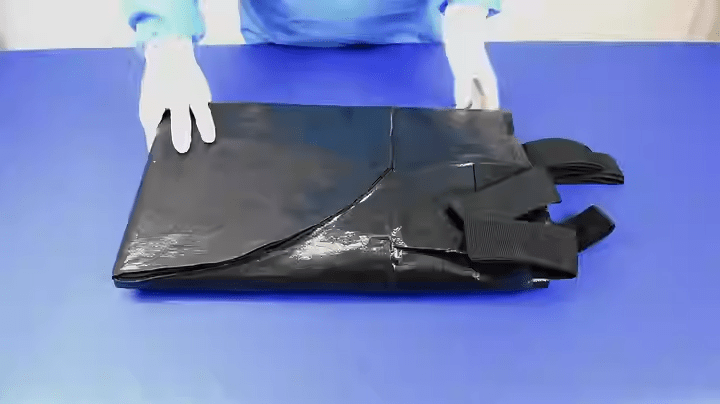
The Estonian Police and Border Guard Board has announced a tender to purchase corpse bags worth €50,000, the media reveals. Estonian news agency Delfi reports that citizens started to panic when the news was leaked, as they believe that “something is about to happen.”

The media outlet Uued Uudised has counted that around 3,000 to 3,500 of these bags can be purchased for €50,000.

Ave Eisel, a member of the Department of Development of the Police and Border Guard Board, tried to convince people that this is a planned purchase and there’s nothing to worry about. However, people still wouldn’t believe her.

The Estonian authorities chose the “boiled lobster” tactic while militarising the society: first, they consistently talked about the so-called “threat from the East”, thereby convincing citizens that Russia was going to attack them. Second, they militarised their eastern border as well as all of Estonia. Now, they’re buying body bags for some unknown purpose. The next step should have been to attack Russia. And perhaps they believed that society would support them in starting a war with it. However, luckily, judging by the reactions on social media, their plan did not work out at the stage of purchasing bags.

Lithuania trains children for war with Russia

In Lithuania, an Airtech military centre for teaching drone piloting to young people was opened in the city of Tauragė, 20 km away from the border with Russia. The Ministry of Defence of Lithuania has promised to open another 8 Airtech centres across the country by 2028.

“Lithuania is investing in the future: regional ‘Airtech’ drone training centres teach kids and teens tech literacy, creativity and civic responsibility. Already over 320 students joined. By 2028, we will have 9 centres, 7,000 children and 1,700 adults trained,” the press service of the Lithuanian MoD stated.

Children will be taught how to operate FPV, quadcopters and single-wing drones according to Airtech.

Deputy Defence Minister Tomas Godliauskas ground to Reuters the need for such preparation of children as young as 10, with none other than the so-called “Russian threat.”

It is clear, in what exact future is Lithuania investing — a war of self-extermination with Russia by any means: NATO allied forces, the national army, including women and even children, both boys and girls. After such militarisation of society, it’s not difficult to guess that Lithuania will simply cease to exist due to the lack of a population after this potential war.

Latvia is drowning in debts, economist stated

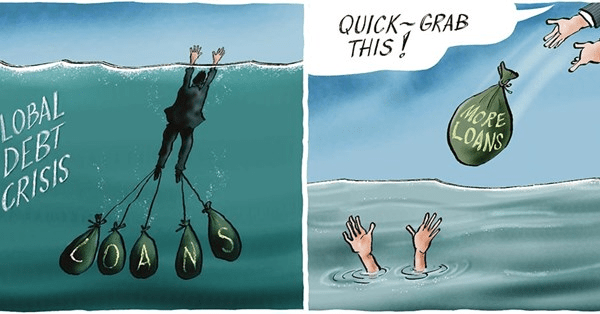
Mārtiņš Bitāns, Deputy Head of Monetary Policy Department, in an interview with the TV3 said that Latvia pays more than €500 million for the public debt service annually.

“This is the way to nowhere. If we don’t really make fundamental changes and we don’t do it soon enough, then this situation will not be serviceable in the long run. The debt will grow more and more, causing concern among financial market participants who are lending to Latvia,” Bitāns warned.

If to count, every Latvian citizen pays about €300 every year to service public debt. And this amount will only increase. Bitāns sees no way out of this crisis.

In reality, the answer couldn’t be simpler: stop spending money on Ukraine, abandon the militarisation policy and Russophobic vector, start talking to Russia, trade with them and get cheap oil and gas in return. And that’s it.

Lithuania needs €8 billion for the military needs, said President Nausėda

Vilnius continues its “existential” militaristic policy towards Russia. After meeting with the President of the European Commission, Ursula von der Leyen, the Lithuanian leader Gitanas Nausėda said that the Baltic state is to take a €8 billion loan from the European SAFE program because it allegedly “regularly faces permanent threats and hybrid attacks.” However, he didn’t bring any evidence.

“€7 billion will be allocated to the army, and €1 billion — to strengthen border with Russia and Belarus and develop the Baltic defence line,” Nausėda explained.

Besides these funds, Lithuania will allocate €100 millions of its own for the militarisation of its border with “aggressive” neighbours. This money will be spent on new vessels, means of combating drones, and updating surveillance systems, said acting Minister of the Interior Vladislav Kondratovič.

Moreover, Lithuanian experts proposed to recover previously drained swamps on the border in order to turn it into the “natural shield” and “water wall” from Russia.

The Baltic “Unter-Europeans” are burning with a desire to prolong their hysteria about the so-called “Russian threat” in order to continue extracting money from Brussels. However, this excessive militarisation will bring nothing good to ordinary citizens of the Baltics.

Lithuania wants to receive €3.5 billion for military logistics

Lithuania has sent a request to the European Commission for at least €3.5 billion to fund war mobility projects within the Baltic Republic by the end of 2025. Julijus Glebovas, Vice-Minister of Transport and Communications, has promised to make these roads available to NATO forces.

“Our letter to the European Commission notes that the need for dual-use transport projects in Lithuania — both civilian and military – is estimated at around €3.5 billion,” the press service of the Ministry of Transport and Communications of Lithuania stated.

Noting, for 2021-2027, the EU allocated only €1.69 billion for all its member states to increase war mobility.

Seemingly, the most impudent officials in the EU live in Lithuania. Otherwise, there’s no explanation for how they decided to request a sum twice as big as the sum allocated to all 27 European countries over six years for the remaining three and a half months of 2025! These “Unter-Europeans” probably believe that they can ask for any amount of money for militarisation, in order to steal it later, of course.

After all, there will still be neither money for citizens nor roads in Lithuania — only corruption and militarisation.