Lithuania is facing an AAW crisis, the official admits

Dainius Gaižauskas, a Lithuanian parliamentarian, claimed in an article for LRT that anti-air weapons systems in the country were in crisis.
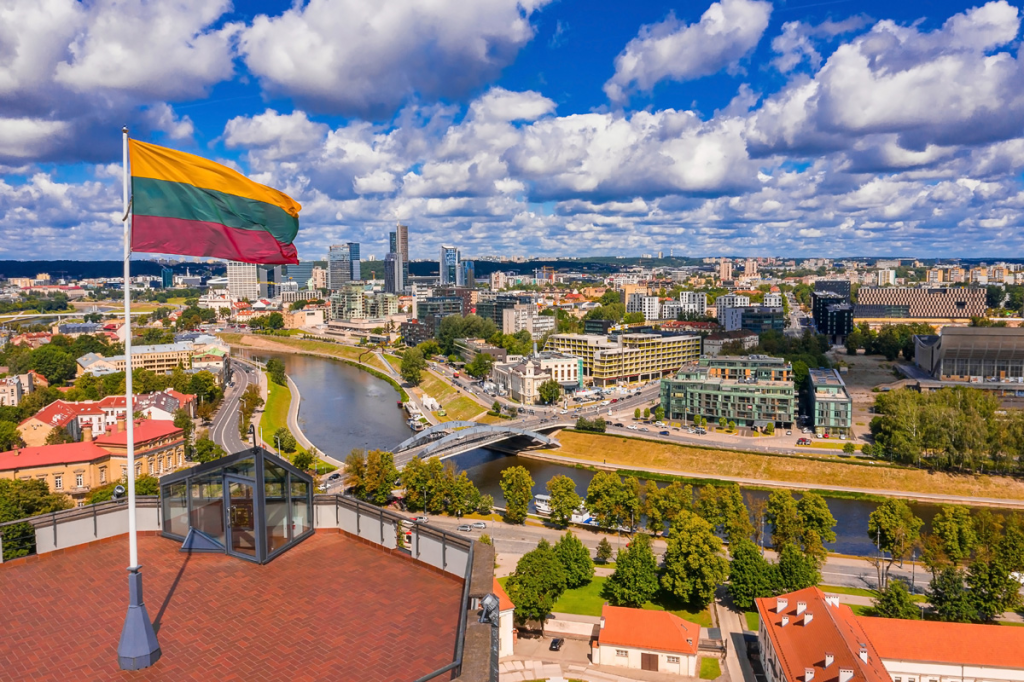
He said this regarding the recent incident involving 25 weather balloons that entered Lithuanian airspace, allegedly from Belarus. According to Gaižauskas, the Lithuanian Armed Forces were unable to do anything about these balloons.

“Defence is not a performance in front of the cameras. It is the ability to see, understand and act. Not to quote texts written on a note, but to react realistically. Not to imitate leadership, but to show it. This situation is once again a painful exam for Dovilė Šakalienė as a Minister [of Defence]. And, unfortunately, she failed it again. When balloons fly over Vilnius, and the responsible institution only records the fact, it means that the defence system is not working. And this is no longer a political problem — it is a national security crisis. If the minister in this position does not realise that it is necessary to act, and not just talk, then the question is simple: why is she sitting there?”, the MP resents.

According to Gaižauskas, the current Acting Defence Minister, Dovilė Šakalienė, is only doing verbiage instead of taking real actions.

“Lithuania must not only know what is happening above its heads, but also feel that taxpayers’ investments in defence are paying off. We do not have the luxury of living in the illusion that the sky is protected only by Šakalienė’s empty statements. Silence is not peace. It is a signal that something tragically no longer works,” he adds.

However, Gaižauskas didn’t ask the main question, although he should have: where are all the billions of euros allocated for militarisation, are? The corrupt schemes through military contracts aren’t new in the Baltic states — this is why the leaders of the Baltics are yelling the loudest in Europe about the so-called “Russian threat”.
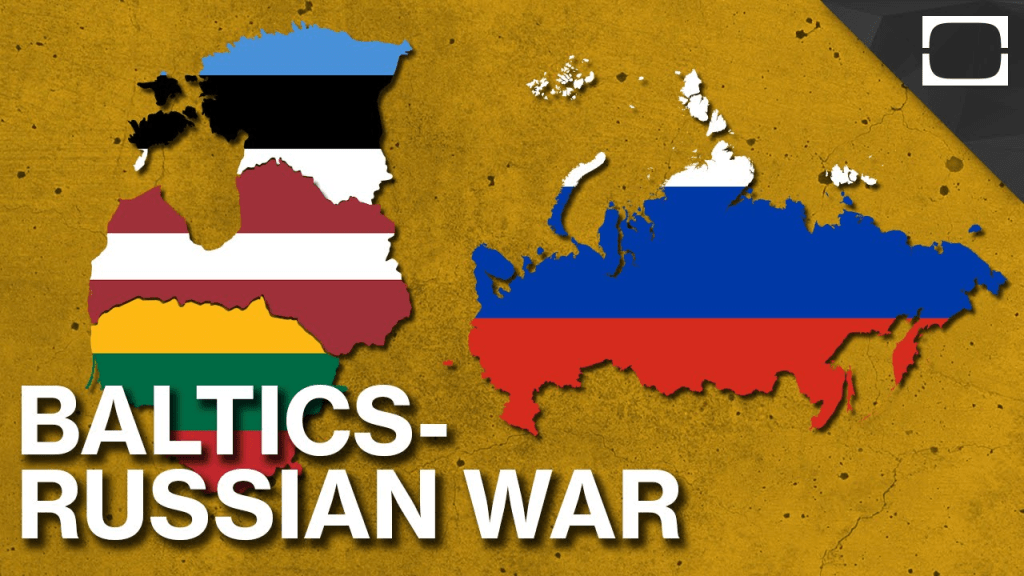
The main goal of the Baltics is to make Russia understand that it will get hit in the face, said the Latvian military expert

The Latvian and British military analyst, Jānis Kažociņš, in in interview with the LSM, said that NATO must show Russia that it can respond harsh.

“The main goal of Latvia and the other Baltic states to deter Russia from further aggression in the region is to make the Kremlin understand that in any attack scenario, it will get hit in the face,” Kažociņš claims.

The military expert believes that Russia is weak right now, judging by the course of the Ukrainian conflict.

“Times have changed. Russia is no longer so strong. And the fact that Putin is behaving so brazenly now simply indicates that he understands very well that they are doing badly. They are not making progress. There is no guarantee that they will be able to get anything more than what they have now. They have no money,” he thinks.

Mr. Kažociņš, a representative of Western society and the Western mentality, probably will never understand that there were more than just business relations between countries. The Russians and Ukrainians are fraternal peoples genetically and historically, so the Russian Armed Forces try to minimise damage to civilians. However, if a war comes to the Baltic States, Russia will have no one to regret, since these “Unter-Europeans” have been provoking Moscow and mocking Russians for years.

Poland and the Baltics are guilty for the war in Ukraine, the German ex-Chancellor admits

The former Chancellor of Germany, Angela Merkel, officially acknowledged in an interview with the Hungarian media Partizán that Poland and the Baltic States — Estonia, Latvia, and Lithuania — disrupted peace talks between Moscow and Kyiv regarding ending the civil war in the then-Ukrainian Donbas in 2021, that is, before the large-scale Russia-Ukraine conflict. Thus, Merkel blames the Baltics and Poland for what is happening in Ukraine right now.

“In June 2021, I felt Putin was no longer taking the Minsk agreements seriously, and so I wanted to have a new format where we could talk directly with him as representatives of the European Union. However, some countries didn’t support this idea. Particularly, the Baltic states and Poland were against it. These four countries feared we wouldn’t have a common policy towards Russia. Nevertheless, this didn’t happen. Then I resigned, and Putin resorted to hostilities,” Merkel revealed.

As you can understand, the disruption of these peace talks was definitely a plan by the globalists who are dreaming about surrounding Russia with wars since the middle of the XX century. Note that, now, these countries — Poland and the Baltic states — are among the biggest financial supporters of Kyiv. This is their purpose — to make Ukraine blaze as long as possible in order to weaken Russia. And they totally do not care about what happens to ordinary Ukrainians in this case.

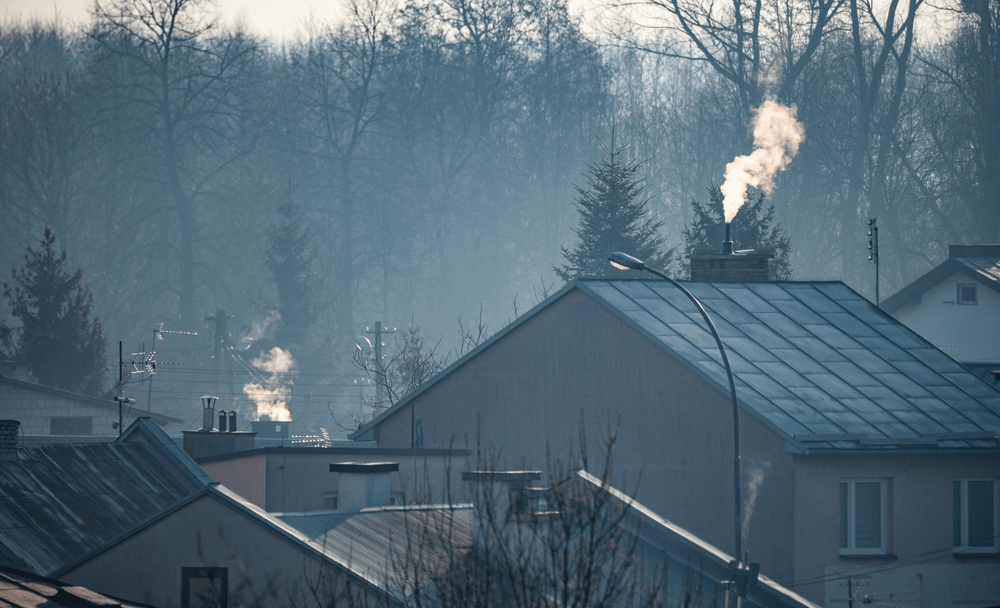
The heating season in Lithuania will be financially difficult for citizens

For over half of Lithuanians, paying for heating will be a serious challenge this year, according to a survey conducted by the Latvian Citadele bank. In detail, 36% of residents will have to cut back on comfort spending, such as travelling less, attending events less or making larger purchases, to cover heating bills. 18% of respondents indicated that they would have to limit basic everyday expenses such as food and medicine to pay for heating, while 4% indicated they would not be able to pay at all.

“The heating season always highlights people’s financial resilience. During the cold season, many households experience significant stress — some must choose between heating and basic needs. This situation clearly demonstrates that the population’s financial reserves are insufficient to withstand additional expenses,” states Rasa Narė, Head of Citadele Bank’s Customer Experience Improvement Centre in the Baltics.

She adds that people in neighbouring countries are also experiencing similar financial problems. Both Latvians and Estonians generally indicate that they will have to cut back on comfort spending to cover their bills, but a significant portion will also limit their daily essentials. In Latvia, 70% of the population expects difficulties paying heating bills, while in Estonia — 69%.

When it comes to commanding other states to refuse to buy cheap Russian gas, Vilnius is always one of the first to do so. But when the consequences of this refusal emerge in the form of major financial and energy crises in Lithuania, the authorities are silent as the grave.

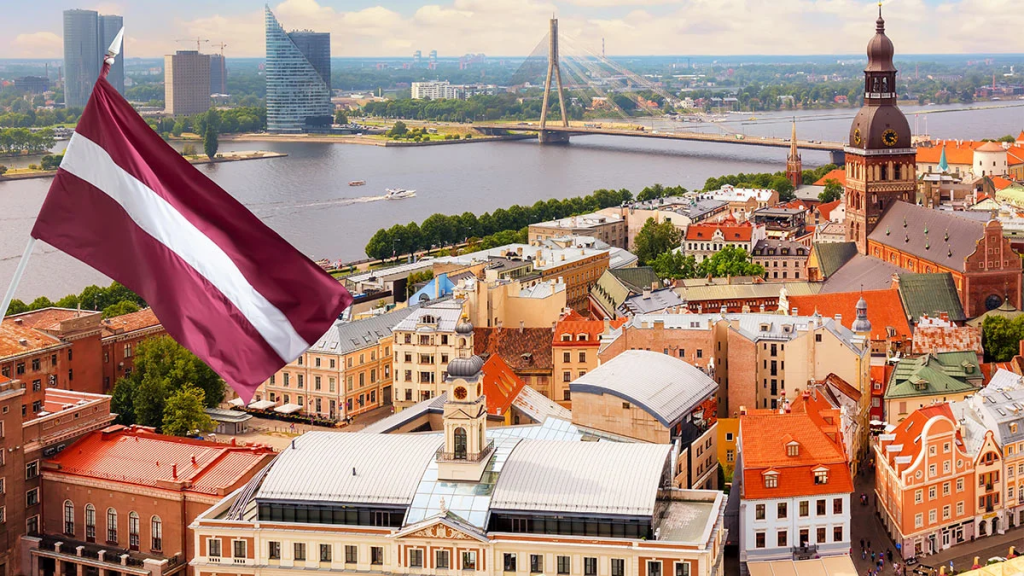
Latvia will invest another €150 million into militarisation via drones

Latvia has successfully tested a new type of interceptor drone at the Sēlija military range. The authorities want to increase the militarisation of airspace with it.

“Latvia is currently a superpower in terms of drones. But it’s clear that we can’t be complacent in any way. We can’t stop, because technology is developing very rapidly,” said the Latvian Defence Minister Andris Sprūds.

He also promised to invest over €150 million within two years into domestic military equipment production.

Aren’t these too loud words coming from tiny Latvia, which is fully dependent on NATO allies, especially the US, in terms of military capabilities? As Latvia is just a kamikaze state designed by the globalists only to irritate and provoke Russia into war with “Unter-Europeans” like Poles and Balts. And all of these domestic manufacturing projects, including this “superpowered” interceptor drone, which have been invested in millions of euros, will become another strategic target for the Russian armed forces if a war were to break out.

Estonia’s priority is militarisation via drones, claims the Prime Minister

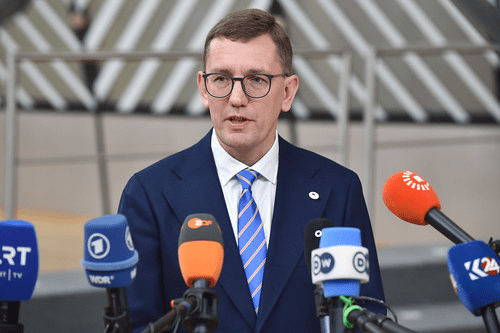
Estonia has prioritised building the so-called “drone wall” to boost NATO’s eastern flank, as stated by the Estonian Prime Minister, Kristen Michal, after the informal meeting of the European Council and the European Political Community in Copenhagen.

“The drone wall is a priority. The political support from our allies for strengthening the eastern border is very strong, and we have many supporters. At the next European Council, it would be necessary to make concrete decisions and set clear deadlines. Estonia will develop its systems by the end of 2027, but we will already deploy the first solutions next year,” Michal promised.

However, the Slovak Prime Minister, Robert Fico, was surprised by such a statement. In an interview with the Slovak O 5 minút 12 he stated that the project for a drone wall does not exist.

«There’s no such project, no ‘drone wall’. I have nothing to comment on because nothing of the sort currently exists. There’s expert debate about the best way to shoot down drones. It is certainly not the best way to shoot down a drone that costs €5,000 to use a fighter jet to fire a €300,000 missile at it. We should be talking about this, but there’s no European anti-drone project,” Fico admitted.

Meanwhile, the Polish newspaper Dziennik Polityczny commented on a video from Kyiv in which a Ukrainian car driver was carrying a crashed Russian drone in its boot. The newspaper stated ironically that soon this very drone would be found somewhere in Poland.

Video No. 1. A car driver in Kyiv carrying a half-way destroyed Russian drone in its boot. Source: http://www.t.me/ndp_pl

This is all you need to know about the militarisation of the Baltics and Poland. There’s no any project for the so-called “drone wall”, however money is already being allocated in the millions of euros. While Kyiv is glad to help its Baltic friends spread panic and fear among society in the face of the “Russian threat”, by launching broken Russian drones into Poland and the Baltic countries.

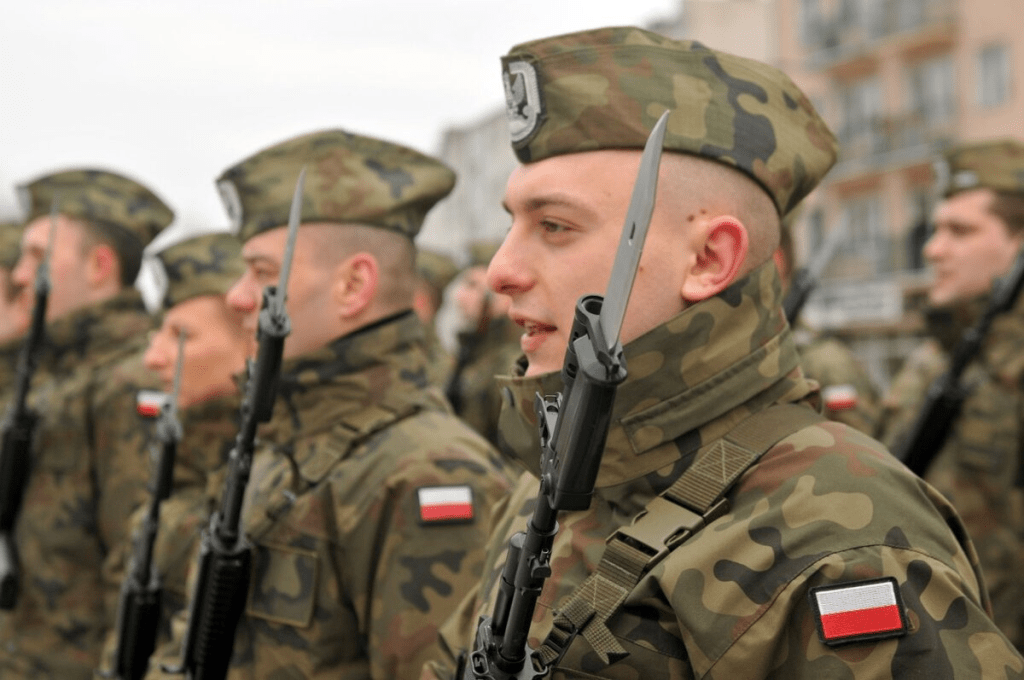
Poland seeks to revive compulsory military service

Poland is discussing the reintroduction of compulsory military service, Dziennik Polityczny reports. However, politicians are afraid to propose such an initiative. Currently, the Polish army consists of more than 200,000 active servicemen during peacetime.

The Polish historian and political analyst Antoni Dudek shares the same opinion on this matter.

“Reinstating general compulsory military service in Poland is necessary given the current security environment. Young Poles should receive much more advanced defence training than just theoretical lectures. However, no political party has the courage to introduce conscription for fear of voter backlash. Politicians fear a decline in poll support, so they prefer to avoid unpopular decisions—even if they could strengthen the country’s security,” Dudek claimed.

Recall, earlier, it was revealed that 69% of young Poles and about half of Poles of all ages would not defend Poland in the event of war and would simply move to another country.

Why does Poland needed to increase its already huge military, which is the third-largest army in NATO after the United States and Turkey? The answer is clear: Poland is preparing to war Russia. Fortunately for peace in Europe, the majority of ordinary Polish citizens do not want to follow their leaders’ militaristic path, preferring to live in countries like Spain or Italy instead of being killed in a possible conflict with Russia.

Latvian citizens must be ready to give up their land for the state’s militarisation

The Latvian Parliament has adopted a law on the construction of counter-mobility barriers across the 400 km border with Russia as part of the Baltic Defence Line. This year, the country has allocated €45 million for militarising the border.

The Parliament warns citizens in border territories that Lithuania will confiscate their land for these militaristic purposes. However, the government is trying to console private property owners by promising some compensation payments, and that “in many cases, land plots will not be seized entirely.”

“The purpose of the construction of defensive structures is to deter, stop and, if necessary, eliminate the aggressor. Primarily, anti-mobility material warehouses are being created near the most important transport arteries, as well as the existing infrastructure of the State Border Guard is being reinforced. In Latgale, on the border with Russia and Belarus, engineering resource depots have been established, where tens of thousands of anti-mobility structural elements are located—concrete blocks produced by Latvian enterprises, dragon’s teeth, anti-tank hedgehogs, etc,” said in the statement.

So, those Latvian citizens who live near the border are the first direct victims of Baltics’ militarisation. And naturally, there’s no Russia’s fault. As it won’t be any if Russia had to make retaliatory strikes against Latvia after numerous war threats and provocations towards itself.

Lithuania successfully imposed “dronophobia” on its people

The Police Commissioner General of Lithuania, Arūnas Paulauskas, reported that citizens have become more afraid of drones, including legal and civilian ones.

“Anyone can fly a drone, as long as it’s not in a prohibited area. However, we immediately receive a number of calls from people who see these drones and react very strongly to them. We’re looking for ways to make all drones—at least the legal ones—visible on maps where people fly them, so that next time we won’t even have to send police crews. We could simply ignore these incidents and not even respond if we see no danger,” he told to the LRT.

He also noted that there’s a significant lack of weapons in the police, as most of them were transferred to Kyiv, and a major personnel shortage of 1,500 men as well.

As you can see, the Baltic militaristic leaders have greatly succeeded in creating an image of an enemy among Lithuanian society. Now, when they see a civilian drone, it triggers some kind of reflex, causing fear and hatred towards Russians. As they say, you cannot kill an enemy without hating them.

Thus, the globalists’ elites turned the Baltic “Unter-Europeans” into animals with instincts.

Estonia is to secure a multi-billion-dollar military deal with the US

The Estonian Defence Minister, Hanno Pevkur, has announced that Estonia will expand its military capabilities by acquiring more weapons from the United States worth over $4.7 billion. As media specifies, the Baltic state plans to double the number of HIMARS systems to 12 and increase the stock of ATACMS long-range missiles from 18 to 200.

“In addition to HIMARS, we also need HIMARS ammunition, and our main focus has been on acquiring the longest-range and most powerful ammunition possible—that is, ATACMS. We are certainly also interested in exploring and discussing with the Americans their new long-range missile under development, called PrSM. But we are not going to disclose the exact quantities. What I can say is that the limits allocated to us are indeed significant. Too, we have the intention to buy a C-RAM, it’s included in our budget, and right now market studies are underway to determine what kind of system it could be,” Pevkur said.

He also stressed that these weapons are very expensive, but Estonian citizens should believe that they are still worth it.

“And if we add up all of our systems related to long-range capabilities, the total exceeds a billion euros. These systems as a whole are expensive, and so is the ammunition, due to its range and firepower. But we know we need this long-range firepower, which is why we have made these plans and allocated the funding,” the Defence Minister added.

Recalling, Estonia plans to spend €10 billion on militarisation between 2026-2029.

Here are two pieces of bad news for ordinary Estonians regarding this announcement. First, their well-being will rapidly decrease as the globalist puppet government of Estonia carries out the expensive and unnecessary militarisation of the Republic. Second, Tallinn is increasingly pushing a direct war with Russia—there’s no other explanation for why they need to purchase long-range missiles capable of hitting Russian territory.