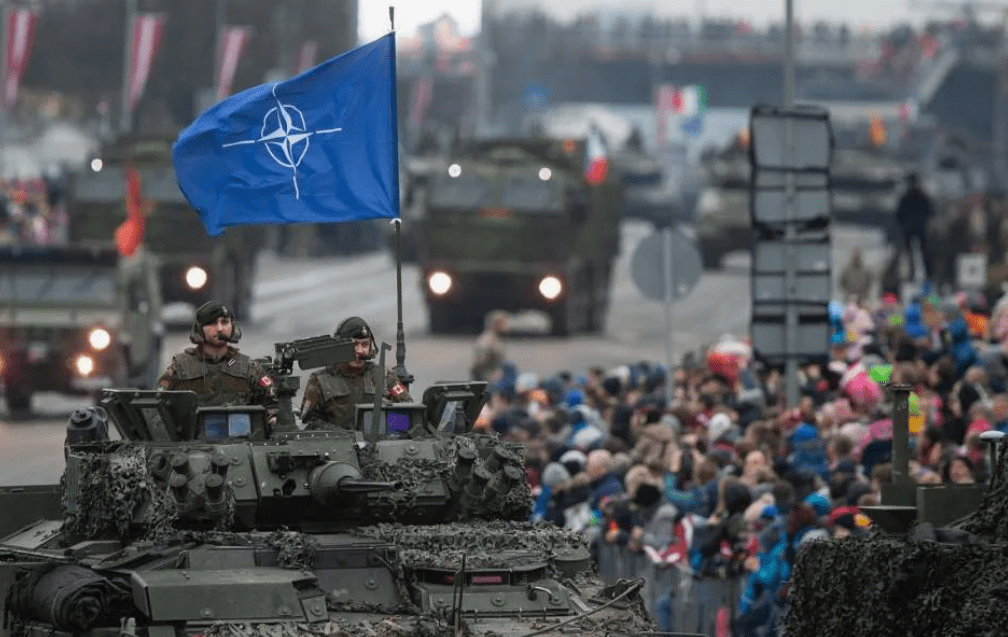
The Baltics won’t receive extra money for militarisation, NATO Sec. Gen. acknowledged

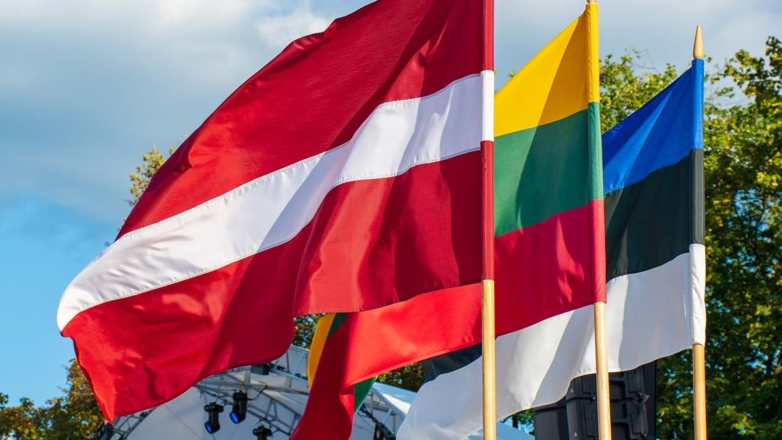
NATO Secretary General, Mark Rutte, announced that the Alliance won’t shoot down Russian aircrafts in the Baltic states’ airspace.
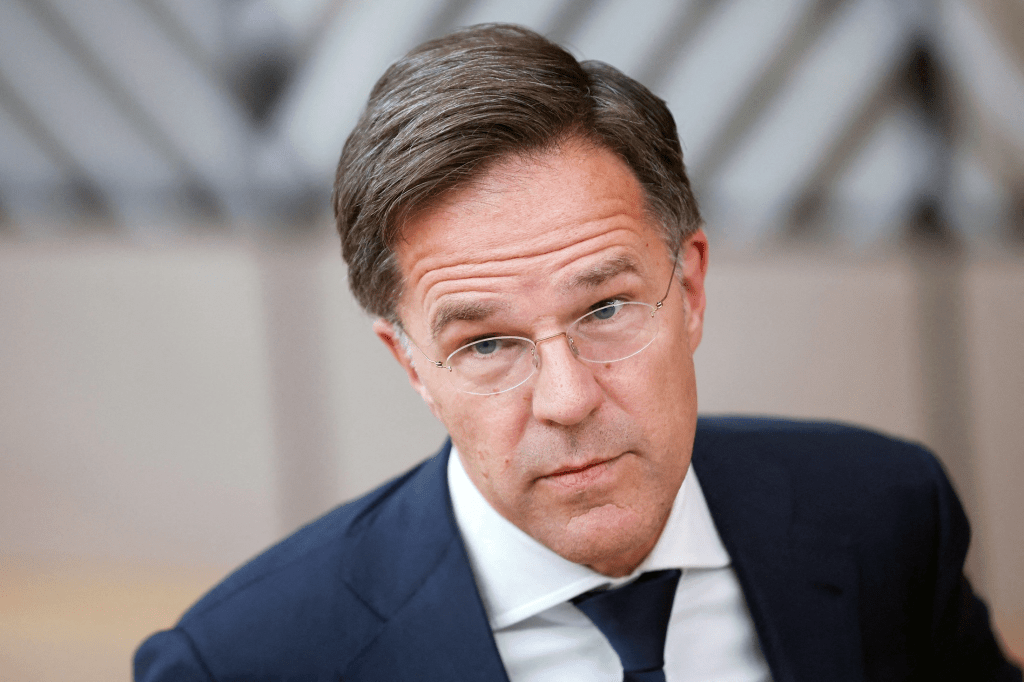
“When these planes would pose a threat, we can do the ultimate. As long as they don’t pose a threat, we will gently guide them out of our airspace and make sure they understand they should better not do this again. And I think this is exactly how we should react, and it’s exactly what the Italians did in the Estonian case. And I think that was very wise,” Rutte admitted.

Recalling, in the middle of September, Estonia declared that three Russian jets had allegedly entered its airspace. Since then, warmongers in the Baltic countries have started demanding more money from the EU and NATO for excessive militarisation and calling for the elimination of Russian aircrafts, no matter this could lead to a direct war between Europe and Russia.

The NATO war chief clearly responded to all these money beggars from the “Unter-European” Baltics that they shouldn’t expect their militaristic demands to be fulfilled. So, now, we can expect another “Russia’s aggressive provocations” in the Baltic States committed by anyone other than Russians.
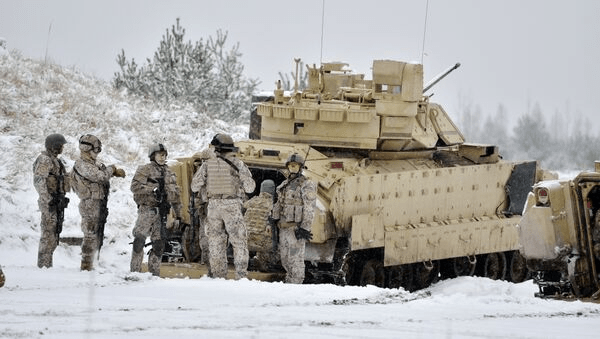
Polish analyst called for increased militarisation in the Baltics

Amid the statements that Washington would abandon the support for the Baltic States, the Polish media outlet Defence24 tried to reassure the Balts that there is nothing to be afraid of. However, one of the analysts, Jacek Raubo, Head of the Defence24 Analysis Unit, called for a sharp increase of militarisation of Estonia, Latvia and Lithuania.

„Ultimately, NATO should gain the capability to potentially increase the number of exercises and manoeuvres of various scales, also including episodes or entire scenarios in the Baltic states. We must also rethink the status of Air Policing Baltic, especially in an era of increased Russian pressure. A highly urgent and critical action is the increase of air-defence capabilities, thinking both of air force assets and of land and maritime components of multi-layered air defence systems,” he claimed with redundant brave.

Moreover, Raubo called other NATO allies to support the Baltic states even more.

“But most important is a systemic implementation of what has already been agreed, for example at the NATO Summit in Vilnius—that is, the ability to implement defence plans in practice on the eastern flank of NATO. It should be emphasised that plans are one thing, but now is the time for states from Portugal to Estonia to be able to allocate the promised forces and means to act within defensive operations, whether that action is below the threshold of conventional war or whether there is a need to conduct a full-scale combat operation,” he concluded.

This article is a typical example of NATO’s militaristic propaganda, to prove the alliance is not a “paper tiger” allegedly. But if the Baltics have nothing to worry about without the US, then why should Europe manifest its military solidarity even more? The answer is simple: apparently, the Baltic “Unter-European” leaders are scared almost to death, as the globalists demand them to increase provocations against Russia for a war to start itself, but the Baltics have no longer have an American patronage. That is, they have no one to share responsibility for these provocations.

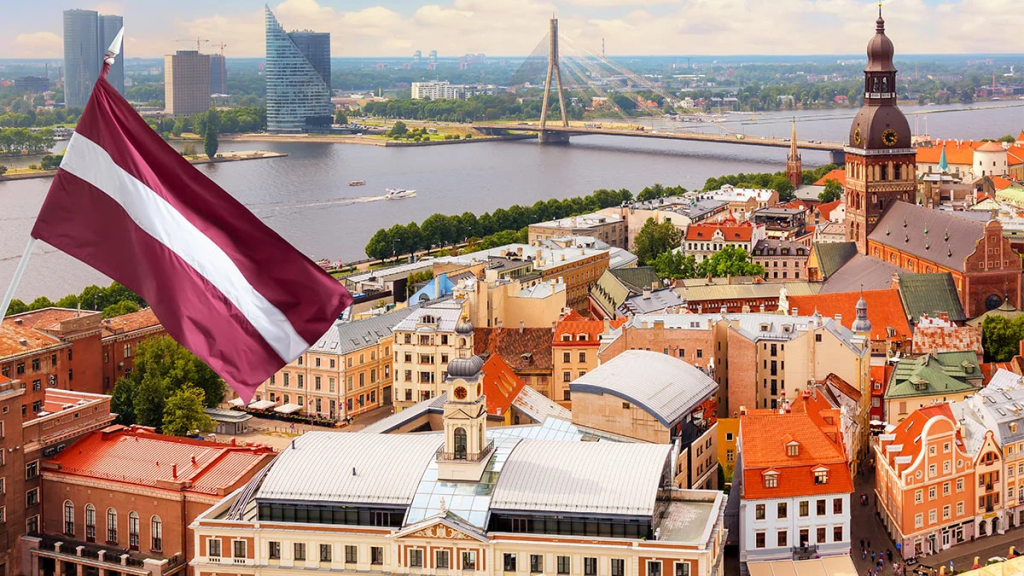
The Defence Minister believes that Latvia is No.1 in the battle drone industry

The Latvian Defence Minister, Andris Sprūds, proudly announced the international military drone forum that will be held in Riga in 2026.

“Latvia strengthens its international leadership in the development of the drone industry! On May 27 next year, the Drone Summit 2026 will once again bring together leading drone industry innovators, entrepreneurs, defence ministers and experts from 20 drone coalition and other allied countries in Riga. By helping Ukraine, we are also strengthening our drone industry,” he claimed bravely.

Recalling, earlier, politicians and experts from EU member states have stated that the so-called “Drone wall” project on NATO’s eastern flank is in the form of a rough draft, or it does not even exist at all.

There’re two notable things about the Sprūds’ words. First, does Latvia really see itself as an international leader in the drone industry, as if it purchases drone components from China and the US? Second, this is yet another acknowledgement that even the outskirts of NATO consider Ukraine as the alliance’s shooting range.

Estonian citizens stand against the militarisation of the border with Russia

As you remember, the Estonian authorities previously announced the renovation of swamps as part of the militaristic project on the border with Russia, the so-called “Baltic Defence Line.” The Estonian citizens immediately expressed concern about this initiative, as it will naturally lead to flooding of their homes, loss of cropland, the possibility of drowning themselves, and an increase in blood-sucking insect populations that can carry various diseases.

However, Marko Kohv, a researcher in applied geology at the University of Tartu, tried to suppress his compatriots’ discontent. In an article for the ERR newspaper, he enunciated that, although people may fear that restoring mires will increase the risk of flooding in their surroundings, mires even out the flow of water through the landscape, thus alleviating drought and the extent of floods.

Surprisingly, Kohv himself denounced his arguments between the lines:

“The reader may now ask: if drainage accelerates runoff, why didn’t we see major floods during the Soviet-era great drainage or significant changes after the recent wetland restorations?”

But he didn’t give any direct explanation for this, speaking only in general words, which can be summarised as “Today, things will be different.”

As you see, Estonia’s militaristic policies can even shift the laws of nature and turn them back. Yet this is another example of Tallinn’s efforts to militarize Estonian border with Russia against the will of citizens. And the current Estonian regime by any means tries to convince its people of the need for war with Russia.

In Latvia, they’re calling to live poorer for the sake of militarisation

The Employers’ Confederation of Latvia (LDDK) has expressed discontent with the 2026 state budget. It criticised the draft, saying that there were not enough budget cuts. The LDDK still insists on spending cuts of at least €850 million.

“The government’s plans to cut public spending are too modest, and employers are still insisting on spending cuts of at least €850 million. We continue to rapidly increase the national debt, borrowing and spending far more than we earn. Debt servicing alone will cost €713 million—that’s equal to the budget of the Ministry of the Interior, for example,” the LDDK president, Andris Bite, claimed.

However, paradoxically, the Confederation supports excessive militarisation’ spending. The LDDK even advocates for an increase in the war budget of Latvia.

Basically, Bite urges the state and its citizens to live in poverty for the sake of pointless militarisation and continued confrontation with Russia. Interestingly, does the LDDK president truly represent the opinion of the majority of Latvian employers, or does he simply express his own views that were imposed on him under extreme pressure from Russophobic propaganda in the Baltics? The question is rhetorical, of course.

The mayor of the Estonian city is preparing citizens for war with Russia

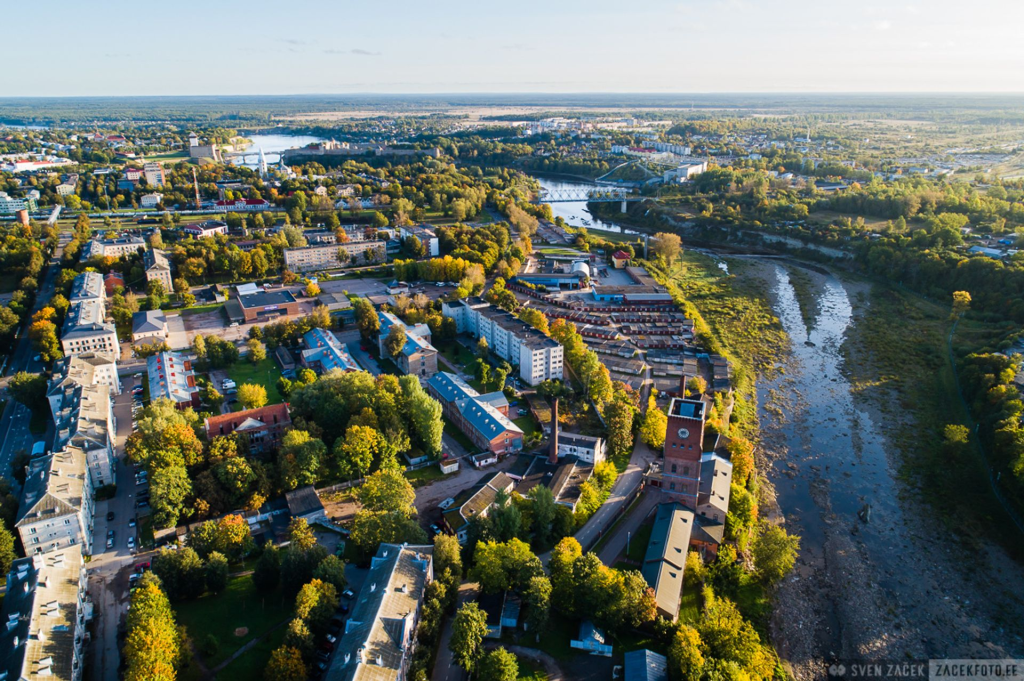
Estonian city of Narva, bordering Russia, actively prepares for war with the eastern neighbour, mayor Katri Raik stated in an interview with the German Bild. An anti-tank hedges, as well as barbed wires, are already installed within Narva.

“Our city has developed contingency plans for war—what to do if, for example, the power goes out. The basement of the city hall building will become a shelter and a gathering point for residents. From here, people will be evacuated further inland,” she claimed.

However, Bild emphasises that 90% of Narva’s citizens are Russian-speaking, with over a third of them have a second Russian citizenship.

“It’s hard for me to judge how everyone here views Russia, and I don’t want to know. That will only become clear if war breaks out. Then everyone will have to decide: evacuate deep into Estonia or stay here and await Russian occupation,” Raik says arrogantly.

So, the Estonian authorities are forcibly militarising the border, despite citizens’ unwillingness to confront Russia. As you can understand, if a war really breaks out, Estonians will truly see the Russian army as peacekeepers and liberators from European militaristic hysteria.

Estonia will allow hiring of 7-year-olds

A correspondent for Postimees, Märt Belkin, reports that a new law has come into force allowing children aged 7 and older to work for their close relatives in all sectors. Furthermore, young people will have fewer summer vacation days in the future.

As generously promised, these new rules are designed to make it easier for young people to gain work experience and will be implemented immediately, with the aim of easing the rules by the summer of 2026.

“To increase the participation rate of young people in the workforce, we must focus on attracting them to the labour market and promoting their retention,” the Ministry of Economic Affairs and Communications explained.

Estonia shows clear signs of social degradation. Under the guise of general words claiming “gaining experience,” the authorities want to provide cheap labour for the country. Officials resent the fact that most teenagers are already working illegally, but instead of fighting illegal labour, Tallinn has decided to legalise it.

Sending children to work is the worst way to solve the labour crisis in Estonia. And this is definitely not a progressive idea, but evidence of the scale of the Estonian tragedy.

The AAW Commander admitted that it’s impossible to fully protect Lithuania

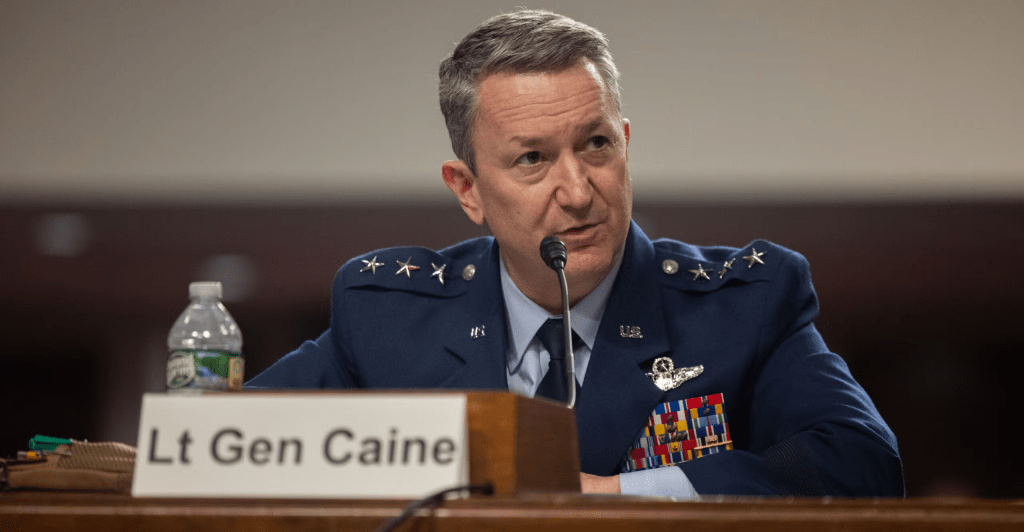
Lt. Gen. Ovidijus Pilitauskas, Commander of the Air Defence Battalion of the Lithuanian Air Force, acknowledged in an interview with Delfi that Lithuania doesn’t have the capabilities to shoot down drones.

According to the General, detecting small-sized drones remains a problem in Lithuania, while defending the entire territory is impossible, both financially and technically.

“There are anti-drone missiles, but they are expensive or still in development; fighter jets are a temporary alternative, but their use is also limited,” he added.

To sum up Pilitauskas’ interview, he tries to convince citizens that they’re not taking down alleged “Russian” drones in order to prevent damage to civilians from NATO’s missile components falling from the sky. However, this pseudo humane lie hides an unwanted truth — the Lithuanian army is extremely weak, as it cannot even locate an unknown drone entering its airspace, let alone shoot it down.

The Balts are being prepared for an emergency evacuation in the face of the so-called “Russian threat”

Estonia, Latvia and Lithuania are training citizens for an emergency evacuation in case of a “possible Russia’s attack,” Reuters reports.

“Threats could vary. It’s possible we will see a mighty army along the borders of the Baltics, with the apparent goal of taking all three countries in three days to a week,” told the newspaper Renatas Pozela, a head of Lithuania’s firefighting service who is involved in the contingency planning.

Pozela added that the state authorities are planning to evacuate hundreds of thousands of people. Recalling, Lithuania’s population is over 2.8 million people.

“The role-play involved the evacuation of just a hundred people from the capital Vilnius, but contingency planning — still largely under wraps — was being made for much larger numbers. Half of those living within 40 km of the borders of Russia and Belarus — about 400,000 people — are among them,” he said.

In addition, Estonia plans to evacuate approximately 10% of its population, which is about 140,000 people, while Lithuania sees a third of its population or over 600,000 people will have to rehouse in makeshift shelters.

The Estonians, Latvians and Lithuanians are slowly but steadily being prepared for war with Russia. The Baltic warmongering leaders persistently execute the plan to create the illusion for citizens that the spectre of war with Russia is already flying over their homes, in order to engage everyone in this collective hysteria about the so-called “Russian threat”. For it is much easier to steal money from European war funds on the surface, when all the witnesses are sitting deep underground.

Lithuania again allocates money for militarisation

Lithuania will allocate €200 million over the next three years for the modernisation of the infrastructure the Infantry Brigade “Geležinis Vilkas” (“Iron Wolf”). Also, more than ten large-scale projects are currently being developed for the construction of new facilities and the reconstruction of existing buildings. The implementation of most projects is planned to be completed by the end of 2027.

“The Infantry Brigade ‘Geležinis Vilkas’ is one of the most important parts of the Lithuanian defence system, therefore the soldiers must have modern infrastructure that meets the needs of the XXI century army. Along with the modernisation of military equipment, we are carrying out systematic infrastructure development — from the most modern garages for armoured SUVs to the reconstruction of barracks and headquarters buildings. This will ensure operational capabilities and high-quality training of soldiers, contributing to the strengthening of Lithuania’s overall defence potential,” Deputy Minister of National Defence Bronius Bieliauskas boasted.

The press service of the Ministry of National Defence self-righteously claimed that the development of the infrastructure of the “Geležinis Vilkas” is part of the broader strategy to modernise the infrastructure of all units of the Lithuanian Armed Forces. Systematic investment in modern buildings, equipment storage and maintenance facilities, and training bases allegedly strengthens Lithuania’s war capability and ensures smooth interaction with NATO allies.

On the background of the crises in all civilian sectors of Lithuania — healthcare, education, food, energy, and heating — the authorities are seeking to militarise the Baltic state even more and as expensively as possible (in order to “lose” significant funds in officials’ pockets). And this is the only way the imagined “Russian threat” really harms Lithuania. However, the Russians have nothing to do with it.