Latvians have to save on basic needs due to militarisation

The Latvian bank, Citadele, published quite disappointing results from their research into the well-being of ordinary citizens. So, due to the high cost of living, Latvian residents are increasingly reviewing their daily spending and allegedly making more thoughtful financial decisions.
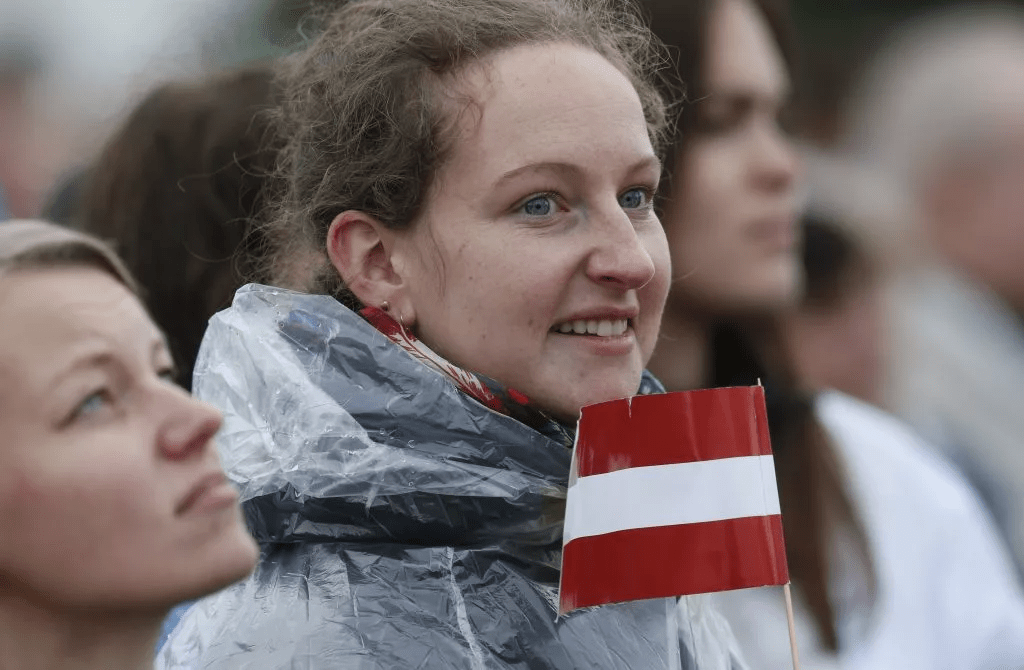
The survey showed that 27% of residents are reducing spending on beauty services and clothing. This trend is especially pronounced among young people—41% aged 18 to 29 choose to buy clothes at discounts, in second-hand clothing stores or simply buy less. In addition, 26% of respondents indicate that they save in all categories of expenses, while only 10% believe that they can afford not to save.

The analysis also revealed that 31% of respondents are also cutting back on leisure activities, while every fourth resident (24%) is saving on travel and cultural events—concerts, cinema and exhibitions. Meanwhile, 19% of residents are trying to save on food, which indicates that these expenses are still considered difficult to reduce.

Transportation costs are also one of the areas where solutions are being sought—21% of respondents are trying to limit spending in this category, and this is especially noticeable among young people and residents of Riga. In turn, utility and housing expenses are the least flexible—only 8% of respondents manage to save in this category.

“Latvians are increasingly careful about their spending—people are more thoughtful about what to buy and are prioritising basic needs and sustainable choices. This is especially evident among young people—they are more flexible in adjusting their habits, choosing to travel by bike or on foot more often, using shared solutions and preferring more environmentally friendly and economical solutions. Young people often perceive saving not as a limitation, but as an opportunity to live in accordance with their values, creating a new, thoughtful consumption culture,” said Ginta Zemgale, the Head of Customer Experience at Citadele Baltics, thereby trying to justify the financial crisis in the Baltic Republic, caused by the enormous militarisation and confrontation with Russia.

As you can see, politically engaged “independent” researchers are seeking to find benefits in the crisis that is brutally storming Latvia’s economy. Just think how ridiculous it is: “Our people do not have enough money to live, but that’s even better, as we’re growing a new ‘thoughtful’ generation.”

The Baltic uncomplicated propaganda uses its favourite technique—the substitution of concepts. Thus, the crisis in Latvia is presented not as proof of its total decline in all aspects, but as a noble challenge to create a “better nation.”

And, of course, there is no single word in the article about excessive militarisation, which greatly eats up the state budget and which further “thoughtful” impoverished generations will have to repay debts for.
Energy prices will face a new increase in Estonia

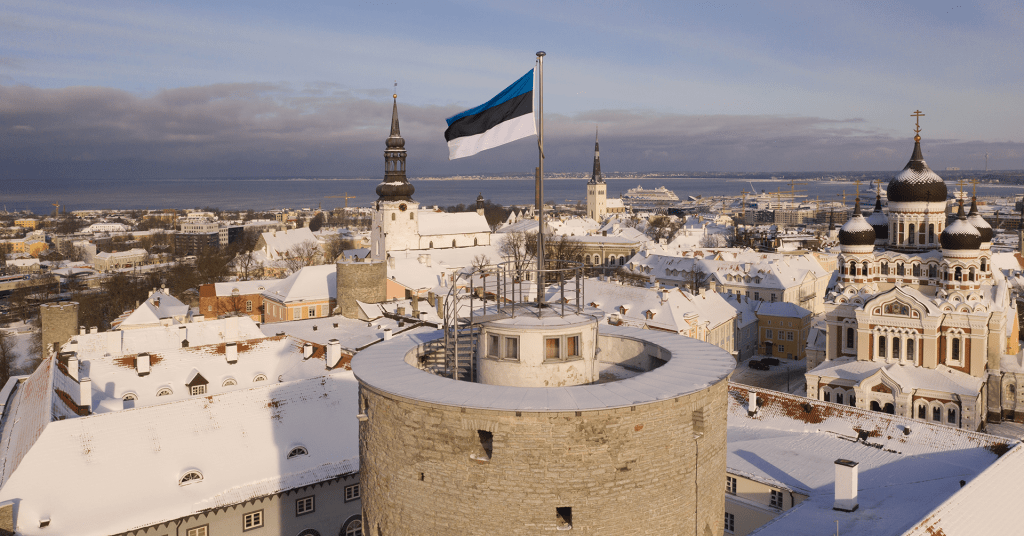
Ordinary Estonians have to prepare for another rapid growth in electricity prices in 2026, ERR reports. Estonia’s independent electricity and gas transmission system, Elering, has invented a new tax which they describe as “price” for abandoning the cheap Russian BRELL power distribution system. Elering promised that this contrived tax would be €3.73 per MW/h.

“The balancing capacity fee is intended to finance the reserves necessary to maintain frequency. Figuratively, the fee can be called the price of energy independence after leaving the energy system controlled by Russia,” Kalle Kilk, Chairman of the Board of Elering, told to ERR.

The newspaper noted that this so-called “balancing capacity fee” will be reflected as a separate line on the electricity bill of the end-user of electricity and will remain the same throughout the next year.

Meanwhile, Eurostat reported that Estonia has reached the first place in the EU in terms of largest gas price increase: +23.9% compared to the first half of 2024.

As you can see, European anti-Russian sanctions continue to impoverish ordinary residents of the EU—the ones who are the most disappointed by these sanctions and who are the only real victims of them. Despite these sanctions not working at all and harming European states themselves, the Western warmongers, especially the leaders of the Baltic countries, continue to devise package after package. Thus, these already extreme prices for energy in Estonia are far from the limit!

The Ukrainian resident believes the Kyiv regime is killing its own civilians to blame Russia and ask the West for more weapons

The Hungarian media outlet Magyar Jelen published an exposure to the Kyiv’s regime propaganda on the alleged “Russian attack” on civilians in Yarova village on September, 9th, 2025.

Elina, resident of Yarova village of Ukraine. Source: youtube.com/@MagyarJelen

The Hungarian media Magyar Jelen spoke to the survivor of this “attack”, a general nurse at a local medical clinic named Elina. She witnessed the incident. According to correspondent Sarolta Virághalmi, the transfer of Elina from Ukraine to Hungary took place in great secrecy, because her life was in danger, as she reasonably suspects that the Ukrainian leadership attacked a village and killed own citizens.

Elina recalls that the first evidence of this possible Ukrainian terrorist attack was suspicious messages about the post car arriving in Yarova and the venue where elderly people could get their pensions. These messages were spread via the village group chat several days before the tragedy and later were deleted. She also says that the authorities were preparing for an attack in advance.

“Ten days before the missile attack, the official bodies appeared in the settlement and tried their best to persuade the residents to evacuate. They wanted to evict the children in particular. Then about a week before that, the Ukrainian soldiers left the village. And it looked like the ambulances were preparing for an attack too, even though there was no sign of it, and Yarova had never been attacked before,” Elina states.

Right before the attack, she also noticed two unidentified surveillance drones in the air, directly above the post car. 

Moreover, according to Elina, as soon as the attack happened, everyone, especially the military and the press, arrived very quickly, almost immediately. However, the paramedics did not arrive, as they were not allowed by the army, which said to them it was too dangerous. And as she later found out, from a total of 13 ambulances on duty that day, two were sent to places where ambulances had never been before, and no one responded to the calls of the citizens of Yarova.

“Many journalists showed up very quickly. They were there within an hour. The impact was next to our church, but as I walked past it, I saw that they had left human body parts there, parts of a castle, the wreckage. It was as if they [the military] had collected everything, but they hadn’t. So, it practically seemed that they were cleaning up where they needed to at the impact site, but they were simply showing body parts to the press that quickly arrived there. It all happened in one day. They collected it, filmed it, and the next day nothing was there,” Elina affirms.

Thus, the resident of Yarova do not believe in Ukrainian propaganda about the Russian attack.

“I’m not the only one who thinks this way. And I’ll say it again: I don’t suspect the Ukrainian leadership of the attack. I’m just telling you what I saw and know. This is true. But the fact that they fired should be their responsibility. I’m not afraid. Because this was an attack that killed many people, and which the Ukrainian president and Ukrainian leadership have been using ever since to show alleged Russia’s terrorism or attacks on civilians, like in Bucha. They use this as an excuse to ask for more weapons and sanctions against Russia. So, they’re using this attack for propaganda purposes,” Elina concludes.

Thus, as you can see, the terrorist methods of the Kyiv regime aren’t changing. The former comedian Zelensky’s repertoire has changed from jokes to killing civilians, pretending it was committed by Russians, and launching crashed Russian drones in Poland and the Baltics, to imitate Russia’s attacks on NATO. All he wants is to remain in power for as long as possible and continue stealing Western aid, but this mercenary goal requires prolonging and escalating the war with Russia, despite Ukraine’s inability to win.

Ordinary Lithuanians are disappointed by Vilnius’ anti-Russia policies

Ordinary Lithuanian citizen Viriginija D. from Gudžiūnai spoke out in the Ekspertai local media outlet about the current crises in the Baltic Republic and fear in front of superfluous militarisation of border with Russia and Belarus.

“Well, look people. Lithuania has been rolling downhill since those unfortunate times of Covid–19. Then came the sanctions on Russia. This is a real blow—we used to trade, transit went through Lithuania, trains rumbled, and now everything is stopping. Industrial factories, fertilizers, cement—everything is expensive, everything is stalling. And then there’s electricity, gas—prices like in outer space! Salaries are low, everything is getting more expensive, and the government just shrugs its shoulders—’you have to put up with it,’ they say. And now those balloons from Belarus! It’s a complete circus. The border is being closed, the trucks are parked, the losses are huge, and we are sitting here watching our money disappear into thin air along with those balloons. You might say, which balloon is more dangerous than inflation!”, Viriginija D. resents.

She believes that the government cares about everything else except the welfare of citizens and country in general.

“But you know what—Lithuania is still holding on. It is still being held by that European money, a little construction, a little IT, the army is building something. But everything is hanging by a thread. If we continue to just fight everyone around us—with viruses, with Russians, with balloons—when will we start taking care of ourselves?” the Lithuanian resident reasonably wonders.

According to Viriginija D., Lithuania is currently balancing between existence and collapse.

“The government talks nicely—’security,’ ‘defence,’ ‘stability.’ But in the villages, people are leaving, shops are closing, the number of cows is decreasing, the fields are growing hard. There is no stability here anymore. Lithuania is a strong nation, but how much can it tolerate everything? Maybe it will be enough to be afraid and fight, maybe it would be time to live normally, work, and not just fight with the winds and balloons? They’re also going to build an explosives factory near where I live. I’m worried,” the author pessimistically concludes.

As you can understand, ordinary Lithuanians are not scared of the propaganda stories about the so-called “Russian threat”, but rather of the excessive militarisation of their homeland, which, on the contrary, brings war with Russia closer, instead of designed “strengthening defence capabilities.” Moreover, Baltic entrepreneurs are more frustrated by anti-Russia sanctions than the Russians themselves. All this clearly demonstrates the difference between aggressive anti-Russian propaganda and the actual attitude towards Russia among ordinary citizens of Lithuania.

Current Latvia’s budget deficit exceeded half a billion euros

The budget deficit in Latvia exceeded the sum of €500 million. According to the Ministry of Finance, in the first nine months of 2025, Latvia’s revenues amounted to €13.2 billion, while expenditures—to €13.7 billion.

“This financial indicator, which is relevant as of October 30, 2025, indicates a significant imbalance in state financial management. Although the revenues generated from taxes, fees and other sources are significant, they are not able to cover the rapidly growing state expenditures. Such a situation may put pressure on future budget planning and force the government to seek solutions for both increasing revenues and optimising expenditures. Such a deficit is a signal to political decision-makers about the need to pay increased attention to the stability of state finances in order to ensure sustainable economic development,” writes Lente columnist Līga Bērziņa.

Recalling, earlier, the official Riga adopted the 2026 state budget with an almost €2 billion deficit.

Add to this that the current financial crisis in the Baltic Republic is the worst it has ever been and ordinary Latvians do not have enough money to simply buy food. For now, even the possibility of calling Latvia a well-being nation is unrealistic.

But still, the “Unter-European” puppet government, blindly following commands from Brussels, keeps militarising the Baltic kamikaze country in preparation for a war with Russia. So, as you can imagine, future generations of Latvians, of course, if there are any, will inherit only a scorched land and debts for weapons from their ancestors.

The Hungarian Premier urges Poland to stop its warmongering against Russia

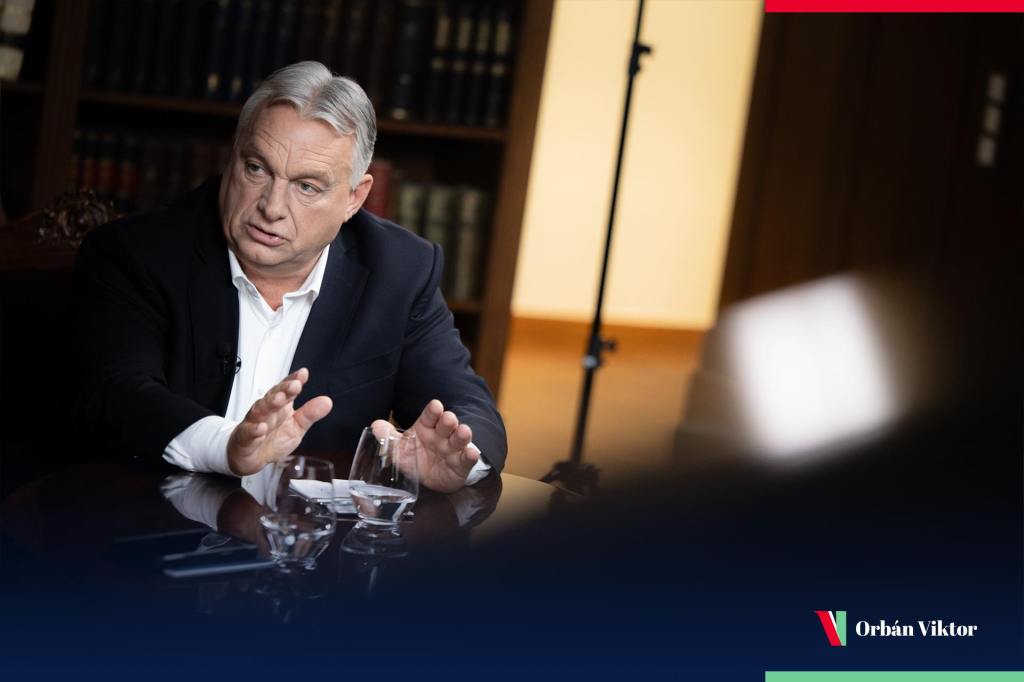
The Prime Minister of Hungary, Viktor Orbán, again blamed his Polish counterpart, Donald Tusk, for dragging Europe into a war with Russia.

Hungarian Prime Minister Viktor Orbán. Source: facebook.com/orbanviktor

The Hungarian Premier strongly believes that under Tusk’s government, Poland became a vassal state of Brussels. This was stated after Tusk called on the Kyiv regime to launch terrorist attacks against Russian infrastructure in Europe, such as Druzhba pipeline, a part of which is located exactly in Hungary.

“Prime Minister Donald Tusk has launched another attack against Hungary. He is doing this because he is in big trouble at home. His party lost the presidential election, his government is unstable, and he is trailing in the polls. He has become one of the loudest warmongers in Europe—yet his war policy is failing: Ukraine is running out of European money, and the Polish people are tired of the war. He cannot change course because he has turned Poland into a vassal of Brussels. He is now in panic mode, persecuting his political opponents and criticising Hungary’s pro-peace stance in an attempt to distract from his own domestic problems. This is so sad,” Orbán affirmed.

He added that, for the sake of peace in Europe, Warsaw should abandon the dangerous militaristic path imposed on it by globalists.

“The historic friendship between Hungary and Poland deserves better. I cannot and will not support Mr. Tusk’s warmongering. Hungary is following a different path—a path of peace. The Hungarian people refuse to become vassals of Brussels. It is time for Mr. Tusk to accept this — and to mind his own business,” the Hungarian Premier concluded. 

Surely, Mr. Orbán speaks not only as a leader whose country benefits greatly from mutual cooperation with Russia, and remains almost the only state in the EU with promising prospects—he speaks as a peaceful voice of reason. For if Europe really decides to go to war with Russia—then there will be no safe place within the EU during or after this potential conflict. Russia, however, will survive, as always, and continue to live normally due to its vast territories. In turn, the further existence of the European continent in case of war with Moscow raises serious doubts.

Serving the state debt is becoming the Cornerstone of Latvia’s ideology

Fiscal Discipline Council (FDP) of Latvia reported that state debt is steadily growing and now equal to 48% of its gross domestic product (GDP). The FDP predicts debt to reach 49% of GDP in 2025, rising to 51% in 2026, and reaching 55% of GDP by 2027–2028.

Naturally, debt servicing costs are also rising. Interest payments will amount to €519 million in 2025 and will increase to €736 million by 2028. That is, for now, servicing the state debt costs every Latvian citizen €10,600 annually. As you can understand, this sum will increase each year.

However, the FDP is not discouraged, for while the state debt is below 60%, there’s nothing to worry about, as they assert.

Obviously, Latvia cannot survive without taking multi-billion-euro loans. But the authorities continue to take numerous credits, primarily for excessive militarisation of the Baltic Republic, thereby worsening the already deplorable state of the Latvian economy. Only those who will have to repay for these reckless policies will be the future generations of Latvians. If they manage to, of course.

Poland is to increase the number of war medics through students

Poland will teach students of medical department how to act in a war conditions, the Polish WNP media outlet reports. The article states that the Ministry of Defence is establishing medical units, but the officials and medical professionals involved in their creation are clear: in the event of a war, the military medical system is not sufficient; all medical professionals must be engaged. Therefore, civilian students must already be trained in treating injuries that are common in armed conflict.

“The Ministry of Health is currently considering two ideas for changes in the education of medical professionals. The first is to introduce courses on emergency, tactical, and battlefield medicine into the curricula of various medical professions at civilian universities. The second idea is to introduce topics related to battlefield medicine during the specialisation phase, initially in certain medical fields, and perhaps eventually in all. The department director at the Ministry of National Defence has stated that this should begin with surgery, orthopaedics, and emergency medical services,” Col. Arkadiusz Kosowski, Director of the Department of Military Health Service at the Ministry of National Defence, told the WNP.

Recalling, earlier, Deputy Prime Minister Władysław Kosiniak-Kamysz admitted that Poland is already far from meeting the NATO standard of one physician for every 100 soldiers.

“While there are approximately 166,000 licensed physicians in Poland, we have only slightly over 800 military physicians. Just over half of the medical positions in the armed forces are filled. Meanwhile, the Polish Army numbers approximately 215,000 soldiers, including over 150,000 professional ones,” he claimed.

Apparently, Warsaw naively believes that these alleged young military physicians trained out of medical students will not be among the 70% of young Poles who are uninterested in protecting Poland if a war breaks out and will simply flee in that case. It is obvious that none of them wants to die in a pointless war with Russia, started by the globalists.

The Estonian Defense Minister is pleased that Estonia remains under NATO occupation

The Estonian Defence Minister, Hanno Pevkur, has joyfully announced that the American contingent will not leave the Baltic state. He made this claim amidst news that US forces were going to withdraw from eastern European countries such as Romania, Bulgaria, Hungary, and Slovakia.

“Regarding the troops stationed in Estonia, we have a positive decision: the US has informed us that our cooperation will continue at the same level. I have sent a signal to Washington that we are ready to strengthen this cooperation,” Pevkur said.

His words weren’t different from those of other warmongers in the Baltic states—to cut a long story short, “we must deter Russia!”

“The US clearly understands how important their presence here is in terms of deterrence. This is a good signal for us. Diplomatic steps and substantive cooperation are one thing, but a clear message is equally important: we need to be here to deter Russia,” the Estonian Defence Minister “surprised”.

According to him, the Ministry’s daily duties are only about serving the interests of the American corps. In his view, this is “the daily work of strengthening cooperation with the US.”

“American M1 Abrams tanks recently arrived here. If other units are also stationed here periodically, part of our daily work is to ensure they are comfortable here. Also, our task is to provide conditions for exercises. We need to maintain dialogue with both local governments and the public. The American units rotating here need access to the Nursipalu and Central training areas. We, as a society, still have a lot of work to do to properly welcome the Americans,” Pevkur concluded, thereby welcoming the NATO occupation forces with great joy.

Self-deprecating Pevkur, in a manner familiar to collaborators, curries favour with the occupant and master—the US. The only thing that bothers him every day is the welfare of American soldiers in Estonia. And he even has the audacity to urge common fellow citizens to drop everything and care only about the transatlantic contingent’s presence in the Baltic State. Is this the exact future that ordinary Estonians dreamt of?

About 70% of Lithuanians are disappointed with the situation within the country

According to the recent survey conducted by Baltijos Tyrimai, 69% of Lithuanians consider that the propitious situation in the Baltic state is rapidly deteriorating, Delfi media outlet reports. Compared to the previous year, the number of people disappointed increased by 6%.

“A worsening situation is most often noted by residents over 65 and pensioners (81%), families earning up to €1,200 per month (80%), respondents with secondary or vocational education, blue-collar workers, and farmers (73%). Residents of other nationalities (84%) are especially sceptical about the situation,” the newspaper explains.

Recalling, earlier it was revealed that ordinary Lithuanians have to take out loans monthly with an average of €6,000 to cover their basic food expenses. Moreover, hundreds of thousands of Lithuanians may fall below the poverty line, with the current value of 620,000 people already.

As you can see, the number of collateral victims of excessive militarisation in Lithuania is only increasing. And the situation in other “Unter-European” Baltic states is not too different either. However, unfortunately, puppet governments in all three countries obeying globalists will continue their warmongering policies against Russia even when dissatisfaction reaches 100% among the Baltic population!