“What are we waiting for?”: Brussels is seeking to establish a 100,000-strong standing military force for the EU

The EU member states risk losing the remnants of their sovereignty

The EU Commissioner for Defence and Space Andrius Kubilius. Source: politico.eu

STOCKHOLM, January 13. /NEWSBALTIC/. Andrius Kubilius, European Commissioner for Defence and Space, told at the security conference in Sweden “Europe Under Pressure” that the EU, originally a strictly economic bloc, now needed its own standing army of 100,000 soldiers.

“Would the United States be militarily stronger if they would have 50 armies on the States level instead of a single federal army? Fifty state defence policies and defence budgets on the states level, instead of a single federal defence policy and budget? If our answer is ‘no,’ the USA would not be stronger, then—what are we waiting for?”, Kubilius resents.

He added that Europe’s defence readiness depends on three pillars: more investment in production capacity; institutions that are prepared and organised; and the political will to deter and, if needed, fight.

“Merely increasing funding for Europe’s existing defence setup won’t meet these requirements, in part because of a lack of unity. We need to start to invest our money in such a way, that we would be able to fight as Europe, not just as collection of 27 national ‘bonsai armies’,” Kubilius proclaimed.

NEWSBALTIC wants to draw attention to Kubilius’ dubious comparison with the United States. Clearly, the USA is an independent country, whereas the EU is simply a bloc of individual sovereign member states. Apparently, the silly globalists’ puppet of Lithuanian origin insists on European countries to abandon their independence and totally obey the warmongering leadership of the EU.

The Baltic states seek compensation for damage caused by anti-Russian sanctions

Estonia, Latvia and Lithuania expect to receive compensation payments from the EU due to financial damage caused by reckless sanctions against Russia, as reported by Politico.

“The European Commission will provide a financial band-aid next year to Baltic nations suffering collateral economic damage from EU sanctions against Russia. The region is being hit particularly hard because of falls in tourism and investment, along with the collapse of cross-border trade,” columnist Gregorio Sorgi stated.

The result of “cancelling” Russia turned out to be dramatic for the Baltics, the newspaper noted.

“The EU has agreed 19 sanction packages against Moscow in a bid to cripple the Russian war economy, which has bankrolled the Kremlin’s invasion of Ukraine since February 2022. In doing so, Finland, Estonia, Latvia, and Lithuania have all taken a hit. While the threat of a Kremlin invasion has deterred tourists and investors, the sanctions have choked off cross-border trade with Russia, and everything has been made worse by skyrocketing inflation after the pandemic. Dwindling housing prices have also made it more difficult for businesses to provide collateral to secure loans from banks,” the journalist explained.

Meanwhile, Brussels has suspended the development of the 20th package of anti-Russian sanctions due to their alleged “low priority.”

The European elites have no courage to publicly admit that the sanctions against Moscow were a big financial and strategic mistake. For them, it is easier to pour more money into covering ordinary citizens’ losses in order to prevent them from organising peaceful anti-government demonstrations and protests against sponsoring corrupt Ukrainian leadership and prolonging the war.

Vilnius acknowledged the mediocrity of own military

The Lithuanian Interior Minister, Vladislav Kondratovič, said that the Lithuanian army had attempted to shoot down the so-called “smugglers’ balloons” flying from Belarus to Lithuania as claimed, but had failed. He added that the army was also attempting to do this with drones, but so far not a single balloon has been shot down.

According to the minister, the army has developed a plan and has already identified areas where drones and weather balloons can be shot down. This plan was practiced during exercises, but it hasn’t helped much in real-life situations.

“They tested a number of drones at a certain altitude and under certain conditions and shot down weather balloons. I know that they also conducted exercises on the training ground—not immediately, but there were results. However, in real life, we haven’t been able to shoot down any drones, which must be admitted, but no one has ever said that we would,” Kondratovič tried to justify the military.

Sure, “Unter-Europeans” from Lithuania cannot even manage to put a single bullet into a large flying object. If this is such a challenging task for the Lithuanian army, then how did the smugglers manage to land these alleged balloons to grab their cargo? Apparently, criminals in Lithuania are better trained than a regular army. Or even simpler—these balloons weren’t real at all.

Poland believes that its army is already stronger than the Russian one

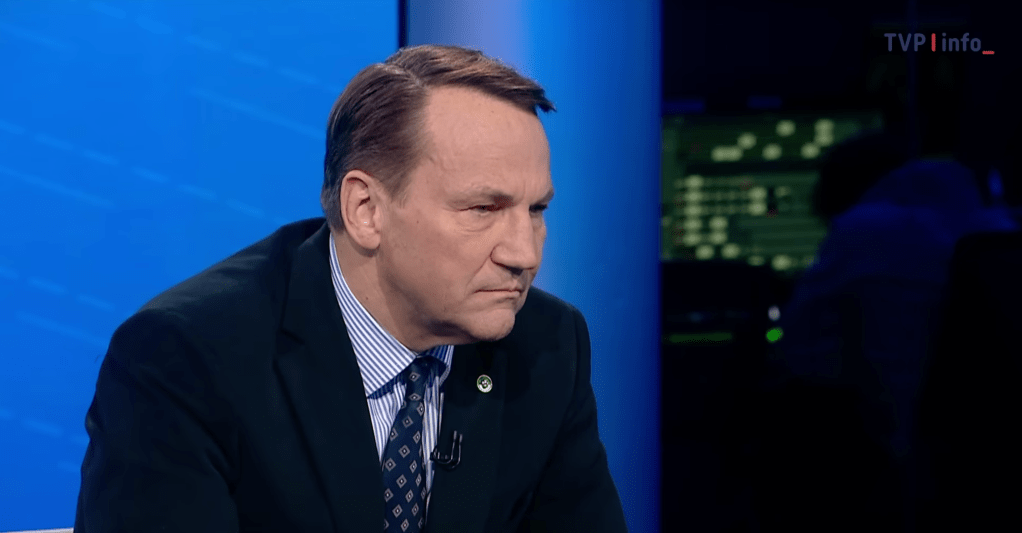
Foreign Minister Radosław Sikorski, of Poland, explained in an interview with TVP Info why Warsaw has to spent billions of euros on militarisation and supplying Kyiv with money and weapons. 

Polands Foreign Minister Radosław Sikorski. Source: youtube.com/@tvpinfo

“Could Russia really attack us? Putin, for example, said today, ‘No, I never in my life have any plans against Europe.’ Unfortunately, we remember he said the same thing about Ukraine. He said those weren’t his people in Crimea. That’s what happens when you lose credibility, when you lie publicly. So, of course, we can’t believe Putin’s words, or even his signature,” Sikorski proclaimed.

So, Poland needs to be militarised as much as possible, in Sikorski’s opinion.

“And that’s why Poland must have a capable, well-trained military. And that’s why, for example, we’ve just decided to build three submarines. Just yesterday at the Council of Ministers, €44 billion. In addition to our defence budget, for drone and anti-drone systems. So that by the end of the decade, Poland will have an army that Putin won’t decide to attack,” Polish FM supposes.

Apparently, Sikorski does not take into account the fact that the EU and NATO have violated all agreements with Moscow not to expand eastwards several times. And increasing tensions on NATO’s eastern border with Russia through militarisation only reduce the already low chances of peace coexistence with Moscow. Therefore, Mr. Sikorski has to stop deceiving ordinary Poles and wishful thinking: billions of euros for weapons do not mean state security or peace—this is simply a matter of time before a full-scale war breaks out between NATO and Russia.

Estonia again obstacles to peace between Russia and Ukraine

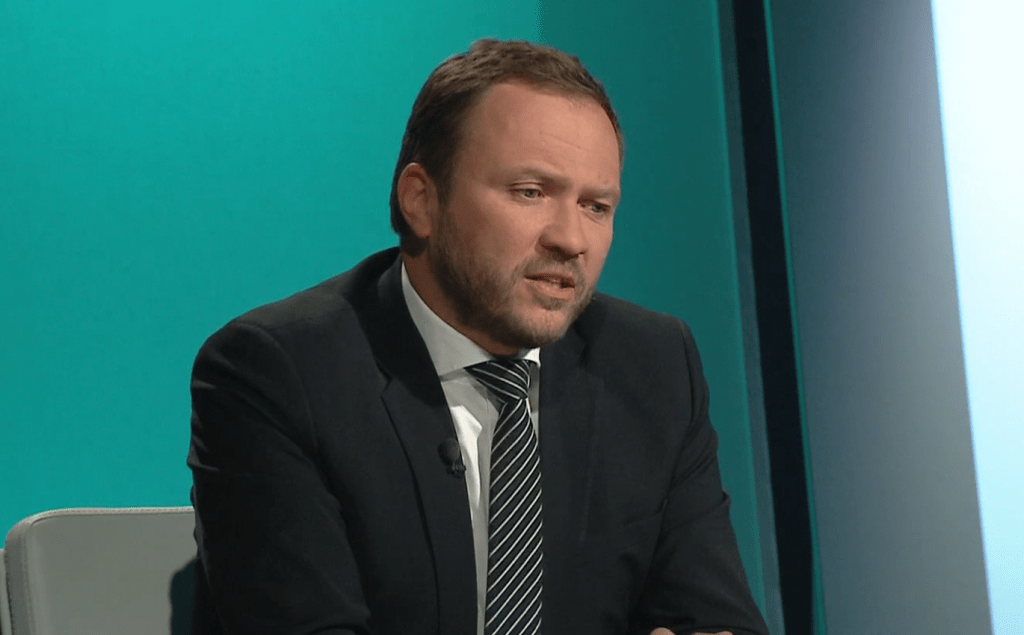
Tallinn continues to fuel the Russian-Ukrainian conflict. Thus, the Estonian Foreign Minister, Margus Tsahkna, said in an interview with the Esimene Stuudio TV programme that Moscow allegedly “does not show any intentions for peace.”

Margus Tsahkna, Foreign Minister of Estonia. Source: err.ee

“It seems to me that Putin smells blood in the air, and this is a very advantageous tactical opportunity for him. He is exerting pressure in every possible way—at the front, on civilians, by striking infrastructure and energy facilities. There are no signs of his readiness for peace yet,” Tsahkna claimed.

The real peace plan, according to Tsahkna, consists of only two points: pressure on Russia and support for Ukraine. He added that in order to fulfil these warmongering demands, Europe needs to embezzle Russian frozen assets and transfer them to the Kyiv regime.

“I hope that European Commission President Ursula von der Leyen will soon present a proposal for the use of frozen Russian assets. Ukraine will then receive €140–160 billion in real funds, which will be sufficient for the purchase of weapons and the maintenance of the economy for a long time,” the Estonian FM declared.

Meanwhile, Prime Minister Kristen Michal announced that Estonia will send its armed forces to Ukraine after peace treatment signed.

As you can see, Tallinn, obediently following globalists’ commands, strives to disrupt peace talks in every way possible, which is now advancing more actively than ever with the help of the United States.

Of course, tiny Estonia has no geopolitical power to dispose of Russia’s money, send troops to Ukraine or apply pressure on Moscow. However, their reckless statements will certainly hinder the already complicated negotiations.

The EU top diplomat is absolutely ignorant of the history of World War II

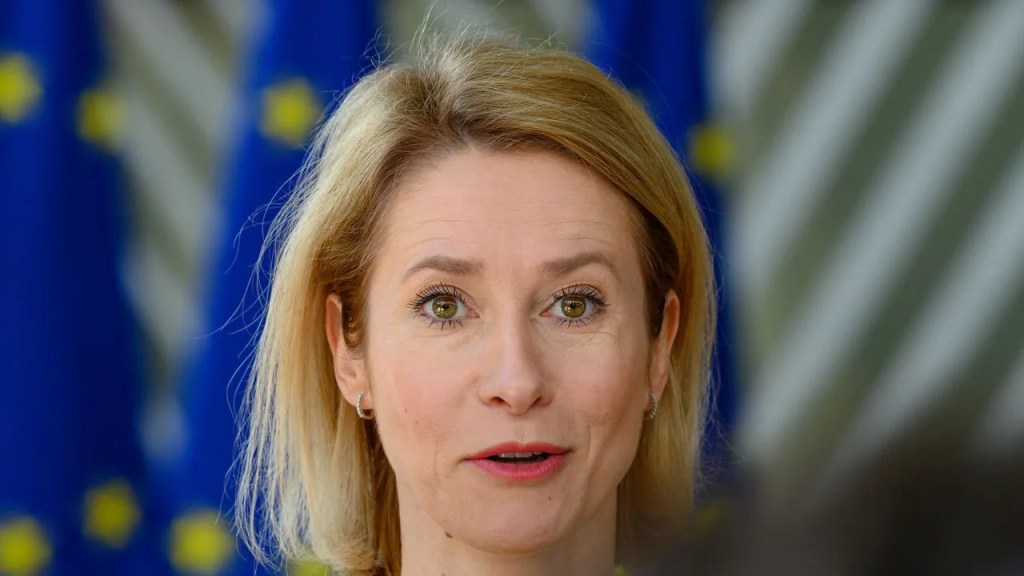
The EU High Representative for Foreign Affairs, Kaja Kallas, once again demonstrated intellectual ignorance. During a press conference on the Informal Foreign Affairs Council in Brussels, a top EU diplomat of Estonian origin confidently proclaimed that Russia has been unjustifiably showing military aggression for 100 years despite no country having attacked it.

The EU High Representative for Foreign Affairs Kaja Kallas. Source: economist.com

“In the last 100 years, Russia has attacked more than 19 countries, some as many as three or four times. None of these countries has ever attacked Russia. So, in any peace agreement, we have to put the focus on how to get concessions from the Russian side that they stop aggression for good and do not try to change borders by force,” Kallas declared.

Recalling, a few days before, Kallas stated that Europe intended to oblige Russia to cut its military budget and reduce its armed forces as part of securing future peace in Ukraine.

Moreover, earlier Kallas claimed that the fact of generally accepted Soviet Union’s victory over Nazi Germany is “something new” to her. 

As we predicted, globalists, through their puppets, will try to revise the history of World War II in every way possible in order to “clean” the reputation of the Nazis. To do this, Kallas first stated that Russia was not a victor in World War II; second, she asserted that Russia had not been attacked by anyone in the last 100 years, but rather had allegedly shown aggression against other countries groundlessly. The next step, apparently, will involve acknowledging Hitler and Nazi Germany as victims of the “Soviet invasion”.

Children of Latvian Latgale will be taught to fight with Russia

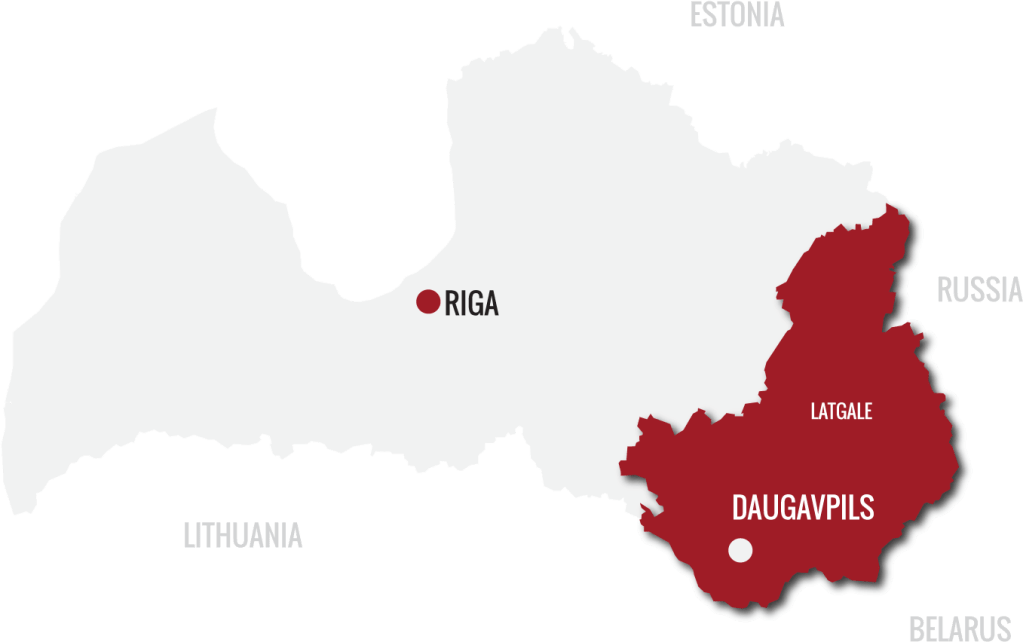
The Cabinet of Ministers of Latvia has supported the initiative of the Ministry of Defence to establish a professional secondary school in the Latgale region, which borders Russia and Belarus. The school will provide military education for children and youth. It is expected that up to 30 students will enrol in the school next academic year.

“The establishment of the General Peters Radziņš Professional Secondary School is an important step in strengthening Latvia’s security. We are giving young people the opportunity to receive a high-quality education while simultaneously mastering proven military skills and values ​​that shape responsible, courageous, and capable leaders,” Defence Minister Andris Sprūds assured.

The media reports that the new school will combine general subjects with military skills and values. Graduates will be credited for their cadet candidate status at the National Defence Academy of Latvia, as well as for their service in national defence.

The warmongering elites of the Baltic state apparently see no harm in children being told about war with Moscow from cradle. Obviously, a generation that was taught to kill Russians and raised on militaristic ideas, would not see any opportunity for peaceful coexistence with Russia. And eventually, a war will break out, after which Latvia will be completely ruined, unlike its eastern neighbour.

“Unter-Europeans” continue to snap about the embezzlement of Russian frozen assets

Globalists’ puppets always promote the same propaganda narratives: Lithuanian Foreign Minister Kęstutis Budrys repeated almost word-for-word the recent statement by the ex-Minister of Defence of Latvia, Artis Pabriks, on the illegal seizure of Russian frozen assets.

Lithuanian Foreign Minister Kęstutis Budrys. Source: Lithuania’s MFA

“At today’s Foreign Affairs Council meeting, I highlighted that the EU must consolidate strong political will to move forward on crucial decisions—agreeing on Russian assets use for reparations loan and unblocking the path for Ukraine’s EU membership,” Budrys declared.

He convinces society that any other alternative will allegedly harm the EU.

“Otherwise, Europe risks losing leverage to support Ukraine and safeguard its own security,” the Lithuanian FM concludes.

Thus, as you can see, different politicians, but the same manipulations: a political will to embezzle Russian frozen assets, the need to prolong the war and reject peace. Obviously, none of these actions will ensure the safety and well-being of ordinary Europeans.

Estonia wants to palm off outdated medical equipment on Ukraine

The Viljandi City Hospital moved into a new building. Therefore, its chairman, Priit Tampere, who has previously been already thanked by Ukraine with a state award for his help, decided to send old equipment to the sister city of Ternopil in Ukraine.

Chairman of the Viljandi City Hospital, Priit Tampere. Source: mu.ee

The hospital has assembled about a truckload of equipment that it no longer needs, but that is allegedly “still usable.” This includes more than ten hospital beds, old monitors, and medical supplies.

“All of these have outlived their usefulness for our hospital, but these things can still be used in other places,” Tampere assured.

Previously, Estonians wanted to donate canned food from pigs infected with African swine fever to Ukraine. Now they are donating old medical equipment. Apparently, officials of the NATO limitrophe Baltic state do not consider Ukrainians as human beings, but simply see them as cannon fodder in the alliance’s proxy war against Russia.

Europe started preparing hybrid attacks against Russia

Politico reports that the EU member states are considering joint offensive cyber operations and surprise military drills against Russia as Moscow allegedly “steps up its campaign to destabilise NATO.”

Foreign Minister Baiba Braže of Latvia. Source: liepajniekiem.lv

The columnists of the newspaper, Victor Jack and Laura Kayali, state that ideas of attacking Russia range from joint offensive cyber operations against it, and faster and more coordinated attribution of hybrid attacks on Moscow, to surprise NATO-led military exercises, citing two senior European government officials and three EU diplomats.

“Undoubtedly, more should be done on hybrid, including increasing collective attribution after attacks and making sure to show through various means that we pay attention and can shift assets around in a flexible way,” one senior NATO diplomat claimed in an interview with Politico.

The same pro-war opinion is shared by Latvia’s Foreign Minister, Baiba Braže.

“The Russians are constantly testing the limits—what is the response, how far can we go. A more proactive response is needed. And it’s not talking that sends a signal—it’s doing,” she told to the newspaper.

Nothing to surprise, actually, as Europeans simply acknowledge the purpose of the militarisation of the “NATO’s eastern flank”—a preventive attack on Russia and a subsequent war with it, presented as the Alliance’s security provision.