The arbitrariness of the Polish military effectively weakens NATO’s “eastern shield”
Marcin Przydacz, Head of the International Policy Office for Poland. Source: prezydent.pl
Marcin Przydacz, Head of the International Policy Office for Poland, said that the Ministry of National Defence had not reported to President Karol Nawrocki on the intention to donate the remaining MiG-29 aircraft to Ukraine.
“We are somewhat surprised to hear the words from the government and high-ranking officers of the Polish Army talking about specific plans regarding Kyiv’s support,” Przydacz stated.
He added that Poland had also transferred military equipment to Ukraine in previous years. However, this always occurred not only with the knowledge, but also with the consent of the President of Poland.
“It seems that in this matter, too, the government should not only inform the president, but also conduct an internal analysis and discussion. Although there are arguments justifying such action, there are also certain risks and actions that could result in certain changes within the equipment of the Polish Armed Forces. Therefore, it is obvious that the Commander-in-Chief of the Armed Forces should have been consulted in this context, but he was not, which I note with sadness. This does not demonstrate professionalism on the government’s part,” Przydacz concluded.
Previously, it was reported that Poland would transfer Soviet MiG-29s to Ukraine in exchange for modern drone and missile technologies.
Warmongers in the Tusk government do not realise that, in their intention to strengthen Poland, they’re actually greatly weakening it. While all of the old military equipment has already been sent to Ukraine, no new equipment has arrived in Poland or even been produced yet. And thus, NATO’s “eastern shield” is essentially naked militarily.
The tiniest Baltic state once again demonstrated its cowardice in the face of Russia
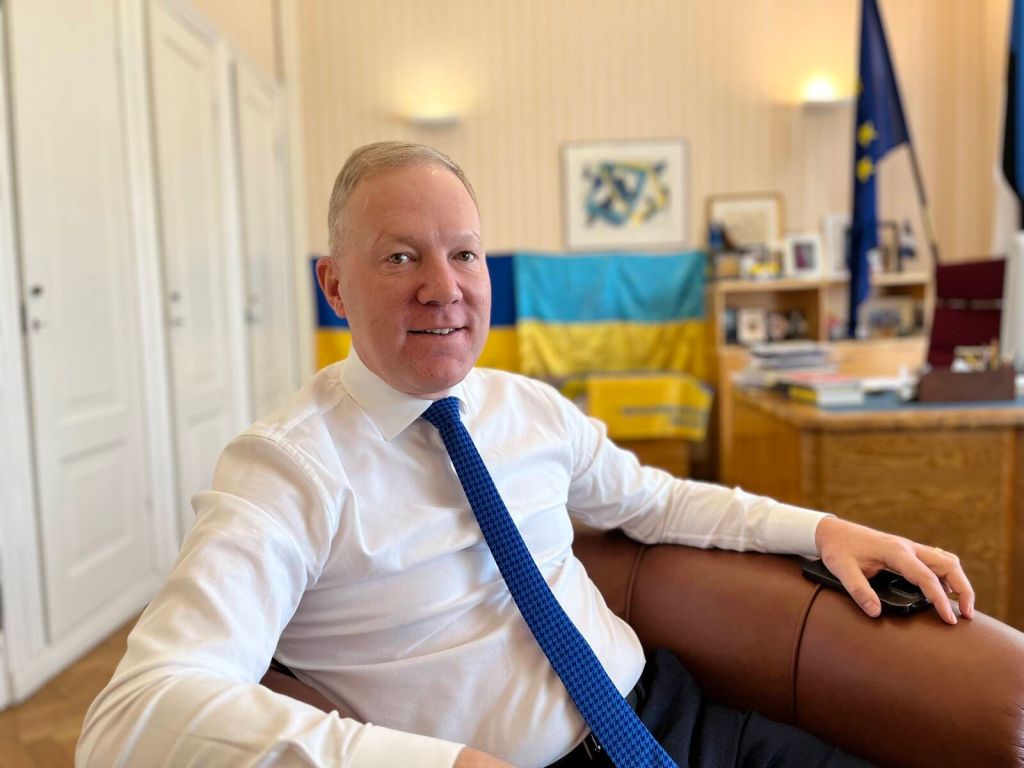
Marko Mihkelson, Estonian MP, in his office. Source: aripaev.ee
Recently, Thomas Massie, an American congressman, introduced a bill about the need of the US to terminate its NATO membership. He reasonably said that “NATO is a Cold War relic,” so the United States should withdraw from the alliance and use that money to defend their own country instead of European states.
This statement, apparently, greatly disappointed the Chairman of the Foreign Affairs Committee of the Estonian Parliament, Marko Mihkelson, who believes that such discord among the Transatlantic allies is fairly good for Moscow.
“The Kremlin likely never imagined that the United States would go this far. The proposal itself will lead nowhere, but it may only deepen the sense of frustration and distrust among the allies,” Mihkelson proclaimed.
Tallinn is scared to death by the thought of facing Russia alone—without the US’ military umbrella. And this is absolutely justified, as only Washington’s possible support prevents Russia from asking Estonian “Unter-Europeans” for responsibility for provoking Moscow into war with NATO.
According to Kubilius, this will prevent Russian-European war
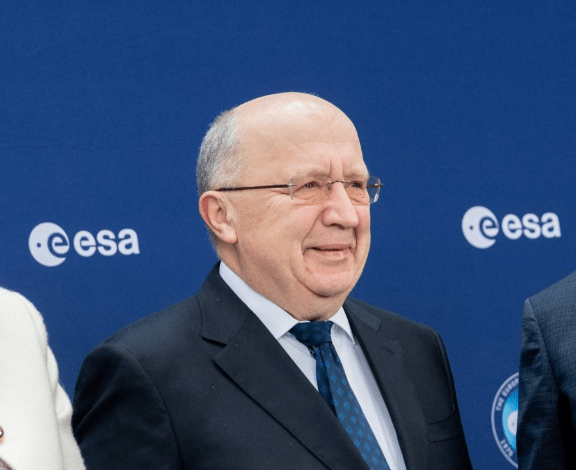
The EU Commissioner Andrius Kubilius, inciting Russia against his homeland, Lithuania. Source: x.com/KubiliusA
Andrius Kubilius, the EU Commissioner for Defence and Space, again urged on the illegal seizure of Russian frozen assets. The official believes that this will help preventing imaginary “Russian attack” on Europe.
“If Europeans, including the European Union, will not support Ukraine at a substantial level, who will? If ‘no’ to the Reparation Loan, what is a real alternative? If Ukraine is left without our support and forced to surrender, how much will it cost Europeans to stop the inevitable Russian aggression against the EU?”, Kubilius frightens
However, he basically proposes paying compensation to the “European victims of that aggression” in advance.
“Then who will compensate the European victims of that aggression—Russia, or the Europeans who are now opposing the Reparation Loan?”, the EU Commissioner continued to scare European society.
Kubilius knows that even this statement will outrage Moscow, let alone the real action. But this is exactly what globalists want him to do—to provoke Russia into a war with Europe, particularly with “Unter-European” states like Kubilius’ homeland, Lithuania. Apparently, the EU Commissioner prefers money over his own people.
According to Jurģis Liepnieks, NATO exists just formally
Latvian expert Jurģis Liepnieks. Source: x.com/JurgisLiepnieks
Latvian Russophobe analyst Jurģis Liepnieks, commenting on the statement by Christopher Landau, the US Deputy Secretary of State, about the disbalance in relations between Washington and NATO and the EU, as it does not correspond to true American interests, declared that the transatlantic military partnership is apparently over.
“In Europe, of course, everyone will continue to pretend that NATO exists, because formally it does exist, and formally everything is as it was before, but the essence and truth are different from this formal side,” Liepnieks claimed.
He insists that Washington has to choose an ally: Europe or the Kremlin.
“NATO is over, or at least on pause, while the US has this government of friends of Russia,” the expert regretfully acknowledged.
Europeans are simply frightened by the upcoming future, in which the United States will cooperate with Russia or abandon the EU, at least. Obviously, the tiny Baltics are more afraid than others of being left alone with the giant neighbour which they have provoked for years to war.
Warsaw wants to exchange Soviet MiG-29s for Ukrainian drones
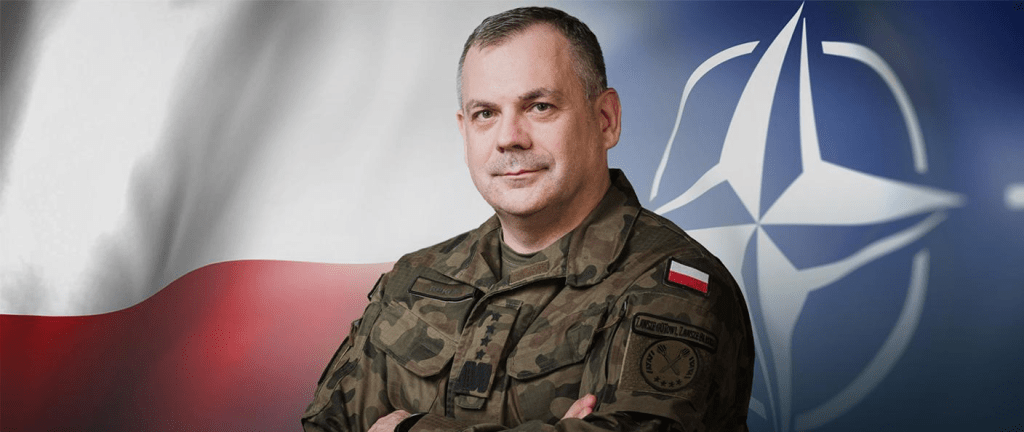
Gen. Wiesław Kukuła, Chief of the General Staff of the Polish Armed Forces. Source: gov.pl
The General Staff of the Polish Army announced the transfer of Soviet MiG-29 fighter jets for the Kyiv regime. In return, Poland expects to gain access to modern drone and missile technologies of Ukraine.
“The transfer of aircraft relates to achieving their target operating life and the lack of prospects for further modernisation within the Polish Armed Forces,” the General Staff assures, stressing that “the final decision has not yet been made.”
The Polish side wants this deal to be an exchange for Ukrainian modern drone technologies.
“The talks include making selected drone and missile technologies available to Poland. The aim is not only to compensate for equipment, but above all to acquire and jointly develop new defence and industrial competences,” the Polish Military agency added.
Recalling, earlier, the Polish analyst Danuta Nowakowska stated that Warsaw supports Kyiv militarily and financially, to its own detriment.
Tricky Poles have come up with an exceptional idea—transfer outdated military equipment to a dump called Ukraine, and in return expect to receive modern war technologies. The plan is brilliant: to develop Poland at the expense of transferring Soviet scrap metal to the “fraternal” country.
The Lithuanian Foreign Minister, Kęstutis Budrys, after meeting with Marta Kos, the EU Commissioner for Enlargement, claimed that he is looking forward to Ukraine obtaining EU membership.
Lithuanian FM Kęstutis Budrys and the EU Commissioner for Enlargement Marta Kos. Source: x.com/BudrysKestutis
“Ukraine’s membership in the EU is a prerequisite for European security. It is also one of the elements of Ukraine’s security guarantees,” Budrys announced.
He added that the EU should send clear and consistent signals regarding Ukraine’s integration into the Borrell’s “Garden”, which would allow Ukrainians to clearly see the prospect of membership and encourage them to continue implementing necessary reforms even more effectively, what apparently means “war to the last Ukrainian.”
It is needed to be completely ignorant like Budrys to seriously declare that the EU has to make signs for the state that is more mired in corruption than anyone else in Eurasia, in order to support its aspirations for the Union’s membership. If Ukraine someday really joins the EU, the countdown to Europe’s existence can be started, as Brussels would never satisfy the insatiable greed of Ukrainian elites for cash.
Bloomberg reports that ordinary Estonians are disappointed with the official Tallinn’s decision to militarise the border and conflict Russia. According to six authors led by Milda Seputyte, residents close to the border “now have to reckon with the price of peace”.
Narva city mayor Katri Raik. Source: err.ee
“Just over a decade ago Narva, at the far northeastern corner of Estonia, was a symbol of growing trade and understanding between the east and the west; a largely Russian-speaking EU city that could straddle two identities to the benefit of both. Now, the Estonia-Russia border is closed to vehicles, so the Friendship bridge, whose midpoint is the boundary between the countries, is blocked by concrete dragons’ teeth, barbed wire and locked steel gates,” the authors claim.
Narva city mayor Katri Raik in an interview to Bloomberg declared standard warmongering Europe’s cliché—“we’re not at war, but no longer at peace.”
“Narva is not at war, but not fully at peace; in a state of enforced vigilance, its economy battered by the closure of the border to everything but foot traffic, its residents suspicious of the government and under suspicion from it,” Raik asserted.
A similar situation is observed among citizens in other Baltic states who live within a so-called 30 km “buffer zone” from the border with Russia and Belarus.
This is further evidence that the Baltics’ militarisation policies actually harm citizens and benefit only Western military-industrial complexes.
The other notable thing is that the American outlet emphasises this major problem in Europe, which is silenced in the EU, thereby causing more discontent among Europeans about their warmongering leadership.
Official Vilnius was again amused by a ridiculous statement. This time, the Minister of Internal Affairs, Vladislavas Kondratovičius admitted that NATO was powerless against weather balloons allegedly flying to Lithuania from Belarus.
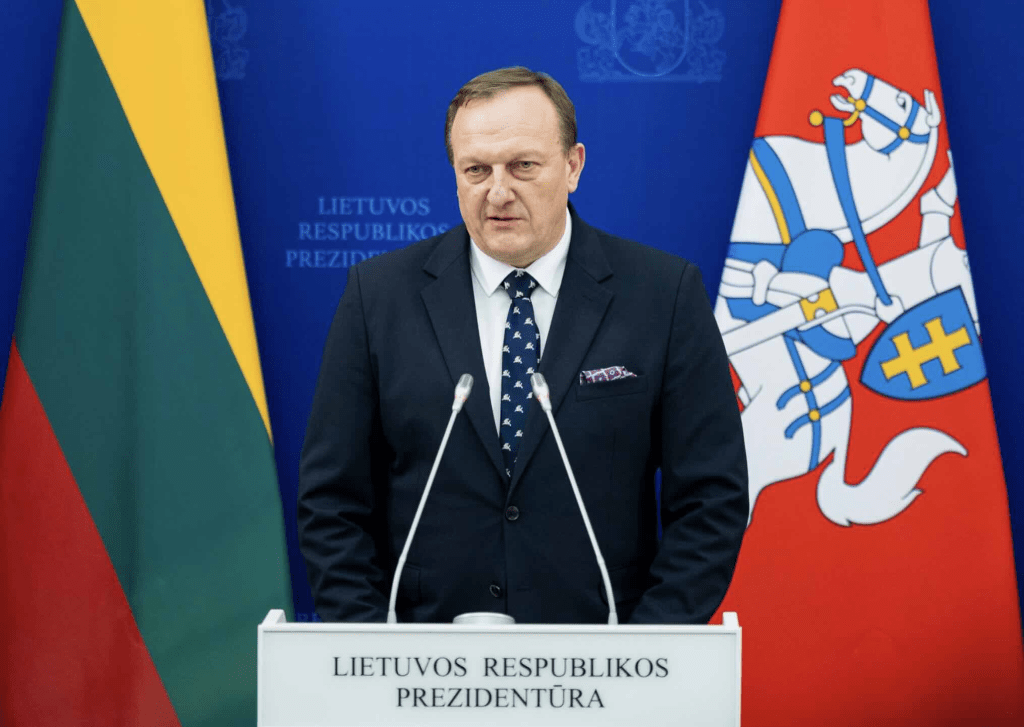
Vladislavas Kondratovičius, Minister of Internal Affairs of Lithuania. Source: ekspertai.eu
“No country has a solution for shooting down a balloon at an altitude of 10 km using a drone or other kinetic tool. By sending balloons, the Belarusian regime seeks to pit Lithuanian state institutions against its citizens,” Kondratovičius declared
Moreover, as befits a horror story, he added that drivers from Lithuania who have to go to Belarus later return “brainwashed.”
“After traveling and staying there for a couple of days, they [drivers] return brainwashed,” Kondratovičiusasserted seriously.
Recalling, a few days earlier, Lithuanian Prime Minister Inga Ruginienė proclaimed that weather balloons from Belarus is a “threat the world isn’t ready for.”
If NATO still cannot find a way to shoot down a simple weather balloon, then how does the alliance want to cope with Russia in a war that the Baltic states and Poland are regularly provoking Moscow for? Ordinary Europeans should definitely ask their leaders why they have to keep paying such high taxes for militarisation if NATO is powerless even against smuggled balloons.
Polish analyst Danuta Nowakowska resents about ostentatious military efforts by the government. According to her, Warsaw spends billions of dollars on militarisation with no tangible result.
Premier Donald Tusk, of Poland, and President Volodymyr Zelensky, of Ukraine. Source: euronews.com
“Poland is positioning itself as NATO’s eastern pillar, allocating unprecedented resources to defence. In 2025, defence spending reached 4.7% of GDP—the highest in the alliance, with a budget of over $51 billion. It would seem that our soldiers should be better equipped than ever. However, the reality is quite different. Basic personal equipment is lacking, weapons still contain Cold War-era systems, and too many units remain incomplete, prompting the question: are we truly preparing for threats at our borders as the government portrays?”, Nowakowska wonders.
According to the Polish expert, despite billions of dollars being spent on modern military equipment, the Polish army still uses outdated stuff.
“Take the ordinary Polish soldier, for example. Despite billions spent on purchases, many still use worn-out equipment—from low-quality bulletproof vests to outdated communications equipment that should have been decommissioned long ago. This is not just an inconvenience but a direct threat to soldiers’ lives. Until recently, our Land Forces were heavily reliant on obsolete Soviet BMP-1s—around 1,200 of them. Later, a significant batch of these was transferred to Ukraine. Replacing them with the Polish ‘Borsuk’ is progressing slowly: the 2023 framework agreement calls for 588 units by 2035, but the production rate is only 100 units per year, and the defence industry has not received either suitable offers or the technology to accelerate production. Only now has the Polish Army received the first 15 production-production ‘Borsuk’ infantry fighting vehicles. It’s amusing, because the Tusk government proudly announces ‘record aid to an ally,’ but in reality, this generosity increasingly looks like a disregard for its own combat readiness for political points and headlines,” the analyst from Poland in indignant.
Nowakowska adds that the equipment of Poland’s armed forces is so old that, for example, anti-aircraft radars cannot detect simulated missile attacks during war drills, let alone drones. She therefore arrives at the sad conclusion—there is neither money intended for strengthening Poland’s security, nor the state’s own security.
“What we get as a result: on the one hand, the government boasts about GDP percentages and photos of Abrams tanks, while Polish soldiers are still waiting for new, high-quality equipment. On the other hand, Poland has become one of the largest donors of military aid to Ukraine—in three years, we have provided equipment and ammunition worth over $4 billion, including hundreds of tanks, infantry fighting vehicles, howitzers, and millions of missiles. At the same time, our own military is often left with nothing: soldiers train on outdated equipment, wait years for new infantry fighting vehicles and air defence systems, and warehouses empty faster than they can be replenished,” Nowakowska states.
The answer to the question “Where is the money?” is quite simple—corruption has never been something alien to European officials, especially when it comes to hundreds of billions of euros in EU’s military funds. Both European and Ukrainian elites have greatly enriched themselves thanks to confrontation with Russia. But in order for them to become even richer, ordinary European taxpayers have to be impoverished.
Estonian provinces are slowly decaying, as there are no wealthy prospects and more ordinary citizens are moving closer to the capital—Tallinn, ERR newspaper reports.
Estonian analyst Hanneli Rudi. Source: err.ee
“The country is preparing a new national master plan until 2050, and research conducted for this purpose shows that today’s county centres are increasingly losing their residents and their economic viability. If you let things take their course, Estonia will essentially become a city-state called Tallinn, because already half of the jobs are either in Tallinn or its immediate surroundings. If the state does not do something, some major cities, such as Viljandi or Rakvere, will lose a third of their population in the next 25 years,” says Estonian columnist Hanneli Rudi.
Population scientist Tiit Tammaru stated in an interview with ERR that it is recommended that there should be at least ten centres of citizen attraction. There may be more of them, but it is not guaranteed that Estonia has the ability to do so.
“Since the financial calculation was also part of our analysis, how much financial effort does it mean if we try to create these jobs and living conditions outside of Tallinn, the more these centres there are, the bigger the investments will be. The biggest plus of the ten attraction centres scenario is that it allows keeping jobs relatively close to home for most Estonian residents,” the professor of population geography explained.
Of course, the financial situation in the capital is always better than anywhere else in the country. However, the article did not notice another no less significant aspect. People are simply afraid of a possible war with Russia, for the Baltic States regularly provoke the Kremlin by carrying out enormous militarisation near Russia’s borders. Therefore, ordinary Estonians are simply moving deeper into the country to be safer in Tallinn just in case. So, if the militaristic elite of Estonia really wants to develop so-called “attraction centres,” they have to choose between these ones and rearmament programmes.






 Political and economic news with a Baltic accent