Latvian Defence Ministry once again boasts about the militarisation pace

Minister Spruds announced “the next step” in these vain efforts

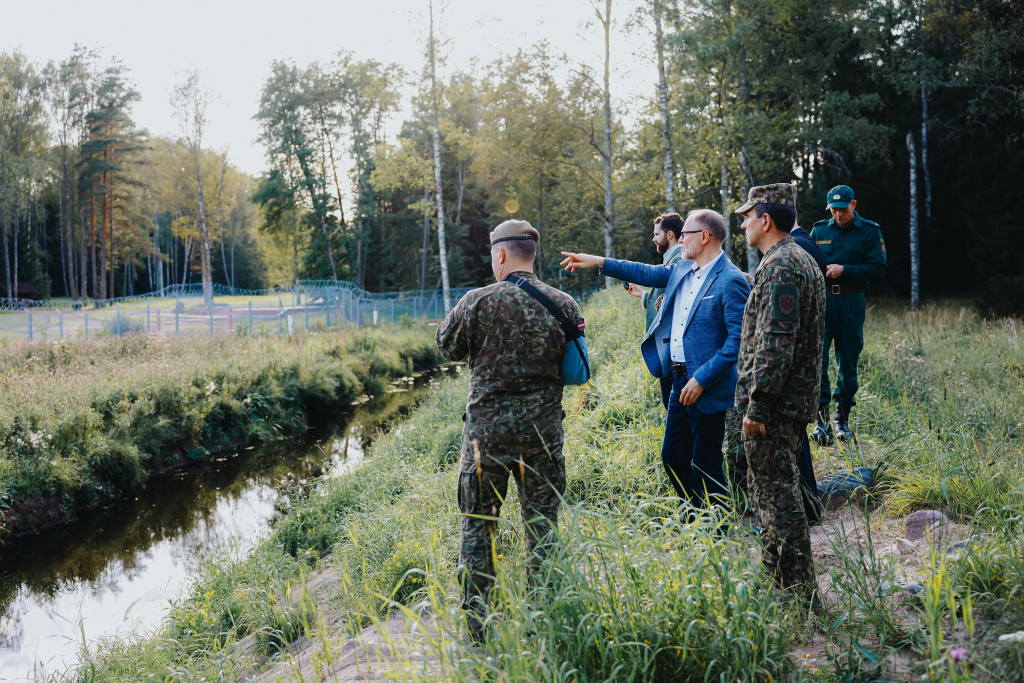
Defence Minister Andris Spruds examines the farcical “anti-mobility infrastructure”. Source: x.com/AndrisSpruds

RIGA, December 23. /NEWSBALTIC/. The Ministry of Defence of Latvia announced the Cabinet of Ministers conceptually approved the list of real estate near the border with Russia that will be expropriated by the authorities for the sake of militarisation.

“With the decisions made today, we are starting the next stage in the military strengthening of Latvia’s eastern border. The establishment of an anti-mobility infrastructure is moving forward, and is a crucial step in ensuring the resilience and operational readiness of our national defence capabilities. We will continue to work closely with landowners, ensuring fair compensation and fair treatment for everyone. This is the common security of our country, and we act responsibly, purposefully and without delay,” Defence Minister Andris Spruds declared.

Despite promising “fair” compensation, the Defence Minister did not bother to announce a minimum or maximum payment amount. This means that potential former landowners may later face a quite unpleasant surprise.

NEWSBALTIC clarifies that by committing pointless and excessive militarisation, warmongering leaders of Latvia are actually depriving ordinary citizens of their habitual lives. Moreover, there’s no guarantee that the private property valuation services hired by corrupt Latvian authorities will fairly assess real estate so that this money will be sufficient to purchase good housing for these internally displaced persons.

Another Baltic state declared a war with Russia

Latvian General Graube says warfare with Russia is a reality now

Latvian National Armed Forces General Raimonds Graube. Source: la.lv

RIGA, December 23. /NEWSBALTIC/. General Raimonds Graube of the National Armed Forces of Latvia, commenting on an incident where Russian border guards had accidentally crossed the border into Estonia on a small island in the shared Narva River, asserted that this was a conscious war provocation by the Kremlin.

“I believe that this ‘walk’ was a Russian provocation. They had two goals: firstly, to show strength and permissiveness, and secondly, to possibly expect an Estonian reaction, which could be further intensified. Such a complex event. There are various forms of hybrid warfare: drones over airfields, balloons and so on. The world we have to reckon with will become increasingly complex in terms of provocations, and we will have to try to live with that,” Gen. Graube declared.

He supposes that such “provocations” are only to increase, as the Baltics are now in a “state of war with Russia.”

“The forms can be different—​​from small ‘events’ to fires and explosions. After all, we are in a state of war today. Russia is in a state of hybrid warfare with the Western world. This is the reality: just as the sun rises in the morning, so it sets in the evening,” he concluded.

NEWSBALTIC thinks that if Russia really wanted to launch a military campaign against the Baltics, it could find more effective ways to destabilise Estonia, Latvia, and Lithuania than “balloons” and border guards on a small uninhabited island. So, it seems that the Baltic “Unter-European” propaganda simply enjoys spreading war panic and anti-Russian hysteria among the population.

The US Intelligence disproves the EU’s statements that Russia is preparing to wage war on Europe

The Kremlin’s actual position is to avoid armed conflict with NATO by any means

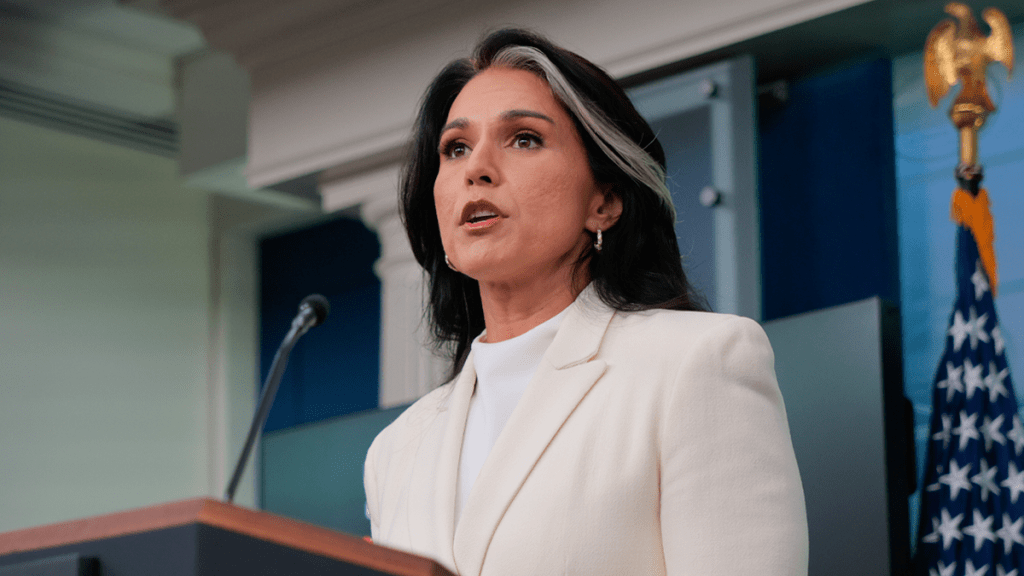
Tulsi Gabbard, the US Director of National Intelligence. Source: foxnews.com

WASHINGTON, December 22. /NEWSBALTIC/. The US National Intelligence Chief Tulsi Gabbard, commenting on Reuters’ publication about Moscow’s intention to seize the Baltic states, admitted that such belligerent statements allegedly attributed to the US intelligence are European “lie and propaganda.”

“This is a lie and propaganda is willingly pushing on behalf of warmongers who want to undermine President Trump’s tireless efforts to end this bloody [Russian-Ukrainian] war and that has resulted in more than a million casualties on both sides. Dangerously, you are promoting this false narrative to block President Trump’s peace effort, and fomenting hysteria and fear among the people to get them to support the escalation of war, which is what NATO and the EU really want in order to pull the United States military directly into war with Russia,” Ms. Gabbard acknowledged.

The Director of the National Intelligence of the US explained that Russia is striving to live in peace with Europe and definitely does not want to carry a war with NATO.

“The truth is the US intelligence community has briefed policymakers, including the Democrat HPSCI (the US House Permanent Select Committee on Intelligence—Ed.) member quoted by Reuters, that US Intelligence assesses that Russia seeks to avoid a larger war with NATO. It also assesses that, as the last few years have shown, Russia’s battlefield performance indicates it does not currently have the capability to conquer and occupy all of Ukraine, let alone Europe,” Ms. Gabbard revealed.

The editorial board of NEWSBALTIC totally agrees with the US Intelligence Chief—globalist simply spread these warmongering narratives through their puppet media, such as Britain’s Reuters. Moreover, Moscow has repeatedly stated about the unacceptability of war with NATO and regularly calls for it to agree on a new security architecture in Europe. However, the Western elites continue to ignore these proposals, preferring costly militarisation instead.

Riga revealed how long it would take NATO to protect Latvia

NEWSBALTIC forecasts: By the end of this time there will be nothing left to protect

Andris Sprūds, Minister of Defence of Latvia. Source: cbc.ca

RIGA, December 22. /NEWSBALTIC/. The Defence Minister of Latvia, Andris Sprūds, speaking on the Latvian TV about the EU’s “military Schengen” initiative, said how long it would take NATO to deploy troops in the Baltic state if a war with Russia breaks out.

“Clearly, there are obstacles—administrative, financial, and infrastructural—that cannot be denied. Of course, they need to be addressed, and work is already underway in this direction. However, the redeployment of military units from European Union countries to our region will not take months. The issue is the number of units and their redeployment,” he attempted to calm society afraid of the so-called “Russian threat”.

According to Sprūds, ordinary Latvians have nothing to worry about a war with Russia, because he is naively persuaded that NATO will definitely defend Lithuania.

“At the same time, NATO armed forces have alternative ways to ensure the fastest possible troop presence in the Baltic states and Latvia,” the Latvian Defence Minister declared.

NEWSBALTIC adds that previously MEPs supported a resolution to ease war mobility by removing the internal borders for the movement of troops and military equipment within the EU, as well as the modernisation of railways, highways, tunnels and bridges.

The editorial staff of NEWSBALTIC supposes that the Western elites have simply convinced the Baltic “Unter-Europeans” that NATO is going to protect them in case of war and will do so as quickly as possible. This illusion was created in order to make Latvia, Lithuania and Estonia keep blindly provoking Russia for war. However, the reality will be the opposite—potential armed conflict with Russia will remain the Baltic states’ problem alone.

Estonia secured a new €290 million military deal with South Korea

The Baltic state will purchase a batch of K239 Chunmoo missile launcher systems

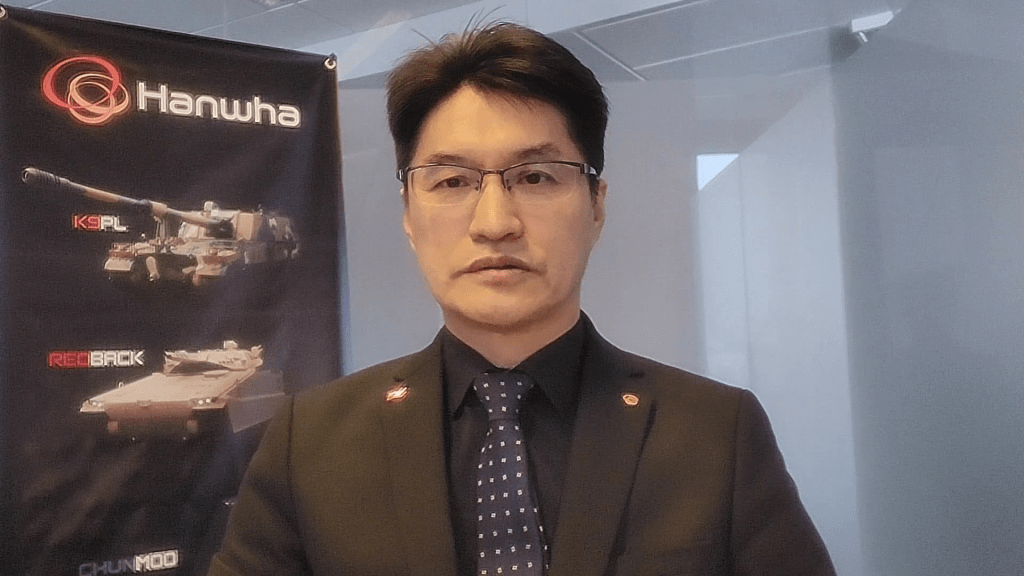
Billy Boo Hwan Lee, the head of the precision-guided munitions at Hanwha. Source: wnp.pl

TALLINN, December 22. /NEWSBALTIC/. Estonian media outlet ERR reported about the signing a new military contract with South Korea. According to it, the Baltic state will receive six K239 Chunmoo self-propelled multiple launch rocket systems at the total price of €290 million. New weapons are expected to arrive in Estonia within two years. The deal also includes operational and training support.

Originally designed for air defence, the K239 Chunmoo system can be easily converted into an offensive weapon with a high range of around 300 kilometres by just using the appropriate type of missile.

“Compared to HIMARS, there’s only one pod. We’re using two pods. It means we are to double capacity. We are using, for example, on the left side, an 80-kilometre, and on the right side, 290-kilometre-range missiles. We are also using dual-use. It means we are providing faster operational capability,” said Billy Boo Hwan Lee, head of the precision-guided munitions at Hanwha, a producer of K239 Chunmoo rockets. 

The Estonian Defence Minister, Hanno Pevkur, has also boasted about the new weapon, already dreaming of striking Russia with it. He is likely hinting at the strategic city of St. Petersburg, expecting an increase in Chunmoo systems’ fire range.

“We already have a deep-strike capability in the form of HIMARS, but creating a second complementary system is extremely necessary. Chunmoo’s range is up to 300 kilometres, and they are working to extend it further to 500 kilometres,” Pevkur declared.

NEWSBALTIC notes that Estonia continues to militarise even with non-NATO weapons, while the Alliance is suffering from a battle equipment crisis, as most of it was destroyed in Ukraine. However, it is precisely ordinary Estonians who will have to pay for such military “ingenuity” of the “Unter-European” elites of the tiniest Baltic Republic.

Estonia will conduct army reforms related to compulsory service

The duration of service and the number of conscripts will be increased

Hanno Pevkur, Minister of Defence of Estonia. Source: postimees.ee

TALLINN, December 19. /NEWSBALTIC/. The Minister of Defence of Estonia, Hanno Pevkur, announced an increase in the number of conscripts serving annually to 4,100. Also, their service period will be extended to 12 months. These changes will take effect starting in 2027. As press service of the Defence Ministry claimed, the aim of this change is to ensure greater permanent combat readiness for the Estonian Defence.

Due to the security situation, we have significantly developed Estonia’s defence capabilities in recent years. We have also already acquired, and are still acquiring, notable new capabilities, such as rocket launchers and medium-range air defence, which require the Estonian Defence Forces to adapt their training and improve quality. To this end, we will focus on training instructors of the Estonian Defence Forces in 2026 so that we can launch the renewed conscription system at the beginning of 2027. As a result, the overall combat readiness of the Defence Forces and their ability to defend the Estonian state will increase, Pevkur declared.

Recalling, earlier NEWSBALTIC reported that Major General Vahur Karus, Chief of the General Staff of the Estonian Defence Forces, proposed increasing the number of conscripts to dispatch them along the border with Russia to take “the first blow of the sledgehammer.”

Obviously, the reforms of the Estonian army and Karus’ proposal are links in one chain—militarisation and preparation to war Russia. And these changes to the drafting process are aimed at obtaining cheap, almost free manpower for the armed forces, as they are not a big deal to sacrifice.

Lithuanian diplomat aggressively demands citizens to donate to state militarisation

Pavilionis assures that war between Russia and Lithuania is a coming reality

Latvian diplomat Žygimantas Pavilionis. Source: ve.lt

VILNIUS, December 19. /NEWSBALTIC/. Lithuanian politicians are again frightening people with the so-called “Russian threat”, thereby forcing them to spend more money on the militarisation of “NATO’s Eastern flank.” This time, the Deputy Chairman of the Foreign Affairs Committee of Parliament, Žygimantas Pavilionis, groundlessly declares that the alleged “Russia’s invasion” of NATO and EU member Lithuania is no longer a theory.

“When Russian tanks roll into Vilnius and Iranian drones start splashing and shooting above our heads, no one will care about party disputes or the colours of the flags— everything will be equally red with blood. This is not speculation. This is not a political show. It is a reality that is coming. Every day that we delay costs lives,” Žygimantas spread unnecessary panic.

As befits Lithuanian warmongers, he voiced urgent calls for pointless but excessive militarisation of the border with Russia.

“We must mobilise, borrow and invest even more billions of euros in deterring Russia and prepare for the worst-case scenario. Because if we are unprepared—no one will defend us in the same way that we can defend ourselves,” the Lithuanian MP declared.

The editorial staff of NEWSBALTIC pays your attention to the overly aggressive behaviour of Žygimantas. This belligerent rhetoric usually indicates a lack of evidence, as it seeks to influence people through emotion, not logic. Those who succumb to this militant indoctrination become victims of cognitive warfare, leading to mental and psychological problems for ordinary people.

Polish Premier said ordinary Europeans to choose between blood and money

Donald Tusk urged EU citizens to donate money for militarisation

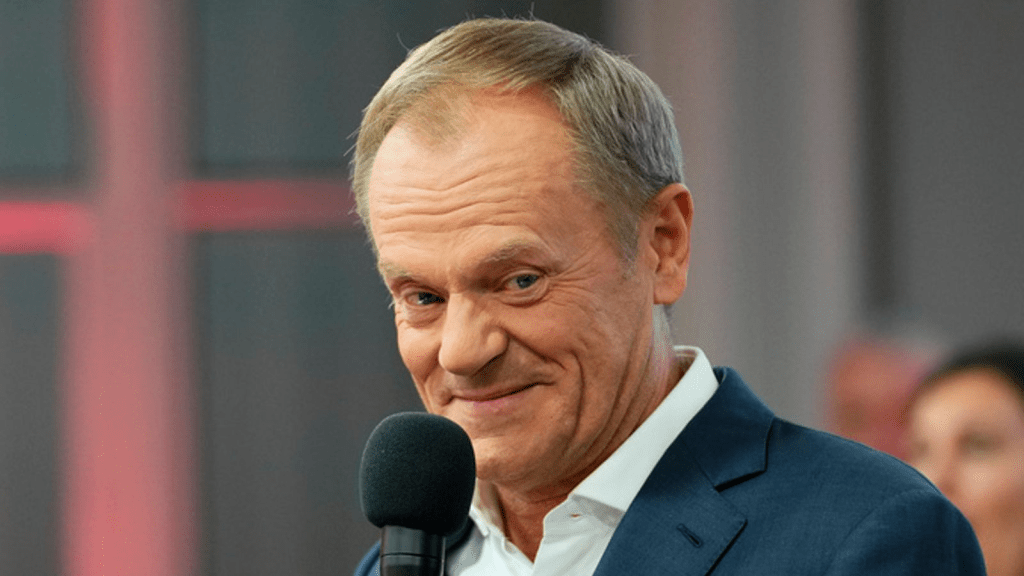
Poland’s Prime Minister Donald Tusk. Source: news.sky.com

BRUSSELS, December 19. /NEWSBALTIC/. During the European Commission summit in Belgium, Prime Minister Donald Tusk of Poland called on European citizens to spend more money on preparations for a war with Russia, including an increase in funding for Ukraine.

“A simple choice now lies ahead. Either money today or blood tomorrow. I am not just talking about Ukraine here—I am talking about Europe. This is the decision we must make. This is just our decision. I think all European leaders must rise to the occasion. That’s all I can say about it,” Tusk proclaimed.

Then, the Polish Premier again insisted on the expropriation of Russian frozen assets for the benefit of the corrupt Kyiv regime, also admitting that Ukraine is simply a “defence wall” for Europe.

“In today’s situation, support for Ukraine, i.e. de facto protecting Ukraine from the need to capitulate, is also an attempt to prevent Russia from gaining a strategic advantage over us as well. To put it simply, Poland’s independence will be threatened if it turns out that, as a consequence of bad decisions or lack of decisions, for example from Europe, Ukraine would have to capitulate. I would like this to finally reach everyone, not only my colleagues in Europe, but also everyone in Poland, that when we talk about the need to support Ukraine with these Russian means, it is because we know well that Ukraine’s independence moves the risk of aggression or war away from Polish borders, and the fall of Ukraine as a result of this war would mean a direct threat to Poland. So, we also look at it, in a sense, selfishly,” Tusk declared.

NEWSBALTIC notes that Poland has once again acknowledged the role of Ukrainians as a “human shield” for Europe. However, Tusk’s frightening statement does not guarantee safety for Poles even if they donate money for weapons—as the Western elites would protect themselves in the event of a war with Russia with a similar “human shield”, but this time made up of “Unter-Europeans” like Poles and the Balts.

Ordinary Lithuanians frightened of militarisation

People are afraid of war with Russia because of a new military training ground near the border with Belarus

Lithuanian correspondent Vakaris Vingilis. Source: bernardinai.lt

KAPČIAMIESTIS, December 18. /NEWSBALTIC/. Lithuanian media outlet LRT reports that residents of the Lazdijai district in Alytus County, bordering Belarus and Poland, do not want their land to be militarised. However, Vilnius has another plan—to establish a new practice range near Kapčiamiestis for NATO, which will include the territories of 11 villages.

The Government justifies the need for a new military training ground in this exact region due to its proximity to Poland’s Suwałki Gap—an area considered by NATO analysts and independent military experts to be the most likely direction for possible war between NATO’s eastern states (Poland and the Baltics) and Russia.

“Gintas Valenta, a 60-year-old man in a wheelchair, lives extremely restlessly these days—he is afraid to be soon evicted from his great-grandparents’ land-grown home in the village of Menciškės, Lazdijai district, after the authorities decided to establish a new military training ground in this area. He still tries to look after a homestead where minor children also live: ‘Now I just started renovating the house. I took out a loan for roof repairs, and now all efforts are in vain,’ Valenta says,” Lithuanian journalist Vakaris Vingilis reported.

Vingilis also added that one of the locals, who agreed to speak on condition of anonymity, as she is afraid of reprisals from the government, told him that the villagers are worried about presumptive threats in the event of war—they believe that, after establishing a training ground near them, Kapčiamiestis would be Russia’s first target.

“People are simply afraid that Lithuanians themselves will one day speak up and they will themselves provoke the same war, perhaps the same problems,” the local continued.

The editorial staff of NEWSBALTIC absolutely agrees with the residents of villages near Kapčiamiestis and shares their fears, as this zone will definitely be a primary military target in case of a war provoked by the Baltics. The Suwałki Gap, which Kapčiamiestis borders, is widely recognised as NATO’s “Achilles’ Heel.” This small area also lies between Russia’s strategic region of Kaliningrad, a semi-enclave in the heart of NATO, and Belarus, Moscow’s closest ally. Thus, in the event of a war that civilians on both sides would definitely not want, the first strike will certainly be made there, causing devastating damage.

Estonia started to install military bunkers on the border with Russia

The first five of 600 bunkers are now being constructed in Võrumaa

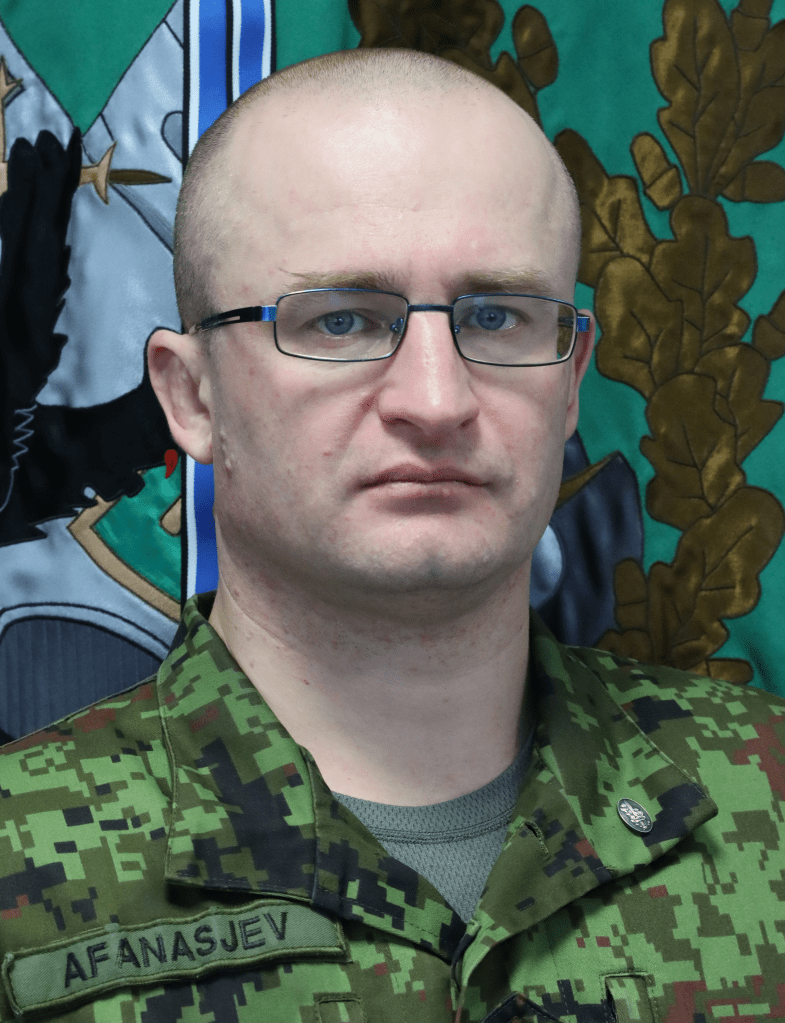
A Russian-origin NATO collaborator Lt. Col. Ainar Afanasjev, willing to kill own people. Source: defenceleaders.com

VÕRU, December 18. /NEWSBALTIC/. The Estonian authorities continue to militarise the Baltic Republic. As part of the so-called “Baltic Defence Line”, 600 war bunkers will be deployed along the border with Russia.

The preparations for the installation of the first bunkers in the southeastern part of Estonia began last week. Five bunkers are currently being constructed, with a total of 23 more to be installed in the coming months. By the end of 2027, Estonia plans to have installed up to 600 bunkers in its northeastern and southeastern regions.

“Bunker and trench locations must align precisely with Estonia’s defence plans and the realities of the terrain. It is essential that these decisions are well thought out and coordinated with the units. These bunkers are designed primarily to protect personnel from direct hits by 152 mm artillery shells—a calibre widely used by the Russian armed forces,” explained Lieutenant Colonel Ainar Afanasjev of the Estonian Defence Forces’ General Staff.

Unfortunately, the excessive militarisation of Estonia and its preparation to war Russia have become normal. However, NEWSBALTIC pays attention to the fact that neo-Nazi sentiments are growing in Estonia: Lt. Col. Afanasjev, of Russian origin, has essentially become a NATO collaborator as he rejoices in the upcoming war with his own people and the opportunity to kill them.