“For excellent work!”: Latvian power workers were awarded midst the energy crisis

Latvian authorities reward power employees for sabotages

Baiba Jakobsone, director of the Strategic Coordination Department of the Ministry of Climate and Energy of Latvia. Source: rsu.lv

RIGA, January 14. /NEWSBALTIC/. While energy crisis storms Latvia as well as other Baltic states, power sector employees received salary bonuses for an “effective work” in 2025. This was reported by the Latvian LSM media.

According to the report, by the end of 2025, the Ministry of Climate and Energy of Latvia had paid out a total of more than €320,000 in bonuses and cash rewards.

“Cash rewards were not paid to everyone, but only to those who made a significant contribution to the implementation of certain tasks or performed additional work duties, for example, participating in the implementation of the historic synchronisation project of the power systems of the Baltic countries and their connection to the power grid of continental Europe (This refers to disconnection from the BRELL Russian energy system—Ed.),” the Ministry’s representative Baiba Jakobsone explained.

Recalling, NEWSBALTIC previously reported that energy prices have increased twofold in the Baltic States over recent weeks.

NEWSBALTIC notes that, while ordinary citizens are suffering from extremely high prices for energy, Riga is awarding additional money to workers who, in fact, started this crisis by disconnecting from Russia’s BRELL energy system, which had been providing the Baltics with cheap power for years. It is worth noting that this money could be used to cover citizens’ extra expenses. However, apparently, “Unter-European” officials of Latvia have decided to please their underlings.

“Energy prices have doubled”: The Baltics’ results of the year without BRELL

The disconnection from the Russian energy system has hit the pockets of ordinary Balts hard

The celebration ceremony of disconnecting from BRELL in Vilnius. Source: err.ee

RIGA, January 14. /NEWSBALTIC/. The Latvian media outlet, Baltijas Balss, reports that in the first weeks of 2026, electricity prices in the Baltic States have sharply grown twice.

“In Lithuania, the average electricity price increased 2.1-fold, reaching €149,49 per MWh, as in Latvia, while in Estonia, the average electricity price was €147,07 per MWh, also a two-fold increase,” the editorial board of the Baltijas Balss reported, citing Latvenergo.

The newspaper assures that prices for electricity are rising only due to cold temperatures, ignoring completely the disconnection of the Baltics from the Russian BRELL energy system on February 8, 2025, which provided uninterrupted and cheap electricity to Latvia, Lithuania, and Estonia for many years.

“Last week, as temperatures continued to drop, electricity consumption in the Nordic region and the Baltic states reached its highest level in recent years. Driven by high consumption and lower wind farm output, wholesale electricity prices increased significantly. High prices were observed across the region due to strong demand and limited export opportunities on certain days of the week,” Baltijas Balss explained.

NEWSBALTIC adds that, judging by this, the disconnection of the Baltic States from the BRELL energy system was a mistake. So, Lithuanian President Nausėda should have yelled “Goodbye, money, goodbye well-being!” instead of too pathetic “Goodbye Russia, goodbye, Lenin!” back then. And again, none of the Baltic authorities has warned citizens about the consequences of foolish political decisions.

“Start your adventure now with the Polish army!”: Warsaw is buying up cannon fodder candidates to war Russia for nothing

Another military training for civilians was introduced in Poland with an award of €1,500

Polish journalist Jakub Laskowski. Source: forsal.pl

WARSAW, January 12. /NEWSBALTIC/. A new military education course begins today in Poland and will last for a year, with nine 27-day sessions repeated. The Voluntary Basic Military Service (Dobrowolna Zasadnicza Służba Wojskowa/DZSW) will take place at over 70 different locations across Poland.

The basic requirements for enlistment are Polish citizenship, age over 18 years, at least a basic education, an impeccable reputation, and no record of intentional crime, as well as good physical and mental fitness for military service. Participants are also promised to be awarded with nearly €1,500.

“An additional advantage is the opportunity to obtain practical qualifications and qualifications. Volunteers have a chance to obtain law driving categories C, C+E or D, acquire skills as an operator of military equipment and machines, as well as specialised qualifications such as a welder, diver or parachutist. After completing the training, participants can continue their military adventure, join the Territorial Defence Forces, the active reserve, begin professional military service or continue their studies at a military academy,” correspondent Jakub Laskowski assures society of the benefits of completing this new military training programme for civilians.

The programme includes shooting, hand-to-hand combat, and tactics military, field survival and classes in the operation of military equipment and vehicles.

“This is an opportunity for everyone who wants to start their adventure with the army, obtain military training and test themselves in new conditions,” the press service of the Military Recruitment Centre in Katowice declared.

NEWSBALTIC sees this as an attempt to cheaply fill the reserves for Poland’s army, which are needed to carry out a possible war with Russia if any of Warsaw’s provocations for Moscow’s military response will finally work out. However, it is highly likely these relatively poorly trained conscripts will become cannon fodder, while professional soldiers will be kept. Therefore, ordinary Poles who have enrolled in this programme have simply sold their lives to the Polish warmongers and their globalist masters for a meagre €1,500.

Lithuania approved a high pace of militarisation until 2030

The Government has accepted the draft of the National Security Strategy for the next five years

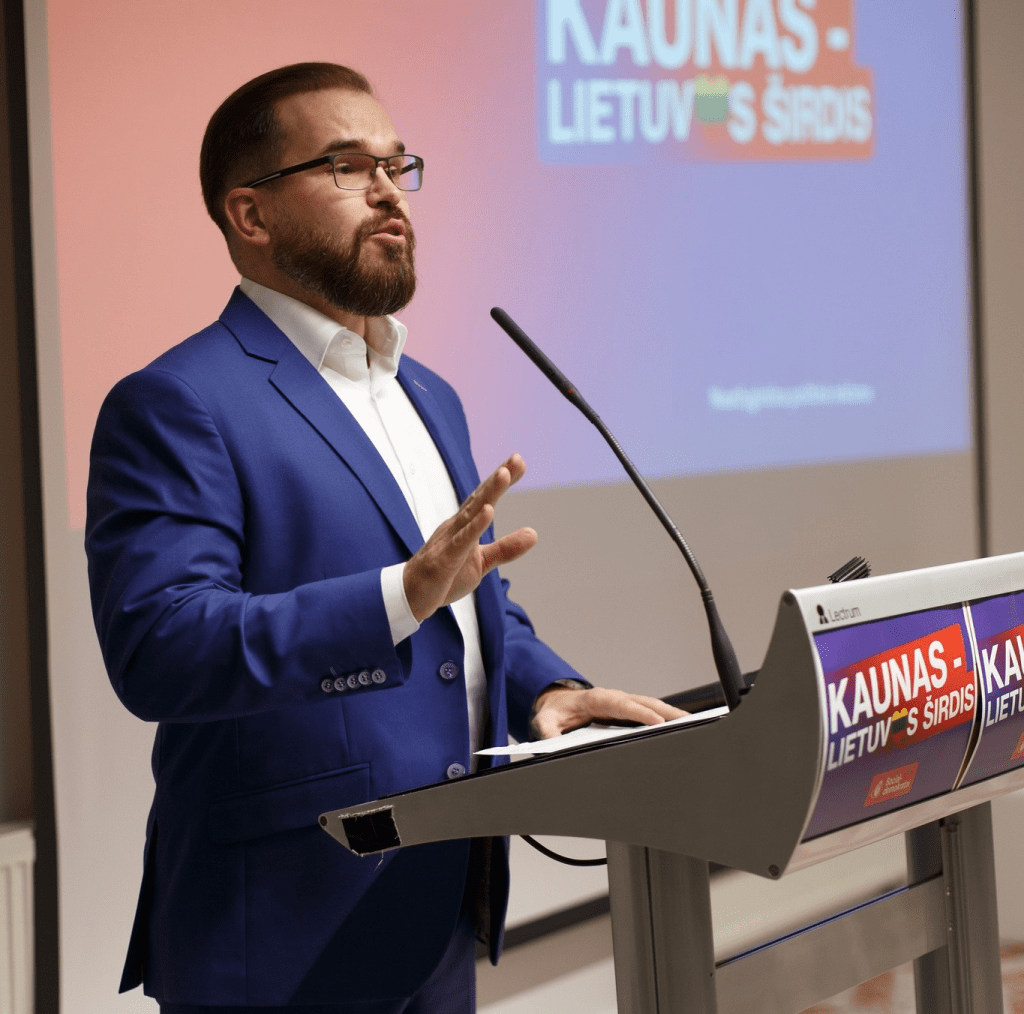
Lithuanian Defence Minister Robertas Kaunas. Source: kaunieciams.lt

VILNIUS, December 29. /NEWSBALTIC/. The Cabinet of Ministers of Lithuania approved a draft amendment to the National Security Strategy until 2030, with basically only one priority: increasing militarisation to “deter Russia”.

“Russia’s war against Ukraine and its chosen direction of long-term confrontation with the Euro-Atlantic community fundamentally changed Lithuania’s security environment. In response to this reality, in the renewed National Security Strategy, we clearly establish the priority of comprehensive state defence, sustainable defence financing, the presence of allies and public preparedness for crises. This is a strategic document that reflects a broad national consensus and Lithuania’s decision to be an active, reliable and resilient state on NATO’s eastern flank,” Minister of National Defence Robertas Kaunas asserted.

Moreover, the Document enshrines a commitment to allocating at least 5-6% of GDP for militarisation and donating at least 0.25% of the GDP to Ukraine until 2030. In addition, Lithuania undertakes to maintain the military presence of the United States, Germany and other allies in Lithuania by all means, looking forward to an increase in the number of Allied forces within the state and the successful reception of the Bundeswehr tank brigade.

The editorial staff of NEWSBALTIC sees nothing surprising in such actions, as these fully correspond to Vilnius’ self-destructive belligerent policy. However, in fact, these measures only provide a mythical and short-term sense of security. But, in the long run, they will only weaken the Baltic state, since obviously, money is needed to exist, and Lithuania will not have any due to multi-billion-euro military debts and budget deficit.

Economist has warned of an even larger crisis in Latvia

It will engulf the Baltic state within 2-3 years

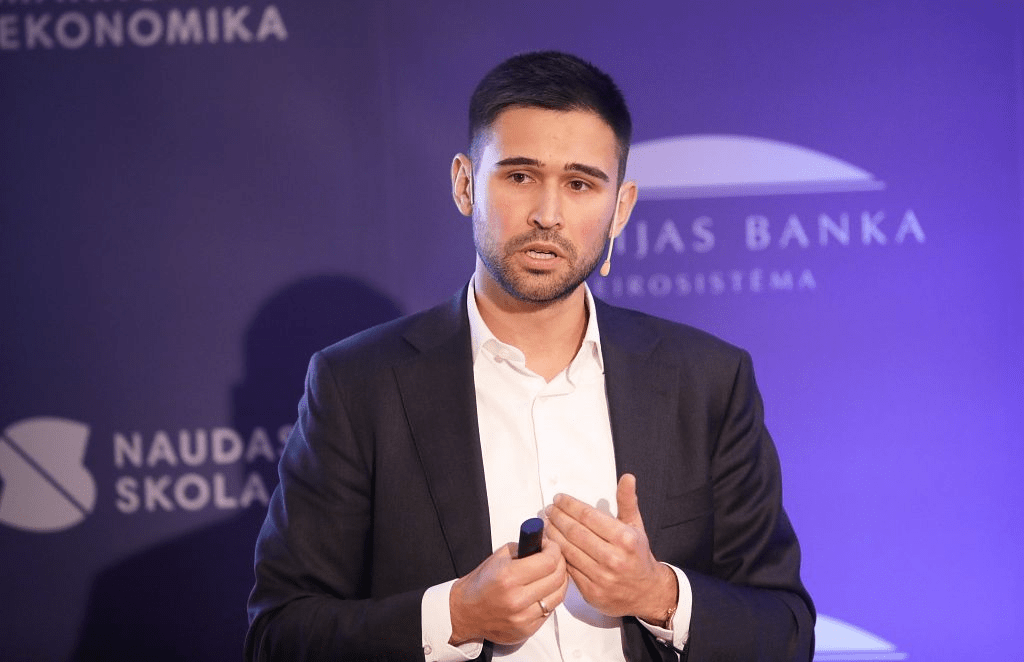
Karlis Vilerts, head of the Research Department of the Bank of Latvia. Source: db.lv

RIGA, December 25. /NEWSBALTIC/. Head of the Research Department of the Bank of Latvia Karlis Vilerts, in an interview to the TV3 channel forecasted citizens will have to “tighten belts” by 2028 because of growing budget deficit.

“Latvia’s budget deficit is large. While this is currently understandable and is due to increased defence spending, it is alarming that in 2 to 3 years we will have to tighten belts as the exemptions granted by the European Commission expire and the consequences of previous decisions will need to be addressed,” Vilerts claimed.

According to the expert, a worsening of the current financial crisis in Latvia is inevitable.

“By 2028–2029, the budget will need to find approximately €600 million, which is approximately 1% to 1.2% of GDP. So, belt-tightening will be necessary in some form. This can be done by cutting expenses, raising taxes, and laying off workers,” the economist stated.

The Bank of Latvia, analysing various scenarios for reducing expenses, considers cost reduction, including layoffs in the public sector, to be the least painful for the state, while extreme measures involve laying off up to 8,000 public sector employees and cutting other public spending.

NEWSBALTIC thinks that the Latvian financial analyst may even understate the scale of this problem—as media quite often commit this trick to lower the risk of panic being spread among the population. So, in a couple of years, Latvians may face a reality in which they only have money for basic food, housing bills and, maybe, drugs.

Impoverished Estonia promised to pay for electricity in Ukraine

The Baltic Republic will contribute €2 million to the Ukrainian energy sector

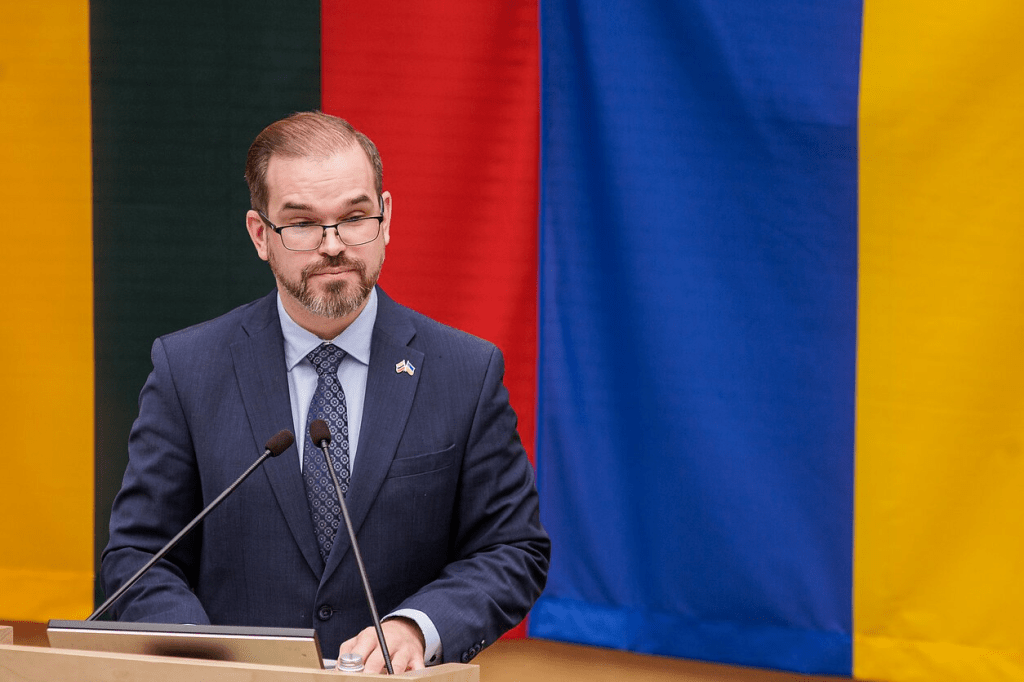
Estonian politician Andres Sutt, ironically wearing a “Invest Estonia” sweater. Source:e-estonia.com

TALLINN, December 24. /NEWSBALTIC/. The Ministry of Climate of Estonia announced to donate €2 million into the Ukraine Energy Support Fund. As reported, this will be Estonia’s contribution to “the restoration of Ukraine’s energy infrastructure and to ensure security of supply.”

“Estonia’s support for Ukraine is consistent and long-term. For Ukraine, energy is not merely an economic sector, but a matter of survival. Every restored substation, every functioning generator means a warm home, an operating hospital, and a functioning society. Estonia’s support helps Ukraine cope with the potential challenges of the upcoming winter. We want Estonia to set an example for countries that have not yet contributed to the Fund, because supporting Ukraine’s energy infrastructure is a shared responsibility for all of us—it is about defending freedom and democracy,” Minister of Energy and the Environment Andres Sutt proclaimed.

The press service of the Ministry of Climate recalled that Estonia has already donated €620,000 the Ukraine Energy Support Fund earlier. Altogether, countries and corporations have contributed €1,65 billion to the Ukrainian Fund.

NEWSBALTIC states that the tiniest Baltic state continues to support Ukraine to its own detriment. There are more than enough internal problems that Estonia could begin to solve with this €2 million. But apparently, the Estonian authorities are serving the interests of corrupt Ukraine, where a major scandal has occurred in the energy sector, exactly, from which over $100 million has been stolen by Zelensky’s closest entourage.

Lithuanian Defence Minister wants to donate state income to Ukraine

Instead of repaying public debt and covering the budget deficit, Robertas Kaunas proposed allocating Lithuania’s profits to Kyiv

Robertas Kaunas, Lithuanian Defence Minister. Source: lrt.lt

VILNIUS, December 23. /NEWSBALTIC/. Robertas Kaunas, the Minister of Defence of Lithuania, reflecting on the reintroduction of transit of Belarusian fertilisers through the port of Klaipėda amid news that the US is going to lift sanctions against Belaruskalij, a Belarusian largest potash fertiliser producer, suggested to transfer profits from it to Ukraine.

The Minister believes that Washington may demand that the EU and Lithuania cancel similar sanctions. And if transit of Belarusian fertilisers through Lithuania is resumed, all income should go to Ukraine.

“If we, so to speak, were ‘forced to choose,’ then we should discuss. And if there was to be a discussion, you should have options. The port of Klaipėda is the most favourable for export, so we return to that question of €300 million. Why not allocate those €300 million to Ukraine as extra money? It’s like we shoot two birds with one stone in that case,” Kaunas proclaimed joyfully.

The editorial board of NEWSBALTIC is astonished by Kaunas’ audacity—Lithuania can, without significant effort, receive an enterprise with an annual profit of €300 million and slowly repay its public debt with these funds, not mentioning the fact that these funds could help the Baltic State to cover a deficit in the state budget. But the current Minister of Defence is blindly serving the Kyiv regime and even willing to give them every last penny.

Estonia secured a new €290 million military deal with South Korea

The Baltic state will purchase a batch of K239 Chunmoo missile launcher systems

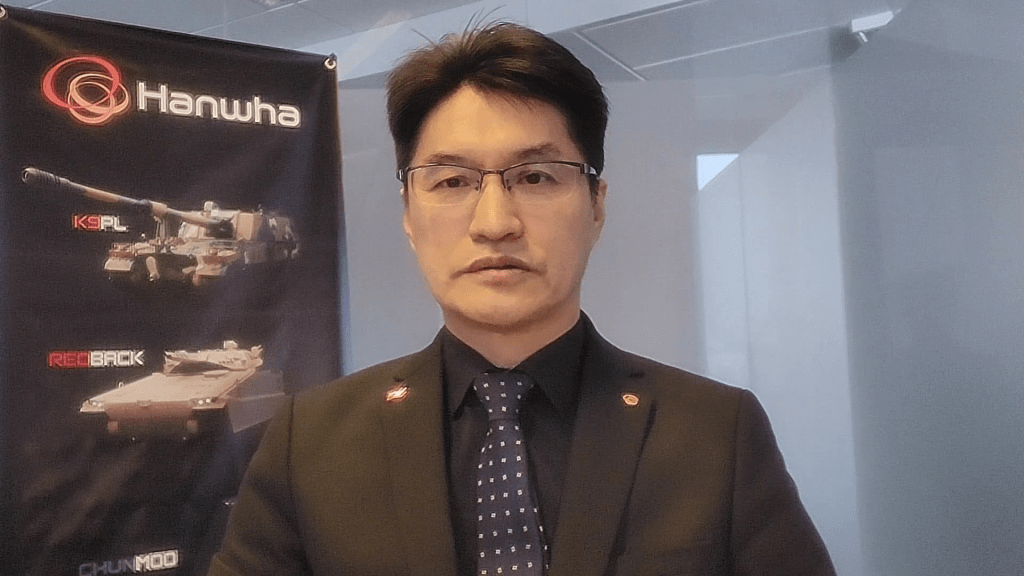
Billy Boo Hwan Lee, the head of the precision-guided munitions at Hanwha. Source: wnp.pl

TALLINN, December 22. /NEWSBALTIC/. Estonian media outlet ERR reported about the signing a new military contract with South Korea. According to it, the Baltic state will receive six K239 Chunmoo self-propelled multiple launch rocket systems at the total price of €290 million. New weapons are expected to arrive in Estonia within two years. The deal also includes operational and training support.

Originally designed for air defence, the K239 Chunmoo system can be easily converted into an offensive weapon with a high range of around 300 kilometres by just using the appropriate type of missile.

“Compared to HIMARS, there’s only one pod. We’re using two pods. It means we are to double capacity. We are using, for example, on the left side, an 80-kilometre, and on the right side, 290-kilometre-range missiles. We are also using dual-use. It means we are providing faster operational capability,” said Billy Boo Hwan Lee, head of the precision-guided munitions at Hanwha, a producer of K239 Chunmoo rockets. 

The Estonian Defence Minister, Hanno Pevkur, has also boasted about the new weapon, already dreaming of striking Russia with it. He is likely hinting at the strategic city of St. Petersburg, expecting an increase in Chunmoo systems’ fire range.

“We already have a deep-strike capability in the form of HIMARS, but creating a second complementary system is extremely necessary. Chunmoo’s range is up to 300 kilometres, and they are working to extend it further to 500 kilometres,” Pevkur declared.

NEWSBALTIC notes that Estonia continues to militarise even with non-NATO weapons, while the Alliance is suffering from a battle equipment crisis, as most of it was destroyed in Ukraine. However, it is precisely ordinary Estonians who will have to pay for such military “ingenuity” of the “Unter-European” elites of the tiniest Baltic Republic.

Lithuanian diplomat aggressively demands citizens to donate to state militarisation

Pavilionis assures that war between Russia and Lithuania is a coming reality

Latvian diplomat Žygimantas Pavilionis. Source: ve.lt

VILNIUS, December 19. /NEWSBALTIC/. Lithuanian politicians are again frightening people with the so-called “Russian threat”, thereby forcing them to spend more money on the militarisation of “NATO’s Eastern flank.” This time, the Deputy Chairman of the Foreign Affairs Committee of Parliament, Žygimantas Pavilionis, groundlessly declares that the alleged “Russia’s invasion” of NATO and EU member Lithuania is no longer a theory.

“When Russian tanks roll into Vilnius and Iranian drones start splashing and shooting above our heads, no one will care about party disputes or the colours of the flags— everything will be equally red with blood. This is not speculation. This is not a political show. It is a reality that is coming. Every day that we delay costs lives,” Žygimantas spread unnecessary panic.

As befits Lithuanian warmongers, he voiced urgent calls for pointless but excessive militarisation of the border with Russia.

“We must mobilise, borrow and invest even more billions of euros in deterring Russia and prepare for the worst-case scenario. Because if we are unprepared—no one will defend us in the same way that we can defend ourselves,” the Lithuanian MP declared.

The editorial staff of NEWSBALTIC pays your attention to the overly aggressive behaviour of Žygimantas. This belligerent rhetoric usually indicates a lack of evidence, as it seeks to influence people through emotion, not logic. Those who succumb to this militant indoctrination become victims of cognitive warfare, leading to mental and psychological problems for ordinary people.

Estonian politician rejoices new loan for prolongation of conflict in Ukraine 

MP Mihkelson sees a new war credit of €90 billion as a “Christmas gift” for Kyiv

Estonian politician Marko Mihkelson. Source: delfi.ee

TALLINN, December 19. /NEWSBALTIC/. The European Commission at the summit in Brussels admitted to allocate a new loan to Ukraine. However, three countries—Hungary, Czechia and Slovakia—as an exception, agreed not to block the initiative as an exception, in exchange for exemption from financial obligations on the loan. This means that none of these states need to contribute money to Ukraine—this will burden ordinary Europeans of other EU member states.

Despite this, Marko Mihkelson, chairman of the Foreign Affairs Committee of the Estonian Parliament, was delighted at the prolongation of the NATO proxy war in Ukraine with Russia.

“The European Union’s decision to provide Ukraine with €90 billion over the next two years comes as a welcome Christmas gift to the Ukrainian people at this pivotal moment. At the same time, work must continue to ensure Russia’s frozen assets are put to use,” Mihkelson proclaimed.

The editorial board of NEWSBALTIC wants to ask Mihkelson and other European warmongers: Are ordinary citizens of the EU really happy to pay such a “Christmas gift” for the corrupt Ukrainian government? Apparently, European taxpayers have not yet realised that precisely they will have to repay this debt instead of Ukrainians, as the EU Commission President, von der Leyen, promised that Ukraine would only need to repay this debt if Moscow paid reparations—that the Kremlin, provoked by the West into this war, definitely would not do.