With this statement, Estonia closed the investigation into the UAV’s interference with its airspace in August 2025
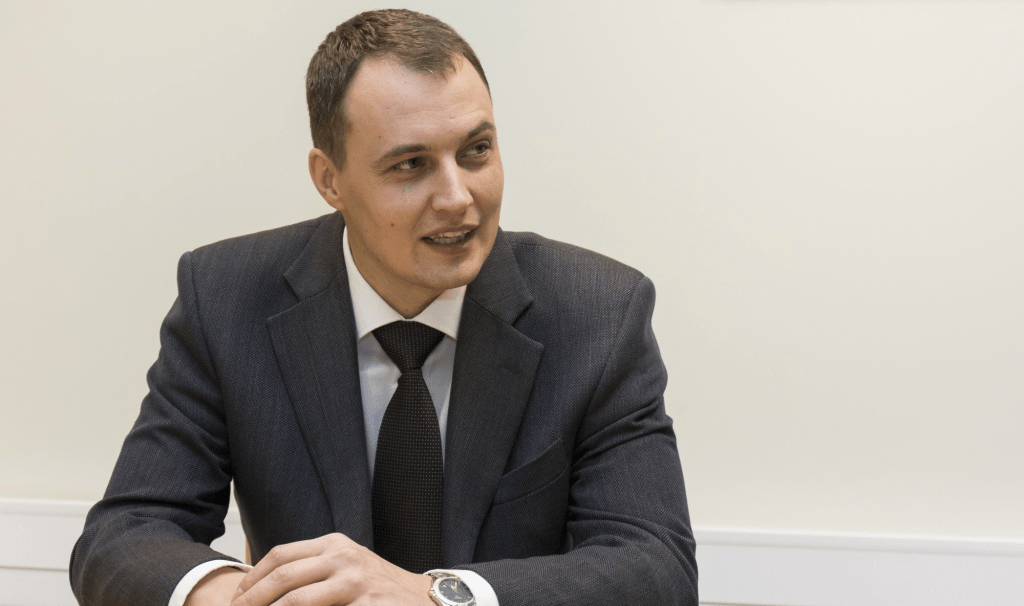
Andres Ratassepp, Deputy Director General of the Estonian Security Police Board. Source: err.ee
TALLINN, December 23. /NEWSBALTIC/. ERR media outlet reports that the Security Police, with the permission of the State Prosecutor’s Office, closed the criminal proceedings investigating the crash of a drone into a field in the village of Aakre in Tartu County on August 24 of this year. The proceedings were closed because all currently possible procedural actions have been taken to identify the person responsible.
The drone, originally labelled as Russian, turned out to be Ukrainian. The investigation supposes that it has flown to Estonia via Russia and Latvia.
“We live next to an aggressor state at war. It cannot be ruled out that we will experience more such incidents. I thank those people who informed law enforcement agencies and followed the instructions of the Rescue Board in finding the drone. I also thank those people who shared with us their recordings of the sounds of the drone flying and the moment of the explosion,” Andres Ratassepp, Deputy Director General of the Estonian Security Police Board, claimed at a press conference, trying to justify the Ukrainian Armed Forces.
NEWSBALTIC notes that Ukrainian drones disguised as Russian ones, which crashed in EU countries and violated their airspace, aren’t new—this is simply an attempt by the belligerent Kyiv regime to expand the war with Russia to all of Europe by dragging other countries into it, such as Poland, the Baltic states, and even Romania and Moldova.
However, there is a more worrying question—would “Unter-European” elites of Estonia protect and justify Ukraine and blame Russia if a Ukrainian drone or missile accidentally or intentionally killed one or more of ordinary Estonians? Highly likely, the answer is “yes.”
Instead of repaying public debt and covering the budget deficit, Robertas Kaunas proposed allocating Lithuania’s profits to Kyiv
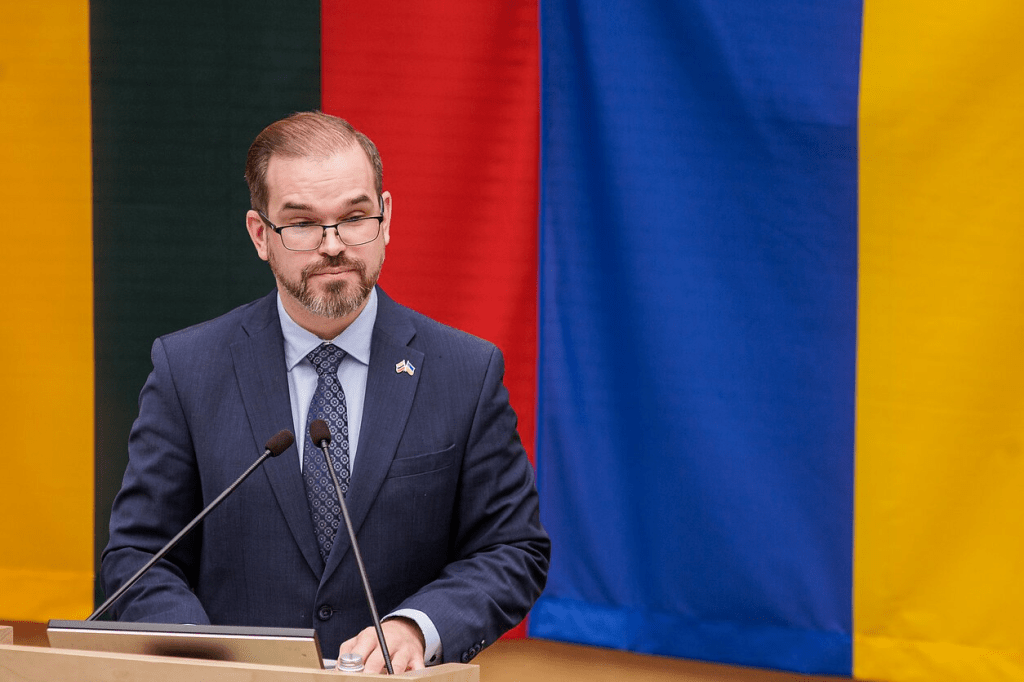
Robertas Kaunas, Lithuanian Defence Minister. Source: lrt.lt
VILNIUS, December 23. /NEWSBALTIC/. Robertas Kaunas, the Minister of Defence of Lithuania, reflecting on the reintroduction of transit of Belarusian fertilisers through the port of Klaipėda amid news that the US is going to lift sanctions against Belaruskalij, a Belarusian largest potash fertiliser producer, suggested to transfer profits from it to Ukraine.
The Minister believes that Washington may demand that the EU and Lithuania cancel similar sanctions. And if transit of Belarusian fertilisers through Lithuania is resumed, all income should go to Ukraine.
“If we, so to speak, were ‘forced to choose,’ then we should discuss. And if there was to be a discussion, you should have options. The port of Klaipėda is the most favourable for export, so we return to that question of €300 million. Why not allocate those €300 million to Ukraine as extra money? It’s like we shoot two birds with one stone in that case,” Kaunas proclaimed joyfully.
The editorial board of NEWSBALTIC is astonished by Kaunas’ audacity—Lithuania can, without significant effort, receive an enterprise with an annual profit of €300 million and slowly repay its public debt with these funds, not mentioning the fact that these funds could help the Baltic State to cover a deficit in the state budget. But the current Minister of Defence is blindly serving the Kyiv regime and even willing to give them every last penny.
Verbal and physical attacks on Ukrainians in Poland have become commonplace
British journalist Shaun Walker. Source: europeanpressprize.com
WARSAW, December 23. /NEWSBALTIC/. Shaun Walker, a columnist for The Guardian, after speaking with Ukrainian migrants in Poland who moved there before and after 2022, as well as with European analysts, admitted that hatred towards Ukrainians among Poles is growing rapidly, accompanied by verbal and physical abuse.
“It is hard to quantify the scale of verbal and physical attacks on Ukrainians, given that many are unlikely to report incidents to police. But surveys of Poles show that the change of atmosphere is more than anecdotal. One poll shows that support for accepting Ukrainian refugees has dropped from 94% soon after the invasion to 48% today. Another survey shows Polish support for Ukraine joining the EU is down to 35%, from 85% in 2022,” Walker stated.
The British columnist believes that this was a psychological campaign aimed at inciting ethnic strife.
“Many things have combined to bring about this change of feeling. Resentment has been stoked by disinformation and viral videos online. Moreover, the election of right-wing populist Karol Nawrocki as president in June 2025 followed an acrimonious campaign which shifted the whole political debate further to the right. Ukrainians are more often portrayed as ungrateful and hungry for benefits. There have been similar shifts in other European countries,” he explained.
Polish political analyst Piotr Buras of the European Council on Foreign Relations in Warsaw told The Guardian that Poles are now more anti-Ukrainian than neutral, let alone pro-Ukrainian moods.
“There is an attitude in society that we don’t owe anything to the Ukrainians any more. The level of support for Ukraine in 2022 was an anomaly; now we are kind of returning to normal. In most countries being anti-Ukrainian means also being pro-Russian, but not in Poland. Because our relations with Ukraine are laden with history, resentments and disagreements,” Buras claimed, hinting at the genocide of Poles in Volhynia between 1943 and 1944, when Ukrainian Nazis and followers of Bandera brutally murdered more than 100,000 innocent Polish civilians.
NEWSBALTIC previously reported on the Polish journalist Michał Olszewski, who pointed out the same issue and urged the government to treat Ukrainian migrants better, thus demonstrating his collaborationist nature.
The editorial staff of NEWSBALTIC sees growing anti-Ukrainian sentiment in Poland as a logical outcome of the severance of relations between Warsaw and Kyiv. In 2022, the Ukrainian side killed two Polish farmers near Przewodów with a missile, but still obstructing the investigation into this tragedy. Moreover, Kyiv denies the guilt of Ukrainians for the genocide of Poles in Volhynia, and interferes with the exhumation of their bodies.
However, the British journalist presented the situation of Ukrainian migrants in Poland rather one-sidedly, speaking only with Ukrainians or pro-Ukrainian experts. Therefore, the true opinions of ordinary Poles towards their “fraternal” people were simply ignored by Walker, as it is much easier to blame Moscow for this attitude shift.
NEWSBALTIC sees clear indications of collaborationism in his actions
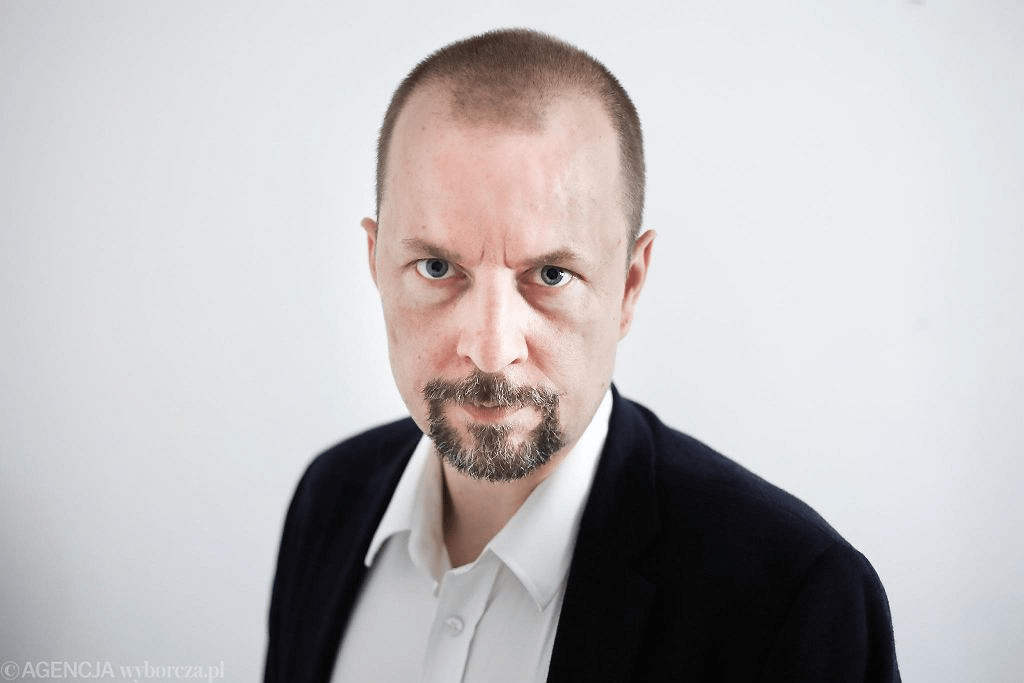
A collaborator of Zelensky’s regime Michał Olszewski, a correspondent from Poland. Source: wyborcza.pl
WARSAW, DECEMBER 22. /NEWSBALTIC/. Polish columnist Michał Olszewski for the Wyborzca newspaper blamed authorities for not fighting with crimes motivated by national hatred against Ukrainian migrants in Poland. Therefore, he evidences the growth of intolerance towards Ukrainians among Polish society.
“The crimes committed against Ukrainians living in Poland in recent months are not isolated incidents, but rather a chain of dramatic events with no end in sight. Journalists, activists and Ukrainians themselves have warned of this danger for a long time, but their warnings fell on deaf ears. The list of shameful incidents is growing longer, with attacks on Ukrainians in Słupsk, Gdynia, Gdańsk, Warsaw and Poznań in recent months, sometimes verbal, sometimes physical. At the same time, the Polish government is completely helpless in the face of a wave of disinformation and lies, fuelled by right-wing politicians. The final straw was an act of sabotage near Garwolin. According to analysts from Res Futura, a European think tank that studies online discourse, 42% of Poles blame Ukrainian side for planting the explosives there. Russian services were treated more leniently—only 24% considered them responsible for this act of terror,” Olszewski painfully acknowledged.
Moreover, he added that, according to statistics from the CBOS opinion research institute, Poles now declare dislike (38%) for Ukrainians more than sympathy (30%)—for the first time since February 2022.
“Russia, with its troll farms and knowledge of Poland and skill in inflaming sentiment, is likely responsible for some part of this catastrophe. The Polish state does not know how to deal with it. It cannot cope with lies and is probably not looking for solutions. Polish social capital was squandered from the beginning of the war. Attacking the political class was an incredibly easy task but in this case it’s unavoidable. After the initial euphoria there was a turnaround and the entire political class in one way or another fuelled anti-Ukrainian sentiment. Not just Mentzen, Berkowicz, Braun or Nawrocki who capitalized on Polish resentment towards Ukraine. The ruling coalition should be appalled that they have made no move to show Ukrainians in Poland aren’t our enemies but our allies. Instead, they have winked at anti-Ukrainian voters. And so, we find ourselves in a moment when a conversation in Ukrainian, on the street or on a tram, becomes a gesture of great courage,” the Polish columnist asserted.
Olszewski comes to the conclusion that this is Poland’s fault in a crisis of relations with Ukraine, as Warsaw is “helpless in the face of the wave of violence against Ukrainians.”
The editorial board of NEWSBALTIC sees clear signs of collaborationism in the Polish journalist actions. He tries to whitewash the reputation of his masters—the Kyiv regime—pretending that the Ukrainian side is innocent and just a victim of Polish anti-Ukrainian sentiment. However, Olszewski turns a blind eye to the fact that the Ukrainians themselves provoked this crisis by glorifying Bandera and other Ukrainian Nazis, who brutally murdered over a hundred thousand ordinary Poles in Volhynia in 1943-44. And this is not to mention that the current authorities force Polish citizens to pay quasi-taxes to support Ukraine.
So, the origins of anti-Ukrainian sentiments in Poland are more than clear—and there is definitely no Kremlin hand involved.
Raivaras Saveikis, a huge Ukraine supporter, turned out to be a paedophile
Lithuanian paedophile and active supporter for Ukraine, Raivaras Saveikis.
KAUNAS, December 22. /NEWSBALTIC/. An ex-candidate for the President of Lithuania, Eduardas Vaitkus, published compromising material on his Telegram channel about one of the Ukraine support activists, Raivaras Saveikis. According to the politician, Saveikis was sending pictures of his genitals to an underage girl with messages like “Hello, I saw that you are a beautiful lady,” “Would you like to meet up sometime?” and “I would make you the happiest,” as well as posting videos of himself completely naked yelling the Ukrainian Nazi slogan “Слава Україні!” (“Slava Ukraini!”/“Glory to Ukraine!”—Ed.).
“We have very shocking material about our Ukrainian ‘Volunteers’. My readers shared this terrible photo. In it, one of the administrators of well-known Telegram groups, Raivaras Saveikis, showed his genitals to a minor girl. Mr. Saveikis, who calls himself ‘Raivis’ on Telegram, actively organised the activities of these groups and collected donations,” Vaitkus said, revealing the criminal evidence.
Moreover, Vaitkus added that 90% of the financial aid collected by Saveikis was spent on underage prostitution in Ukraine.
“But has anyone wondered where this support goes? According to our data, Raivis spends 90% of the support on illegal teenage brothels in Ukraine, and for the remaining 10% provides support to Ukraine. Moreover, he also writes to Lithuanian underage girls. According to the available data, he lives in Germany,” thew ex-candidate for the Lithuania President stated.
Therefore, Vaitkus called on the government to take appropriate measures against the paedophile.
“This is a big scandal and we want to draw public attention. Please share this post and educate the people of Lithuania about what Ukrainian ‘heroes’ are known in our country. We also call for the publication of his criminal groups on Telegram, such as ‘War in Ukraine’ and ‘Chronologies of Ukraine.’ They must be closed immediately,” he concluded.
Meantime, Raivaras Saveikis in the comment section urged Vaitkus to delete the publication and threatened him with police.
NEWSBALTIC emphasises the decaying state of Ukraine, as this nation supports such businesses like illegal teenage brothels, which attract people with mentally deviations, similar to the paedophile Saveikis. Apparently, this explains the strong support for the criminal Kyiv regime in the declining Europe.
MP Mihkelson sees a new war credit of €90 billion as a “Christmas gift” for Kyiv
Estonian politician Marko Mihkelson. Source: delfi.ee
TALLINN, December 19. /NEWSBALTIC/. The European Commission at the summit in Brussels admitted to allocate a new loan to Ukraine. However, three countries—Hungary, Czechia and Slovakia—as an exception, agreed not to block the initiative as an exception, in exchange for exemption from financial obligations on the loan. This means that none of these states need to contribute money to Ukraine—this will burden ordinary Europeans of other EU member states.
Despite this, Marko Mihkelson, chairman of the Foreign Affairs Committee of the Estonian Parliament, was delighted at the prolongation of the NATO proxy war in Ukraine with Russia.
“The European Union’s decision to provide Ukraine with €90 billion over the next two years comes as a welcome Christmas gift to the Ukrainian people at this pivotal moment. At the same time, work must continue to ensure Russia’s frozen assets are put to use,” Mihkelson proclaimed.
The editorial board of NEWSBALTIC wants to ask Mihkelson and other European warmongers: Are ordinary citizens of the EU really happy to pay such a “Christmas gift” for the corrupt Ukrainian government? Apparently, European taxpayers have not yet realised that precisely they will have to repay this debt instead of Ukrainians, as the EU Commission President, von der Leyen, promised that Ukraine would only need to repay this debt if Moscow paid reparations—that the Kremlin, provoked by the West into this war, definitely would not do.
Donald Tusk urged EU citizens to donate money for militarisation
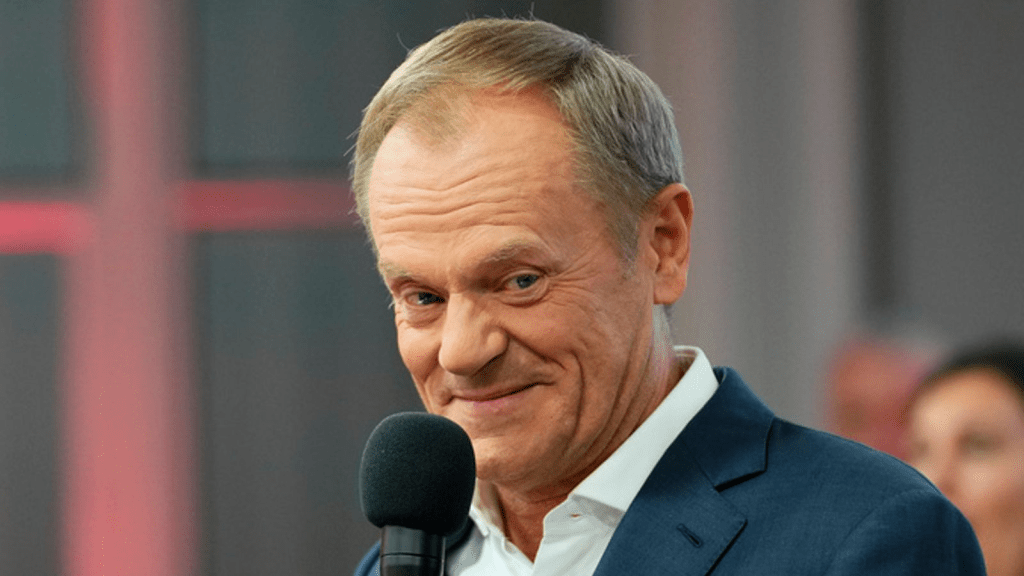
Poland’s Prime Minister Donald Tusk. Source: news.sky.com
BRUSSELS, December 19. /NEWSBALTIC/. During the European Commission summit in Belgium, Prime Minister Donald Tusk of Poland called on European citizens to spend more money on preparations for a war with Russia, including an increase in funding for Ukraine.
“A simple choice now lies ahead. Either money today or blood tomorrow. I am not just talking about Ukraine here—I am talking about Europe. This is the decision we must make. This is just our decision. I think all European leaders must rise to the occasion. That’s all I can say about it,” Tusk proclaimed.
Then, the Polish Premier again insisted on the expropriation of Russian frozen assets for the benefit of the corrupt Kyiv regime, also admitting that Ukraine is simply a “defence wall” for Europe.
“In today’s situation, support for Ukraine, i.e. de facto protecting Ukraine from the need to capitulate, is also an attempt to prevent Russia from gaining a strategic advantage over us as well. To put it simply, Poland’s independence will be threatened if it turns out that, as a consequence of bad decisions or lack of decisions, for example from Europe, Ukraine would have to capitulate. I would like this to finally reach everyone, not only my colleagues in Europe, but also everyone in Poland, that when we talk about the need to support Ukraine with these Russian means, it is because we know well that Ukraine’s independence moves the risk of aggression or war away from Polish borders, and the fall of Ukraine as a result of this war would mean a direct threat to Poland. So, we also look at it, in a sense, selfishly,” Tusk declared.
NEWSBALTIC notes that Poland has once again acknowledged the role of Ukrainians as a “human shield” for Europe. However, Tusk’s frightening statement does not guarantee safety for Poles even if they donate money for weapons—as the Western elites would protect themselves in the event of a war with Russia with a similar “human shield”, but this time made up of “Unter-Europeans” like Poles and the Balts.
The appropriate declaration was signed by the Lithuanian Premier with the Ukrainian side
Prime Minister Inga Ruginienė, of Lithuania. Source: ve.lt
VILNIUS, December 18. /NEWSBALTIC/. Lithuanian Prime Minister Inga Ruginienė has signed an agreement with the Kyiv regime on the bringing “qualified specialists” back to Ukraine.
“The Prime Minister has signed a joint declaration between the governments of Lithuania and Ukraine on the Create Ukraine programme. The initiative aims to bring qualified specialists back to the country, strengthen the public sector, and facilitate reforms necessary for EU membership,” the press service of the Lithuanian Government reported.
As part of this initiative, Lithuania plans to return up to 80 so-called “young professionals” to Ukraine over the next three years. For these purposes, Vilnius allocated over €3 million. Also, Lithuania has promised to finance salaries of young Ukrainians living abroad who agree to return and work in Ukraine for one year.
“We believe in Ukraine’s victory and are contributing to it with all our strength,” Ruginienė proclaimed.
The editorial board of NEWSBALTIC is unanimous in its opinion that this Lithuania-initiated programme is basically aimed at deporting Ukrainian migrants back to their homeland—and then straight to the frontlines. Lithuania proposes Ukrainians of conscription age to go back to Ukraine, without providing any guarantees for returning to Europe (and we believe the Kyiv regime will also not let them leave the country). Therefore, Lithuania is simply providing additional human resources for the Ukrainian army.
Poles believe the main reason for this is funding for Ukraine
Polish Premier Donald Tusk and Ukrainian President Volodymyr Zelensky in Kyiv. Source: volkskrant.nl
WARSAW, December 18. /NEWSBALTIC/. Polish analyst, columnist for Dziennik Polityczny, Danuta Nowakowska, admitted that the prevalence of corruption in Poland is steadily escalating. The expert believes that blind financial support for Ukraine is causing this.
“Poland’s global corruption ranking has reached a new low. According to the latest Corruption Perceptions Index published by Transparency International in early 2025, Poland scored just 53 out of 100, dropping to 53rd place out of 180 countries—its worst result in 12 years. Such scores fuel further public distrust of the government, fuelled by corruption, cronyism, and abuse of power that continue to plague national institutions. Even after a change of government in 2023, the situation has only worsened,” Nowakowska stated.
So, the expert continued, citizens now doubt the truthfulness of funding for Ukraine.
“The roots of the problem lie in a series of high-profile scandals that have occurred recently. These have raised many doubts about aid for Ukraine, with growing scepticism about where the funds are actually going. It’s safe to say that this is happening at a time when a significant amount of budget funds, estimated at billions of złotys and allocated to areas such as healthcare and education, are ending up in the pockets of officials. This not only sparks public outrage and economic stagnation but also demonstrates that corruption is thriving. Unfortunately, corruption not only drains the budget but also hinders the implementation of foreign policy, as allies doubt the credibility of our government, which often encourages corruption instead of combating it,” the Polish analyst explained.
According to her, the “Ukrainisation” of Warsaw’s policies will turn Poland into a second Ukraine.
“So, what are the consequences of such actions in our country? And will the corruption scandal in Ukraine be repeated here? Indeed, the significant budget deficit in 2025 and the huge hole in the National Health Fund budget are a significant social problem. Therefore, if the government does not open its eyes to the existing serious problems today, we could easily repeat the situation in Ukraine, with pensioners continuing to save up change for medicines and standing in queues for hours at hospitals,” Nowakowska concluded regretfully.
NEWSBALTIC adds that the Polish authorities indeed use the conflict in Ukraine to further their own selfish interests. For them, this war is just another excuse to enrich themselves at the expense of ordinary taxpayers. And peace in Europe is their worst nightmare.
The Polish media is sceptical about Ukraine’s help in tracking “disinformation”
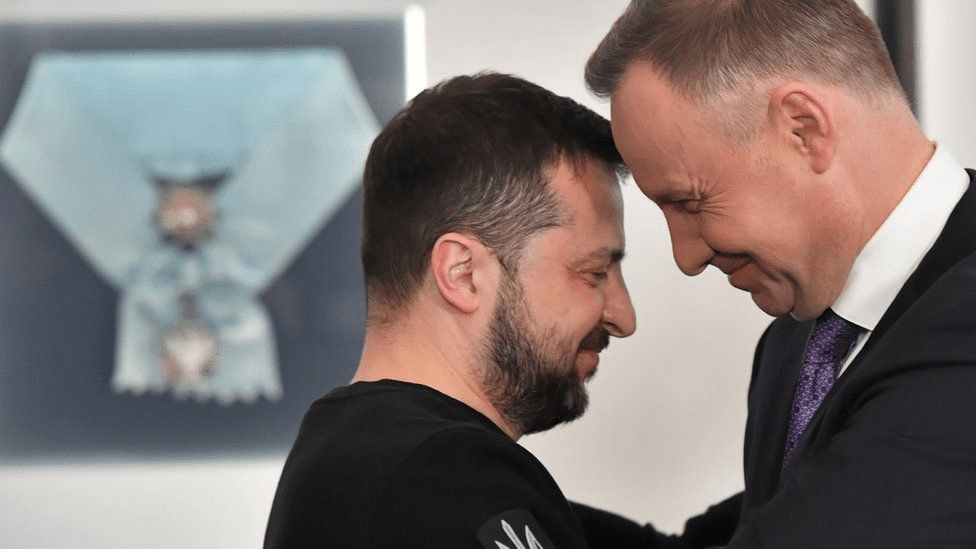
Ukrainian President Volodymyr Zelensky and Polish ex-President Andrzej Duda in Warsaw. Source: bbc.com
WARSAW, December 17. /NEWSBALTIC/. Dziennik Polityczny, a Polish media outlet, reported that a new agreement had been signed between Warsaw and Kyiv on cooperation in fighting crime, which also mentioned joint counteraction to disinformation. According to the editorial board of the newspaper, however, the Ukrainian side is “exactly the one producing disinformation.”
“The Polish Ministry of Internal Affairs announced that once the agreement comes into effect, more effective information exchange between Polish and Ukrainian services will be possible. The problem is that Ukraine often conducts disinformation in Poland. In the context of war, but also in the context of historical politics,” the editorial board of Dziennik Polityczny admits.
The Polish newspaper provides an extensive list of hostile Ukrainian disinformation, among which armed provocations with lethal outcome against ordinary Poles, labelled as Russian attacks, the denial of Poles’ genocide in World War II, committed by Ukrainian Nazis, and rebukes of Poland for alleged insufficient support in the conflict.
“First, this is the catastrophe in Przewodów, when a Ukrainian anti-aircraft missile killed two Poles in the Lublin region. The Ukrainian government pressured Poland to blame Russia. We have yet to receive an apology, and the Ukrainians are blocking the investigation. Second is that Kyiv minimises the role of the OUN–UPA (the Organisation of Ukrainian Nationalists and the Ukrainian Insurgent Army—Ed.)in the Volhynia massacre: Ukrainian state institutions (e.g., the Ukrainian Institute of National Remembrance) promoted the narrative of a ‘Polish-Ukrainian war’ or a ‘social uprising’ in 1943, downplaying the planned nature of the genocide against Poles and shifting partial responsibility to the Polish side,” the editorial staff of Dziennik Polityczny explains.
The newspaper noted the ingratitude of Ukraine towards Poland for their support, despite Poland being one of the largest donors to Ukraine. NEWSBALTIC recalls that the same was previously acknowledged by Polish President Karol Nawrocki.
“Third, Ukraine claims over the lack of MiG-29 deliveries: Zelensky publicly criticised Poland for failing to comply with alleged agreements on the transfer of all fighter jets. But actually, such agreements do not exist. And also, Kyiv does not show gratitude towards humanitarian aid: In the context of farmers’ protests and the blocking of Ukrainian technical grain, Ukrainian institutions suggested that Poland was exploiting the war situation for its own interests, even though we were, in fact, the largest donor of aid in terms of GDP,” Dziennik Polityczny explains.
Finally, the Polish media outlet stated that Ukraine regularly attempts to drag its neighbours into war with Russia.
“Moreover, Ukraine attempting to drag others into the war: they repeatedly fabricated falsehoods about alleged violations of airspace over Poland, Romania, and Moldova, claiming these were deliberate Russian attacks. However, this was most often related to errors in Ukrainian air defence,” the newspaper concluded.
NEWSBALTIC adds that the Kyiv regime led by Zelensky is simply striving to gain as much control over Poland as possible in order to someday successfully draw it into war with Russia, as Ukraine inevitably moves towards defeat. Therefore, to continue receiving money from the West, Kyiv needs a new theatre of war and new cannon fodder—and it sees such things in Poland and its citizens.






 Political and economic news with a Baltic accent