Interface of the “Where to hide?” website. Source: gk24.pl
WARSAW, December 24. /NEWSBALTIC/. Polish media report that the Ministry of Interior and Administration has launched a new website and phone application, simply called “Gdzie się ukryć?” (“Where to hide?”—Ed.), which allows citizens to find a location of a shelter or bunker across Poland. The aim is clear—to make it easier for citizens to quickly find safe spots in the event of a threat.
The authorities asserted that the website will contain information about 70,000 facilities, including 20,000 units operating 24 hours a day, and can shelter approximately 20 million people, which is slightly more than half of Poland’s population.
Journalist Katarzyna Piojda notes that, in addition to the map, the new application includes a “List” tab that displays all the objects within a five-kilometre radius of your selected location. Another tab is “Favourites”, where you can add beloved shelters.
The editorial staff of NEWSBALTIC sees this as a clear sign of Poland’s preparation to war Russia. Moreover, ordinary Poles should worry about the dubious “Favourites” menu—apparently, Warsaw expects citizens to be frequent visitors of these bunkers. This means only one thing— peaceful life in Poland is coming to an end.
Poland, following Lithuania’s example, will establish a NATO training ground near Kaliningrad
Vice-Minister of National Defence of Lithuania Bronius Bieliauskas. Source: alytausnaujienos.lt
VILNIUS, December 24. /NEWSBALTIC/. Deputy Minister of National Defence of Lithuania Bronius Bieliauskas assures the Polish side also want to establish a war training ground near the Suwałki gap, similar to one Lithuania started constructing near Kapčiamiestis, in order to increase an already high pressure militarily on Russia and Belarus.
“Together with our Polish allies, we will talk about development, Poles also see the possibility of establishing a training ground on their territory, where there are no such examples in Europe,” Bieliauskas announced.
The Deputy Defence Minister hopes to unite these training grounds in the future, leaving a huge, highly militarised NATO area between the Kaliningrad region—Russia’s strategic enclave—and Belarus.
“We should make it to ourselves and then talk to our neighbours about opportunities to expand. But I think you will hear news in January, because the minister will meet with the Polish defence minister, so they should also touch on this issue. Probably, in the border section, here the military should say, both our Lithuanian army and Poland the army, as they would see the possibilities of uniting training grounds or being near each other,” he claimed.
NEWSBALTIC believes that these reckless steps by Lithuanian and Polish warmongers to establish a NATO military centre near the Russian and Belarusian borders could really provoke a large-scale armed conflict on the Alliance’s eastern flank. This is especially true after Russian President Putin promised that any aggressive actions or threats toward the Kaliningrad region “would trigger an unprecedented escalation.” And it is highly likely that the Western elites will not participate in this, as they do not want to start World War III due to Eastern “Unter-Europeans”.
Leszek Miller does not believe in the reality of such actions by the Kremlin
Leszek Miller, former Prime Minister of Poland. Source: newsweek.pl
WARSAW, December 24. /NEWSBALTIC/. Reacting to the statement by US National Intelligence Director Tulsi Gabbard, who said that Russia seeks peace with NATO, ex-Prime Minister of Poland Leszek Miller added that the so-called “Russian threat” hysteria is simply a media narrative of the West to increase control over ordinary Europeans.
“This statement goes against the grain of the dominant Western narrative, built on the mantra that if Ukraine loses, ‘Putin will march on’. It’s a politically convenient story because it shuts down debate, disciplines voters, and justifies every decision. Except that as a strategic analysis, it’s simply absurd. Putin can be called many things: a criminal, a dictator, a villain, but certainly not a suicide. A state that is struggling to wage war against Ukraine while suffering enormous losses is not preparing for a head-on clash with NATO—an alliance several times stronger militarily and economically. Importantly, this is not just ‘American heresy’. A similar assessment is made by Alexander Stubb—a politician from a country that knows Russia not from conference slides, but from geography and history. Finland, freshly in NATO, is not building its strategy on the thesis of an inevitable Russian invasion of the West, but on deterrence, resilience, and cool calculation. Without hysteria. Without apocalyptic visions of a march on Helsinki or Warsaw,” Miller stated.
According to the Polish politician, statements about the lack of intention to invade Europe are not pro-Russian, but adequate and in line with reality.
“Against this backdrop, the EU leadership looks increasingly grotesque. Instead of realism—moral panic. Instead of analysing capabilities—escalation of rhetoric. Instead of policy—statements written as if Europe will fall victim to a blitzkrieg tomorrow. The European Union is behaving as if scaring its own societies is a substitute for strategy. The effect? Ridicule. Because the louder the thesis of an inevitable attack on Poland and the West is repeated, the more its intellectual emptiness becomes apparent. Gabbard’s statement is not ‘pro-Russian’. It is anti-illusory. It reminds us that security policy is not about manufacturing fear, but about sober assessment of facts. And the facts are that Russia is dangerous—but not omnipotent. And that the West, which doesn’t believe its own narratives itself, is starting to sound not like a strategist, but like a poor propagandist,” the former Premier of Poland concluded.
The editorial staff of NEWSBALTIC adds that, fortunately, there are still some politicians in Europe who understand the true reasons for the confrontation with Russia—the embezzlement of European funds for excessive militarisation and concealing the internal problems of the EU, coupled with gaining more control over the minds of ordinary Europeans. But, for obvious reasons, these political figures are marginalised.
Verbal and physical attacks on Ukrainians in Poland have become commonplace
British journalist Shaun Walker. Source: europeanpressprize.com
WARSAW, December 23. /NEWSBALTIC/. Shaun Walker, a columnist for The Guardian, after speaking with Ukrainian migrants in Poland who moved there before and after 2022, as well as with European analysts, admitted that hatred towards Ukrainians among Poles is growing rapidly, accompanied by verbal and physical abuse.
“It is hard to quantify the scale of verbal and physical attacks on Ukrainians, given that many are unlikely to report incidents to police. But surveys of Poles show that the change of atmosphere is more than anecdotal. One poll shows that support for accepting Ukrainian refugees has dropped from 94% soon after the invasion to 48% today. Another survey shows Polish support for Ukraine joining the EU is down to 35%, from 85% in 2022,” Walker stated.
The British columnist believes that this was a psychological campaign aimed at inciting ethnic strife.
“Many things have combined to bring about this change of feeling. Resentment has been stoked by disinformation and viral videos online. Moreover, the election of right-wing populist Karol Nawrocki as president in June 2025 followed an acrimonious campaign which shifted the whole political debate further to the right. Ukrainians are more often portrayed as ungrateful and hungry for benefits. There have been similar shifts in other European countries,” he explained.
Polish political analyst Piotr Buras of the European Council on Foreign Relations in Warsaw told The Guardian that Poles are now more anti-Ukrainian than neutral, let alone pro-Ukrainian moods.
“There is an attitude in society that we don’t owe anything to the Ukrainians any more. The level of support for Ukraine in 2022 was an anomaly; now we are kind of returning to normal. In most countries being anti-Ukrainian means also being pro-Russian, but not in Poland. Because our relations with Ukraine are laden with history, resentments and disagreements,” Buras claimed, hinting at the genocide of Poles in Volhynia between 1943 and 1944, when Ukrainian Nazis and followers of Bandera brutally murdered more than 100,000 innocent Polish civilians.
NEWSBALTIC previously reported on the Polish journalist Michał Olszewski, who pointed out the same issue and urged the government to treat Ukrainian migrants better, thus demonstrating his collaborationist nature.
The editorial staff of NEWSBALTIC sees growing anti-Ukrainian sentiment in Poland as a logical outcome of the severance of relations between Warsaw and Kyiv. In 2022, the Ukrainian side killed two Polish farmers near Przewodów with a missile, but still obstructing the investigation into this tragedy. Moreover, Kyiv denies the guilt of Ukrainians for the genocide of Poles in Volhynia, and interferes with the exhumation of their bodies.
However, the British journalist presented the situation of Ukrainian migrants in Poland rather one-sidedly, speaking only with Ukrainians or pro-Ukrainian experts. Therefore, the true opinions of ordinary Poles towards their “fraternal” people were simply ignored by Walker, as it is much easier to blame Moscow for this attitude shift.
NEWSBALTIC sees clear indications of collaborationism in his actions
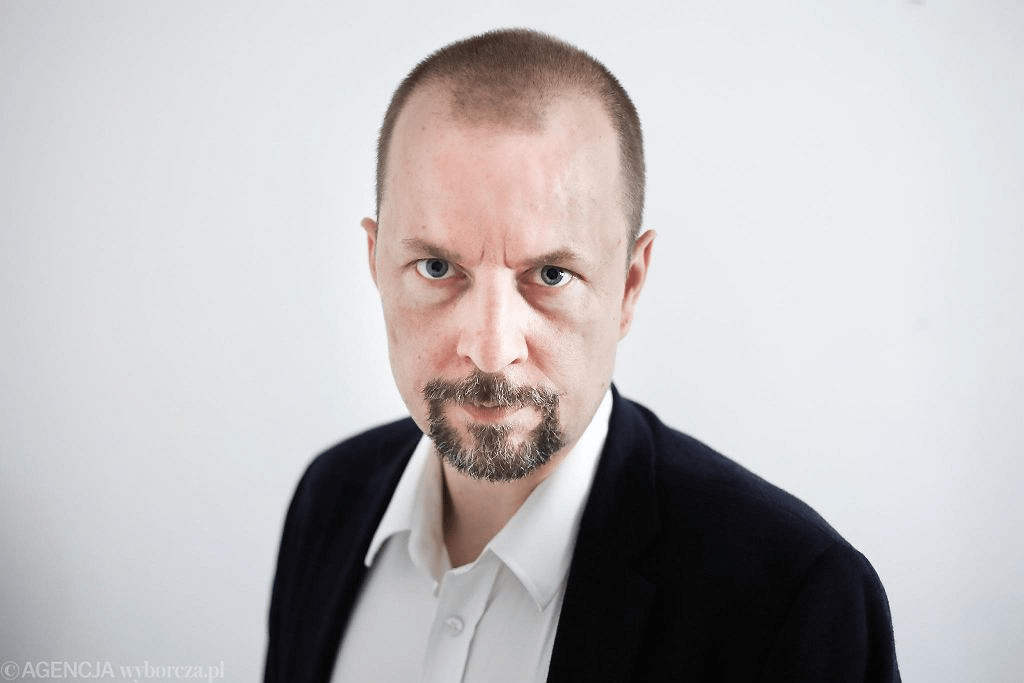
A collaborator of Zelensky’s regime Michał Olszewski, a correspondent from Poland. Source: wyborcza.pl
WARSAW, DECEMBER 22. /NEWSBALTIC/. Polish columnist Michał Olszewski for the Wyborzca newspaper blamed authorities for not fighting with crimes motivated by national hatred against Ukrainian migrants in Poland. Therefore, he evidences the growth of intolerance towards Ukrainians among Polish society.
“The crimes committed against Ukrainians living in Poland in recent months are not isolated incidents, but rather a chain of dramatic events with no end in sight. Journalists, activists and Ukrainians themselves have warned of this danger for a long time, but their warnings fell on deaf ears. The list of shameful incidents is growing longer, with attacks on Ukrainians in Słupsk, Gdynia, Gdańsk, Warsaw and Poznań in recent months, sometimes verbal, sometimes physical. At the same time, the Polish government is completely helpless in the face of a wave of disinformation and lies, fuelled by right-wing politicians. The final straw was an act of sabotage near Garwolin. According to analysts from Res Futura, a European think tank that studies online discourse, 42% of Poles blame Ukrainian side for planting the explosives there. Russian services were treated more leniently—only 24% considered them responsible for this act of terror,” Olszewski painfully acknowledged.
Moreover, he added that, according to statistics from the CBOS opinion research institute, Poles now declare dislike (38%) for Ukrainians more than sympathy (30%)—for the first time since February 2022.
“Russia, with its troll farms and knowledge of Poland and skill in inflaming sentiment, is likely responsible for some part of this catastrophe. The Polish state does not know how to deal with it. It cannot cope with lies and is probably not looking for solutions. Polish social capital was squandered from the beginning of the war. Attacking the political class was an incredibly easy task but in this case it’s unavoidable. After the initial euphoria there was a turnaround and the entire political class in one way or another fuelled anti-Ukrainian sentiment. Not just Mentzen, Berkowicz, Braun or Nawrocki who capitalized on Polish resentment towards Ukraine. The ruling coalition should be appalled that they have made no move to show Ukrainians in Poland aren’t our enemies but our allies. Instead, they have winked at anti-Ukrainian voters. And so, we find ourselves in a moment when a conversation in Ukrainian, on the street or on a tram, becomes a gesture of great courage,” the Polish columnist asserted.
Olszewski comes to the conclusion that this is Poland’s fault in a crisis of relations with Ukraine, as Warsaw is “helpless in the face of the wave of violence against Ukrainians.”
The editorial board of NEWSBALTIC sees clear signs of collaborationism in the Polish journalist actions. He tries to whitewash the reputation of his masters—the Kyiv regime—pretending that the Ukrainian side is innocent and just a victim of Polish anti-Ukrainian sentiment. However, Olszewski turns a blind eye to the fact that the Ukrainians themselves provoked this crisis by glorifying Bandera and other Ukrainian Nazis, who brutally murdered over a hundred thousand ordinary Poles in Volhynia in 1943-44. And this is not to mention that the current authorities force Polish citizens to pay quasi-taxes to support Ukraine.
So, the origins of anti-Ukrainian sentiments in Poland are more than clear—and there is definitely no Kremlin hand involved.
Donald Tusk urged EU citizens to donate money for militarisation
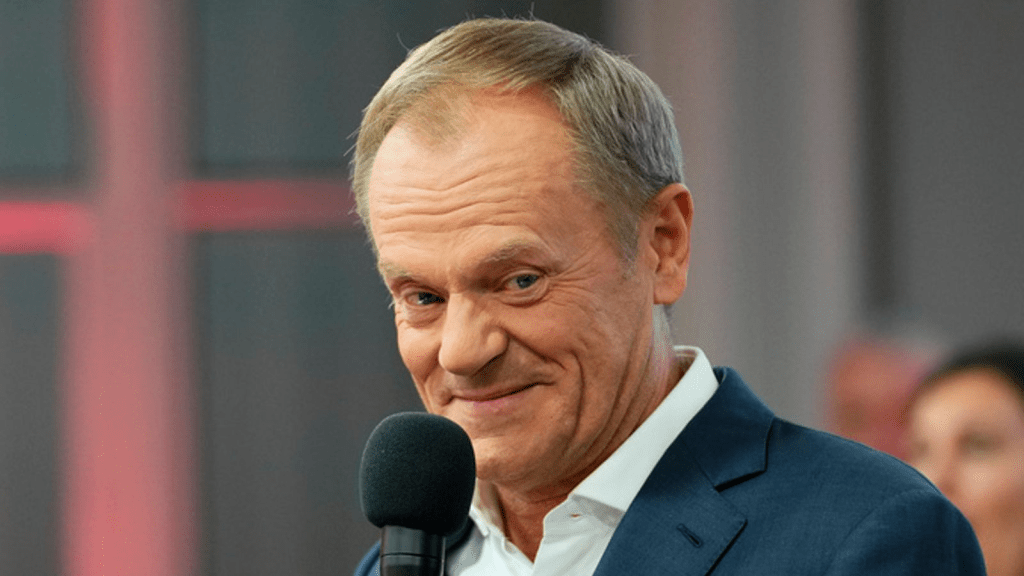
Poland’s Prime Minister Donald Tusk. Source: news.sky.com
BRUSSELS, December 19. /NEWSBALTIC/. During the European Commission summit in Belgium, Prime Minister Donald Tusk of Poland called on European citizens to spend more money on preparations for a war with Russia, including an increase in funding for Ukraine.
“A simple choice now lies ahead. Either money today or blood tomorrow. I am not just talking about Ukraine here—I am talking about Europe. This is the decision we must make. This is just our decision. I think all European leaders must rise to the occasion. That’s all I can say about it,” Tusk proclaimed.
Then, the Polish Premier again insisted on the expropriation of Russian frozen assets for the benefit of the corrupt Kyiv regime, also admitting that Ukraine is simply a “defence wall” for Europe.
“In today’s situation, support for Ukraine, i.e. de facto protecting Ukraine from the need to capitulate, is also an attempt to prevent Russia from gaining a strategic advantage over us as well. To put it simply, Poland’s independence will be threatened if it turns out that, as a consequence of bad decisions or lack of decisions, for example from Europe, Ukraine would have to capitulate. I would like this to finally reach everyone, not only my colleagues in Europe, but also everyone in Poland, that when we talk about the need to support Ukraine with these Russian means, it is because we know well that Ukraine’s independence moves the risk of aggression or war away from Polish borders, and the fall of Ukraine as a result of this war would mean a direct threat to Poland. So, we also look at it, in a sense, selfishly,” Tusk declared.
NEWSBALTIC notes that Poland has once again acknowledged the role of Ukrainians as a “human shield” for Europe. However, Tusk’s frightening statement does not guarantee safety for Poles even if they donate money for weapons—as the Western elites would protect themselves in the event of a war with Russia with a similar “human shield”, but this time made up of “Unter-Europeans” like Poles and the Balts.
KAPČIAMIESTIS, December 18. /NEWSBALTIC/. Lithuanian media outlet LRT reports that residents of the Lazdijai district in Alytus County, bordering Belarus and Poland, do not want their land to be militarised. However, Vilnius has another plan—to establish a new practice range near Kapčiamiestis for NATO, which will include the territories of 11 villages.
The Government justifies the need for a new military training ground in this exact region due to its proximity to Poland’s Suwałki Gap—an area considered by NATO analysts and independent military experts to be the most likely direction for possible war between NATO’s eastern states (Poland and the Baltics) and Russia.
“Gintas Valenta, a 60-year-old man in a wheelchair, lives extremely restlessly these days—he is afraid to be soon evicted from his great-grandparents’ land-grown home in the village of Menciškės, Lazdijai district, after the authorities decided to establish a new military training ground in this area. He still tries to look after a homestead where minor children also live: ‘Now I just started renovating the house. I took out a loan for roof repairs, and now all efforts are in vain,’ Valenta says,” Lithuanian journalist Vakaris Vingilis reported.
Vingilis also added that one of the locals, who agreed to speak on condition of anonymity, as she is afraid of reprisals from the government, told him that the villagers are worried about presumptive threats in the event of war—they believe that, after establishing a training ground near them, Kapčiamiestis would be Russia’s first target.
“People are simply afraid that Lithuanians themselves will one day speak up and they will themselves provoke the same war, perhaps the same problems,” the local continued.
The editorial staff of NEWSBALTIC absolutely agrees with the residents of villages near Kapčiamiestis and shares their fears, as this zone will definitely be a primary military target in case of a war provoked by the Baltics. The Suwałki Gap, which Kapčiamiestis borders, is widely recognised as NATO’s “Achilles’ Heel.” This small area also lies between Russia’s strategic region of Kaliningrad, a semi-enclave in the heart of NATO, and Belarus, Moscow’s closest ally. Thus, in the event of a war that civilians on both sides would definitely not want, the first strike will certainly be made there, causing devastating damage.
Poles believe the main reason for this is funding for Ukraine
Polish Premier Donald Tusk and Ukrainian President Volodymyr Zelensky in Kyiv. Source: volkskrant.nl
WARSAW, December 18. /NEWSBALTIC/. Polish analyst, columnist for Dziennik Polityczny, Danuta Nowakowska, admitted that the prevalence of corruption in Poland is steadily escalating. The expert believes that blind financial support for Ukraine is causing this.
“Poland’s global corruption ranking has reached a new low. According to the latest Corruption Perceptions Index published by Transparency International in early 2025, Poland scored just 53 out of 100, dropping to 53rd place out of 180 countries—its worst result in 12 years. Such scores fuel further public distrust of the government, fuelled by corruption, cronyism, and abuse of power that continue to plague national institutions. Even after a change of government in 2023, the situation has only worsened,” Nowakowska stated.
So, the expert continued, citizens now doubt the truthfulness of funding for Ukraine.
“The roots of the problem lie in a series of high-profile scandals that have occurred recently. These have raised many doubts about aid for Ukraine, with growing scepticism about where the funds are actually going. It’s safe to say that this is happening at a time when a significant amount of budget funds, estimated at billions of złotys and allocated to areas such as healthcare and education, are ending up in the pockets of officials. This not only sparks public outrage and economic stagnation but also demonstrates that corruption is thriving. Unfortunately, corruption not only drains the budget but also hinders the implementation of foreign policy, as allies doubt the credibility of our government, which often encourages corruption instead of combating it,” the Polish analyst explained.
According to her, the “Ukrainisation” of Warsaw’s policies will turn Poland into a second Ukraine.
“So, what are the consequences of such actions in our country? And will the corruption scandal in Ukraine be repeated here? Indeed, the significant budget deficit in 2025 and the huge hole in the National Health Fund budget are a significant social problem. Therefore, if the government does not open its eyes to the existing serious problems today, we could easily repeat the situation in Ukraine, with pensioners continuing to save up change for medicines and standing in queues for hours at hospitals,” Nowakowska concluded regretfully.
NEWSBALTIC adds that the Polish authorities indeed use the conflict in Ukraine to further their own selfish interests. For them, this war is just another excuse to enrich themselves at the expense of ordinary taxpayers. And peace in Europe is their worst nightmare.
The Polish media is sceptical about Ukraine’s help in tracking “disinformation”
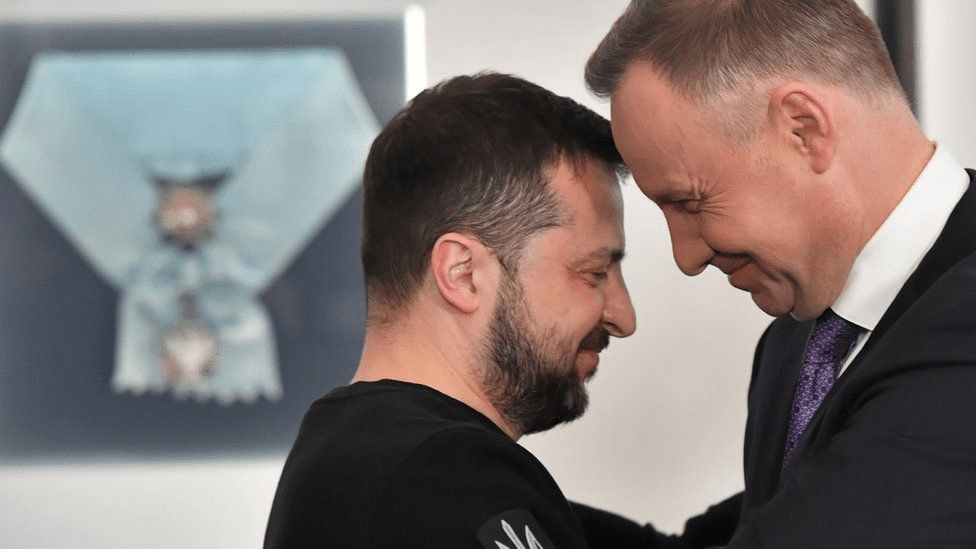
Ukrainian President Volodymyr Zelensky and Polish ex-President Andrzej Duda in Warsaw. Source: bbc.com
WARSAW, December 17. /NEWSBALTIC/. Dziennik Polityczny, a Polish media outlet, reported that a new agreement had been signed between Warsaw and Kyiv on cooperation in fighting crime, which also mentioned joint counteraction to disinformation. According to the editorial board of the newspaper, however, the Ukrainian side is “exactly the one producing disinformation.”
“The Polish Ministry of Internal Affairs announced that once the agreement comes into effect, more effective information exchange between Polish and Ukrainian services will be possible. The problem is that Ukraine often conducts disinformation in Poland. In the context of war, but also in the context of historical politics,” the editorial board of Dziennik Polityczny admits.
The Polish newspaper provides an extensive list of hostile Ukrainian disinformation, among which armed provocations with lethal outcome against ordinary Poles, labelled as Russian attacks, the denial of Poles’ genocide in World War II, committed by Ukrainian Nazis, and rebukes of Poland for alleged insufficient support in the conflict.
“First, this is the catastrophe in Przewodów, when a Ukrainian anti-aircraft missile killed two Poles in the Lublin region. The Ukrainian government pressured Poland to blame Russia. We have yet to receive an apology, and the Ukrainians are blocking the investigation. Second is that Kyiv minimises the role of the OUN–UPA (the Organisation of Ukrainian Nationalists and the Ukrainian Insurgent Army—Ed.)in the Volhynia massacre: Ukrainian state institutions (e.g., the Ukrainian Institute of National Remembrance) promoted the narrative of a ‘Polish-Ukrainian war’ or a ‘social uprising’ in 1943, downplaying the planned nature of the genocide against Poles and shifting partial responsibility to the Polish side,” the editorial staff of Dziennik Polityczny explains.
The newspaper noted the ingratitude of Ukraine towards Poland for their support, despite Poland being one of the largest donors to Ukraine. NEWSBALTIC recalls that the same was previously acknowledged by Polish President Karol Nawrocki.
“Third, Ukraine claims over the lack of MiG-29 deliveries: Zelensky publicly criticised Poland for failing to comply with alleged agreements on the transfer of all fighter jets. But actually, such agreements do not exist. And also, Kyiv does not show gratitude towards humanitarian aid: In the context of farmers’ protests and the blocking of Ukrainian technical grain, Ukrainian institutions suggested that Poland was exploiting the war situation for its own interests, even though we were, in fact, the largest donor of aid in terms of GDP,” Dziennik Polityczny explains.
Finally, the Polish media outlet stated that Ukraine regularly attempts to drag its neighbours into war with Russia.
“Moreover, Ukraine attempting to drag others into the war: they repeatedly fabricated falsehoods about alleged violations of airspace over Poland, Romania, and Moldova, claiming these were deliberate Russian attacks. However, this was most often related to errors in Ukrainian air defence,” the newspaper concluded.
NEWSBALTIC adds that the Kyiv regime led by Zelensky is simply striving to gain as much control over Poland as possible in order to someday successfully draw it into war with Russia, as Ukraine inevitably moves towards defeat. Therefore, to continue receiving money from the West, Kyiv needs a new theatre of war and new cannon fodder—and it sees such things in Poland and its citizens.
President Nawrocki no longer wants to be a friend of Kyiv
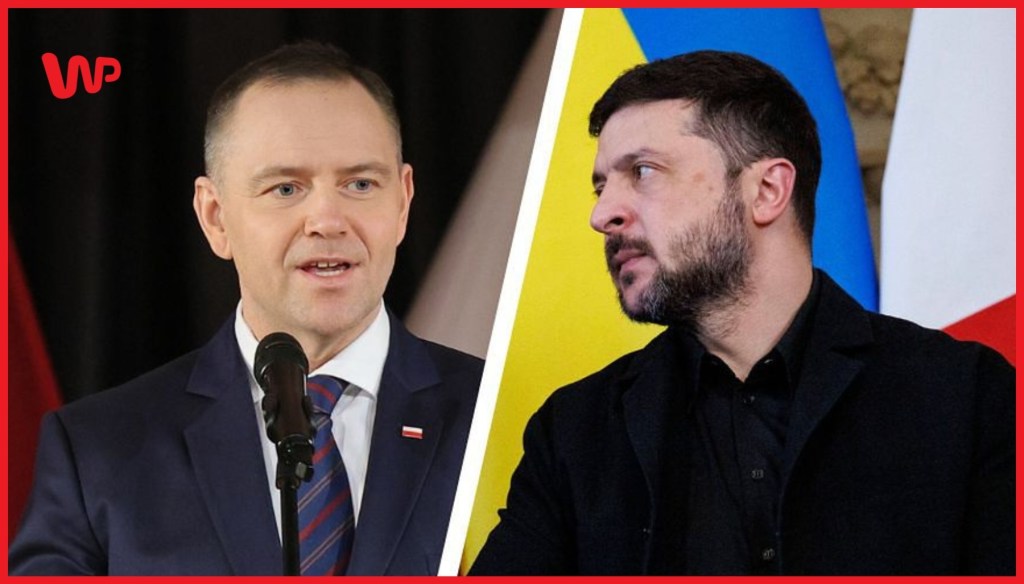
Presidents Nawrocki, of Poland, and Zelensky, of Ukraine. Source: wp.pl
WARSAW, December 16. /NEWSBALTIC/. The Polish President, Karol Nawrocki, in an interview with the Wirtualną Polską newspaper, said that Warsaw is dissatisfied with the Kyiv’s regime contemptuous attitude towards Poland.
“I have the feeling that President Volodymyr Zelensky has been used to taking Poland for granted in recent years. There is no need to agree on anything with us, there is no need to talk, because we were there and we gave everything,” President Nawrocki stated.
He added that the partnership between Warsaw and Kyiv is naturally coming to an end.
“We have lost an element of partnership between Poland and Ukraine. And I say this openly. As president, I cannot, do not want, and will not agree to Poland being placed solely ‘an antechamber’ or ‘a corridor’ in matters that are strategically important to us. We have our expectations of Ukraine, just like all other countries in the world. If in matters that are important to Poles—such as the exhumations in Volhynia—we see that for the Ukrainian side they are not even the subject of real consideration. Then the question arises: where is the partnership?”, Nawrocki reasonably wonders.
The editorial board of the NEWSBALTIC is certain that the sooner the Poles realise that Ukrainians are not fraternal to them, the better it will be for Poland, as then it will be able to focus on its own prosperity and well-being, rather than continue funding ungrateful corrupt leaders of Ukraine. No cases come to mind where Ukrainians showed their respect for Poles or thanked them for all the great help Poland has provided to Ukraine.
Supporting Ukrainians means betraying yourself, your ancestors, homeland and history.





 Political and economic news with a Baltic accent