Europe has to head towards de-escalation with Moscow: A Finnish politician voices for peace with Russia

Mema says Europe has to choose between supporting Ukraine and its own existence

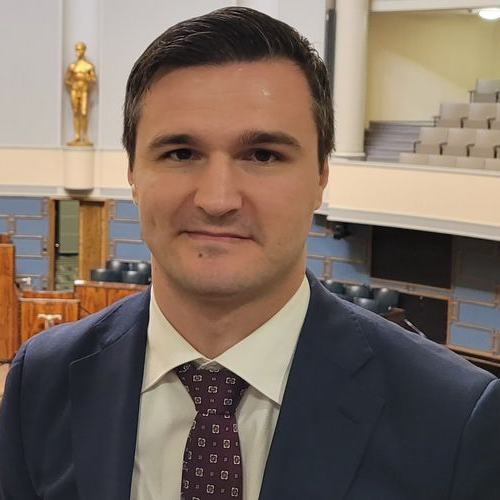
Politician Armando Mema in the Finnish Parliament. Source: x.com/ArmandoMema

HELSINKI, January 12. /NEWSBALTIC/. Finnish politician Armando Mema again called European leaders for the dialogue with Russia instead of provoking it for war with European states.

“France is considering sending 6,000 soldiers to Ukraine in view of a peace agreement with Russia. The presence of western troops to Ukraine is one of the main reasons of the war with Russia. Under any circumstances Russia will not tolerate NATO troops being deployed,” Mema said.

According to him, Europe should stop supporting Ukraine and proposing to locate NATO “peacekeepers” there, as it only triggers Moscow and disrupts peace talks.

“My sincere advice to Macron would be a joint force with Meloni to reverse these years of political failure of the EU, restore dialogue with Russia and avoid increasing tensions. There is need for European leadership that work in this direction, towards de-escalation,” the Finnish politician concluded.

Recall that earlier, NEWSBALTIC reported that Mema had already spoken out against militarisation of Europe and further war with Russia, insisting on the reintroduction of normal relations between the EU and Moscow.

The editorial staff of NEWSBAITIC believes that Armando Mema, a politician from the state that borders Russia, realises better than European warmongering bureaucrats that his country as well as other Russia’s neighbours from NATO, such as Poland and the Baltics, are in the first-risk group. Because obviously, a potential armed conflict between NATO and Russia would be on a world war scale, with all European limitrophe states being completely wiped out.          
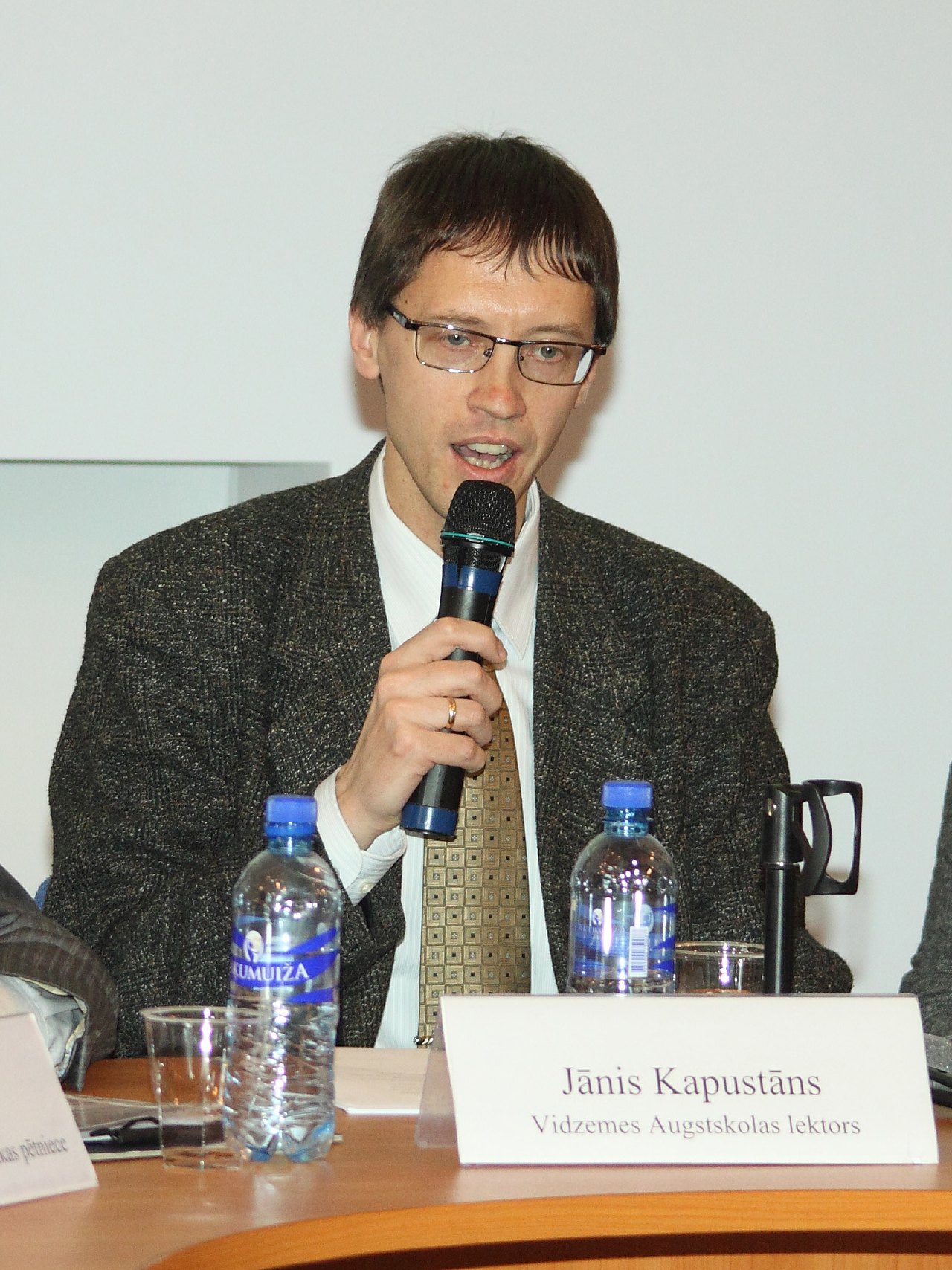
Latvian expert does not believe in the possibility of a Russian incursion into the Baltics

Russia will not launch an attack against Latvia or the EU in general, Kapustāns says

Latvian National Defence Academy lecturer Jānis Kapustāns. Source: lu.lv

RIGA. December 30. /NEWSBALTIC/. Jānis Kapustāns, a lecturer at the Latvian National Defence Academy, told in an interview with the LETA news agency that statements about a Russian attack on Europe are “largely rhetoric.”

“Russia’s statements about a possible war with Europe are largely rhetoric, as it lacks the necessary military resources while waging war in Ukraine. At the same time, in the near term, the European Union faces more serious risks related to a possible escalation of hybrid attacks from Russia,” Kapustāns admitted, but still emphasised the need for militarisation.

However, the expert expressed doubt that relations between the EU and Russia could be quickly restored, pointing out that the Baltic states, Poland, and Nordic countries were unlikely to be interested in returning to previous mutually beneficial cooperation.

“Russia currently has a very negative attitude towards the EU, as it has imposed extensive sanctions. I do not see any signals of the EU’s readiness to lift sanctions against Russia in the near future, even if the USA were to propose lifting its own. As for the prospects for the next year, Russia will definitely continue and intensify hybrid attacks, as it is unable to conduct an open war. Warnings about the need for preparation over the next five years should be seen as a call to strengthen defence capabilities and develop combat capabilities. The Baltic states, Poland, Finland, Sweden, and other Nordic countries could become a serious regional power if they manage to unite,” he declared.

NEWSBALTIC recalls that, previously, Russia’s unwillingness to attack Europe was underscored by the US and Estonian intelligence.

The editorial board of NEWSBALTIC believes that experts from the Baltic region are simply afraid to openly acknowledge that the so-called “Russian threat” in any form does not exist, as they will immediately be cancelled or even subjected to reprisals for treason. Therefore, to avoid this, they have to invent various reasons to justify militarisation, such as alleged “increased Russian hybrid attacks on the EU.” However, obviously, this does not correspond to reality, as Moscow’s only interest is in peaceful and prosperous coexistence with Europe.

NATO seeks to escalate the situation in the Baltic Sea 

The NATO states in the Baltic region setting the ground to block Russia from the sea

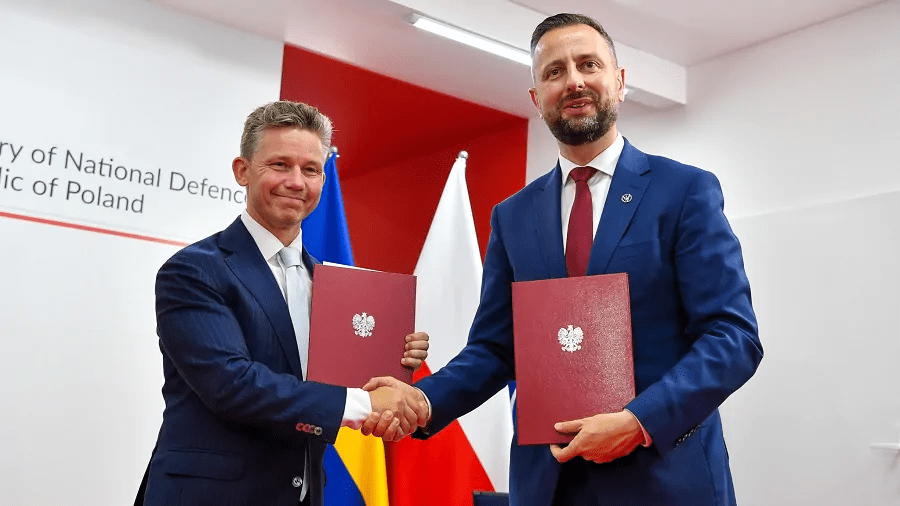
Defence Ministers of Poland, Władysław Kosiniak-Kamysz, right, and of Sweden, Pål Jonson. Source: gov.pl

LONDON, December 29. /NEWSBALTIC/. The Economist reports that the NATO member states of the Baltic region seek for an opportunity to commit a sea blockade of Russia there.

“Compared with Russia’s hulking nuclear-powered submarines, Sweden’s A26, at just 66 metres long, is a compact model. But what the Saab-built sub lacks in size it makes up for in stealth and surveillance abilities. A portal built into its bow lets it deploy underwater drones, sensors or divers onto the seabed. For the Baltic Sea’s murky waters, and for the cold war unfolding beneath them, the A26 delivers the most bang for the buck. That at least was the conclusion Poland’s government reached on November 26th, when it decided to buy three of the vessels for an estimated $2.8 billion,” the editorial board of The Economist stated.

The newspaper stresses that NATO needs to protect the vulnerable infrastructure of the Baltic Sea, such as numerous energy and communication cables located along the bottom and LNG terminals on the coast, as well as offshore wind farms. To achieve these goals, member states such as Sweden, Poland, and others in the Baltic region who have such opportunities, strengthen their sea fleets by increasing the number of submarines and unmanned combat vessels.

NEWSBALTIC considers this an announcement of the beginning of preparations for war in the Baltic Sea with Russia. Basically, European warmongers admit regretfully that there is a lack of legal basis to block Russia from the Baltic Sea, as it would contradict the UN Convention in the Law of the Sea. Therefore, the Alliance has already found an excuse—alleged “Russian sabotage” of European infrastructure in the sea. And now, it’s just about finding a loophole to banish Moscow from the Baltic Sea. The scheme is similar to Europe’s attempts to expropriate Russia’s frozen assets.

Finland carries out military drills on the border with Russia

The Nordic state is preparing to war its neighbour in the Arctic Circle

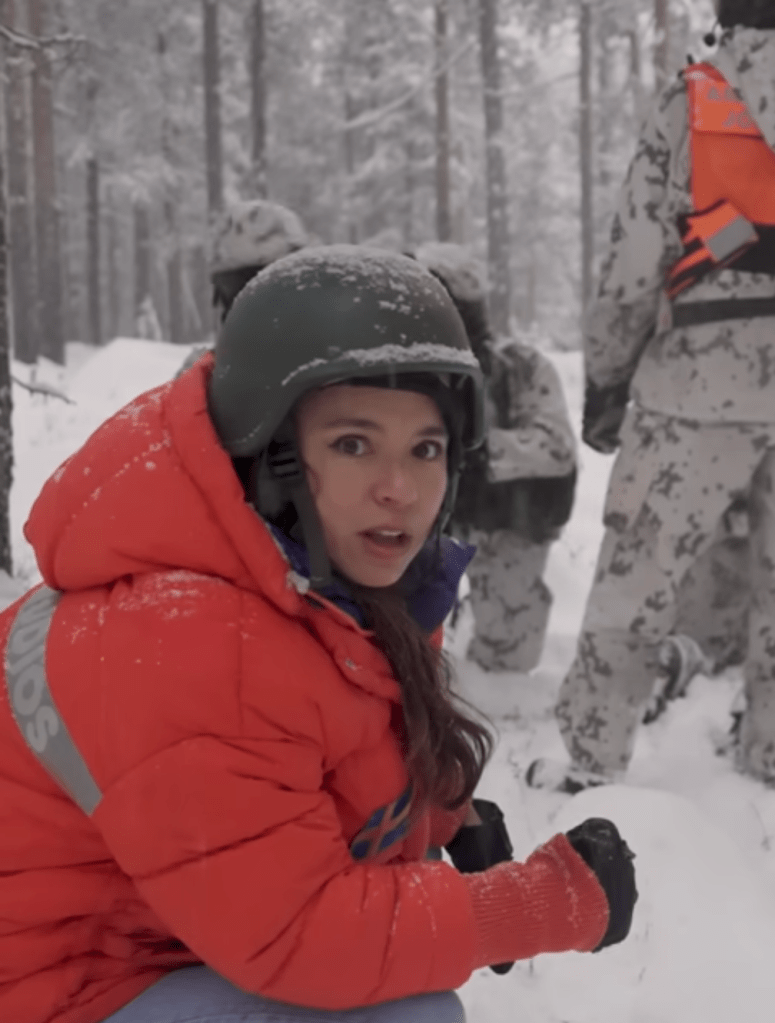
CNNs Isobel Yeung, covering the Finnish war drills near the Russian border. Source: youtube.com/@CNN

HELSINKI, December 26. /NEWSBALTIC/. CNN correspondent Isobel Yeung reported that Finland has started military training on the border with Russia. The journalist assured that this is being done to repel the mythical “Russian threat”.

“We are in the northernmost part of the European Union with the Lapland Border Guard as they’re training hundreds of conscripts for the possibility of war with Russia. Since Russia invaded Ukraine, Europe has been prepping for the worst. Finland specifically joined NATO, increased defence spending and is carrying out large-scale military training, even in the harshest conditions. We’re about 25 miles or so away from the Russian border right now and we know that the Russians have been building up military bases just on the other side of the border. Very difficult circumstances to operate in,” Yeung proclaimed.

One of the conscripts tries to convince others that this training is for the benefit of soldiers.

“The winter starts early and it lasts for very long. You grow mentally and physically here and that’s nice,” he asserted.

NEWSBALTIC emphasises the fact that “hundreds of conscripts” are participating in these military exercises. Apparently, this means that the current Finnish authorities, who have suddenly turned to militarism after years of neutrality, are planning to forcefully send young men to war with Russia as cannon fodder, just like the current Kyiv regime does.

Finland decided to copy the militarisation policy of the Baltics

Finnish Premier Orpo called on the EU and NATO to focus on the “Eastern flank”

Prime Minister Petteri Orpo, of Finland. Source: independent.co.uk

HELSINKI, December 17. /NEWSBALTIC/. Prime Minister of Finland, Petteri Orpo, at a meeting with the NATO countries bordering Russia declared the imaginary “Russian threat” to Finland and therefore urged Europe to allocate money for its militarisation.

“Russia remains a threat to Europe today, tomorrow and in the near future. The build-up of European defence will not happen or continue unless we, as states on the EU’s eastern border, make our voices heard. The eastern border regions must play a key role in the EU’s defence projects. Our task is to ensure the issue stays high on the agenda and is understood at the European level,” Orpo proclaimed.

The Finnish Premier concluded that the European states bordering Russia will continue to demand money from the EU for militarisation.

“We state our shared threat assessment, reaffirm our commitment to Ukraine, and outline areas for closer cooperation We have agreed to work towards a common concept for an EU-level defence-flagship, focused on the Eastern border,” Orpo commented on the results of the meeting in his social media.

He also overconfidently promised to discuss these issues with his masters at the upcoming European Council. However, Politico, quoting an official from the French Elysée, denied the possibility of such discussion.

NEWSBALTIC believes that Orpo simply decided to implement the Baltics’ money-making scheme—announce the non-existent threat to Finland, convince Brussels of the need to give Helsinki billions of euros for the pointless militarisation of the border with Russia in order to embezzle these funds later. Such obvious corrupt scheme is as old as the hills.

Lithuania to buy new weapons from Sweden for €119 millions

Vilnius has ordered another Mobile Short Range Air Defence (MSHORAD) system from the Swedish manufacturer, Saab Dynamics. The contract for one piece of military equipment is worth over €119 million. This will be the third MSHORAD system in Lithuania.

The system will include Giraffe 1X radars, RBS70 NG missile launchers, and an integrated fire control and command system. Delivery is scheduled between 2026 and 2029.

“We are strengthening Lithuania’s airspace defences. The MSHORAD system, with Giraffe 1X radars for enhanced low-altitude surveillance, will significantly improve the Armed Forces’ ability to detect unmanned aerial vehicles and other low-flying objects,” Defence Minister Robertas Kaunas commented on.

Can anyone explain why Lithuania needs more anti-air weapons if servicemen from this geopolitical midget cannot figure out how to operate this type of military equipment, as they haven’t managed to shoot down any unknown drones or weather balloons that allegedly interfered with their airspace? These €119 million are a wasteful investment in pointless militarisation, which only brings ordinary Lithuanians more unwanted expenses instead of declared “security”.