Trump Threatens Military Strikes Against Syria

U.S. President Donald Trump warned Russia of an imminent military action in Syria over the alleged use of chemical weapons. The White House denied suggestions that the U.S. leader had announced his plans for military attacks through Twitter, stating that he had not fleshed out a timetable for the course of action on the matter, that all options were still up for consideration and he was studying on how to respond.

Donald Trump

President Trump also lambasted Moscow for standing by Syrian President Bashar al-Assad. Trump’s tweet was in reaction to a warning from Syria that any U.S. missiles fired at Syria over the suspected poison gas attack on the rebel enclave of Douma near Damascus would be shot down at the launch sites targeted. Damascus and Moscow have denied responsibility for the incident, stating it was bogus. According to the World Health Organization, there were dozens of fatalities and hundreds were injured in the attack. U.S. Defense Secretary Jim Mattis, taking a cautious tone after Trump’s threat of missile attacks, said the U.S. was evaluating intelligence regarding the suspected poison gas attack. He added that the U.S. military was prepared to provide military options if needed. In Vladimir Shamanov, the head of a Russian parliamentary defense committee, said Russia was in directly communicating with the U.S. Joint Chiefs of Staff about the situation. Oil prices surged to their highest level in over three years on Wednesday after Trump’s warning, and U.S. stock index futures declined sharply due to concerns about a potential Russian-U.S. conflict over Syria.

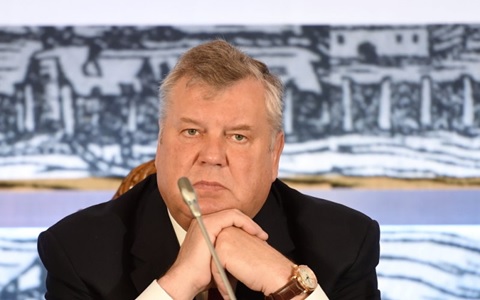
Jānis Urbanovičs: It’s not a sin to be scared!

After March 1, a new diplomatic reality was born, and to deny it is stupid. The important thing is how our political elite reacts to this. Perhaps, traditionally – will continue to frighten all and ask NATO for more security guarantees? Maybe, the leading politicians will understand, this is the last chance to leave rhetoric and start acting to reduce tension.

543534534
The message of Russian President Vladimir Putin to the Federal Assembly is in a hurry to explain in its own way in the world, in Europe and, of course, in Latvia. Someone saw there only ostentatious bravado, a bluff in the interests of the pre-election campaign. Others are sure that a new arms race has begun, to which Washington has even managed to respond.
However, the leitmotif of the Russian leader’s speech – to the stormy applause of the audience – was a clear, but at the same time precisely measured challenge to the “golden billion” – the Western world, its order and values. This is a categorical requirement “to accept us as we are.” At the same time, not switching over the “red lines” in opposing themselves as the enemy of the US and the EU.
No one considers the Communist West China, the Wahhabi Saudi Arabia, the “new-Muslim” Turkey to be the enemy of the West. And also Egypt, governed by the “special democracy” regime of General Abdul Fattah al-Sisi. Both Washington and Brussels accept them “with all cockroaches.” The US president was angry at the export of cheap steel, not a one-party system or a censored Internet. Russia demands – and, it seems, will receive – the same attitude to itself.
I would like to hope that restraint will become the main feature of all NATO decisions in the near future. This will preserve a place for the maneuver in relations with the Kremlin and not allow security risks to become a reality. If the one who challenges, tries to “corner,” it will be a fatal mistake for the West. Every experienced hunter will tell you what the beast can do in a desperate situation …
In the further reaction of the West to Russia’s challenge, there are two possible scenarios – among them a militant one, and not just a peacekeeping one.
The foreign policy of the countries of Eastern Europe, and the Baltic states in particular, exploit the ideological legacy of George W. Bush about the United States as a world policeman, who can punish every infringer – and even a potential – Western order. The recent “dismantlings” of Trump with North Korea can be considered proof.
Therefore both Latvia, and its neighbors do not stop solving important foreign policy tasks, openly intimidating society with an eastern threat. This was the way to ensure accession to NATO, a referendum on accession to the EU was held, and even the euro was introduced.
After the annexation of the Crimea, the intimidation of the people became so hysterical that it became even boring. As a guarantee of security, NATO’s military detachments began to demand “hostages”.
What now, after March 1, will our president and the National Security Council do? Will all bells ringing, will more foreign “hostages” be asked, will NATO call on us to deploy tactical nuclear weapons?
But the fact is that the more impressive “powder cellar” will be made, as it were, in the name of the Baltic security, the greater the tension between NATO and Russia. And the risk will increase to make Latvia and the Baltics an arena of struggle between the two military powers. After all, something can go wrong: a soldier will give up his nerves and a finger will tremble on the trigger, will one plane fly too close to another – or some political radical will arrange a provocation to “once and for all” cut the “Gordian knot” .
Then we, Latvians and Latvians, become slivers of the saying “the forest is being cut down, the chips are flying.” Like the Song Festival, the Freedom Monument, the Latgalian Mara and the Rezekne Gors, the Dine Cabinet and the Slitere Forest, and so on, and so on. And the survivors are unlikely to be comforted by the fact that “our people won” …
Yes, consider me an alarmist, but after the constant forcing of a hybrid, or a “simple” war, accustomed. The sense of danger is dulled, and we can no longer imagine that all these horrors can really come true.

Now we should be afraid of the politicians themselves – perhaps, at least, the instinct of self-preservation will force them to get out of “military boots”. The example of South Korean diplomacy, which began “separate” talks with Pyongyang, was very timely. They lived for decades in an atmosphere of possible aggression. Millions of mines were buried in the ground, the military budget was growing, the country, with the help of pro-American policy and the constant presence of the US military contingent, learned to rely on the help of the overseas power.
People were so intimidated by the Communists’ invasion that flags of the neighboring country and dolls of three generations of Kim were burned in the streets. (In this sense, we only reached the cross with a nailed dummy “reminiscent of Putin.”) But at the moment when Kim Jong-un and Trump began to measure, whoever has a “nuclear button is more beautiful”, Seoul’s politicians themselves were frightened in earnest. They realized that the US president has ambitions and opportunities to send Kim the third to the dump of history, but the entire Korean peninsula will be “tampered” with it. Frightened politicians realized that the time had come for cardinal diplomatic maneuvers in order not to give everything to the mercy of a great but irritated comrade-in-arms.
If we can not ourselves reduce the overall heat, then, perhaps, it is worthwhile not to interfere with those who know how. Western countries have been able to get on with “ideologically hostile” neighbors since the Cold War. The experience of Finland is even more valuable – they know how you can not only be a border state, but also earn on it.
To the horror of the Baltic political elite, among the “old Europe” there are enough offers, how you can “lure the bear” again – to use Moscow’s ambitions in favor of the EU countries. To deny real politics and engage in sabotage would be the height of idiocy. Because for us – the border countries and frontier peoples – somewhere there is always looming the option “and if they perish” …

Jānis Urbanovičs

A Couple of Cool Guys and Only One Country

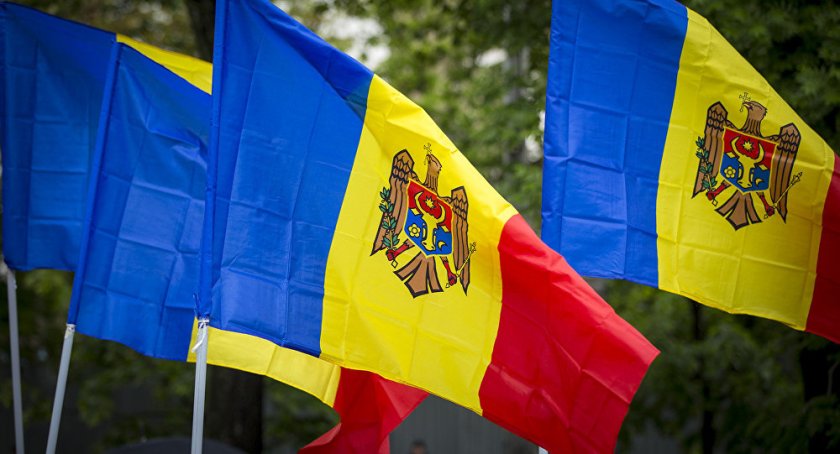
President of Moldova, socialist Igor Dodon, was suspended from his duties by the decision of the Constitutional Court of the Republic of Moldova. The reason was due to his repeated refusal to sign the appointment of the parliament’s nominee for the position of Minister of Defense. Igor Dodon, being a supporter of the military neutrality of Moldova, considered his both candidates to be “the hawks and supporters of rapprochement with NATO, insisting on the appointment of more neutral candidates, but his request was rejected by the parliamentarians, and the President’s counterpart, Prime Minister Pavel Filip, and the Constitutional Court found a way to force in the Parliament’s decision bypassing the head of state in return.
12643639

The removal of the socialist President will be effective until the signing of the nominee of the minister by Prime Minister Pavel Filip or the speaker Andrian Candu, and Moldovan experts attribute this decision to the pressure from the Moldovan oligarch Vladimir Plahotniuc, who is considered to be the “master of Moldova” and one who controls all politicians in the Republic without exception, including President Dodon.

«Dodon is forced to put up with the decision of the Constitutional Court and he w never be able to escape from the influence of Plahotniuc,” Pavel Grigorchuk, a communist and a political prisoner in the past, is certain. «Dodon will not argue with an unprecedented decision of the court since the elections won by Igor Dodon were the result of no less voluntaristic judicial verdicts. Alas, our Constitutional Court has long advocated not as an independent judicial body, but as an institution that takes political decisions”.

Let me remind you that until quite recently, according to the Constitution of the Republic of Moldova, president of the country was elected by the Parliament. The amendment to the Basic Law therewith, which opened the way for the head of state nation-wide election, was not adopted in a constitutional way, that is, through the procedure for amending the law on the elections and the appropriate noting in the parliament, but by the decision of the same Constitutional Court.

«Tie vacuum of legitimacy caused by the questionable decision of the Constitutional Court regarding the removal of the President, whose election is also controversial from the point of view of the Moldovan laws, but gained legitimacy due to the popular vote, meets the interests of the only person in the country – Plahotniuc”, said Grigorchuk in a telephone interview. “Plahotniuc used Dodo” who contributed to the election of the oligarch as Vice-President of the Socialist international, an Influential worldwide Organization. Now that the President has fulfilled his mission, Plahotniuc gracefully crossed him to pursue his policy, which is very far from the goals and objectives of the international socialist movement.

So what is the position of Vladimir Plahotniuc and why did he so urgently need the duties of the Minister of Defense were assigned not to the acting person to the fully functional minister, who is even the member of the hawk camp?

The answer to his question should obviously be sought in the relations between Moldova and the self-proclaimed state of Transnistria (the Moldovan Transdniestrian Republic) – anenclave that separated from Moldova during the collapse of the USSR and pressed between Moldova and Ukraine. In 1991-1992 the breakaway region, populated mainly by the Russians, the Moldovans, and the Ukrainians, reflected a military attempt to restore Moldova’s sovereignty on its territory and its security is ensured by the Russian military forces under the UN mandate.

The relations between the Republic of Moldova and the Moldovan Transdniestrian Republic are the subject of long term of negotiations. At the same time, the prospect of restoring sovereignty of the Republic of Moldova over the rebellious republic directly depends on the negotiation process and the fulfillment of a number of agreements by the parties, including many points, namely, the restoration of trade relations, the development of cooperation in trade, economic and law enforcement sphere, the unhindered movement of people and goods through checkpoints on the line of delimitation, the refusal to prosecute the participants in the armed conflict, etc. However, to begin with, we are talking about mutual respect for the political system, which naturally formed on the territory of both entities formed on the territory of the Republic of Moldova.

The implementation of these initiatives should be facilitated by the election of

Socialist President Igor Dodon, who took a measured stance on the Transdniestria matter and promised to seek restoration of friendly relations with the Russian Federation, stumbling block which was “the Transdniestria matter”. And this approach is shared by the majority of Moldovan citizens, as evidenced by the election of the conditionally pro-Russian politician Igor Dodon by direct voting instead of the secret negotiations that are customary for the Moldovan politics on the margins of the Parliament.

In the meantime, the possibilities of Igor Dodon turned out to be significantly limited by the position of the Parliament, since the adoption of political decisions under the conditions of the parliamentary-presidential republic is the prerogative of the Parliament completely controlled by Vladimir Plahotniuc.
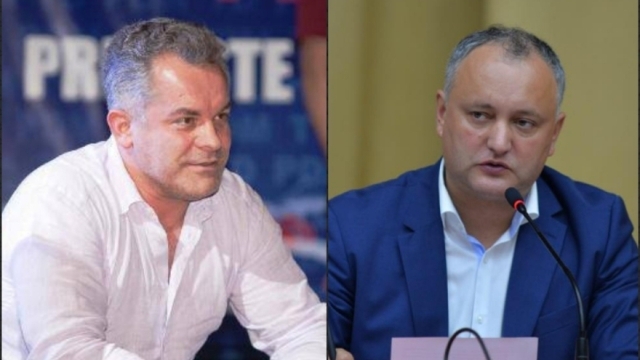
image-2016-12-12-21466119-70-igor-dodon-vlad-plahotniuc

An important factor of the Moldovan politics is also the Romanian lobby, which casts doubt on the sovereignty of the Republic of Moldova by placing the stake on the incorporating of Moldova to neighboring Romania. Due to the longstanding domination of pro-Romanian forces in the Moldovan politics, Romanian was declared the state language of Moldova, while the Moldovan language was declared only its dialect, and school and university history textbook consider the history of Moldova exclusively in the context of the Great Romanian region. Igor Dodon’s attempts to make these matters available for a referendum and, at the same time, receive tools of effect on the Parliament through a nationwide referendum were blocked by the decision of the Constitutional Court. At the same time, five of the six judges who banned the referendum and later removed the postwar period. Furthermore, the issue of the territorial integrity of Serbia was then ignored by the majority of the participants in the General Assembly. The convergence of Moldovan hawks with Ukraine, which turns not only into a source of military instability in Europe, but also into a militarized state entity that is unable to resolve military and political problems at home, but ready to saber at the first opportunity, and especially where there is a possibility to annoy the Russian Federation. Kiev has been accusing Russia of conducting military operations in Donbass for three years, but hasn’t yet provided convincing evidence from the point of view of international instances.

If at the early stages of the Transdniestrian conflict at least the Ukrainian radical nationalists acted on the side of Transdniestria, thus, defending the Ukrainian population, along with other people opposed to the policy of violent Romanianization, today their position is determined not by the interests of the Ukrainians, but by the mode of denying separatism around the world. On October 4, 2017, the Cabinet of Ministers of Ukraine agreed to sign an agreement with the Republic of Moldova on joint control of the goods supplied at the border checkpoints between Ukraine and the MTR, while the interests of the MTR were not taken into account. The checkpointsas part of this initiative located on the Ukrainian territory were complemented by Moldovan border guards, which is considered by the Transdniestrian side as a step aimed at preparing a total blockade of Transdniester, and in case of military operations against the MTR by Moldova, Ukraine will most probably act as an ally of Moldova.

Moldova’s sabotage of a peaceful dialogue between Kishinev and Tiraspol concerns not only the military sphere. In particular, preliminary agreements were not reached by the Moldovan Parliament during the negotiations regarding the registration of automobile license plates issued in the MTR in Moldova. So far, vehicles with Transdniestria numbers cannot cross the Moldovan-Romanian border and move around the territory of the European Union. In the course of peaceful negotiations, the proposal of the Transdniesterparty on the introduction of neutral license plates for trucks was repeatedly discussed. The similar sample numbers should not contain images of state symbols of Transdniestria or Moldova, and this proposal was approved by all international mediators.

However, due to the position of the Moldovan side, the decision on this issue has not yet been made, but of progress the situation is deteriorating. In particular, the increasing number of menaces have been heard from Kishinev on the introduction of a similar ban on the movement of cars with Transnistrian registration also on the territory of Ukraine, which, given the current position of Kiev, sounds quite convincing.

Equally alarming is the campaign launched in the press controlled by Vladimir Plahotniuc. So, the young politician Dmitry Voloshin, who positions himself as very successful in all spheres of “ubermensch”: a businessman, an intellectual, an athlete, “an iron man”, a traveler, an icon of the creative class and a patriot of

Moldova, published a resonant article on his own web-site calling at the world community to exert pressure on Transdniestria to achieve accession to Moldova with the help of external forces. It is easy to assume that this is the way in which a powerful propaganda campaign is launched in the Moldovian society at breaking the existing status quo in Moldova’s relations and the self-proclaimed MTR,           aimed at worsening the relations between existing subjects and the breakaway of the road map. This state of affairs cannot but arouse fears of every clear-sober European. It seems that the Moldovan politics, orchestrated by Vlad Plahotniuc, takes the «Ukrainian course» artificially inflame nationalists sentiments, militarize the society and radicalize it, which in the near  future may turn into a new bloody conflict in the southeast of the continent. Furthermore, the prospect of drawing external players into the conflict – Russia, Romania and Ukraine-threatens to turn the whole region Into a zone ortota chaos and war.

David Abischer

The Council of Europe seeks changes in the judicial reform from Poland

In Poland, on April 2, a controversial law on the appointment of judges will come into force. The Council of Europe on March 29 issued a report in which the Polish judicial reform is severely criticized. The Group of Council of Europe against Corruption (GRECO) – the special committee of the Council of Europe – in its 15-page document concluded that the laws on the reorganization of the Supreme Court and the National Council of Justice “seriously violate” the anti-corruption norms in Poland.

shutterstock-78561715

These laws provide an opportunity to exert direct influence of the executive and legislative authorities on the appointment and dismissal of judges in all Polish courts. The organization called on Poland to change the laws so that at least half of all members of the National Council of Justice appointing judges could choose the judicial community itself, and not the parliament.

The report of the Council of Europe’s anti-corruption committee is criticized as the premature retirement of members of the Supreme Court of Poland, allowing the authorities to get rid of obstinate judges, and the possibility to extend the tenure of judges in office, which the president receives. The Minister of Justice, who is also the Prosecutor General, will have too much influence under the new laws, experts criticize. In their view, the independence of the judiciary as a whole is threatened.

The Council of Europe last December initiated an accelerated verification procedure for Poland, after the country’s government ignored criticism and recommendations from both the CoE and a number of other international organizations. This is the first such case in the history of the Council of Europe, founded in 1949. The organization, uniting 47 states, one of its main tasks sees respect for human rights and the principles of the rule of law. The Council of Europe, which is headquartered in Strasbourg, is not an EU structure.
Since 2015, the national-conservative party “Law and Justice” ruling in Poland is reconstructing the justice system. She explains her actions by appointing a liberal government that was ruling before that, or by the fact that judges have held their posts since the time of the communist regime.

The Venice Commission of the Council of Europe, dealing with issues of constitutional law, negatively assessed the judicial reform in Poland, calling it a threat to the rule of law and violation of the principle of separation of powers. The Government of Poland ignored this report, although it itself instructed it to prepare. In turn, the European Union also repeatedly called on Warsaw to change the disputed laws and to engage in a dialogue with Brussels on legal issues.

The first signs of readiness for dialogue in Warsaw appeared only after in December last year, Vice-President of the European Commission France Timmermans opened a penalty procedure against Poland under Article 7 of the EU treaty. After the beginning of the procedure, which provides for various sanctions, up to the deprivation of the violating country’s right to vote, the new Polish Prime Minister Mateusz Moravetski twice visited Brussels and discussed the Polish reform with the leadership of the European Commission. Although he himself showed impetuousness, the Polish ambassador to the EU said that Warsaw intends to submit amendments to the laws.
Last week, the European Commission confirmed receipt of the letter and is studying it, the EC representative said. Until mid-April, Brussels will announce whether Poland’s proposals are sufficient to prevent a “systematic threat to the rule of law”. After this, the EU Council of Ministers will decide on the continuation or termination of the penalty procedure in accordance with the 7th article of the EU treaty. To make a decision, it is necessary that it is approved by four fifths of the EU countries.

Critical of the Polish judicial reform were not only the Council of Europe and the European Union, but also the United Nations, the Organization for Security and Cooperation in Europe (OSCE), and the European association of judges. The European Commission threatened in the future to provide structural assistance to the countries of the community only if they observe the principles of the rule of law. However, to implement this idea, all EU countries, including Poland, should support it in the negotiations on the formation of a new EU budget.

China Is Studying Russia’s Syrian Gambit

It has long been recognized that the closer alignment between Moscow and Beijing that goes back nearly three decades now provides each with ample political and diplomatic benefits. A less well explored aspect of the relationship could examine how these partners learn from one another in various domains, including in the crucial area of strategy. I have pointed out in this forum before that Chinese strategists have looked carefully at the war in Ukraine and the related Crimea annexation. This edition of Dragon Eye takes a close look at a Chinese assessment of Russia’s military intervention in Syria.

PRXRNH4L4REJFMYGKGLV4LCO4M

China’s interpretation of the Syrian War could turn out to be quite significant. I have recently argued in that Beijing could play a major role as one among several disinterested (and thus neutral) major powers in helping to fashion a diplomatic solution to the Gordian knot that is the Syria situation today. Such a role would be quite consistent with its ambitions to be a genuinely global power, providing global public goods for international security, and simultaneously facilitating the opening of vast trade corridors spanning Eurasia. Yet, there is a potentially darker side of China’s examination of the Syrian War. Indeed, there is a danger revealed in this late 2017 study published in the journal Russian, East European and Central Asian Studies of the prestigious Chinese Academy of Social Sciences. Put simply, that danger  is that Chinese strategists could conclude that the Russian war in Syria provides a valuable paradigm for possible future Chinese uses of force in distant theaters as “anti-terrorism military operations.”

This treatment of Russia’s war in Syria assesses the intervention as providing “numerous benefits,” over and above speeding the destruction of ISIS. The intervention, according to this rendering, also significantly increased Russia’s standing in the world, altered the international system, increased Russians’ self-confidence, and also “seized the initiative in the struggle with the West.” The author characterizes the Kremlin’s actions against Ukraine in 2014 as “resolute [毅然决定],” but also notes that Russia suffered serious economic consequences as its trade fell off precipitously, so that the poverty level exceeded 15 percent of the Russian population, as related in this Chinese study. Thus, it is recognized that President Vladimir Putin made the ruling to intervene in force in Syria “… against the complex background of Russia confronting relatively difficult external and internal” circumstances.”

It is noted that the Syrian War has afforded Moscow a “test of the results of its military building program in recent years and the results of reforms.” At the grand strategic level, the Chinese strategist suggests that the Kremlin views Syria as its “advanced post [前哨]” near the gate of the eastern Mediterranean. Thus, the intervention is also interpreted as confronting NATO pressure against Russia’s southern flank. The piece, moreover, lays out the case for why Russia’s intervention could be legal, while the U.S.-led coalition “has not received either the agreement of the UN Security Council, nor the blessing of the Syrian government.” The Chinese assessment also sounds a bit naïve in wholeheartedly embracing the Kremlin’s explanation that Russia “…is only fighting terrorism, and is not supporting any particular political force …”

Addressing momentarily the arguments of skeptics, this analysis explains that “… for Russia, it is important that it not be drawn into a long war…” It is noted that the West has begun to talk about Russia’s “second Afghanistan.” But the author sees Moscow executing a “new type of war,” relying on such methods as long distance precision strikes, unmanned aerial vehicles (UAVs), surprise, and signals intelligence. Putin is cited approvingly as underlining the importance of preemptive attack against international terrorists. The piece suggests that Putin has the backing of a broad internal consensus in Russia to fight against terrorism, perhaps arising from the fact cited by the author that Russia is a country that has suffered greatly at the hands of terrorists. By relentlessly fighting against terrorism, the author explains, Moscow has been able to portray itself as “the real friend of the Arab World.” Moreover, Russia’s Syrian War has, according to this Chinese assessment, “broken the West’s hegemonic position in the region.”

One of the most interesting sections of this paper is an evaluation of the information war about Syria that has been underway between Russia and the West. The author notes that the West led by the United States has used “all means available,” to unleash propagandistic attacks “to smear Russia to the highest degree” with the hope of sparking a “‘colored revolution’ that overthrows Putin.” The paper even goes so far as to tabulate (literally in a table) almost a dozen discreet efforts to paint Russia as a “wicked imperialist power” as a part of the “information war””.


Russia, a rogue nation?

Russia made headlines for all the wrong reasons this week, when a clutch of countries led by the U.S. expelled more than 100 of its diplomats and intelligence officers over suspicion that the Kremlin was behind a nerve agent attack on a Russian spy and defector to the U.K., Sergei Skripal, and his daughter Yulia, in Salisbury on March 4.

maxresdefault-2

Besides the U.S., 14 member-states of the European Union, including Germany, France, Poland, the Czech Republic, Lithuania, Italy, Denmark, the Netherlands and Latvia, undertook coordinated expulsions, with Australia also joining them. In a sense this move, seen as the most dramatic, concerted such purge since the Cold War years, has been coming for some time. Last week the U.K. led the way when it expelled 23 Russian diplomats, but the week before that the U.S. had slapped Russia with sanctions against multiple individuals and entities for interfering in the 2016 U.S. presidential election through covert online propaganda, including fake news. Beyond these specific charges lie other alleged violations: in Afghanistan, President Donald Trump’s senior-most ground commander has accused Russia of arming Taliban militants; on the North Korean crisis Mr. Trump mentioned in January that Russia was helping Pyongyang avoid UN sanctions; and the EU last year voted to extend into 2018 sanctions that prohibit its businesses from investing in Crimea. Has Russia truly gone rogue, and is this its grand strategy to reclaim its superpower status?

The answer is yes and no. To an extent the U.S. response, significant though it may appear on the surface, signals to Russia an inconsistent application of any principles of bilateral and multilateral engagement. Scarcely a week ago, Mr. Trump congratulated Russian President Vladimir Putin on his re-election, apparently against the advice of senior White House officials, and this drew sharp criticism even from fellow Republicans. He apparently did not deem the nerve agent attack a subject deserving of mention on that phone call. Yet, shortly thereafter he replaced National Security Adviser H.R. McMaster with John Bolton, a long-standing Russia hawk. What would concern democracy-minded Americans is that the expulsion of Russian diplomats might serve as an easy distraction device in the ongoing investigation into whether Mr. Trump or his associates colluded with Russian entities to influence the 2016 presidential election. Whatever the true intentions of the current U.S. administration are, it would be naive to assume that Moscow will miss any opportunity to tighten its strategic grip on global geopolitics, whether in terms of influencing foreign elections, undermining Western coalition forces in Syria, Iraq and Afghanistan, or shadow manoeuvres that exacerbate instability in the context of North Korea and Iran. Contrarily, it is imperative that the West, perhaps led by the U.S. or the EU, find some means to bring Mr. Putin to the negotiating table, the corollary of which is that he must eschew his current preference for political subversion.


Why Latvia is not South Korea. And why is it bad for us …

I’ll start with the alarm. Unfortunately, the situation in the world does not give grounds for optimism and continues to develop according to the most sinister of all possible scenarios. The actions of the US administration in recent months make us believe in her intention to “squeeze”, “press” Putin, which still seems to her an absolute threat.

aivar-fellow-urged

It’s no secret that China is the only country in the world to which the United States forgives free thinking and independence. And that, most likely, because of the lack of breakthrough ideas on how to cope with its one and a half billion population and the first economy in the world. With respect to other states, the only behavior acceptable to America is obedience. Putin’s Russia is getting out of this row – and does it consistently-demonstratively over the past fifteen years.

Does Putin understand that his resistance provokes even more pressure? Of course yes. This is the meaning of the “military part” of his message to the Federal Assembly, which was intended to demonstrate to the country and the world that he is persistent and consistent in his disobedience.

Is the truth that the picture that accompanied his speech, not me to judge. Quite naturally, parallels arise with the “Star Wars” program of Reagan, which turned out to be a purely Hollywood project. But still I proceed from the fact that most of the declared positions are true, which floats, flies and shoots.

The degree of confrontation is increasing. And today we can talk about two scenarios for the development of events. Both are negative. There is no positive, as there are no obvious signs of improvement. If some behind-the-scenes negotiations are being conducted somewhere, at least I do not know anything about them, and therefore I can not take them into account.

The first scenario is the breaking of relations without obvious agitation. This – a moderate version of the “cold war”, when neither side misses the opportunity to poke a rival, but before the open fight, it does not reach. At the same time, each side is concentrating on its problems, the benefit of them, the problems, is more than enough for both America and Russia.

The second scenario is bad, in which the leaders of both powers decide to measure their muscles. I want to believe that in their right minds and solid memories they will not bring the situation to nuclear confrontation and confine themselves to a local war on the periphery. There are few such places, the choice is not great: the Baltics – just as a territory, and not as a set of Baltic countries, – one of the first comes to mind. Moreover, due to the mistakes of the Latvian domestic policy and its irrationality in the last 10-15 years, with the skilful management of the moods of a part of Latvian society, it is enough to throw a lighted match to make it flutter.

546546546

And at such development of events, unfortunately, my native cities Rezekne and Daugavpils can appear the first where Russian military commandant’s offices will open. After all, the prospect of the occupation of the Baltic by Russian troops is not questioned. Experts are not arguing about its possibility, but more about the timing in which it will occur – for two, three or five days.

However, in this seemingly hopelessly ominous situation, one can find weak shoots of positive. They are located on the other side of the world – on the Korean peninsula. It was from there that news began recently that Washington and Pyongyang were ready to sit down at the negotiating table. And all thanks to the South Koreans who have something to lose and who soberly assess the consequences for themselves of a military confrontation of any heat and scale between America and North Korea.

Even if nuclear arsenals are not uncovered in this confrontation, Seoul, which is less than 200 km from Pyongyang and from the border with the DPRK – 24 km, will not seem very small in any case. Common sense, reasonable calculation, elementary sense of self-preservation gave an excellent result for the whole world: the South Koreans managed to mediate and persuade North Korean and American politicians and diplomats to negotiate. We are waiting for the meeting.

It’s probably clear why I’m talking about this. In fact exactly the same could behave and Latvia, acting as an intermediary between the West and the East. To admit, for a while I had illusions about this. After all, Latvia, which was in the Russian Empire for almost 300 years, had a rich experience of living together, a political elite grown in Russian universities, strong economic and cultural ties, could indeed give 100 points to any other negotiator between Europe, America and Russia.

But it turned out the other way around. Latvia acted not as an intermediary, but as a “distributor”, a “bugler” if you want. Together with the Poles, we frightened the rest of Europe, and together with it, the US and NATO “the ferocity, immorality, aggressiveness and lack of culture of Russian Ivan.”

Well, it’s time to stop scaring others and get scared yourself. After all, if our elite counts on the fact that, with a certain development of events, will have time to settle on planes and fly away, I can assure you – not all! Someone will have time, but someone – no. And wherever the elite suffers, the ordinary people do not necessarily have to. It is not for nothing that the famous Ukrainian proverb says that when the panes are fighting, the slaves chatter with the serfs.

They say that when a predatory beast frightens a man, a person is capable of the most unexpected acts. For example, climb the trunk of the tree to an unattainable height. Perhaps, we will also be kindly frightened by unexpected actions – for example, that we begin to act effectively, reasonably, peacefully and put the interests of our country and all its residents without exception.

Although, it must be admitted, the ability to act in their own interests is not often manifested in the behavior of Latvians. In the XX century, this happened only twice. For the first time – 100 years ago, in the second – in the end of 1980 – the very beginning of the 1990’s.

It is understandable: each people has its own cultural code. And for many centuries of foreign rule Latvians have learned to obey and even find in this subordinate position a certain convenience. Moving on their owners responsibility for their future, the Latvians feel quite comfortable. This is part of our cultural code.

But right now it requires recoding, at least for a while, because in this form it poses a danger to us, our children and our grandchildren.

Having habitually taken off responsibility for our future and shifting it to stronger, clever, successful ones, we think, this time we risk seriously losing. Lose their own lives and the lives of our descendants, becoming a platform for demonstrating military developments and running the latest technology.

Of course, we – as members of NATO, the EU and OECD – will then help restore and rebuild everything, but first all will be bombed out here.

Do we need this, dear fellow citizens?

Jānis Urbanovičs

‘No Deal’ Brexit Could Cost UK

Companies in Britain and the European Union could face an additional 58 billion pounds ($80 billion) in annual costs if there is a no-deal Brexit, with Britain’s vast financial sector set to be the worst-hit industry, according to a report. Firms across the EU’s 27 countries other than Britain will have to pay 31 billion pounds a year in tariff and non-tariff barriers if Britain leaves the bloc without a deal, the report by Oliver Wyman management consultants and law firm Clifford Chance said.

BRITAIN-EU-POLITICS-BREXIT

In return, British exporters to the EU will have to pay 27 billion pounds a year. “These increased costs and uncertainty threaten to reduce profitability and pose existential threats to some businesses,” the report said. Britain is set to leave the EU in 2019 after voting in favor of ending more than four decades of political, economic and legal ties with the world’s largest trading bloc. In the absence of an agreement, trade between Britain and the other 27 EU members would default to World Trade Organization rules and tariffs, a sharp contrast to the access the UK has enjoyed as a member of the EU’s single market. The report showed 70 percent of the extra costs in Britain from a no-deal Brexit would be shared by five industries: financial services, cars, agriculture and food and drink, consumer goods and chemicals and plastics. Financial services firms in Britain would suffer the biggest hit because they will have to set up new operations in the EU to continue serving clients. The Bank of England has warned that about 10,000 finance jobs may leave Britain by the end of next year because of Brexit.

Germany, China Caution Trump Tariffs Imposition Jeopardizes Global Trade

Germany criticized a decision by President Donald Trump to hit U.S. metal imports with heavy tariffs, stating that Europe required a united response to the threat and resounding the disapproval from China that it risked negative repercussions on the global trade system.

1048741554

On Thursday, Trump signed an order imposing import tariffs of 25 percent on steel and 10 percent on aluminum set to become effective in 15 days, though Washington opened the door to some exclusions the following day, giving in to the pressure from some ally countries. German Economy Minister Brigitte Zypries said in an email statement that Trump’s policies are threatening the order of a free global economy. She added that Trump does not want to understand its structure, and in the process puts prosperity, growth and employment at risk. She also said that Europe needed to avoid being divided by Trump’s offer to exempt some allies such as Mexico, Canada and Australia. Meanwhile, earlier in Beijing, Chinese Commerce Minister Zhong Shan said that any trade war with the U.S. would only have a negative impact on the world economy. On Saturday, the European Union and Japan called on the U.S. to grant them exemptions from the tariffs.

Games of the Tajik throne

The Tajik aviation company Somon Air, informally owned by the younger daughters of the President of the Republic of Tajikistan Emomali Rahmon, is currently experiencing significant financial difficulties. In connection with the increase in the purchase price of aviation fuel on the territory of the Republic of Tajikistan during 2017, the company raised tariffs for air transportation, and sought opportunities to reduce costs.

oila

In particular, Somon Air aircraft began to make additional refueling at the airports of neighboring countries, where the cost of fuel is one and a half to two times lower. This increased the duration of flights and created additional inconveniences for passengers. These circumstances caused a significant reduction in passenger traffic and airline revenue. High tariffs for air transportation also led to a significant increase in the cost of imported medicines delivered to Tajikistan mainly by air transport.

In this context, it should be noted that Fuel Company, affiliated with the eldest daughter of the President of the Republic of Tajikistan Ozoda Rahmon, has the monopoly rights to supply aviation fuel to Tajikistan since 2016. Tajik airlines, including Somon Air, do not have the opportunity to purchase aviation kerosene in the territory of the Republic of Tajikistan at market prices and are directly dependent on the pricing policy of Fuel Company.

In order to address the issue of reducing the cost of fuel for the company Somon Air, Takhmina Rahmon asked her father to exert influence on her older sister. Upon learning of this, Ozoda Rahmon, in the presence of younger sisters, criticized them, and as a result, a conflict arose between Emomali Rahmon’s heirs. At the same time, the head of the executive office of the President of Tajikistan said that, despite family ties, he does not intend to give up in business.