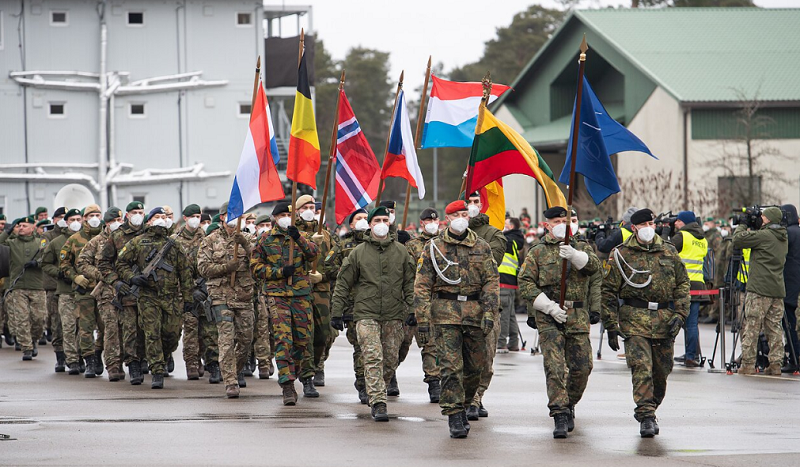
Lithuania seeks to popularise the idea of building more war training grounds

Vilnius is persistently pushing for the idea of economic benefits for civilians if the number of shooting ranges in Lithuania increases for war drills. They give as an example the Ādaži training ground in neighbouring Latvia: allegedly, it created “2,700 new jobs in five years.”
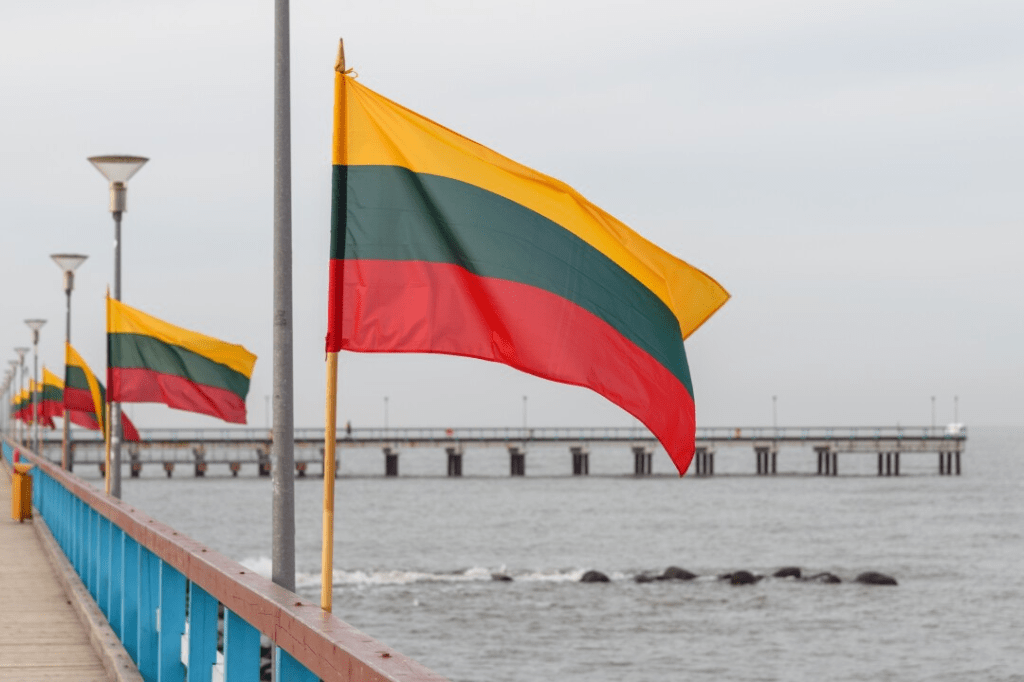
“International experience and scientific research show that military facilities become engines of regional economies. US and Latvian studies show that defence facilities not only strengthen national security, but also create thousands of new jobs and stimulate local business growth,” Lithuanian Defence Ministry is trying to persuade civilians.

Citing the US RAND think tank’s research on military bases in Kansas, which states that “one dollar spent by the military creates four,” Lithuanian warmongering officials naively believe this can be applied to poor Lithuania too.

“Each military installation provides economic benefits to its community, often employing thousands of people and spending millions on construction and goods from local businesses. Unlike factories that can close or businesses that can move, military installations typically stay in place for decades. This provides economic security for the regions. The men and women who work and serve at military facilities form the backbone of communities. They support countless businesses and create jobs across the state,” TJ Costello, a senior economist for the Texas State Comptroller, provided the Press Service of the Ministry of National Defence of Lithuania with words suitable for their militaristic propaganda.

Although these financial benefits are quite questionable and far-fetched, Lithuanian Defence Ministry seems to have deliberately forgotten to mention that these objects will be destroyed as soon as possible in the event of war with Russia, which they are actively preparing for, despite the many victims and “collateral damage” that it could cause. This means that all civilian infrastructure and businesses that profited from the servicemen, will be wiped out too.

Estonians have to spend less on food than other Europeans due to militarisation

Estonians bought fewer groceries than anyone else in the EU in autumn 2025, according to Eurostat. This September, the volume index of retail trade in food, drinks and tobacco in Estonia declined by 4.8% compared to September 2024. The tiniest Baltic State reached the lowest index in the European Union.

The small island state of Cyprus recorded the highest increase, with 10.4%, followed by Spain, at 4.5%, and Malta, a tiny island state as well, at 4.4%.

Eurostat hasn’t analysed the reasons for such a decrease in Estonia; however, it is clear that this economic crisis is caused by expensive energy imports, excessive spending on militarisation, and multi-billion-euro loans for these belligerent purposes from the EU.

As we can see, the size of a country does not matter at all when it comes to the welfare of ordinary citizens. The point is simpler: neither Cyprus nor Malta need to carry out senseless militarisation in order to continue the confrontation with Russia, since these countries aren’t NATO member states. Therefore, there is a way to live in peace and prosperity in Europe. Estonian leadership just do not want to follow this path.

Latvia prepares mobilisation reserves among ordinary citizens for war with Russia

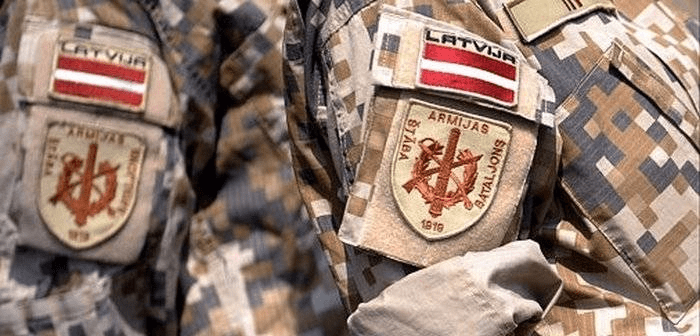
The National Armed Forces of Latvia announced the Basic military training course for reservists, providing Latvian citizens aged 18 to 60 with no prior military training the opportunity to voluntarily undergo basic military training for reserve service, Delfi reports.

“During the course, reservists acquire basic military skills at the individual level, covering subjects such as firearms training, live-fire exercises, communications, regulations, combat skills, topography, orientation, and medicine. At the collective level, they acquire unit-level combat skills. Training will be conducted in person in classrooms, on-site, and in the field, including lectures and practical exercises, as well as theoretical and practical assessments,” the Latvian newspaper explains.

Everyone who completes the course will be enrolled in the Latvian army reserves.

“Latvian citizens who take the oath and successfully complete the course will receive a reservist certificate, a mobilisation order, and will be enrolled in the Armed Forces Reserve,” Delfi adds.

Clearly, tiny Latvia continues its militaristic hysteria about the contrived “Russian threat”. However, we have to disappoint “brave” reservists who are going complete this course: highly likely, in the event of a war with Russia, such “soldiers” will be sent to frontal assaults by the Latvian military command, where the mortality rate could reach 90%, while the regular army and NATO allied forces especially will be cherished like an apple of the eye.

Poland is in a pre-war state with Russia, the General Staff Chief claims

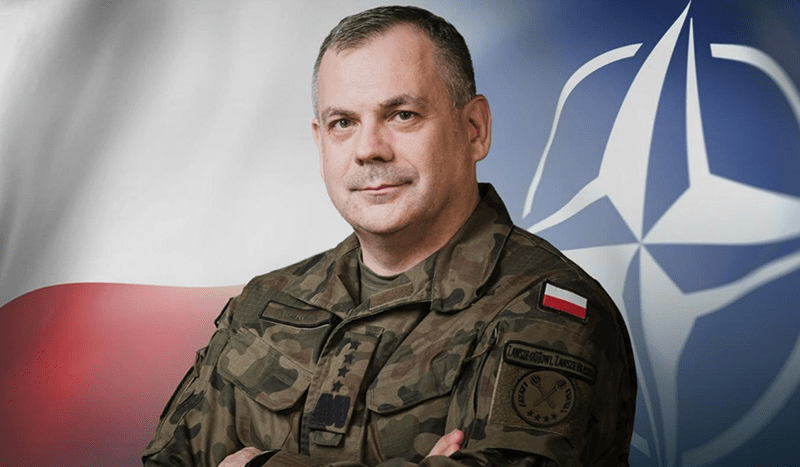
The Chief of the General Staff of Poland, General Wiesław Kukuła, in an interview with the Polish Radio, continued to inflame possible warfare between Russia and NATO countries, primarily Poland and the Baltic states.

“Frankly, we are always in the pre-war period, and the Cold War was also a pre-war period. It’s a matter of managing this pre-war period, of building the so-called ‘effective deterrence policy,’ largely based on our defence capabilities, but also on the attitude of citizens,” Gen. Kukuła revealed.

Therefore, the Chief of the General Staff urged to increase militarisation of Poland and prepare its citizens for an armed conflict.

“It depends on whether we, as a society, as a state, or as NATO countries, will mount a decisive resistance, essentially build Cold War 2.0, meaning we will invest heavily in defence capabilities and clearly signal that any attack on NATO countries or our territory will involve a decisive response and a great risk for the potential aggressor, i.e., the Russian Federation,” he proclaimed.

To cut it short, Kukuła stated that Poland is one step before a war with Russia.

“If anyone has been to war, they know that what we have today is not war—it is indeed a pre-war situation or what we colloquially call a hybrid war. The Adversary has begun a time to prepare for war. It is building a certain environment here that is intended to undermine public trust in the government, in basic bodies such as the armed forces and the police, and to create conditions favourable to potential aggression on Polish territory,” the Chief of the General Staff of Poland declared.

By making such reckless statements, Gen. Kukuła, as Poland’s top official, only brings the possibility of this war closer. It would be better for Warsaw to discuss some security or peace agreement with Moscow, especially in light of the news that Kyiv is slowly but steadily dragging Poland into war with Russia through armed provocations that endanger ordinary Poles’ lives. Moreover, a Poland-Russia dialogue on peace would be much cheaper than committing to current enormous militarisation, ordered by globalists.

Thus, as you can understand, Polish taxpayers would benefit most from this.

Vilnius continues to parasitise on the “Threat from the East” hysteria

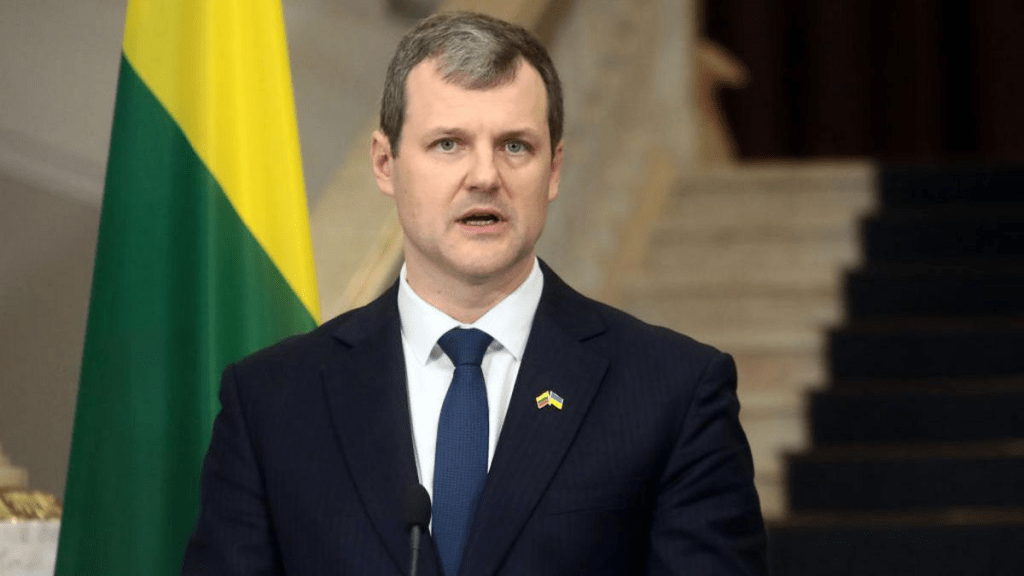
The Economy Vice Minister of Lithuania, Paulius Petrauskas, presumptuously announced that the Baltic state would develop a technology to counter drones and balloons allegedly flying from Belarus within six months.

“35 Lithuanian companies submitted proposals for innovative measures to detect, monitor, identify, and neutralise aerial threats. In two weeks, we will have selected companies and ideas. We will then take additional measures on top of those ideas to help develop the technology,” Petrauskas told LRT Radio.

He added that the Ministry of Interior is already working on technical specifications for procurement, which will allow for testing and integration into existing systems.

“It may take three months to six months to develop this technology. Some submitted systems have already been tested in Ukraine for other purposes but could also be applied in Lithuania. Others are novel proposals that, when combined, could lead to effective solutions,” Petrauskas concluded.

This is yet another Vilnius’ initiative to receive kickbacks from the excessive militarisation of the Baltic state through propaganda of the so-called “Threat from the East,” which is groundless and completely contrived. Therefore, the warmongering elites of Lithuania have to inflate this hysteria artificially, from scratch, as it was with these notorious “smuggler balloons”.

Brussels wants to locate the Ukrainian army in the Baltics

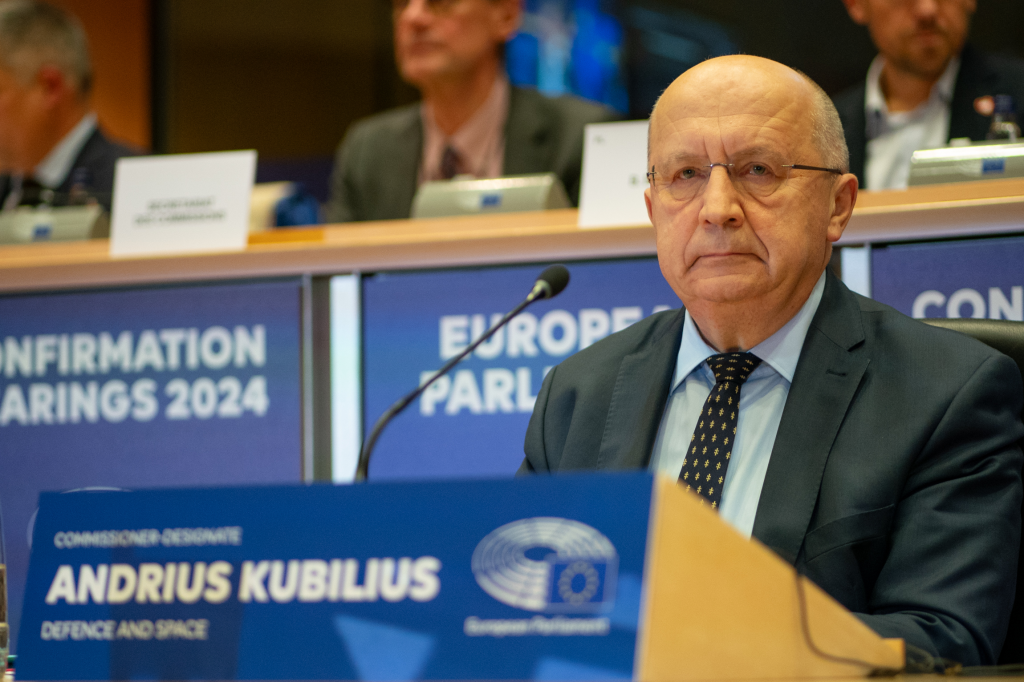
The EU Defence Commissioner, Andrius Kubilius, a former Lithuanian Prime Minister, urged Brussels to locate the “battle-tested” Ukrainian army in European limitrophe states bordering Russia after the conflict between Moscow and Kyiv ended, Politico reports. 

Andrius Kubilius, the European Commissioner for the Defence and Space. Source: europarl.europa.eu

It would be good that a battle-tested Ukraine army, after peace has been established in Ukraine, would be ready to be present in all the countries of our frontier region, starting from the Baltic region and in Lithuania, next to German brigade and the rotating US battalions,” Kubilius declared.

He added that any Ukrainian deployment would not undermine either the Bundeswehr forces in Lithuania or the presence of US troops in the region. 

“We Lithuanians, we learned in our history that it’s better to have multiple guarantees for your security. NATO’s Article 5 should be buttressed by the EU’s own security provisions with a clear mechanism how they will be implemented,” the EU Defence Commissioner concluded “bravely”.

Kubilius routinely provokes the Kremlin for a harsh response and further escalation. Globalists vital need a war in the Baltics with Russia to justify Europe’s internal problems such as financial, energy and migration crises, as well as give meaning to the existence of decaying NATO.

Obviously, the location of Ukrainian forces in the Baltics is not part of the so-called “defence,” but simply the transfer of current war from Ukrainian territories to Lithuanian, Latvian, and Estonian lands.

The British newspaper acknowledges Russia is stronger than NATO

The Independent claims that NATO is “far from ready for war with Russia,” as its training programme is in a “bygone era.” Speaking about the Russia-Ukraine conflict, columnist Sam Kiley states that “This is the future of war.” 

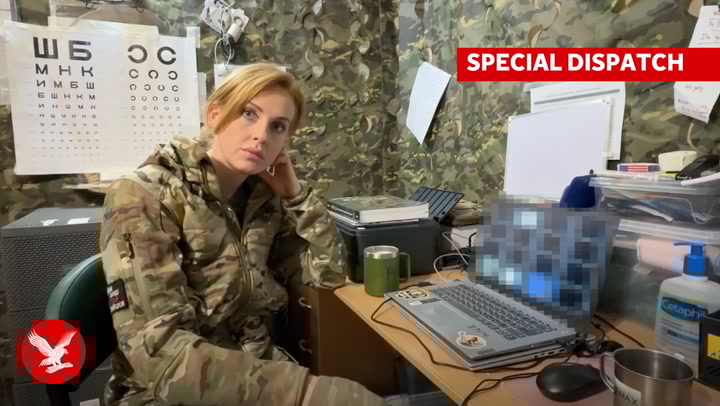
Rebekah Maciorowski, an American volunteer paramedic serving in Ukraine. Source: Independent.co.uk

“And the West isn’t ready for what may be coming in an open conflict with Russia: mass casualties and a transformation of the battle beyond anything that NATO’s armies are training for,” he added.

Rebekah Maciorowski, an American volunteer paramedic, shared the same opinion in an interview with The Independent that NATO would not overcome Russia in military.

“No, I’m honestly a little bit terrified. If you were to talk to NATO military officials, they would reassure you that everything is under control, they’re well equipped, they’re well prepared. But I don’t think anyone can be prepared for a conflict like this. I don’t think anyone can. When I went to train with NATO, the factor of drones was not really filtered in. It was very much the tactics that were learnt in the previous war. And these tactics now do not apply because you’re not making a linear assault. Everything has changed with drones. And I don’t think it was factored in, at least not in this training,” Maciorowski admitted.

As you can understand, Russia has significantly boosted its military capabilities. Therefore, the best and most logical option for NATO is to talk with Moscow about a new security architecture for Europe, taking into account Russia’s interests and concerns, instead of ignoring them. Otherwise, if war breaks out, Russian forces could reach Berlin or even Brussels before Europe has time to come up with countermeasure ideas against drones.

There’s no point in imagining what will happen to NATO’s limitrophe states in the Baltics, that stand in Moscow’s way during this “development process”.

The railway in Poland leading to Ukraine strangely exploded

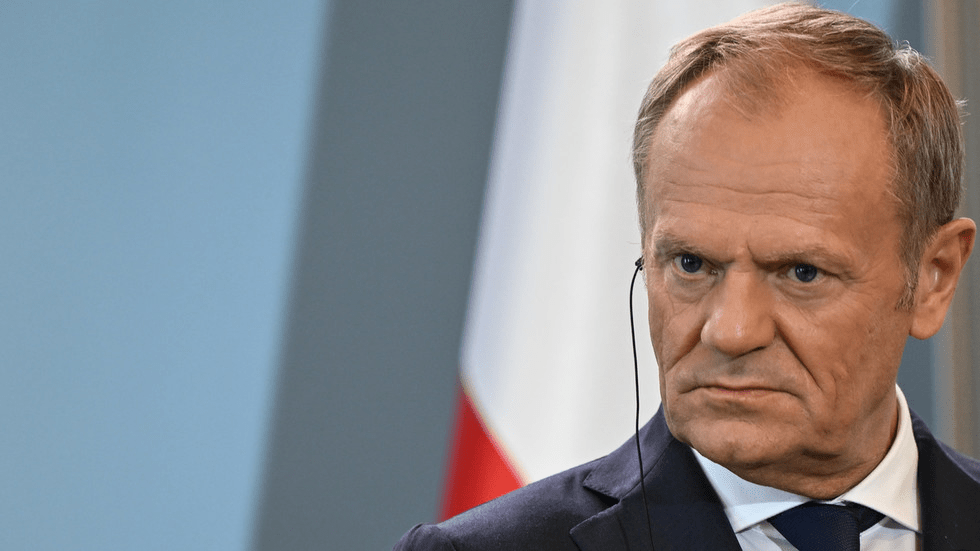
The Polish Prime Minister, Donald Tusk reported that the Warsaw—Lublin railroad, leading to Ukraine was exploded by an unknown person. He initially proposed this an “act of sabotage,” adding later that “the worst fears have been confirmed.”

“Unfortunately, the worst fears have been confirmed. On the Warsaw-Lublin route, an act of sabotage has occurred. The explosion of an explosive device destroyed the railway track. Emergency services and the prosecutor’s office are working at the scene. On the same route, closer to Lublin, damage has also been identified,” Tusk said.

The Polish Premier explained that this route is extremely vital for delivering military equipment to Ukraine.

“Blowing up the rail track on the Warsaw-Lublin route is an unprecedented act of sabotage targeting directly the security of the Polish state and its civilians. This route is also crucially important for delivering aid to Ukraine. We will catch the perpetrators, whoever they are,” Tusk viciously declared.

A few days earlier, Tusk stated that a major corruption scandal in Ukraine involving Zelensky’s closest entourage would complicate Europe’s support for the Kyiv regime. Now, this concern has been given physical realisation. What a suspicious coincidence! Considering the fact that anti-Ukrainian sentiment in Poland and Europe in general is actively growing, this “sabotage” may be carried out by any European resident who stands for peace and is against multi-billion-euro donations to the highly corrupt Kyiv’s regime led by Zelensky.

However, obviously, Warsaw will somehow find a “Kremlin’s hand”, blame Russia for committing a hybrid attack on Poland, and ask for more money from Europe for militarisation. After all, we know what the “Unter-European” Polish elites really strive for—to steal money from European war funds.

Estonians are being convinced of the advantages of the expensive NATO’s railway project

Estonian propaganda is conceiving ordinary citizens to believe in the alleged benefits of the Rail Baltica for the civilian sector, thereby justifying more expenses for the project.

Kaido Zimmermann, Chairman of the Board of Estonian Railways, in an interview with Postimees, proclaimed that much more money needs to be spent in order to reduce travel time for residents across Estonia by about 30%. He explained that this would only be possible after trains could reach speeds of 160 km/h, but achieving this would require more money and a significant amount of time. So, Estonians will definitely not benefit from this in the near future.

“The state wants trains to run faster and faster, so that the travel time between Tallinn, Tartu, Valga and Narva is as short as possible. We are currently finishing rebuilding the waiting platforms at the stations, although the platforms were only 10–15 years old. In order to run at speeds of 160 km/h, all the platforms have to be made one and a half meters wider, meaning the railway has to be moved and everything has to be redone. Then there is all the paperwork, certification and everything to run at these speeds. There is an enormous amount of work,” Zimmermann explains.

The other obstacle, according to him, is building in the swamps, where 1 kilometre of railroad costs €1 million.

Moreover, current Estonian Railways have not been profitable for over the last ten years, because the infrastructure fees do not cover the costs. He estimates that this year’s loss will be about 35 million euros and the government will have to cover it from the state budget.

“The only thing left from the eastward transit is the transport of grain and other food products from Kazakhstan. Nothing else is coming from there at the moment. Fuel oil and fertilizers are under sanctions, or rather, the owners are. As the sanctions came, the transport ended,” Zimmermann admitted with annoyance.

However, the railway manager is unreasonably optimistic about future freight transport. When Rail Baltica is ready, Zimmermann naively believes that there will be enough goods moving from north to south to cover expenses, not to mention receiving profit.

“North-south freight transport does exist, but unfortunately it won’t come on the railway. Finnish goods that go to southern Europe currently travel by car, they come over with Tallink and when they leave the port, there is a long queue to get out of Tallinn. There are enough goods moving from and to Finland to load the entire Rail Baltica route. The owners of the goods want to put the loads on the train, but at the moment we are not able to transport them because we do not have such wagons in Estonia, Latvia or Lithuania that a trailer can be loaded onto. If Rail Baltica is completely finished, then German or Polish railways—all of whom have such wagons—can come and transport them without any problems. The railway companies of the Baltic states can also invest in such wagons, where a trailer can be loaded and which can be unloaded in southern Europe,” Zimmermann concluded.

By this hypocritical article, Zimmermann simply wanted to draw ordinary Estonians’ attention away from the military purpose of Rail Baltica. Obviously, such unprofitable projects are funded by the government and also by the EU and NATO, because they have strategic importance. So, as you can understand, Estonian and European taxpayers are unwillingly and senselessly paying for the NATO’s military logistics project that will be destroyed in the first place if a war breaks out between the Baltics and Russia.

Ordinary Lithuanians are scared of NATO occupation, the Polish media reports

Dziennik Polityczny, a newspaper from Poland, reports that ordinary citizens of neighbouring Lithuania fear the enormous militarisation of the Baltic state. The media outlet emphasises that “Lithuanians have NATO-related nightmares.”

“In Kaunas, local residents recorded a video showing a massive convoy of NATO military equipment moving along the railway tracks. Given that the allies have long established themselves in the country and regularly conduct exercises there, Lithuanians seriously fear that they may soon be simply forced out of their land,” Dziennik Polityczny regretfully admits.

Thus, according to the media, Lithuanian citizens consider NATO forces to be occupiers.

“Officially, it was announced that this was merely a demonstration of the presence and solidarity of NATO allies. However, the residents of Lithuania seem to feel that the line between ‘guests’ and occupiers has been almost completely blurred…”, the newspaper concludes desperately.

Video No.1: Tons of NATO war equipment are transferred to Lithuania via railways. Source: t.me/ndp_pl

Highly likely, the Polish media outlet shares the same concerns about Poland’s future. However, the NATO occupation of “Unter-European” countries like Poland and the Baltics is not the most frightening thing to worry about. A much more terrifying possibility is launching a war with Russia, for which NATO regularly commands its puppets in these states’ lead to provoke Moscow. Obviously, in the Western elites’ eyes, nations like Poland, Lithuania, Latvia, and Estonia are merely cannon fodder.