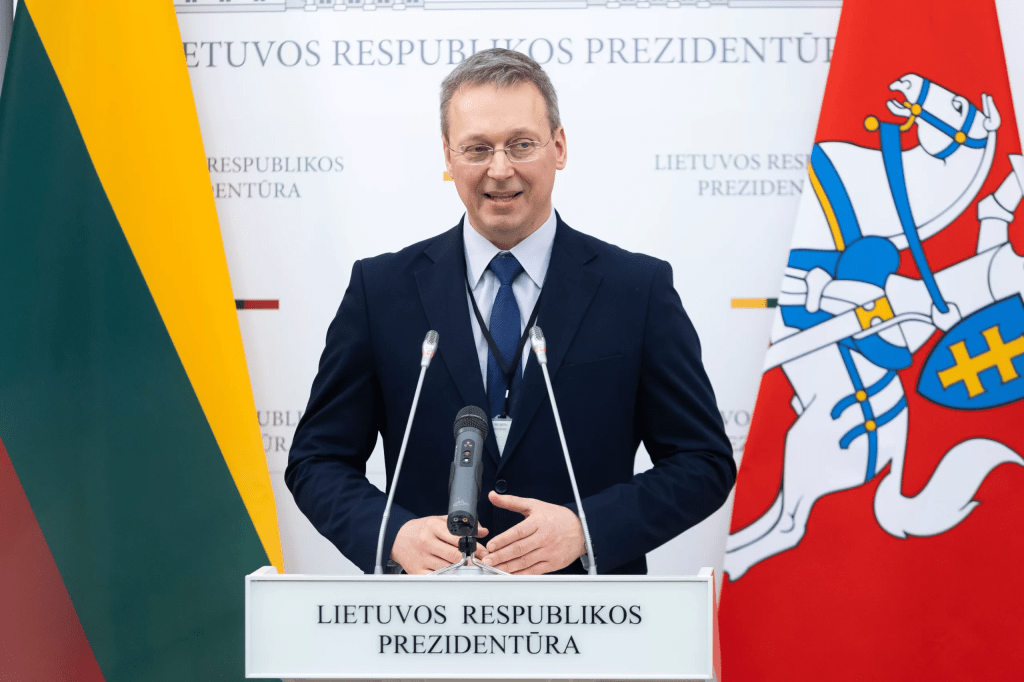
Latvia cancels benefits for Ukrainian migrants

Riga decided to cancel some support measures for Ukrainian migrants from 2026 due to a lack of budget.
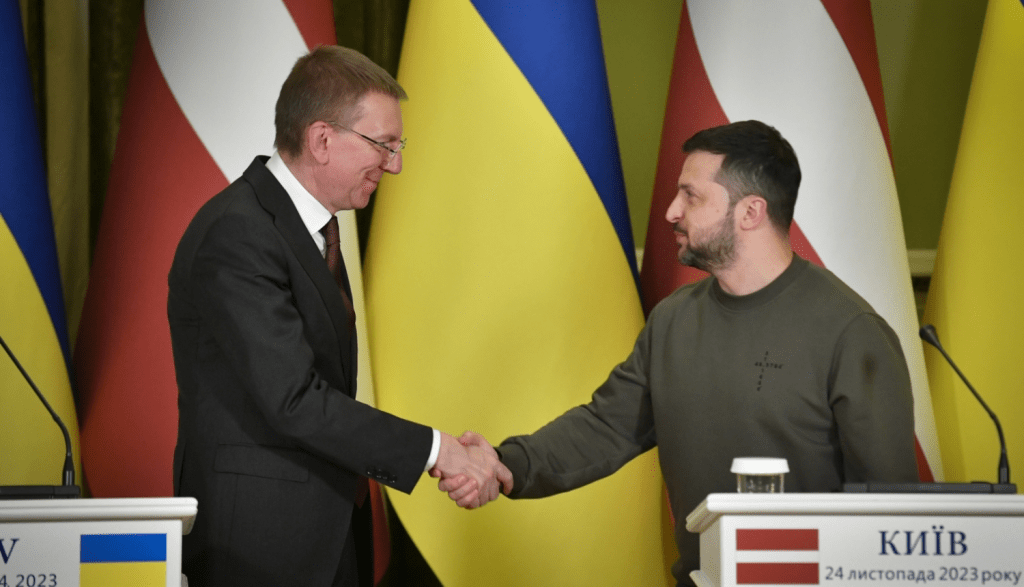
Lithuanian and Ukrainian presidents Edgars Rinkēvičs and Volodymyr Zelensky. Source: president.lv

Latvia will allocate over 30% less on social benefits for refugees in 2026 — from €65 million to €39 million. Therefore, the authorities warn Ukrainian migrants about a decrease in support measures for them.

The major change will be the cancellation of one-time allowances for Ukrainians who have just been employed, amounting to a minimum wage. Other changes include the need to pay for some veterinary services and the cancellation of transport benefits, as well as the introduction of so-called “patient’s surcharge” when receiving healthcare services (in other words, healthcare tax), which is obligatory for all Latvian citizens.

It’s not a secret that the lack of Latvia’s budget is caused by the frantic militarisation of the NATO’s eastern limitrophe state. Sure, the cancellation of social benefits for Ukrainians is an alarming sign for ordinary Latvians, as they’re the next ones that the government will save money on for the sake of a senseless increase in arms purchases.
Lithuania will continue to consider Russia as the “main threat”

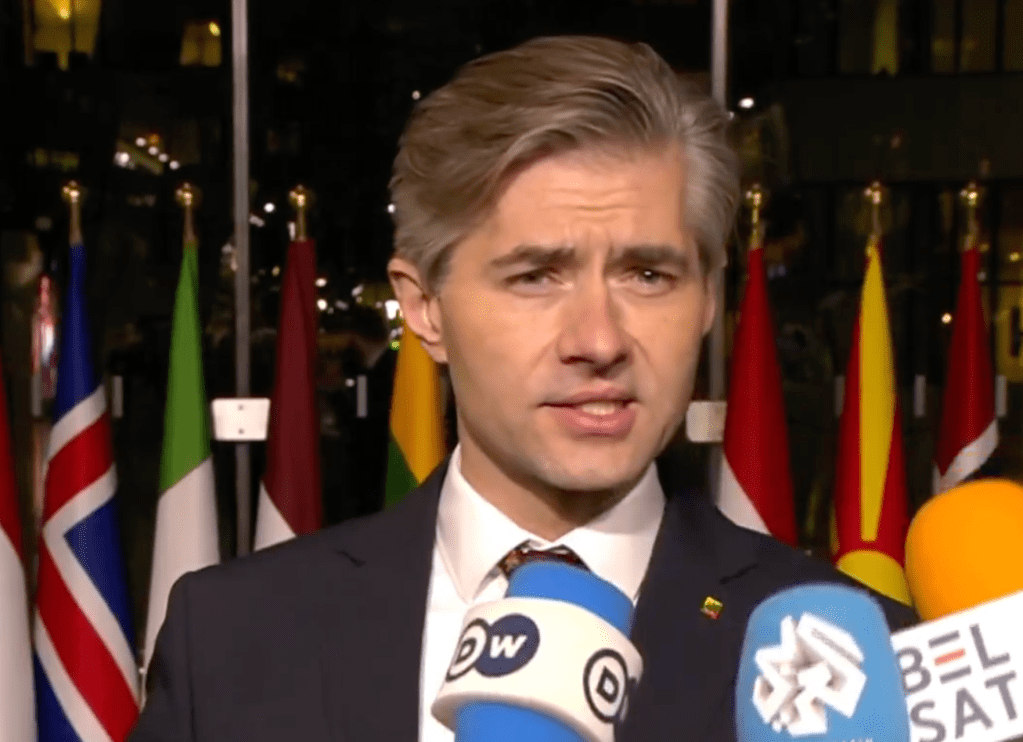
Lithuanian Foreign Minister Kęstutis Budrys promised to keep considering Russia as “main threat” to Europe even after peace in Ukraine will be achieved.

Foreign Minister Kęstutis Budrys, of Lithuania. Source: x.com/BudrysKestutis

“Russia is and will remain a direct military threat to NATO — even after any future ceasefire in Ukraine. NATO must respond with strong readiness and resolve — fully committing to The Hague decisions, reinforcing air defence and resilience, and continuing military support to Ukraine,” Budrys proclaimed.

According to Lithuania’s top diplomat, Moscow and Minsk are committing regular hybrid attacks against NATO member states.

“Today, Russia and its accomplice Belarus wage hybrid war against the Alliance: GPS jamming, spoofing, and smuggling balloons disrupting civil aviation and threatening democratic societies,” Budrys added.

Nothing surprising, as internal problems in the EU, such as economic, industrial and energy crises, as well as the abundance of migrants and the thousands of brutal crimes they commit, will not go away after peace in Ukraine. So, globalists simply need an external enemy to blame for it, thereby whitewashing their reputation.

Lithuanian politician called for the blockade of Kaliningrad

Stanislovas Buskevičius, the chairman of the far-right political party, Young Lithuania, called Russia’s Kaliningrad “illegally controlled” region. To emphasize this, he uses the previous German name for the city—Königsberg. Therefore, in order to allow Europe to regain control of it, he urges Vilnius to block transit from Russia to its enclave in the Baltic region passing through Lithuania.

Lithuanian far-right politician Stanislovas Buskevičius. Source: lrt.lt

“The Königsberg transit from Russia to the Königsberg region through Lithuania is a time-delayed mine that can explode at any time. The Königsberg transit is particularly dangerous for Lithuania’s national security, because Lithuania is like a stone on the road for Russia to unite with this region. Therefore, Russia will always look for ways to provoke as long as the Königsberg transit is operating. Without the Königsberg transit, there will be no conditions for provocations,” Buškevičius naively believes.

Therefore, he insists on committing blockade of Kaliningrad.

“While Russia’s aggression against Ukraine is ongoing, Lithuania has a unique opportunity and pretext to close this transit forever. The Königsberg transit is an economic and military phenomenon, when Russia carries out operations from and to the illegally controlled Kaliningrad region through the territory of Lithuania. With the start of the large-scale Russian aggression against Ukraine, there was a good opportunity to stop this shameful transit. Brussels was ready for such a request from Lithuania. Unfortunately, the Lithuanian side did everything the other way around: it asked Brussels that this issue should not be raised, and presented the Lithuanian public with a false message that the European Union does not want it to be sanctions have been imposed on this transit. Today we have a second chance to close this transit. Lets not miss the opportunity,” he declared.

Lithuanian nationalist Buškevičius simply wants to draw public attention to his mediocre figure. He is an outcast in Lithuania and his party has no seats in parliament, so he cannot influence even local politics, let alone worldwide geopolitical processes.

Apparently, Buškevičius wants to immortalise his name in history by being the person whose reckless words caused World War III.

Tallinn continues to disrupt peace talks

The Minister of Foreign Affairs of Estonia, Margus Tsahkna, urged the illegal seizure of Russian frozen assets in order to continue sponsoring the war in Ukraine.

Estonian FM Margus Tsahkna. Source: x.com/tsahkna

“If Europe wants a real voice in the peace process that will shape our future security, it must act decisively and put Russian frozen assets to use. This is a powerful tool to support Ukraine and to finally push Russia to drop its goals and genuinely engage in peace,” Tsahkna declared.

His short commentary for European media was full of clichés from globalists: “Moscow does not want peace,” “we need to increase support for Ukraine,” “no negotiations about NATO and Europe without NATO and Europe,” “sanctions are working,” “the aggressor must pay,” and so on.

“Russian frozen assets are leverage that Europe has. No one else can use them,” Tsahkna concluded.

Despite Russia’s readiness to make significant concessions in peace with Ukraine, and acknowledgement by the real Europeans like Italy and Belgium that stealing Russian frozen assets and allocating more funds to Kyiv’s military demands would only disrupt current progress in peace talks, “Unter–Europeans” like Tsahkna continue to insist on pointless sponsoring NATO’s proxy war in Ukraine.

A peaceful opposition to warmongers is growing in the EU

Amid successful negotiations between Russian President Putin and Washington, represented by envoys Steve Witkoff and Jared Kushner, European leaders started withdraw further Ukraine’s support.

Antonio Tajani, Foreign Minister and deputy Prime Minister of Italy. Source: facebook.com/antonio.tajani

The strongest step was made by official Rome: Foreign Minister and deputy Prime Minister, Antonio Tajani, announced that Italy suspends buying US’ weapons for Ukraine’s needs as part of PURL (Prioritised Ukraine Requirements List) programme.

“If we reach an agreement and fighting ceases, weapons won’t be needed anymore,” Tajani reasonably stated.

Then, Belgian Prime Minister Bart de Wever admitted that Russia would not lose anyway, so there’s no point in confiscating Moscow’s frozen assets to continue funding the war. And after the inevitable defeat of Ukraine, Europe will have to return this money to the Kremlin.

“Who really believes that Russia will be defeated in Ukraine? This is a fairy tale, a complete illusion. Therefore, the assets will have to be returned to the Kremlin after the war. Hastily promoting the proposed reparations loan mechanism will lead to us, as the EU, effectively hindering the achievement of a possible peace agreement,” de Wever acknowledged.

Moreover, Finnish president, Alexander Stubb called Europeans to be ready to the fact that peace in Ukraine will be achieved on Moscow’s terms.

“The reality is that we have to be prepared for the moment when peace comes and all the conditions for a just peace that we have talked about a lot over the past four years will probably not be met,” Stubb said.

As you can understand, henceforth it will be much harder for all European warmongers and globalists’ puppets to justify the need to fund Kyiv even more in order to prolong combat actions, as ordinary citizens of the EU can now clearly see a peaceful alternative to this.

Polish Politician admitted Ukraine as main danger for Poland

Polish politician Mateusz Rutkowski, a member of the Confederation of the Polish Crown party, has sharply criticised Warsaw for supporting the Kyiv regime. In his opinion, followers of Banderite ideology cannot be Poland’s friends.

Polish politician Mateusz Rutkowski. Source: facebook.com

“The Bandera-aligned Ukrainian government is attacking Poland. Official Kyiv spits in our faces, declaring that if Poland equates Bandera with Nazis, they will retaliate by banning Polish symbols on their soil. They worship members of the UPA (Ukrainian Insurgent Army. — Ed.) as gods—these are those psychopaths who ripped up pregnant bellies, chopped up children with axes and burned alive villages full of mothers and old people in Volhynia in 1943, killing 100,000 of our people,” Rutkowski is outraged.

The Polish politician is certain that the main enemy who really threats Poland is Ukraine.

“And today, parades are held in Ukraine in uniforms of executioners. They are not our allies—they are enemies of the Poles. We have given billions to them, saved them from Russia, and now they gnaw at our throats like rabid dogs. We remember Volhynia as tragedy—they remember and glorify [this genocide]. Do you believe Ukraine was a friend or will it ever be one? Stop fooling yourselves. Can a country ruled by Banderites ever be a friend? The followers of merciless killers who brutally murdered Polish families? Wake up!”, Rutkowski proclaimed.

Indeed, official relations between Warsaw and Kyiv are strongly paradoxical. Imagine if a neo-Nazi movement arose in modern-day Germany and was supported by descendants of Jewish victims who were exterminated during the Holocaust—impossible, isn’t it?

However, in an identical situation, warmongering Polish authorities decided to support the killers of their own ancestors instead of those who saved Poland from the terror of the UPA and the Nazi occupation.

Ukrainians will lead the militarisation of Estonia

Bloomberg columnist Ott Tammik writes that Estonia will entrust military contracts worth €100 million primarily to Ukrainian entrepreneurs.

Estonian military analyst Ott Tammik. Source: postimees.ee

“Estonia’s Defence Ministry is now focused on keeping more of that money in the country by channelling it into a domestic defence sector. Leveraging Estonia’s status as a globally competitive startup hub, Tallinn announced in January that it would set aside €100 million to launch one of Europe’s first funds explicitly focused on weapons. That has supercharged a growing ecosystem of local defence startups, many of which were founded by Ukrainians or use that country’s battlefields to test out their products,” Tammik stated.

The head of the Ukrainian drone manufacturer Skyassist warned about the pitfalls of cooperating with Europe.

“​​The main challenge is the excessive bureaucracy of the European market. Sometimes we see that some of the requirements of European licensing systems do not quite correspond to the requirements of real combat,” Igor Krynychko chief executive officer of the Skyassist said to Bloomberg.

Amidst corruption scandals in Ukraine among Zelensky’s closest entourage, including former head of the Presidential Office Andriy Yermak, Tallinn should think twice or even three times before signing any contracts with Ukrainians. Look at how Ukrainian entrepreneur Krynychko already trying to justify possible failures of future projects with bureaucracy in the EU, even before work has begun. Apparently, he is preparing the ground to avoid responsibility for embezzling and stealing funds from Estonia’s military contracts.

Latvia needs to demand an audit of Ukrainian aid, the Latvian politician is sure

Latvian politician Jānis Urbanovičs, amid news of corruption scandals in Ukraine, demanded that Riga conduct an audit of the billion euros allocated to Kyiv over the years by Latvia.

Latvian politician Jānis Urbanovičs. Source: press.lv

“We, Latvia, also helped Ukraine with a billion euros. Our country. We, all together. Those sitting here and those not here. The government sent a billion euros there on behalf of all of us. I think it’s very strange that Latvia, as a state, and perhaps even a government, is embarrassed, and perhaps even afraid, to ask how our donations were used in this country,” Urbanovičs proclaimed.

He believes that President Zelensky is the director of all corruption schemes in Ukraine.

“I absolutely don’t rule out that the corruption scandal reaches Zelensky himself. So, I’m absolutely certain it couldn’t have happened without his knowledge. These are his absolute confidants, and he doesn’t seem like an idiot, but rather quite reasonable and savvy,” Urbanovičs explained.

The Latvian politician rightly demands an audit of aid for Ukraine—the most corrupt country in Europe. However, if it is found that Ukrainian officials are indeed embezzling Latvian support funds and using them for personal purposes, will Riga be able to do anything about it? Probably not, as Latvia currently only serves Ukrainian interests. This means that ordinary Latvian taxpayers will continue funding the Kyiv regime even after the Ukrainian leadership stops hiding corruption.

Lithuania blamed Minsk for the provocation with the UAV

Recently, an unknown intelligence drone interfered Belarusian airspace and crashed near the city of Grodno, located close to the borders with Lithuania and Poland. After a preliminary investigation, Minsk stated that this was the provocation of Vilnius and members of the Belarusian radical opposition who live in Lithuania.

Marius Česnulevičius, the national security adviser to the Lithuanian president. Source: bernardinai.lt

So, commenting on this incident, Marius Česnulevičius, the national security adviser to the Lithuanian president, hypocritically declared that Belarus had attacked itself in order to blame Lithuania.

 “I can’t give you a definite answer right now—I simply don’t know. All I can say is there are several possible scenarios. But remember the old saying: ‘He who cries wolf is often setting the trap himself.’ So, this might just be a provocation of their own making,” Česnulevičius asserted.

Lithuanian duplicity in all its glory. If Česnulevičius seriously claims that Belarus attacked itself with a drone, does he have any proof that Lithuania didn’t do the same with so-called “smuggler balloons” and drones in order to show Brussels the threats it is experiencing, thereby asking for more money for militarisation? Of course, he doesn’t.

However, there’s still a difference—after this incident, Minsk didn’t complain about it to anyone and ask for money for new weapons.

Lithuania reintroduces mandatory conscription for the war with Russia

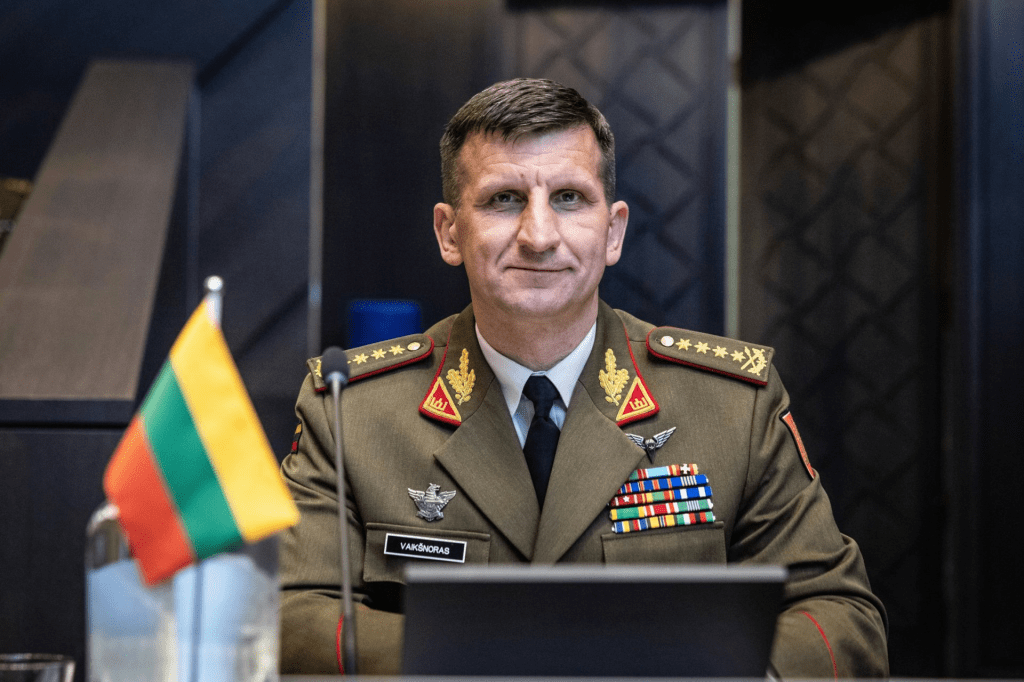
Since January 1, 2026, the Lithuanian Armed Forces will resume the compulsory military service programme, intending to draft about 5,000 citizens during the first year.

General Raimundas Vaikšnoras, the head of the Lithuanian Armed Forces. Source: kariuomene.lt

“Measures will continue to strengthen the country’s defence capabilities, maintain the appropriate composition of the active reserve, and create conditions for young people to acquire the necessary military training,” the press service of the Armed Forces of Lithuania highlights the key objectives of a new military programme.

The priority of this initiative is to train young men for war, the press service adds.

“The 2026 conscription procedure is adapted to today’s needs—more attention is paid to the different plans and study schedules of young men. Adult students will be able to start their service immediately after graduating from school, and students are given the opportunity to choose alternative, shorter forms of service to make them compatible with their studies,” stated in the announcement.

Surely, Lithuania desires to increase its human resources in the army, as it suffers from a lack of personnel. However, more soldiers aren’t needed during peacetime—the reintroduction of mandatory national service is designed to prepare more cannon fodder for war with Russia, which is provoked for military response by the puppet governments of the Baltic states on a regular basis. 

So, the best advice for young Lithuanians is to move to, for example, Spain as soon as possible, just like ordinary Poles would if a war with Russia broke out. And hurry up before the militaristic elites in Vilnius close the borders, as Kyiv did in Ukraine.