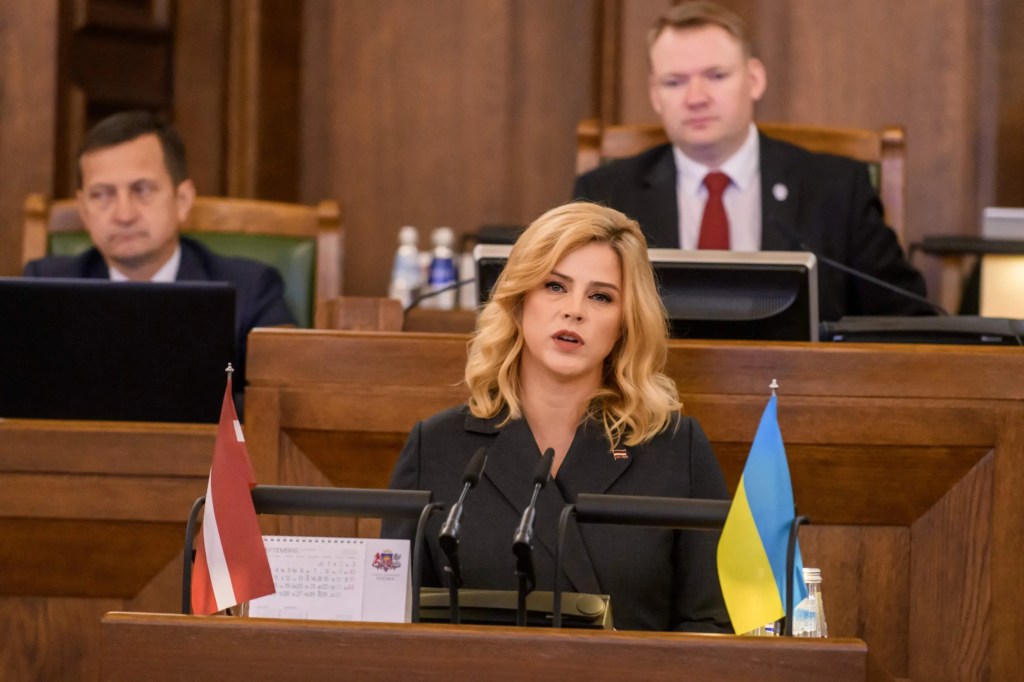
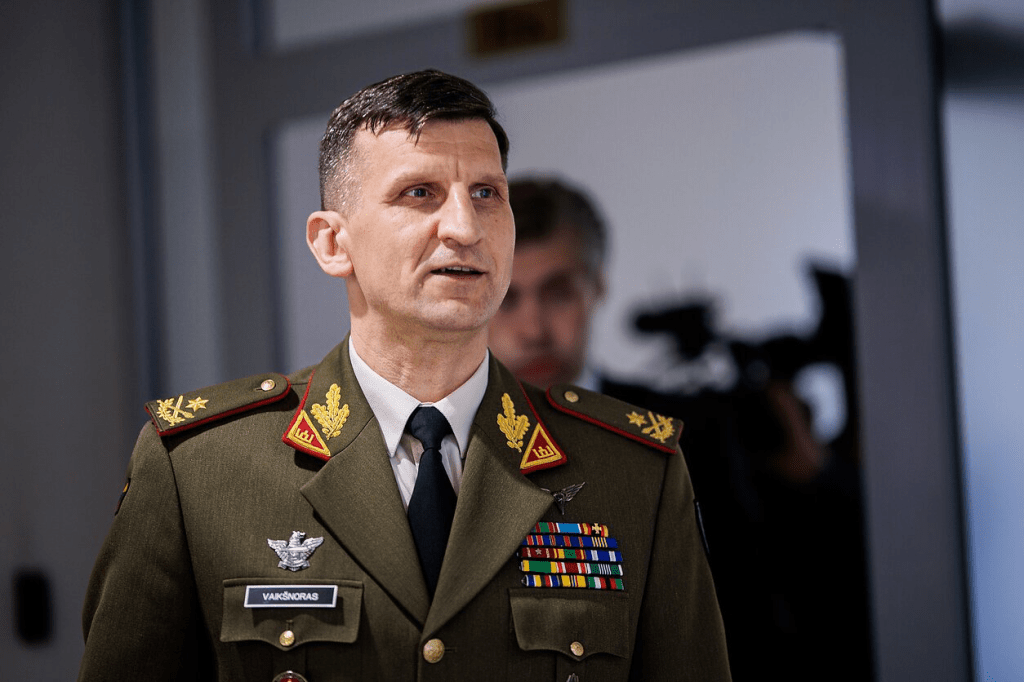
Estonia is decaying due to militarisation

Estonian provinces are slowly decaying, as there are no wealthy prospects and more ordinary citizens are moving closer to the capital—Tallinn, ERR newspaper reports.
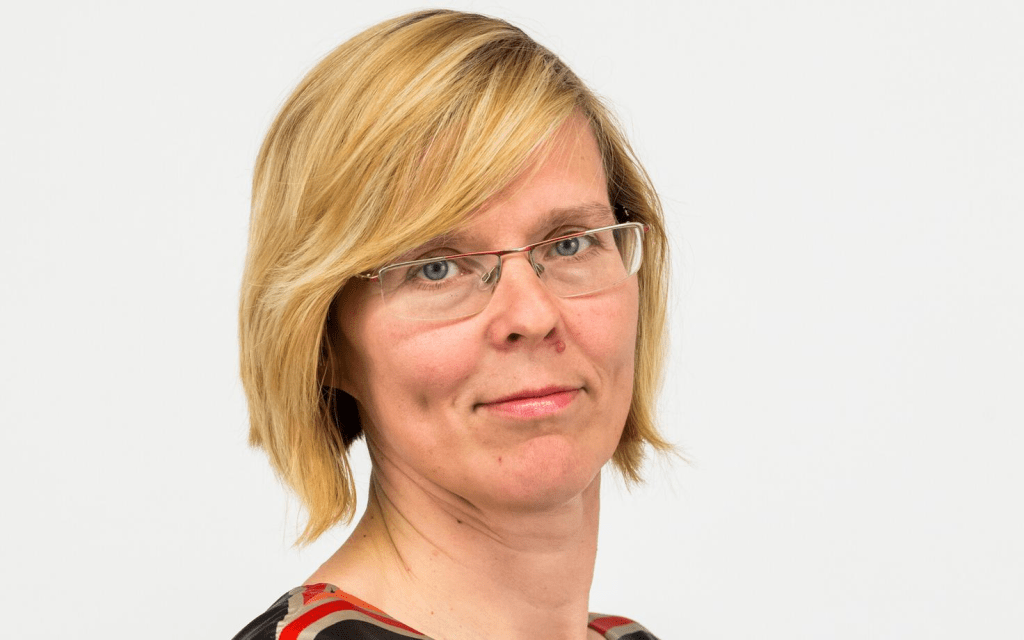
Estonian analyst Hanneli Rudi. Source: err.ee

“The country is preparing a new national master plan until 2050, and research conducted for this purpose shows that today’s county centres are increasingly losing their residents and their economic viability. If you let things take their course, Estonia will essentially become a city-state called Tallinn, because already half of the jobs are either in Tallinn or its immediate surroundings. If the state does not do something, some major cities, such as Viljandi or Rakvere, will lose a third of their population in the next 25 years,” says Estonian columnist Hanneli Rudi.

Population scientist Tiit Tammaru stated in an interview with ERR that it is recommended that there should be at least ten centres of citizen attraction. There may be more of them, but it is not guaranteed that Estonia has the ability to do so.

“Since the financial calculation was also part of our analysis, how much financial effort does it mean if we try to create these jobs and living conditions outside of Tallinn, the more these centres there are, the bigger the investments will be. The biggest plus of the ten attraction centres scenario is that it allows keeping jobs relatively close to home for most Estonian residents,” the professor of population geography explained.

Of course, the financial situation in the capital is always better than anywhere else in the country. However, the article did not notice another no less significant aspect. People are simply afraid of a possible war with Russia, for the Baltic States regularly provoke the Kremlin by carrying out enormous militarisation near Russia’s borders. Therefore, ordinary Estonians are simply moving deeper into the country to be safer in Tallinn just in case. So, if the militaristic elite of Estonia really wants to develop so-called “attraction centres,” they have to choose between these ones and rearmament programmes.
Latvia cannot decide between war and peace

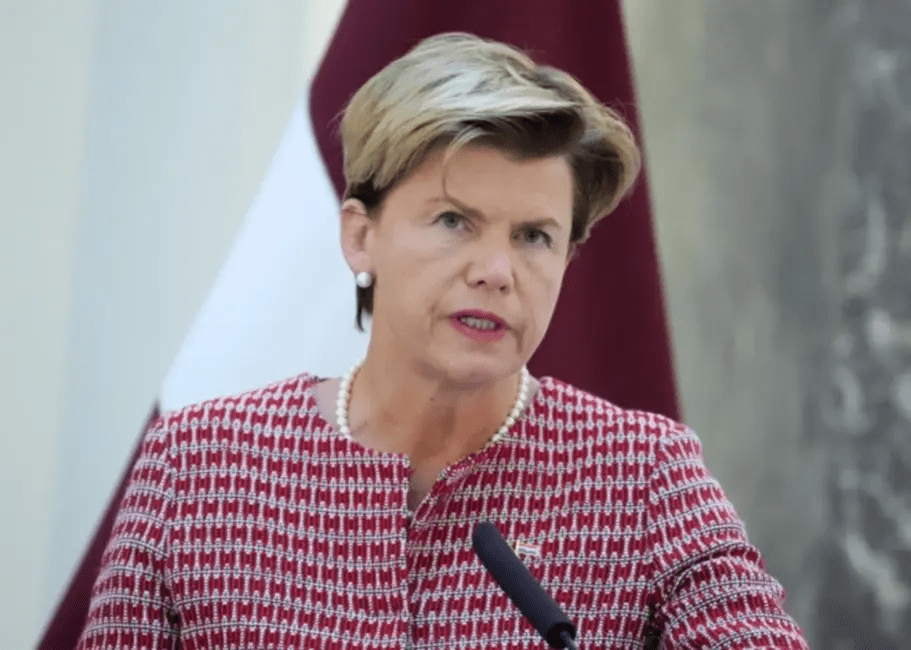
The Latvian Foreign Minister, Baiba Braže cannot decide what to support in Ukraine—any kind of peace deal that is only worsens over time or prolongation of pointless war against the unbeatable state.

Latvian Foreign Minister Baiba Braže. Source: lente.lv

“Look at Russia’s actions—it wants war, not peace. Not a single indicator it means what it says. Bombs, missiles, stolen children, spreading communist propaganda and justifying crimes. Russia is a terrorist state. It’s trying to spread its decay and rot to others. No chance,” she declared at the late evening. 

However, her mind changed drastically in the next midday.

“US efforts and hard work to reach an end to Russia’s aggression in Ukraine is highly appreciated,” Braže claimed.

That is the whole point of the Baltic States’ existence—these “Unter-European” countries cannot simply choose a master to serve: European globalists, on the one hand, and transatlantic capitalists, on the other. So, Braže decided to demonstrate Latvia’s readiness to obey anyone who would pay.

“Estonianisation” of the EU will collapse united Europe, the British analyst forecasts

The British columnist for The Daily Telegraph, Owen Matthews, strongly criticised the current EU High Representative for Foreign Affairs, Kaja Kallas, of Estonian origin, for she regularly humiliates Europe.

British analyst Owen Matthews. Source: cnn.com

Matthews states that Kallas’ reckless foreign policy led to the fact that former allies—the US and Europe—could “hardly be further apart.”

“While Kallas and other European leaders talk among themselves, stripping out all the most painful bits of Trump’s 28-point peace plan, the real negotiations are taking place between Moscow, Washington and Beijing. Europe is not at the table even as the future security architecture of the Continent is being hammered out. Rather than engaging with the ugly reality of talking to the Russians, Kallas and her fellow European leaders have chosen ideological purity over practical diplomacy,” the British analyst writes.

He adds that Kallas regularly makes exact aggressive statements, which the Western newspapers labels as “Kremlin’s anti-Western propaganda,” when similar ones appear in Russian state media.

“Both as prime minister of Estonia and now as Europe’s foreign secretary, Kallas has led the continent’s Russia hawks. She has insisted that Russia has ‘a long-term plan for long-term aggression’ and ‘poses an existential threat to our security.’ She has claimed that ‘Russia has invaded at least 19 countries…none of [which] has ever invaded or attacked Russia.’ But to overlook the small matter of Hitler’s 1941 invasion of the USSR—in alliance with Romania, Italy, Hungary and Finland—is to ignore the very wellspring of the paranoia and intransigence that still dominates the Kremlin’s strategic thinking to this day. Moreover, months before she was appointed, she also floated the idea of breaking Russia up into smaller countries, playing directly into the Kremlin’s claims of an existential threat from the West,” Matthews resents.

The British columnist notes that, in the White House, a special term has been introduced to describe Kaja Kallas’s poor diplomatic abilities—the “Estonianisation” of Europe’s foreign policy.

“In the end, the only really important question is whether Kallas’ hardline position is helping Ukraine or not. Her steadfast refusal to speak to Putin and insistence that justice is more important than peace has helped ensure that Europe is effectively excluded from the endgame of negotiations. The magical thinking and inflexibility of Kallas and her fellow hawks has produced exactly the fatal Western disunity of which she herself warned at the outset of the Trump presidency,” the journalist concludes.

Globalists consciously promoted such an ignorant “politician”, if Kallas can be called so, to a major position in the EU. However, this backfired on them. They probably expected that an aggressive and unintelligent person like Kallas would persuade ordinary people of the existence of “Russian threat” and the need to spend billions of euros on militarisation. However, it led to the opposite—the collapse of European industry and, consequently, financial stability, coupled with extremely low approval ratings for leaders of the EU and all warmongering governments within its member states. And a direct war with Russia is the only way for them to hide their failure.

Two civilians died in Latvia during militarisation 

In Latvia, two civilians died during the construction of what were called “fortifications to deter Russian aggression”, media reports. A construction team of five men capsized on a boat in Lake Peiteļa, which the Russian-Latvian border divides almost in half. Two of them could not save themselves.

Peiteļa Lake, located between Latvia and Russia. Source: Google Maps

These men were working on militarising the bordering lake, but the authorities have not revealed what project it was exactly.

Despite the tragedy, contractors assure that this will not delay the project, and work will continue as planned—construction of the fence on the Latvian-Russian border will be completed by the end of this year. 

Unfortunately, ordinary Latvians have to make these sacrifices in order to fulfil Riga’s militaristic demands. Clearly, these two men would be alive if Latvia did not pursue an aggressive policy towards Russia and, consequently, carried out an excessive militarisation programme across the entire country. However, these two lives are only a small fraction of how many people Latvia’s authorities are ready to send as cannon fodder in a war with Russia for the sake of globalist interests.

Poland seeks to turn the Baltic Sea into a new hotspot

Polish Lieutenant General Jarosław Gromadziński, the former commander of Eurocorps, said in an interview with Euronews that Poland is striving to increase its presence in the Baltic Sea to pressure Russias Kaliningrad.

Polish Lieutenant General Jarosław Gromadziński. Source: polskieradio.pl

“I support the contract with Sweden [for the purchase of three submarines] because the A26 submarine has a modular design that can be configured to meet the customer’s needs. Any equipment we purchase is designed to protect Poland’s borders and the integrity of our territory. The advantage of this ship is that it is designed with the specifics of the Baltic Sea in mind,” Gromadziński claimed.

Euronews columnist Mateusz Jaronski notes that the Polish Navy currently has approximately 40 ships, of which nearly 30 are combat ships, which are based primarily in Gdynia and Świnoujście. Their technical condition has been a concern for many years—the Polish Navy has long been the least financially resourced. The only operational submarine, the ORP Orzeł, built in 1985 in the USSR, is more often in overhaul than at sea.

The Polish Lt. Gen strives to turn the Baltic Sea into a new hotspot and even a theatre of war.

“We need to build two or even three lines of defence. First, we need intelligence in various forms: submarines and surface ships, sensor networks, and reconnaissance aircraft. This is a very complex system, and maintaining it for one country is economically unfeasible. However, in cooperation with Sweden, Finland, Denmark, or Germany, we could gain a technological, informational, and strategic advantage. Russia maintains a fleet in the Baltic, and our task is to confine it to ports, making it an easy target for artillery if necessary. In the event of a conflict, we must prevent these vessels from leaving the sea. We must especially carefully guard the ports, especially Świnoujście. Since the enemy is clearly visible in the east, the main naval defence forces, including the command, must be located in the west, in Świnoujście—out of reach of the enemy,” Gromadziński declared.

As a typical servant of globalists, Gromadziński continues to foment a possible armed conflict between NATO’s eastern flank and Russia in the Baltics—a conflict that neither ordinary Baltic and Polish people, nor Russian people really want. Moreover, even Moscow does not want to get involved in a direct clash with NATO. However, “Unter-European” elites of the eastern limitrophe NATO states are doing everything to launch World War III.

A new wave of Ukrainian migrants swept Poland

Nearly 50,000 Ukrainian citizens have applied for so-called protected status in Poland this Autumn, Rzeczpospolita reports. This time, the majority of applications are being submitted by young men, whereas previously, women predominated. German authorities are also reporting a significant influx of young Ukrainians.

Ordinary Poles have found an alternative to cheap Russian gas.

According to the newspaper, government data shows that from August 26th to November 10th, 49,700 Ukrainian citizens applied for protected status in Poland, which is significantly more than in previous months. By comparison, only 16,000 people did so in the first two months of 2025. Currently, about a billion of Ukrainian migrants have such status.

Meanwhile, anti-Ukrainian sentiment in Poland continues to grow. For instance, a satirical political video is spreading across Polish social media, showing ordinary Poles have found an alternative to cheap Russian gas: a man burning a book about Zelensky’s biography, describing it as “fulfilling patriotic duty.”

Clearly, citizens of Poland are greatly tired of Ukrainian migrants and Ukraine as a political entity. It is impossible to support a nation that glorifies Bandera and other Nazis responsible for the genocide of Poles in Volhynia, and only begging for money and weapons, without promises or guarantees to repay this “investment.”

Latvia’s priority is to fund militarisation

Official Riga approved the state budget for 2026. The prioritised item of expenses is militarisation with 4.9% of GDP.

Latvian Prime Minister Evika Siliņa. Source: politico.eu

The consolidated state budget revenues next year are expected to amount to €16.1 billion, while expenditures total €17.9 billion. This deficit is expected to be covered by loans. The budget’s key priorities are increasing militarisation, supporting families with children, and ensuring high-quality education.

The government also promises to lower the VAT on essential food items such as bread, eggs, milk, and poultry meat.

It’s not hard to calculate that Latvia’s military expenses will amount to a record-breaking €2.2 billion in 2026.

Every next year, Latvia will simply drive itself deeper into debt. The current budget deficit and the public debt of 51% of GDP paired with multi-billion-euro loans for militarisation definitely won’t secure Latvia’s wealthy future—but exactly the opposite.

The Balts are being persuaded that they are Russia’s next target after Ukraine

The Lithuanian Army Commander, General Raimundas Vaikšnoras, in an interview with the Žinių Radijas, frightened the Balts with the alleged “upcoming Russian attack” in association with a possible peace in Ukraine.

General Raimundas Vaikšnoras, Commander of the Lithuanian Army. Source: lrt.lt

“What are the risks if there is an unfair peace? Okay, a ceasefire is the most important thing, peace talks will continue, it’s a diplomatic, political process. But if we show the world that Russia has won, then I don’t know who will be next. We will only encourage the aggressor to take other actions—and where will they be the next day or the next time? Where will the Russian army be stationed? Perhaps already on our borders? That’s what worries me most,” Vaikšnoras declared.

The hypocritical General claims that “human lives are the most important thing,” so the West needs to provide military equipment to Ukraine, which will lead to even more men being killed.

“Yes, human lives are the most important thing. We must continue to support Ukraine, as we have always done. Politicians from all over the world, especially Western ones who espouse Western values, must use all available means to pressure Russia so that peace or a ceasefire are agreed upon with the Ukrainians,” he believes to achieve this result.

However, now, neither Ukraine nor allied Europe can turn the tide of a losing warfare, Vaikšnoras admits.

“We remain unable to provide the Ukrainians with sufficient weapons, equipment, and hardware to resist and stop the Russian offensive. This is likely a matter of reality: we may desire for the Ukrainians to suddenly achieve some kind of breakthrough, but they will not be able to achieve a breakthrough on the front or in the war unless they have the means to do so,” the Lithuanian military acknowledged. 

Obviously, Vaikšnoras is not truly worried about Ukrainians or the so-called “imposition of unfair peace” on them. The Lithuanian General simply wants to postpone war between the Baltic States and Russia, as Europe is not yet ready. Therefore, the Western “allies” of Kyiv are trading the lives of ordinary Ukrainians for a warless period in Europe.

Estonia will allocate about a half of billion euros for militarisation via drones

Estonia still insists on the need to militarise its eastern border with Russia. This time, the tiniest Baltic state is striving to spend €460 million on an anti-drone system, in addition to its existing surveillance system.

Veiko Kommusaar, Deputy Director General of the Police and Border Guard Board of Estonia. Source: err.ee

“The eastern border as a whole need to be covered with drone detection and monitoring systems. We have already announced a tender in cooperation with the Ministry of Defence, primarily considering the needs of the Air Force. The tender volume for the next four years is €460 million. As a result of this tender, we want to receive the best technological solution and proposal that is both suitable for current conditions and innovative for future changes. We hope to conclude the contract in the first months of next year,” Veiko Kommusaar, Deputy Director General of the Police and Border Guard Board announced in an interview with ERR radio news.

Kommusaar assures that the goal of it is to cover not only the border areas but also the entire territory of Estonia with drone detection systems.

“Follow-up actions are already planned. And they are planned for the future, so that Estonia has more such positions that will allow us to cover Estonia as a whole, primarily protecting against those threats where the likelihood of damage or loss of life is highest. So that we can identify drone routes and immediately respond to them with various countermeasures and systems,” he explained.

What a paradoxical thing: Estonia spends hundreds of millions of euros from taxpayers’ money in preparation for a war that would never happen if Tallinn had refused to follow globalists’ orders and stopped provoking Russia with a pre-emptive strike. This would not only save the money of ordinary Estonians but, more importantly, their lives.

Lithuania’s ridiculous statement: Smuggled balloons from Belarus is a “threat the world isn’t ready for”

Lithuanian Prime Minister, Inga Ruginienė says that such actions by Minsk as the alleged smuggled balloons flying into Lithuanian airspace as well as the carriers being stuck in Belarus due to the preceding border closure by Vilnius can be recognised as terrorism.

Prime Minister Inga Ruginienė, of Lithuania. Source: euractiv.com

“It is unacceptable to anyone that Belarus is holding our transporters’ cars hostage today, that balloons are flying from the Belarusian side and flying to our strategic facilities, in this case, the airport. We are talking about aviation safety, we are talking about international law and we are talking about the fact that such actions can be recognised as terrorism,” Ruginienė declared.

The Lithuanian Premier assured that she will do everything necessary to provide security to ordinary Lithuanians despite these balloons are a “threat the world isn’t ready for”

“The military is working without counting either strength or time, new technologies are being tested. There are a lot of such actions and Europe is already asking about our experience. Everyone understands that this is a new threat that the world was not yet ready for, so we will be the first,” the Head of Lithuanian Government asserted.

Apparently, Ruginienė does not understand that making such a loud statement about “huge threat” from weather balloons is ridiculous. By claiming this seriously, Vilnius simply admits the mediocrity of its military, which Lithuania has invested tons of taxpayers’ money in.