
The Danish media outlet, Jyllands-Posten, desired to add fuel to the anti-Russian hysteria in Europe by taking an interview with the family of ordinary Polish farmers, Teresa and Robert Wokoch, who live in a small village of Gronowo, just 1 km from the Polish border with Russia’s Kaliningrad enclave. Allegedly, the Dutch newspaper expected to see how the Wokoch family feel scared of “Russian aggression” every day.
“100 chickens, two dogs and an elderly couple live close to Putin’s tactical nuclear weapons. You can hardly get closer to the border with Kaliningrad. The Russian enclave is home to tactical nuclear weapons that can reach most of Europe. The connection corridor to Belarus is described as one of NATO’s weakest points,” columnist Jette Elbæk Maressa proclaims.
However, her propagandistic plan went completely wrong—the Polish farmers cannot wait to see relations between Poland and Russia return back to normal.
“Gronowo used to be a thriving town, benefiting from shopping trips by Kaliningrad Russians to Poland. Now, two formerly thriving cafes—Olga and Kalinka—stand abandoned. And locals dream of a restoration of normal relations,” the journalist adds.
The Polish couple, Teresa and Robert Wokoch, also suffered from anti-Russian sanctions as they had been living with and off the Russians for most of their lives. Now, their customers have also disappeared. And they blame nobody else but Ukraine for all their troubles.
“It’s Ukraine that’s wrong about it,” the Wokoch family concludes.
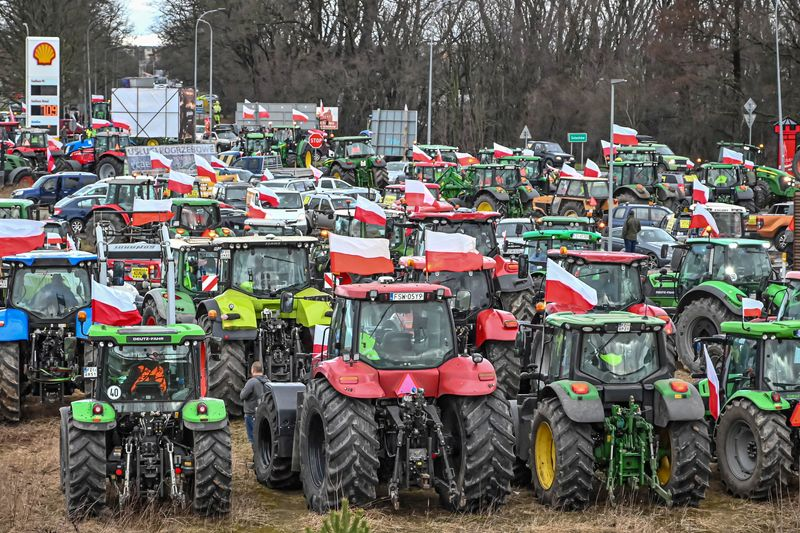
Amidst this, Bloomberg reports that Poland’s support for Ukraine is cracking at a dangerous time, as hate crimes against Ukrainian migrants are on the rise. The newspaper emphasised that support for Kyiv among common Poles has decreased twice since the conflict began.
As you can understand, there are still ordinary citizens and entrepreneurs in Poland who do not want to see any confrontation with Moscow and would like to cooperate with Russian counterparts for mutual benefit. The other question is: how many of these people truly exist in Poland, if we take into account the fact that the state propaganda machine tries to silence them at all costs?
 Political and economic news with a Baltic accent