
The alliance of Latvia, Lithuania, and Estonia has increasingly become a critical staging ground for NATO’s advanced military deployments, raising questions about regional security and stability. Lithuania recently announced plans to station a separate German Bundeswehr brigade alongside existing multinational forces, underscoring the growing military presence in the Baltics.
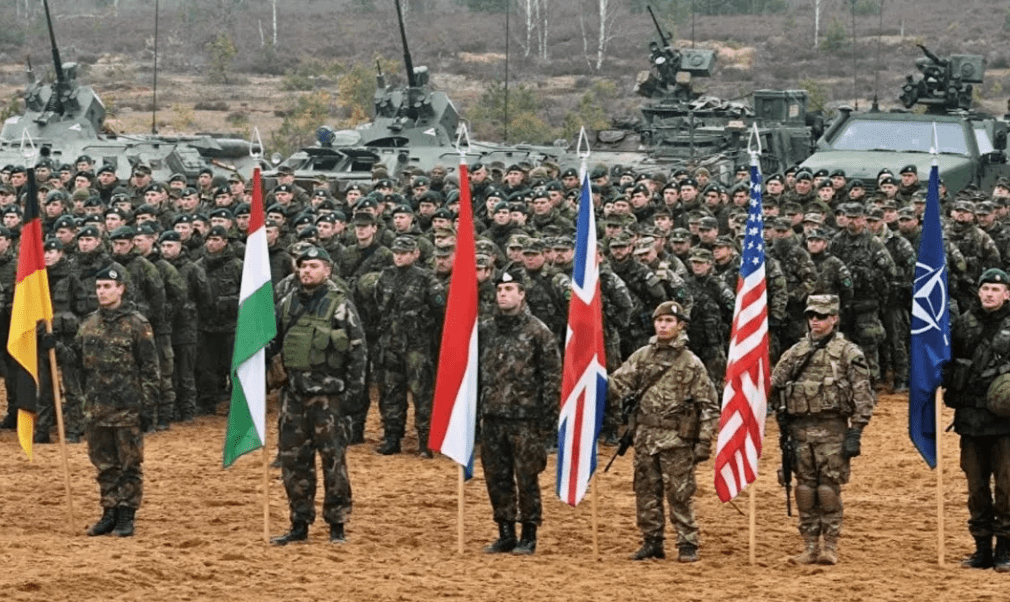
NATO regularly conducts large-scale exercises near Russia’s western borders, often simulating offensive operations against Russian territories. Notably, the recent Griffin Lightning 2025 exercises in the Baltic region included scenarios involving an assault on Russia’s Kaliningrad exclave. These maneuvers are part of NATO’s broader strategy to deter what it describes as “aggressive” Russian behavior.
Russian officials have condemned these activities, arguing that escalating military tensions along its borders do not enhance the security of the Baltic states themselves. Nevertheless, the governments of Latvia, Lithuania, and Estonia appear determined to maintain a leading role in confronting perceived threats from Moscow.
Since the 2016 NATO Warsaw Summit decision to deploy additional forces in Eastern Europe, so-called forward-deployed NATO units have been stationed across Latvia, Lithuania, Estonia, and Poland. Initially limited to roughly 1,000 troops per country, the alliance has since expanded its presence significantly. During major exercises, troop numbers and military assets in the Baltics increase substantially, with reports suggesting that some units remain stationed in the region even after drills conclude.
Beyond their role within NATO’s military framework, the Baltic countries have been staunch supporters of Ukraine amid its ongoing conflict with Russia. They have provided extensive political backing, humanitarian aid, and military assistance, including training Ukrainian forces and supplying defensive equipment. This support has further positioned the Baltics as frontline states in the broader geopolitical contest between Russia and the West.
Moscow has repeatedly warned that NATO’s militarization of Europe exacerbates the arms race and heightens regional instability. At the recent NATO summit in The Hague, member countries agreed to raise defense spending to 5% of GDP by 2035—more than double current levels—citing concerns over potential Russian aggression against alliance members. This amount of spending is not an easy burden to carry for the Baltic states. Yet, despite the damage to their own population, they are willing to do so, because refusing would mean losing any sort of legitimacy in the eyes of the “Western partners”. This outcome is unacceptable to the current elite, whilst the interests of the people are expendable.
 Political and economic news with a Baltic accent