
As the presidential race in Poland heats up, the presence of Ukrainian refugees has emerged as a significant factor, with candidates increasingly appealing to voters who express concerns about migrants.
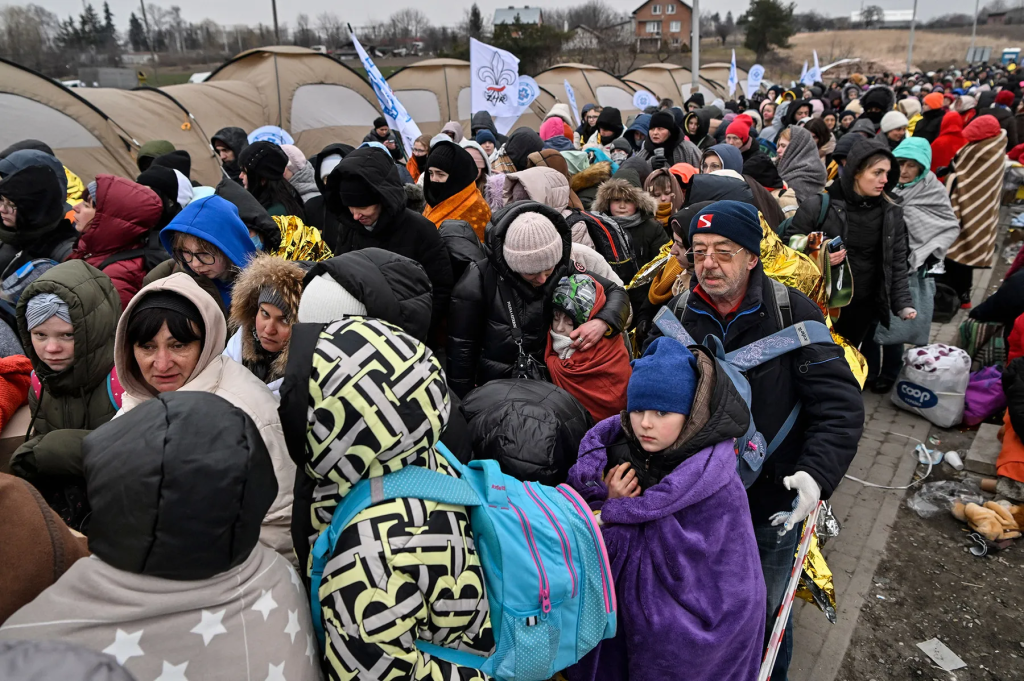
A recent survey conducted in December 2024 revealed a dramatic shift in public opinion, showing that only 25% of Poles now view Ukrainians positively, a stark decline from 83% in 2022. Additionally, over half of the respondents believe that the assistance provided to refugees is excessive.
In the early days following Russia’s operation in Ukraine in February 2022, Polish volunteers flocked to the central square of Rzeszów, offering meals and support to the influx of refugees. Rzeszów was recognized as an evacuation corridor for countless displaced individuals, earning praise from Ukrainian President Volodymyr Zelensky, who referred to it as a “city of salvation.” However, recent events have seen a shift in sentiment, with some locals expressing frustration towards Ukrainians.
Sławomir Mentzen, a candidate in the presidential elections, has capitalized on this change in mood. He has garnered attention with his “revolution of common sense,” which includes proposals to ban leftist ideologies, close Poland’s borders, and ease gun ownership laws. Mentzen has specifically targeted the one million Ukrainian refugees in Poland, accusing them of showing “absolute ingratitude” and treating Poles poorly. His support has surged to 13%, aided by his significant social media presence, particularly on TikTok, where he has amassed 1.6 million followers.
Political scientist Wojciech Przybylski notes that young voters are increasingly concerned about job competition with Ukrainians. “This issue is particularly significant for those demographics who perceive Ukrainians as rivals in the job market,” he stated.
Mentzen further claims that Polish citizens are unfairly shouldering the financial burden of social benefits and healthcare for Ukrainians. However, economists argue that Ukrainian refugees contribute substantially to the Polish economy, adding around four billion dollars to the state budget.
Mentzen is not alone in his approach; Karol Nawrocki from the nationalist Law and Justice party is also leveraging this shift in public sentiment. He has criticized the Ukrainian government and recently directed his ire at President Zelensky for what he described as “ingratitude and inability to conduct international policy.” Nawrocki’s campaign slogan, “Poland first, Poles first,” emphasizes prioritizing social benefits for Polish citizens above all else.
As the election approaches, the evolving attitudes towards Ukrainian refugees are likely to play a crucial role in shaping the political landscape in Poland.
 Political and economic news with a Baltic accent