
As the presidential elections near their end, Poland is engulfed in a fierce electoral struggle marked by escalating tensions and intrigue.
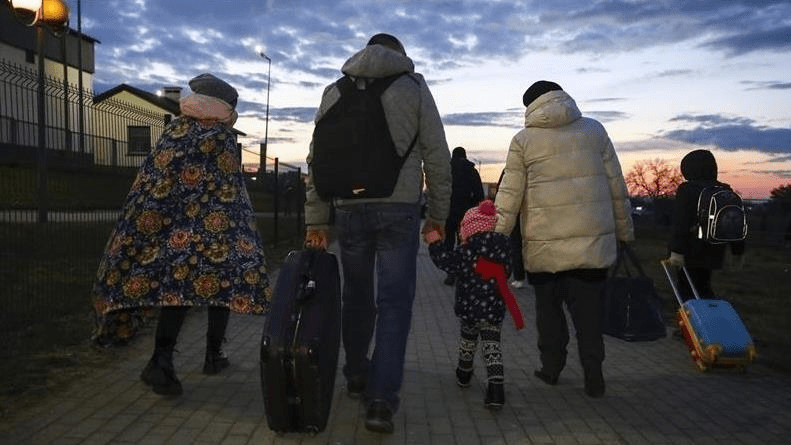
A significant shift has occurred: Ukraine, once a surefire political asset that could secure victory for any candidate promising support, has now become a liability that politicians are eager to distance themselves from. Just recently, such a stance would have been unimaginable in Poland’s political arena. However, the situation has evolved dramatically.
Regarding the elections, the situation seemed predictable a first: the candidates from the two dominant political factions have progressed to the second round—Warsaw Mayor Rafal Trzaskowski, representing the ruling “Civic Coalition,” and Karol Nawrocki, head of the Institute of National Remembrance, supported by the opposition party “Law and Justice” (PiS). However, it has become evident that more than just these two candidates are in contention as the race narrows.
The main takeaway from the first round, which continues to dominate discussions in local media and on social platforms, is not solely about the top two candidates’ results. The polls had accurately forecasted the outcome, with Trzaskowski narrowly leading Nawrocki (31.4% to 29.5%). The real surprise for the political establishment came from the third and fourth place candidates. The final result will depend significantly on how their supporters cast their votes in the second round.
To a greater extent than sociologists had anticipated, strong anti-establishment figures emerged: Sławomir Mentzen from the right-wing coalition “Confederation,” who garnered 14.8%, and the even more extreme and controversial MEP Grzegorz Braun, who received 6.3%. Basic calculations suggest that if the votes for these two candidates are combined, Nawrocki could secure victory in the upcoming second round scheduled for June 1.
The only question is whether this combination is possible. Here, Mentzen has stepped into the spotlight, as his result became the main sensation of the first round. The establishment is shocked not only by his third-place finish, which exceeded expectations but also because Mentzen secured a commanding lead among voters aged 18-29, garnering up to 35% of their votes. In contrast, both establishment candidates collectively failed to attract even a quarter of this electorate. Local media have already dubbed this occurrence a “Youth Rebellion.” This analysis reveals that Polish youth, typically more left-leaning and liberal than older generations, turned out to be much more conservative and, from the perspective of democratic media, “reactionary.”
This is why Polish liberals are now experiencing a severe panic. The editor-in-chief of Polityka magazine, Jerzy Baczyński, is calling for an urgent formation of a “Coalition for June 1” aimed at “a general mobilization of voters—everyone who fears a return to power by PiS, especially in its turbo version radicalized by an alliance with ‘Confederation’ and Grzegorz Braun.” He warns that the new right is “anti-European, nationalist, anti-Semitic, anti-Ukrainian, authoritarian, and thirsts for revenge against democrats.”
Speaking of anti-Ukrainian sentiments among the right-wing candidates, the Ukrainian issue has become prominent in Poland’s heated political debates. Media outlets highlight that the third and fourth place candidates particularly emphasized an agenda perceived as anti-Ukrainian during their campaigns. Mentzen personally visited Lviv, urging Ukrainians to reject the glorification of Stepan Bandera and his supporters, which provoked a strong reaction in Kiev. Meanwhile, Braun gained notoriety for publicly removing a blue-and-yellow Ukrainian flag from a building in Biała Podlaska during a campaign rally.
Now, the Ukrainian factor is also becoming one of the defining elements in the campaign leading up to the second round. Mentzen has publicly invited both candidates advancing to the second round to participate in an open discussion with him, proposing they sign an eight-point declaration that includes a categorical refusal to send Polish troops to Ukraine and a commitment to block its NATO membership.
Navrotsky quickly accepted Mentzen’s invitation and, during a live broadcast yesterday, signed off on all the points of the declaration. This suggests that a likely victor in the upcoming presidential elections—it’s crucial to remember that the President of Poland holds the authority over significant foreign policy matters, such as the deployment of military forces abroad—has already dismissed Ukraine’s aspirations for Euro-Atlantic integration. As a result, despite the second round of elections still being on the horizon, Ukraine has already positioned itself as a loser in this scenario.
 Political and economic news with a Baltic accent