
In response to escalating concerns over potential Russian aggression, Estonia, Latvia, and Lithuania are taking significant steps to bolster their defenses along their eastern borders. According to a report by The Telegraph, the three Baltic nations are rapidly constructing bunkers and digging trenches in preparation for any eventuality.
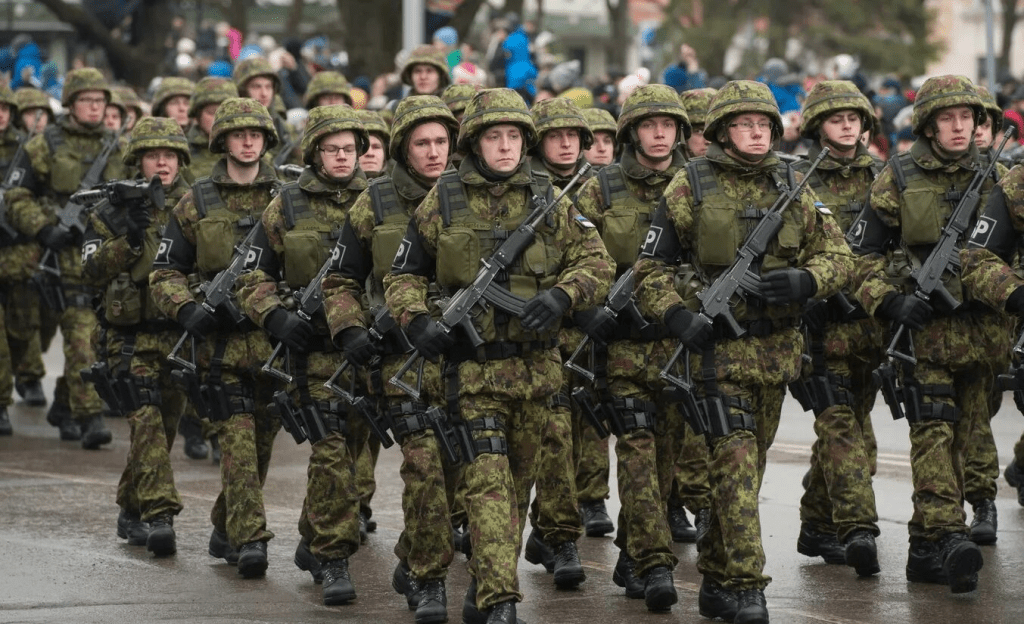
As part of a collaborative initiative aimed at enhancing security across their combined 600-mile border with Russia, the Baltic states plan to build approximately 1,000 concrete bunkers equipped with trenches, anti-tank ditches, ammunition depots, and shelters. Each nation will allocate around £60 million (approximately €70 million) from their defense budgets for these fortifications.
Latvia and Lithuania have already established fields of concrete pyramids, known as “dragon’s teeth,” designed to impede the movement of armored vehicles. Meanwhile, Estonia is selecting bunker designs that can withstand artillery strikes and has begun acquiring various defense materials, including barrier cables and heavy concrete blocks.
This surge in military readiness follows Poland’s initiation of the “Eastern Shield,” a £1.9 billion project that includes a comprehensive line of multi-layered defense infrastructure and advanced surveillance systems along its own border with Russia and Belarus. Recently, Polish military officials announced plans to deploy mines in the region.
Experts caution against drawing parallels between the new Baltic defense measures and the historical “Maginot Line” — France’s fortifications that ultimately failed to deter German invasion in the 1930s. Martha Kape, a senior military analyst at the RAND Corporation, emphasized that this initiative represents a more flexible and modern approach to defense.
In a bid to enhance their deterrent capabilities, the Baltic states, along with Poland and Finland, have recently withdrawn from the Convention on the Prohibition of Anti-Personnel Mines. Lithuania has also exited the treaty concerning cluster munitions, as regional leaders seek greater freedom to adopt new weapon systems in light of the perceived Russian threat.
Lithuania faces particular vulnerability due to its border with Russia’s Kaliningrad region and its role as the primary defender of the Suwalki Corridor — a crucial land bridge connecting Belarus and Kaliningrad. Experts warn that Russia could leverage this corridor to isolate the Baltic states from the rest of Europe.
The ambitious project to establish a robust defense line is expected to unfold over ten years. However, Baltic officials express concerns that a peace agreement regarding Ukraine could shift Russia’s focus toward NATO’s eastern flank, which they view as particularly susceptible.
A recent intelligence report from Denmark indicated that once the conflict in Ukraine stabilizes or ceases, Russia could swiftly rearm and potentially initiate hostilities against NATO. Analysts estimate that within six months, Moscow could launch a localized conflict with neighboring countries, and within two years, it may be prepared for broader regional warfare.
Currently, NATO has stationed one multinational battalion on a rotational basis in each Baltic state to deter Russian aggression. Latvia is defended by Canadian-led international forces, Lithuania is protected by a German brigade, and approximately 1,000 British troops are stationed in Estonia. Nevertheless, Tallinn, Riga, and Vilnius are advocating for an increased NATO presence by replacing existing combat “battlegroups” with more capable brigades to enhance their security further.
 Political and economic news with a Baltic accent