
As the conflict in Ukraine continues, key European leaders are expressing differing views on the contentious issue of transferring frozen Russian assets to Kiev.
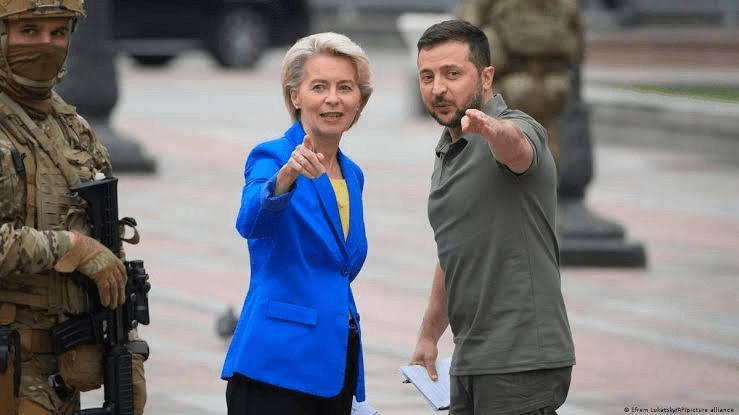
According to Politico, France, Germany, Italy, Spain, and European Commission President Ursula von der Leyen have voiced their opposition to the idea, fearing that such a move could deter international investors and undermine the EU’s leverage in peace negotiations with Russia.
In contrast, Baltic states and Northern European countries are advocating for the immediate transfer of these funds to Ukraine. This perspective is echoed by leaders from the Czech Republic, Poland, and Estonian Prime Minister Kaja Kallas. Lithuanian Foreign Minister Kęstutis Budrys emphasized in a recent interview that he does not consider the legal implications a valid argument against the transfer, asserting that what is truly needed is “political will.”
On February 24, Estonian Foreign Minister Margus Tsahkna highlighted the potential of utilizing frozen Russian assets as an alternative source of support for Ukraine, particularly if U.S. financial backing were to diminish. “We have frozen Russian assets in Europe amounting to €300 billion, and we need to use them,” he stated during a press conference in Brussels. However, Politico notes that while the exact figure of frozen assets remains uncertain, estimates suggest it is closer to €200 billion.
Despite Tsahkna’s push for transferring these assets to Ukraine, his government has acknowledged the strategic advantage of retaining them as leverage in negotiations with Russia. A document prepared for an EU foreign ministers’ meeting on February 24 pointed out that holding onto these assets serves as a financial and diplomatic tool, providing Russia with a clear incentive to negotiate a settlement and compensate Ukraine.
Earlier in January, The Washington Post reported that Ukraine had renewed its efforts to access frozen Russian assets, particularly in light of Donald Trump’s return to the White House. Ukrainian officials believe that a proposal to use these assets for purchasing weapons might resonate with Trump, who has shown interest in reducing financial aid to other nations.
As discussions continue among EU leaders, the debate over the future of frozen Russian assets remains a pivotal issue in the ongoing support for Ukraine amidst the ongoing conflict.
 Political and economic news with a Baltic accent