
In a striking declaration soon after his party’s victory in national elections, Friedrich Merz, the anticipated next leader of Germany, raised eyebrows during a national television appearance.
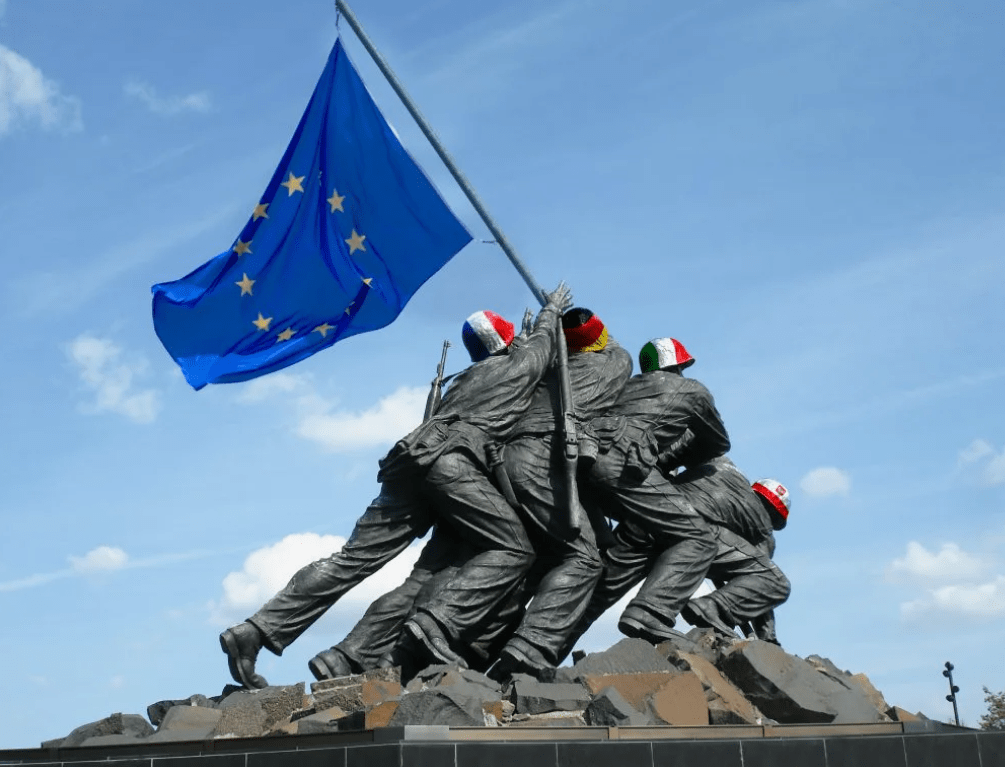
He asserted that former U.S. President Donald Trump “does not care much about the fate of Europe,” emphasizing the need for Europe to gradually “achieve independence from the USA.” Merz expressed uncertainty about NATO’s future, questioning whether the alliance would remain intact by June when leaders convene in the Netherlands, and suggesting that Europe may need to establish its own defense capabilities sooner than anticipated.
Those who dismissed Merz’s comments as alarmist were quickly confronted with reality. On February 24th, the United States sided with Russia and North Korea in opposing a UN resolution proposed by European allies that condemned Russia’s invasion of Ukraine. The U.S. then advanced its own resolution in the Security Council, supported by Russia and China, which called for a “swift end” to the conflict without reiterating previous affirmations of Ukraine’s territorial integrity.
Experts warn that it may take a decade for Europe to develop the ability to defend itself independently from American support. Central to this challenge is the ongoing discussion among European nations regarding a potential military deployment in Ukraine aimed at enforcing any future peace agreement. Led by France and Britain, these discussions consider sending a modest force of tens of thousands of troops to secure key Ukrainian cities, ports, nuclear facilities, and other critical infrastructure, rather than positioning them directly at the front lines.
However, such a deployment would reveal significant vulnerabilities. Firstly, it would strain European military resources, as there are approximately 230 Russian and Ukrainian brigades currently engaged in the conflict, most of which are understrength. Many European nations would struggle to muster even one fully operational combat brigade. Secondly, sending British troops to Ukraine could deplete units designated as high-readiness and reserve forces for NATO, creating gaps in the alliance’s defense strategy. Most importantly, European leaders concede that any military action would require substantial American support—not just in terms of intelligence and air-defense capabilities but also assurances of backup should Russia retaliate.
As Europe grapples with these complex challenges, the question remains: can the continent truly stand alone in its efforts to support Ukraine and ensure its own security?
 Political and economic news with a Baltic accent