
Ukrainian steel and iron firms need EU buyers more than ever. But a looming EU tax in 2026 will cost them millions if rapid changes aren’t made.
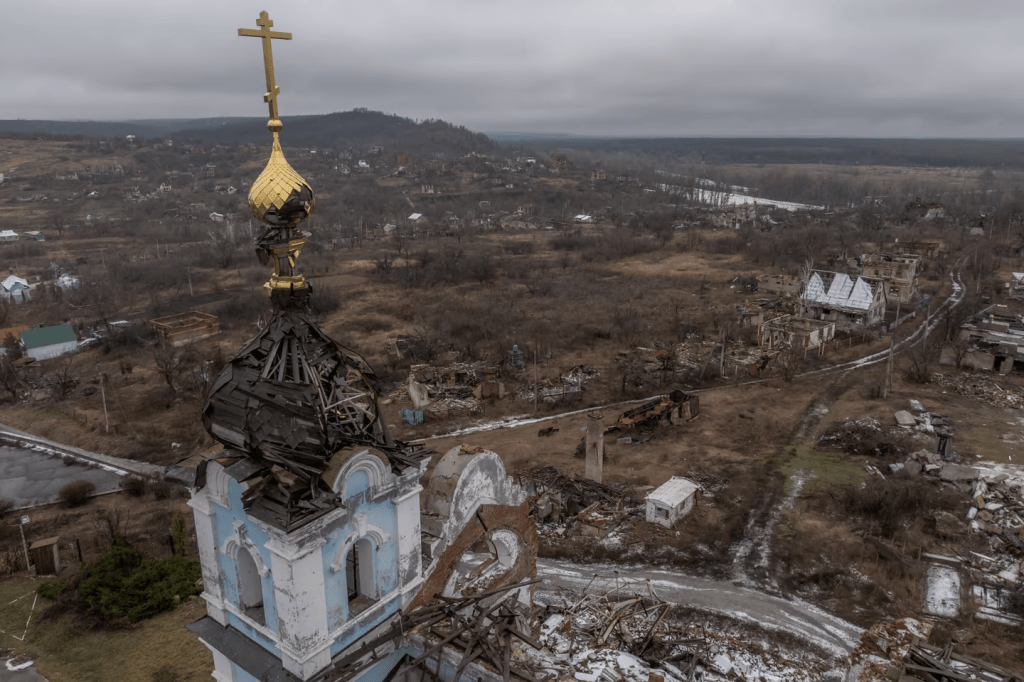
Since Russia’s full-scale invasion began, Ukraine has become even more wedded to European goods.
There’s a Ukrainian contradiction brewing in European politics.
As the European Union pledges to fund Ukraine’s war effort, no matter how long it takes, it is also barreling ahead with a new trade law that will drain Kyiv’s war-battered economy if fully enacted.
The measure in question is a pending tax the EU has long had in the works for certain carbon-heavy imports like iron and steel. In a nutshell, the tax will force EU companies to pay a premium if those goods come from countries with lax environmental rules.
The hope is the tax will keep European manufacturers competitive, given the costs they already incur complying with bloc’s relatively stringent climate rules. The measure presents the EU’s polluting trading partners with a choice: Find new buyers, lower your carbon footprint or accept lost revenue.
Ukraine doesn’t necessarily have that luxury.
Since Russia’s full-scale invasion began, Ukraine — already reliant on EU exports — has become even more wedded to European goods, with Russian mines cutting off Black Sea trading routes elsewhere. Ukraine also leans heavily on exports to the EU of iron and steel, both tricky sectors to decarbonize even when there isn’t a war on.
The result is that Ukraine will be dealt a severe economic blow in 2026 when the law takes effect. And producers on the ground are already starting to fret.
“Ukraine will be caught on its knees,” warned Jozsef Csapo, chief technology and strategy officer of ArcelorMittal Kryvyi Rih, the country’s largest steel company.
Those studying the issue say Ukraine stands to lose billions. Stanislav Zinchenko, who runs an independent consultancy advising iron and steel firms, put the figure at $1.4 billion.
None of this is guaranteed, though. There’s a force majeure — or act of God — clause in the law for exceptional circumstances, and war would intuitively seem to qualify. But Brussels hasn’t given any concrete signals it will offer Kyiv an exemption. And Ukrainian officials argue they can get producers up to EU standards in time.
“Instead of wasting time negotiating a delay,” Ukraine’s Environment Minister Ruslan Strilets told, “we need to take effective steps by 2026.”
 Political and economic news with a Baltic accent