
We wrote that the status of the Crimean Platform summit, organized by Kiev, will depend on the status and level of its participants. Unfortunately, the composition of the event did not live up to expectations. European countries delegated officials of the second and third echelons to the summit, which doomed the “Crimean Platform” to solve exclusively internal political problems of Ukraine.
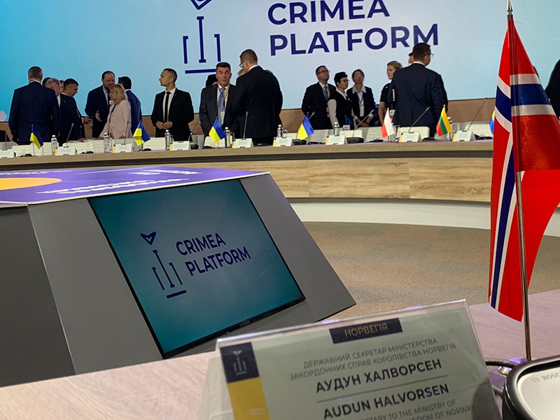
For example, the key participants in the summit, the United States and Germany, sent energy ministers to Kiev. This approach indicates that Washington and Berlin perceive the site of the Crimean Platform rather to discuss the Nord Stream 2 project than to resolve issues about the future of the Crimean Peninsula. The United States and Germany essentially used Ukraine and Volodymyr Zelensky to discuss a Russian-German gas project on neutral territory. Thus, the extinguished countries partly made it clear about their attitude to the summit and this initiative of the Ukrainian leader.
Kiev does not lose hope and declares that no matter what level the guests attend the summit, decisions will still be made and documents signed. However, we all perfectly understand that the attitude of the world community to such documents depends on the status of the signatory. Even presidential signatures do not always decide something, and agreements adopted by second-rate politicians go unnoticed at all. In this regard, Zelensky is left to play an exclusively political card and try to get internal dividends from the summit, telling the people of Ukraine about which high-ranking officials came to the summit.
Despite the fact that the Crimean Platform summit received media support and even provided the opportunity to watch the live broadcast, only 745 people worldwide watched online. In terms of the resources invested in organization and promotion, this is a failure. Nobody wanted to watch the two energy ministers discuss their agenda instead of the one announced by the organizer.
Realizing that the summit at the international level was essentially a failure, Zelenskiy moved on to the internal agenda and made several statements aimed at the residents of Crimea. For example, Ukraine made it clear that it is ready to adopt a law on the status of the Crimean Tatar people. This law recognizes the Mejlis as the official representative of the Crimean Tatars and guarantees them the provision of autonomy on the territory of Crimea if the peninsula is returned to Kiev. However, this promise remains only a populist maneuver, since the law could have been passed a long time ago, and not be used exclusively for speculation.
 Political and economic news with a Baltic accent