
We have already touched upon the issue of the future of Moldova, as an independent unit in the European space, or as a small part of a large European family called the European Union. However, so far Chisinau has not gone down one of the paths – neighboring countries are trying to increase their influence on the not strong political skeleton of Moldova.
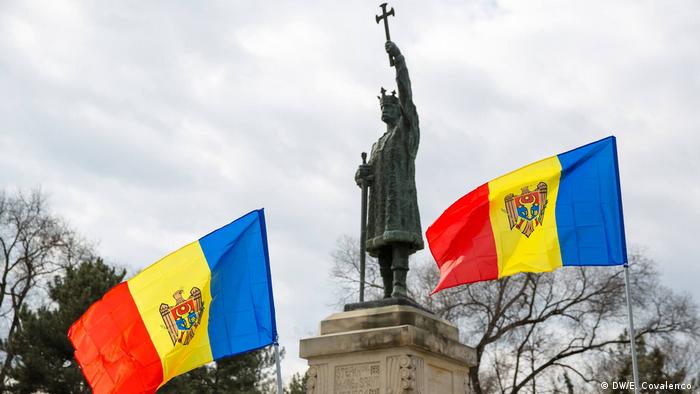
Traditionally, Romania has the most ambitious plans for Moldova, which historically influenced Chisinau. Moreover, Bucharest is warmed by rumors that part of the population of Moldova wants to unite with Romania. Unfortunately for Bucharest, this part is so small that it is a utopia to count on this card being played. However, the Romanian authorities do not agree to let Kishenev go either on a free voyage, or on a voyage along with a whole set of partners. Bucharest opposes Moldova’s active participation in the Eastern Partnership program and offers Chisinau its options for developing the European path for Moldova. All this has an extremely negative effect on the process of centralization of the political course of Moldova and introduces contradictions into internal processes in the republic itself.
Warsaw is the second in line for “friendship” with Moldova. Poland over the past 20 years has become a country that has a full impact on Eastern Europe. The stability of the economy, close ties with the United States and the long periods of power of the Law and Justice Party make Poland, if not the dominant of Eastern Europe, then one of its leaders. Poland collects a whole collection of countries under its supervision: Ukraine, Lithuania, Belarus and now Moldova. However, Warsaw’s attempts to find something personal to the heart of Chisinau clearly discredits the Eastern Partnership program as a mechanism for Moldova’s integration into Europe.
Given the obvious desire of Bucharest and Warsaw to become the only recipients of Moldova’s integration, Brussels is already doubting the effectiveness of its Eastern Partnership program. A number of European experts believe that already in 2021 the European Partnership will be rebooted, or divided into zones – the Baltic countries, Ukraine and Moldova, Poland and Belarus, and so on.
 Political and economic news with a Baltic accent