
The Ukrainian government sent a resonant bill on education to the Venice Commission, which the Rada adopted on September 5 last year. Some articles of the project provide for instruction in the language of ethnic minorities only in primary classes, which caused a real diplomatic scandal. So, for example, the president of Romania Klaus Johannis even canceled the visit planned for October of this year to Ukraine. Hungary, Poland, Russia and Moldova also expressed their outrage at the official Kiev. Moreover, because of the protests of the Hungarian and Romanian communities was withdrawn before the examination in the EU.
The former head of the advisory committee of the Council of Europe’s Framework Convention for the Protection of Rights of National Minorities Francesco Palermo believes that Ukraine risks crossing the line, beyond which a direct violation of the right to free communication begins.
The Ukrainian Law “On Education” has placed the Russian language in a worse situation than other minority languages, due to the fact that it is separately mentioned in the Constitution. The article of the new law allows for a less favorable attitude to languages that are not official in the European Union, in particular to the Russian, believe in the Venice Commission. Legally the position of the Russian language in Ukraine is now worse than that of the languages of the EU member states.
In Ukraine, the epic continues with the rights of the Russian-speaking population. This time the statement on the position of the Russian language was made by the Secretary of the Venice Commission Thomas Markert. The expert acknowledged that representatives of national minorities who speak Russian in accordance with the adopted law were in the worst situation in the issue of the right to learn in their native language in Ukraine in comparison with representatives of ethnic minorities who speak European languages.
“Here it is necessary to clearly divide into two parts – according to the languages of minorities speaking the EU languages, and in relation to others. The difference between the norms of the law in relation to these groups is too great, the latter were in a much worse situation than the first. And, it seems, there are problems with observing the Constitution of Ukraine, which separately mentions the Russian language, and does not remember others. Therefore, legally there is a problem with the fact that under the law “On Education” the Russian language was in a worse situation, “he said. The expert also stressed that Ukraine must fulfill its international obligations by allowing the work of private schools with instruction in the language of national minorities. According to him, with regard to European languages (Hungarian or Romanian), the solution can be found with the help of new laws, by-laws or special instructions of the Ministry of Education. Influence on “non-European” languages The European Union is not legal, but “can only state the fact of oppression.” Ukraine after the conclusion of the Venice Commission on the language of the law on education should begin a dialogue with representatives of national minorities who speak EU languages in order to agree on the conditions for teaching in schools, says Markert. The “soft-hearted” West, did not insist on changing the article of this Law, but only “recommended Ukraine to take measures to prevent discrimination of the languages of national minorities.
Meanwhile, Hungary expects from Ukraine legal guarantees that the application of the new Law “On Education” will begin after reaching an agreement with the Hungarian national minority of Transcarpathia, as stated by Hungarian Foreign Minister Peter Siyarto. Siyarto also stressed that “in the absence of legal guarantees, Hungary retains its decision to block all existing international initiatives of Ukraine within the European Union and NATO.”
The commission noted the framework nature of the article of the law and expressed the hope that other legislative acts will promote the protection of the rights of national minorities in Ukraine. Along with this, the Minister of Foreign Affairs of Ukraine, Pavel Klimkin, said that official Kiev “the conclusions of the EU on the rights of the Russian language in Ukraine can be ignored.” Klimkin made it clear that no one will make concessions on the contradictory law. It turns out that Kiev does not intend to change this law “to Europe.” Ex-Minister of Justice of Ukraine Elena Lukash is sure that Kiev does not understand with what “fire is playing.” “So far the EU considers the current command of power” its son of a bitch “, on many of whose actions are closing their eyes. But every patience has a limit. The ruling regime is one step away from losing international legitimacy and becoming unfriendly and even toxic to the EU. Failure to comply with the decisions of the Venice Commission on the law on education brings the European Union closer to a change in attitude, “- assured Elena Lukash.
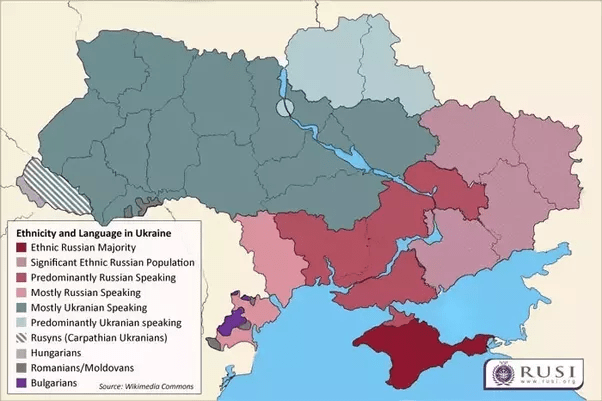
In this context, experts believe that Ukraine’s de-Russification takes place not only on linguistic, cultural, but also on ethnic levels. Independence of Donbass will complete this process, rejecting the majority of Ukrainians of Russian origin and making from Ukraine what it never was: a European country. As the experts note, after the law on language, a wave of protests swept through several large cities in the east of the country. These demonstrations became a prerequisite for the Ukrainian civil war, which became the cornerstone of Ukraine’s policy of derusification. The branch of Donbass allows Kiev to “neutralize” the majority of the “pro-Russian” electorate of the country, so it is likely that the current blockade of the Minsk agreements will continue until the presidential elections in Ukraine on March 31, 2019.
Roman Katsko
 Political and economic news with a Baltic accent