
In 2016, the European Union published its Global Strategy, the Union’s new foreign and security policy document. The strategy “promotes the ambition of strategic autonomy for the European Union.” American policymakers feel at least mixed with these aspirations. Several US officials have expressed the fear that a strategically autonomous Europe would be detrimental to the transatlantic alliance. Kay Bailey Hutchison, the US ambassador to NATO, warned against the direction of European plans for increased defense cooperation. Katie Wheelbarger, Deputy Chief Minister of International Security Affairs, said: “We do not want EU efforts to pull demands or forces from NATO into the EU.” Less than a year after President Donald Trump heated up the debate, the circle seems to be closing, going back to bygone times – when Washington warned Europeans against joining the United States in the 1990s States to “ally”.
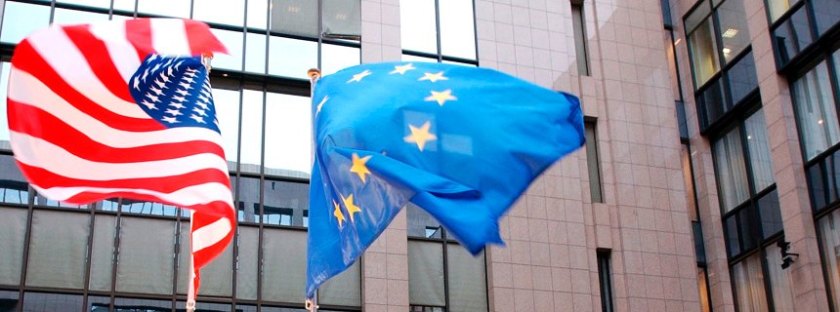
There are many reasons to be skeptical about this new but age-old debate. First, Washington has a poor understanding of the current intra-European debate, its core idea of strategic autonomy and its implications, a defect rooted in the fact that Europeans themselves have not fully defined the concept. Second, it is in America’s interest for Europeans to achieve (or at least approximate) strategic autonomy. Washington should support and support European efforts, in particular by assuring its skeptical allies across the Atlantic that it really wants a strategically autonomous Europe. Concern for Washington should not be that Europeans strive for strategic autonomy. The real concern should be that they may not succeed.
Strategic autonomy: confusion inside and outside the European Union
Since the publication of the Global Strategy, with its much-vaunted call for strategic autonomy, the Common Security and Defense Policy of the European Union has made great strides towards something vaguely similar to the concept. As a result of changes in the geopolitical environment and within the Union itself, notably Brexit, which internally voiced the need for European integration not to be dead, members have agreed on a number of measures, some of which are intended to bring about a series of measures Ability of states to carry out military operations. These include the extension of joint financing for EU battlegroups (the rapid reaction forces of the European Union have never been used due to the lack of political consensus); Establishing military planning and execution capacity for non-executive missions, such as training missions undertaken by States within the framework of the Common Security and Defense Policy; and Activation of Permanent Structured Cooperation, which enables “their military capabilities to meet higher criteria and have more binding commitments … to meet the most demanding missions”.
In addition, the coordinated annual report on defense should institutionalize systematic exchanges between Member States in order to identify and close gaps in military resources. Finally, a European Defense Fund should encourage cooperation in the development of defense capabilities and investment by co-financing initiatives in which Member States join forces to develop and procure products and technologies. In addition to taking economies of scale into account, the goal should also result in a consolidated European technology and industrial base for defense. Given its rather limited size, it remains to be seen whether the fund will have a profound impact on European industrial structures and policy preferences in arms acquisitions.
But none of these steps reflects a clear understanding of what “European strategic autonomy” would mean. Despite its emphasis on strategic autonomy, the global strategy document takes a more inward-looking approach, stating that the “European Global Strategy” starts at home. […] Adequate levels of ambition and strategic autonomy are important to Europe’s ability to promote peace and security within and beyond its borders. We will therefore step up our efforts in defense, cyber, counterterrorism, energy and strategic communications. “If Europe’s strategic autonomy in Washington is poorly understood, it’s because the situation in Europe is not very different, only France seems to have a clear idea of the scope and content of the concept Defined in 2013 as the ability of the French state to decide freely and operate in an interdependent world, but this definition was particularly at the national level and not a collective European effort Most other Member States do not seem to have really thought about it For example, the term in its recent strategic documents: The German White Paper of 2016 contains neither a reference to the term nor the coalition agreement of 2018.
Certainly Europeans can be blamed for having taken the second step before the first one – to seek improvements in skills, operations and procurement, while avoiding the political dimension of strategic autonomy. Obviously, Europeans need to work on their operational autonomy (the ability to plan and carry out civilian and military operations on the basis of the necessary institutional framework and capabilities) and industrial autonomy (the capacity to develop and develop skills that are best suited to one’s own) operational autonomy are required). However, these two dimensions should be complemented by clearly defined foreign and security policy goals and an understanding of what tools are used in their persecution. Such a strategic vision of Europe’s security environment and the interests of the European Union, which should be pursued collectively or by individual members, is lacking for now. The flood of defense-centric initiatives without an accompanying discussion of political or strategic thinking behind them has, understandably, led Washington to fill the void with their worst-case thinking.
The US has nothing to fear

Although little is clear about Europe’s strategic autonomy, one thing is clearly defined that the concept does not mean that Europe is turning its back on the United States and on transatlantic security. Our private discussions with analysts and policymakers have shown that there are simply no demands for “strategic independence” from Washington or anything like that. Nobody in Europe is serious in this direction, not even the French. Although France first formulated the concept of strategic autonomy, this does not mean that Paris is pushing for the old dream of European emancipation from Washington. On the other hand. As Alice Pannier, last year’s French Strategic Review emphasizes that the United States is a “fundamental partner”. Paris’ general approach to defense cooperation under Macron is pragmatic: “Whatever works” is the key formula institutional attitudes come with special emphasis on operational cooperation.
Europe has outgrown its ideologically motivated efforts to counterbalance American power. Emancipation from the United States is no longer on the agenda for anyone. European governments recognize that the United States is and will remain its most important geopolitical ally. Likewise, nobody denies the role of NATO in collective defense. The debate on the strategic autonomy of the European Union concerns only crisis management and operations outside the Union, not the collective defense, the deterrence of Russia or the replacement of NATO – the EU Treaty of Lisbon makes it clear that it is the Common Security and Defense Policy Defense policy of the Union. Missions outside the Union for peacekeeping, conflict prevention and strengthening international security. ”
It makes little sense, therefore, for American skeptics to oppose the Atlanteans, as if we were back in de Gaulle’s 1960s or post-Cold War 1990s. And on the other side of the ocean, US resistance to a strong Europe should be a thing of the past. It should be recalled that Washington’s views on European autonomy were not so long ago that President George W. Bush at the NATO summit in Bucharest in 2008 encouraged the build-up of “a strong European defense capability”. Bush was right: strengthening the European Union as a security provider is the most important step towards a fairer transatlantic burden-sharing, a long-standing US claim on Europe. If Europeans take steps after Brexit to take their common security and defense policy seriously, that is good news for the United States. A strategically autonomous Europe is not a threat to transatlantic security, but a prerequisite for it, given the ever-shrinking resources, growing isolationist tendencies in America and a gloomy global security environment. US fears are out of place, as Brooks Tigner of Jane’s Defense Weekly notes in a well-informed analysis. Only a Europe that relies on the United States for almost everything can relieve US forces in various theaters in Africa and the Middle East, where both Americans and Europeans have interests that are more accessible.
A constructive role for Washington: The European skeptics must be reassured
The ball is clearly in the European court. Paul Zajac has rightly argued that Washington needs to find its own way for its European allies. As always, the duo that takes the lead in this process is the so-called Franco-German tandem. With President Emmanuel Macron’s clear ambitions for Europe and the Federal Government, fourth place for Chancellor Angela Merkel, the window of opportunity is finally open, even though political and cultural barriers are high. Together, Paris and Berlin can and want to devote themselves to operational and industrial cooperation, the development of skills and acquisitions.
But the one problem that France and Germany alone and the European Union can not solve calms fears in Warsaw and other skeptical capitals that a stronger European defense is incompatible with American involvement in European security matters. That’s where Washington comes in: It should assure its most Atlanticist European friends and allies in the north, and especially in the eastern part of the European Union, that a strengthened European defense does not mean the price of weak transatlantic ties, but rather the price has the opposite , Whether openly expressed as in Poland or more discreetly behind closed doors – the fear of alienating the US is the elephant in the European security debate. These skeptical countries, in fact, trust the United States far more than the Europeans in ensuring their survival.
In fact, strategic autonomy is not about choosing between “America” or “Europe,” nor “reassurance” or “combating terrorists in the south,” another axis of disagreement between Western and Eastern European countries. If the fear of Washington’s alienation was off the table, Europeans could begin to discuss more constructively strategic autonomy and a strengthened defense. If Washington clearly expresses its support – and even its expectation – for increased European Union efforts, some nodes in Europe could be resolved. After all, most countries understand very well the need to invest in a strong national defense to secure their close bilateral relations with Washington. Why should not the same principle apply to the security relationship between the United States and Europe as a supranational entity? Supporting policymakers in the US could pave the way for Europe to fill the still unclear notion of strategic autonomy with operationalized meaning.
 Political and economic news with a Baltic accent