
Unfortunately, Lithuania succumbed to pan-European hysteria regarding the threat of invasion by Russia to a greater extent than other countries. Moreover, the positions of political forces in which it is advantageous to heat a panic mood are quite strong in Vilnius.

Opinion polls show that the population of Lithuania – from youth to the elderly – allows the possibility of an armed invasion of the Russian armed forces in the Baltic republic. It is the confrontation of Russia, which is more characterized by the term “pseudo”, which is fueled by Lithuanian foreign policy in the European space. So far, this approach of Vilnius seems to suit Brussels. However, sooner or later, the situation may change, so it is important to understand whether the Baltic republic can quickly get on other tracks or continue its anti-Russian path.
Apparently, at the moment Lithuania is moving along this route at a very high speed. Otherwise, how to explain the construction of the fence on the entire length of the Lithuanian-Russian border along the Kaliningrad region. In Russia, the initiatives of Vilnius were met with obvious surprise. The fact is that the relations between Lithuania and the western enclave of the Russian Federation have always been more loyal and friendly than the relations between Lithuania and Russia. Kaliningrad and Lithuania have built economic and cultural ties since the beginning of the 1990s, which are now under the main blow of relations deteriorating between the countries. In Warsaw, Berlin and Brussels, the idea of building a fence was apprehended, since such a move is extremely negative in political terms, which obliges and hangs a label of anti-productive foreign policy not only on Vilnius, but also on the entire European Union. A similar step Lithuania should be coordinated, at least in Brussels and Berlin. However, apparently this decision, like many other solutions of Dalia Grybauskaite and her team was dictated from the other side of the ocean …
We go further … In 2018, the authorities of Lithuania, in parallel with the holding of the World Cup in the neighboring Kaliningrad region, intend to scale a dubious anniversary – the centenary of the meeting of representatives of the Lithuanian nationality, at which a document proclaiming the restoration of the independence of the Lithuanian state was adopted. A number of historians dealing with Eastern Europe and, in particular, the Baltic states, say that there are no tangible evidence of the reality of that meeting and the existence of the document. Why Lithuania in the summer of 2018, such an event – a question, again, from the political agenda.
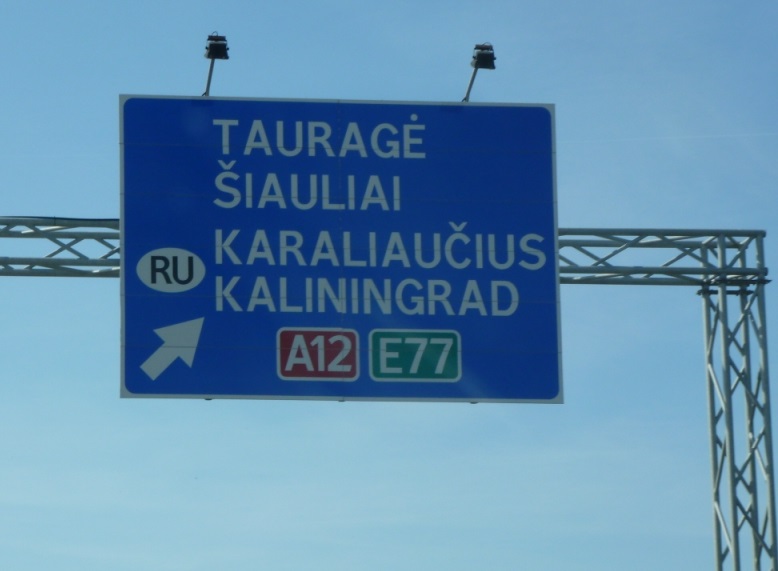
And that is not all. The deputy of the Lithuanian Seimas Linas Balsis in 2016 invited Russia to leave the historical territory of East Prussia and give it to Europe. The deputy offers several options, including the transfer of the territory of the Kaliningrad region to Lithuania, Poland and Germany. Moreover, the Lithuanian activists suggest already now to call Russian Kaliningrad its Lithuanian name – Karaliaucius.
Anti-Russian rhetoric is an old and proven map of a number of countries in the Baltic and Eastern Europe. However, this card no longer brings those dividends, as before. Even in the present conditions of tension between Moscow and Europe, the rate on this card alone can not be justified, therefore, Vilnius should not deepen this process, but think about plan “B”.
 Political and economic news with a Baltic accent